





3 min read
Reconciler of the Rite
Agastya
author: High Priest Zevios Metathronos
The seer who restores concord within the rite
Dates: Rigvedic period; individual lifetime undated
Period: Ancient (6000–500 BCE)
Region: Vedic India
Tradition: ṛṣi
Religion or tradition: Vedic religion: the Agastya seer tradition.
Heresy status: No designation documented.
Agastya is associated with a substantial hymn group in the first book of the Ṛgveda. His identity in the Vedic texts should be distinguished from the many later regional narratives attached to his name. For this profile, the central evidence is the dramatic exchange involving Agastya, Indra and the Maruts.1
GIVING SACRED SPEECH THE WORK OF RECONCILIATION
The Agastya dialogues direct religious intelligence towards agreement within the rite. The exchanges involving Indra and the Maruts move through competing claims towards recognition, preparation and a request for accord. They preserve a model in which the seer’s speech has the task of understanding relationships and making cooperation possible.2
The constructive inheritance for human readers is a demanding account of mediation: know the powers involved, listen to the claims and speak towards a workable religious purpose. The service to the Gods lies in the effort to honour their relationships within a completed offering. Agastya’s example makes wisdom visible through the use of knowledge to restore concord and allow a shared undertaking to proceed.
KNOWLEDGE DIRECTED TOWARD RECONCILIATION
Hymn 1.170 places the sage within a dispute concerning the Gods and the offering. The exchange moves toward the preparation of the rite and a request that Indra come into accord with the Maruts. In the related hymn 1.165, assertions of power are followed by recognition and praise.3
These poems present religious intelligence through an active problem. The seer must understand relationships within the Divine assembly and find speech appropriate to the situation. The goal is a rite that can proceed with the participating powers rightly acknowledged.
The evidence concerns Agastya as a Vedic religious figure. It does not establish that all later texts, medical teachings or distant temple foundations bearing his name were produced by one historical individual.
A ZEVIST INTERPRETATION
Agastya’s example gives a demanding meaning to spiritual judgment. Strength must be understood in relation to purpose, circumstance and the other powers involved. The sage’s task is to bring understanding into the action being undertaken.
For the student, this encourages careful preparation before ritual work. One studies the Divine names and their relationships, understands the offering’s purpose and gives the words deliberate attention. Practice then becomes a further source of understanding.
The profile also offers a constructive treatment of conflict. Agastya’s religious intelligence is directed toward restored cooperation. That makes him an apt personality for a collection in which personal power is developed together with wisdom about its use.
NOTES
1 Ṛgveda 1.170; Macdonell and Keith, Vedic Index, “Agastya”.
2 Ṛgveda 1.170; 1.165.
BIBLIOGRAPHY
Ṛgveda 1.170 and 1.165, trans. R. T. H. Griffith.
A. A. Macdonell and A. B. Keith, Vedic Index of Names and Subjects, vol. I (1912), “Agastya,” University of Cologne scan.
CREDIT
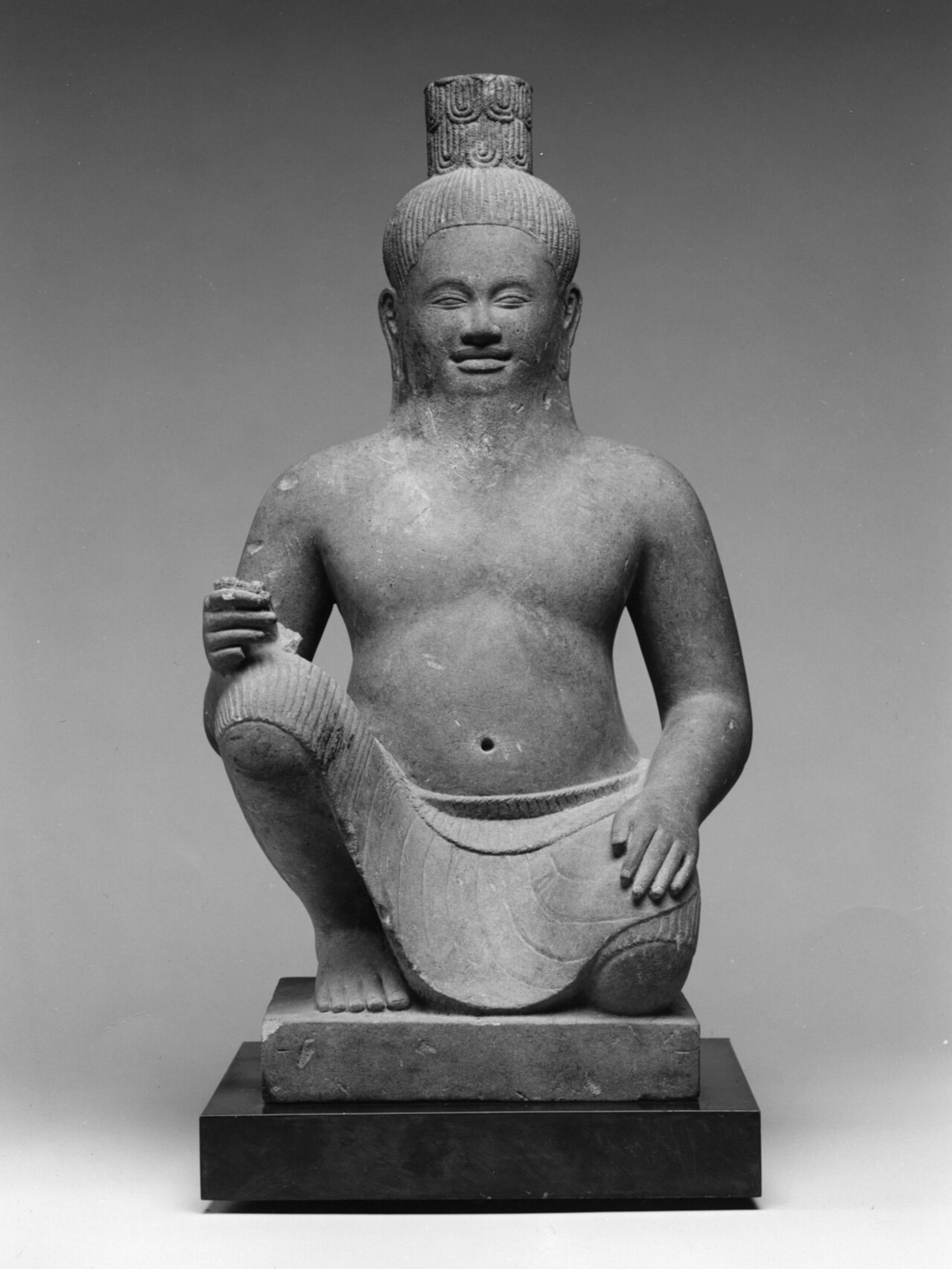
Picture: Historical sacred sculpture. Seated Divine Sage Agastya, Cambodia, around 975, stone, Metropolitan Museum of Art, accession 1993.387.2. A historical sacred representation of the sage, not a lifetime likeness.
Credit: Unknown Cambodian sculptor; Metropolitan Museum of Art. Source record, CC0.

The round picture in the lists of the personalities is cropped from it.