




6 min read
CERIDWEN
author: High Priest Zevios Metathronos
co-author: Novice Priest Karnonnos
Ceridwen
As revealed to NG Lucius, Ceridwen, primarily known from the tale of “The Birth of Taliesin,”26 was a Welsh sorceress who transformed the eponymous hero (Taliesin) into a God. Her central symbols, the Cauldron and the Awen, represent the transformation of the initiate and their union with the astral in its purest form. Ceridwen is not technically identified as a goddess 27. This is likely due to the rising Christian influence in the early Middle Ages, which forced the old Druidic culture to adapt or face persecution. Like many of our beloved Gods, Argus refused to abandon humanity to its downward spiral. They assumed the guise of an enchantress, sorceress, or even witch, guiding children toward the Godhead. However, to the Welsh bards of the Middle Ages, she was like a poetic muse28.
In the days of Arthur, a nobleman named Tegid Foel lived in what is now called Penllyn,26 near a lake known as Llyn Tegid. His wife, Cerridwen, was skilled in magic. They had two children, Creirwy and Morfran. While Creirwy was the most beautiful and intelligent maiden, Morfran was very ugly, misshapen, and dull. Pitying Morfran and fearing for his future, for it was the time of Arthur and the Round Table, Cerridwen worried he would not be accepted. To compensate for his appearance and personality, she decided to brew a potion in her cauldron that would make him wise and knowledgeable, thus impressing the world with his newfound abilities. She gathered specific herbs at the right times and boiled them in a cauldron for a year and a day. The potion would produce three special drops that would grant immense wisdom to anyone they touched. However, the rest of the potion would become a deadly poison, causing the cauldron to shatter and spill its toxic contents. She took in an old blind man to stir the cauldron. She also tasked a young boy to lead the blind old man named Gwion Bach, and Cerridwen assigned him the task of stoking the fire beneath the cauldron. Each tended to his task, stoking the fire, stirring the cauldron, and performing their other duties, for a year and a day.
When the potion was almost ready, Ceridwen, after a long year of work, went to rest. Before doing so, she placed her son Morfran beside the cauldron to await the three sacred drops that would eventually leap out. At the moment the drops leapt from the cauldron, Gwion Bach, unaware of their significance, pushed Morfran aside. The three drops landed on his thumb, which he immediately placed in his mouth. At that moment, the cauldron cracked, and Cerridwen awoke from her slumber to see Gwion Bach filled with knowledge. Furious, Cerridwen confronted Gwion, but he, sensing her rage and his newfound wisdom, fled. He transformed into a hare and began his flight across the earth. Thunder roared and lightning cracked as Ceridwen stood with arms raised, invoking the thunder god. An eight-spoked wheel appeared above her, and a lightning bolt descended through her crown. She transformed into a greyhound, and a chase began. Gwion ran, but Cerridwen was close behind. Knowing he would be caught unless he did something, he leapt into a river ahead and transformed into a salmon. He swam fast, trying to escape, but Cerridwen changed into an otter and pursued him. Realizing he could not escape unless he adapted again, Gwion leapt high into the air and became a small bird. Cerridwen, too, leapt from the water and transformed into a hawk.
After a terrifying flight, Gwion spotted a farmer’s barn and decided to transform into a single grain of corn among many others. Ceridwen lost sight of him, but changed into a black hen and began to peck. She didn’t care how long it took, she would peck at the grain until she consumed Gwion Bach. And at last, she did. Gwion Bach was swallowed by Ceridwen. Inside her, Gwion felt immense pain as the hen’s heat transformed him, breaking him down and reforming him. In the agony, he was consumed by silence and a sense of being everywhere and nowhere. Blinding light and intense pressure overwhelmed him, and he was filled with an all-encompassing love as he was cradled in warm hands. When Ceridwen realized she was pregnant with Gwion Bach, she intended to kill him upon his birth. However, when he was born, she could not bring herself to do it. Instead, she beheld the most beautiful boy. Her heart softened, and she placed the child in a skin bag, sending him into the mystical waters. After eight decades (or four, depending on the version), the bag was caught in a salmon weir by Elffin, who found not a fish, but a child with a shining brow; the hero Taliesin was born.
Ceridwen's role in mythology evolved in the progression of Welsh poetry. For instance, from the Hengerdd era to the end of the Gogynfeirdd era, many poetic allusions to Her name and symbolism emerge. One example comes from the manuscript of the Black Book of Carmarthen (Llyfr Du Caerfyrddin), dated 1225–1250, which contains a poem called “A Poem in Praise of Cuhelyn Fardd (Cuhelyn the Bard)”:
Black Book of Carmarthen29
Lord God, grant me Awen, amen so may it be.
A steadfast song of praise, fruitful utterance, in the tumult of the crowd.
Because of the dignified song of Ceridwen, the ogyrfen of various seeds,
Rich seeds, the generous song of the refined magician.
Symbolism
Ceridwen being the guardian of the Awen, which being linked to aether and the root word for the air, is no mistake. Poets later took this as divine inspiration allowing them to speak or commit words to paper,27 while others related it to prophetic tellings of history.30 The word "ogyrfen" derives from "ogr," a soft mutation of "gogr," meaning "sieve." In Welsh, a gogr is a tool used for separating seeds. The suffix "-fen" means "woman," while "wen" suggests "holy" or "blessed." The name evolved over time, with modern versions stabilizing as "ogyrwen." Ultimately, "ogyrfen/ogyrwen" can be translated as "a woman who sieves" or "the blessed sieve." In the context of the upcoming tale of “The Birth of Taliesin,” this has two key meanings.
The Awen having endless seeds.
The sieving of mortality.
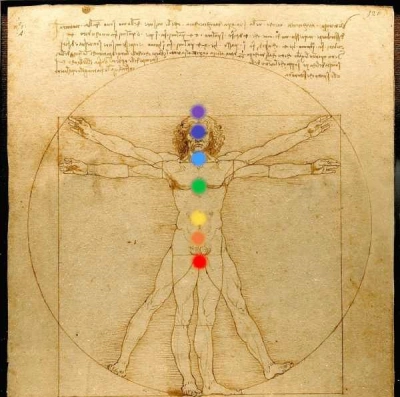
The mysterious Awen is associated with both the cauldron and 'sevenscore' ogyrwen in numerous Welsh contexts.26 In The Book of Taliesin, Gwion says, “There are seven-score ogyrfens in the Awen,” and “It was with seven faculties that I was blessed, and with seven created beings that I was placed for purification; I was gleaming fire when I was caused to exist.” This refers to the seven chakras. The circular cauldron (pair Ceridwen) is shaped like an eye and its brewing represents cultivation, its reflection having a constant association with mystery in Celtic mythology. Kristoffer Hughes identifies three main roles the cauldron plays, as being a vessel of inspiration, a transformative device and a source of inspiration. Gwion becomes the mythological divine poet Taliesin from imbibing a tiny amount of its mysterious contents, elevating himself to divine awareness. The ordinary one churning the contents is not permitted to see it on Ceridwen's instructions that her son Afagddu is only designed to do so, and hence she chose an elderly, blind man to labor on the task. Gwion pushing Afagddu aside symbolizes his will to overcome darkness and ignorance. He casts aside ignorance and drinks the three drops that grant him inspiration. These three drops represent knowledge and wisdom over his Mind, Body, and Soul, but also Heaven, Earth, and the liminal space between (the Otherworld, Annwn).
The Book of Taliesin, poem named the Hostile Confederacy)30
The Awen I sing,
From the deep I bring it,
It is a world-encircling river,
I know its size,
I know how it ebbs,
I know how it flows,
I know its course,
I know its retreat,
I know what creatures
Are under the sea