



3 min read
Khepri and the Tarot
author: High Priest Zevios Metathronos
co-author: Novice Priest Karnonnos
Tarot
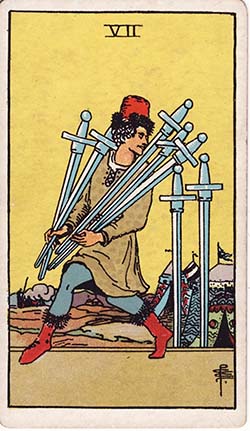
His Tarot card is the Seven of Swords. The number seven relates to the fractional part of the volume of a sphere, with the property of a cubed radius having an extra third to add: 4/3 𝜋𝜋 r³. Nemesis and karma are also part of this numerological symbolism; interestingly, it is known that Ma'at was sometimes regarded as a daughter of Khepri. One half of the head projections of the sacred scarab (their rays) also number seven. The design of the card, again indirectly influenced by the appearance of the Gods in the artistic creation of the popular (and partially corrupt) Rider-Waite Deck, shows a blond-haired man in golden clothing of high finery attempting to steal swords from a military camp, with a bright golden sky in the background.
Part of the card's meaning relates to necessary cunning and strategy. All of these processes are part of accomplishing anything major, being integral to risk. Personality formation also involves standing apart from the camp or crowd, as pleasing everyone is impossible. The latter degrees of the sign of Aquarius being the sign of Khepri is no mistake: the conflict between the Sun of the self and Aquarian ambitions concerning others is a perennial struggle.
The militaristic theme is also a necessary allusion, as Khepri is a patron of soldiers. Whether the camp is the soldier's own (signifying betrayal) or an enemy camp he skillfully snuck into (signifying strategy) is part of the interpretation relating to the querent. The heavy swords he struggles to carry, as well as the two left behind, can be seen as an allegory for the struggle of pushing the sphere, as the beetle does. As anyone familiar with the card knows, the broader interpretation also deals with getting things done regardless of consequences or karmic retribution for lying and other deceitful behaviors. What is truly evil is brought into the golden light and cut down. The flag of the camp is raised, suggesting the man may not get away with his scheme. Ultimately, the Seven of Swords also deals with cleansing. It can also deal with being wary of others' lies, using one's mind and force of self to deny them the opportunity to deceive. In some ways, this may also involve a counter-strategy when the veil of ignorance is lifted. All of these themes, in one way or another, convey fidelity to the self.
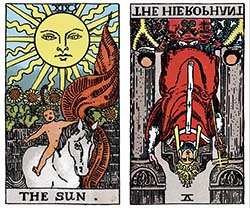
Two Major Arcana cards representing Khepri are the Sun and the Hierophant reversed.
The Sun is represented as a child with a red standard on a horse beneath a Sun with an oblique and inscrutable expression. In some decks such as the standard Marseilles decks, it is represented as two children beneath a similar Sun in front of a brick wall, and in the oldest Visconti deck, as a Cupidon on a black cloud carrying a red sun in his hands. The images of the two children in the Marseilles deck bear a stylistic resemblance to the two baboons and hands that behold Khepri in Egyptian art. This card can convey the completion of one's labors, and the joy that results from creation as a whole, but effortless clearing of obstacles and an increasing cooperation with animals, plant life or children too. It can also indicate pregnancy. As a progression, it signifies triumph over the hazardous scenarios of Death, the Tower and the Moon due to persistent hard work. It has a connection also to the citrinitas or xanthotic stage of the Magnum Opus.
The Hierophant in reverse tends to convey making one's own path, just as the beetle determinedly rolls its ball. His presence in relation to the querent's query can signify the need to be unorthodox and break with dogmas to create breakthroughs. In some older decks, the represents philosophy, and the need for inquiry regardless of dogmas. On the other hand, the Hierophant can signify hypocrisy, and the ball chosen being so heavy that it crushes the querent. Do not project an image that is at odds with reality, because the sun shines on the holy too.
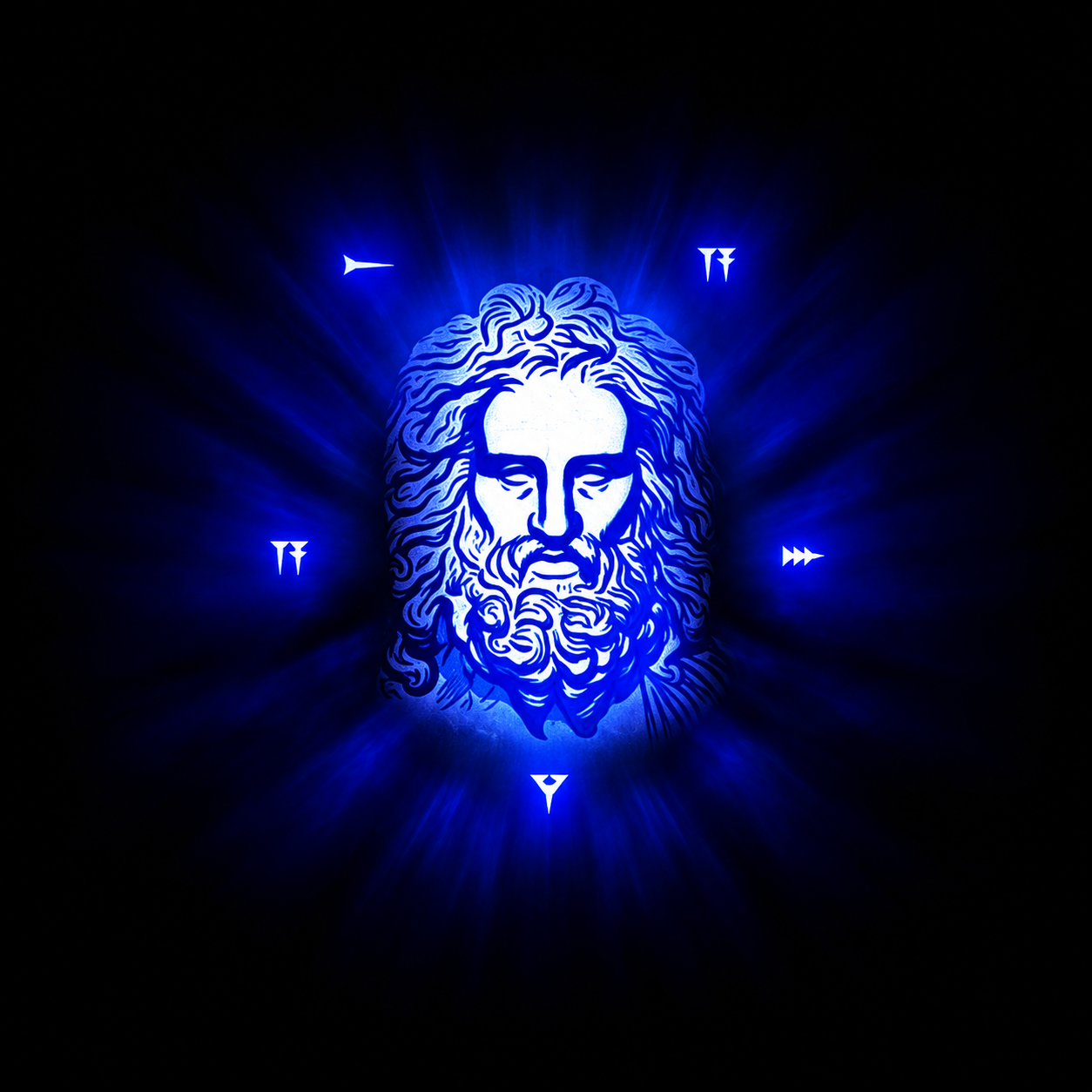
It has been noted that Khepri's candle color is dark blue, and his metal is copper. It can be stated that copper sulfate is notable, as it transmits a remarkable blue light. The association of Khepri with Venus is suggestive of Venus tailing and almost pushing the Sun, particularly at dawn.