




6 min read
Oscarius: The Abrahamic Inversion
author: High Priest Zevios Metathronos
co-author: Novice Priest Karnonnos
Here the trail of Forcas is followed back to Oscarius. The grimoire name belongs to the slander raised against the Original Gods, and it is no name to call upon; Oscarius is reached through the eternal name Oscarius.
Forchas, Fortas, Sartii: the earliest attestation
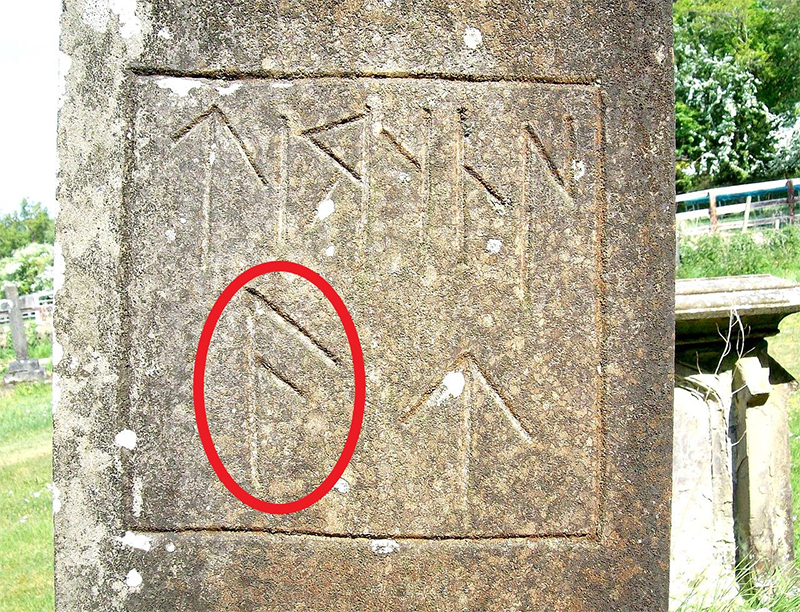
The first known example of the demon-name family which was later written down as Forcas and Foras occurs in Florence, Biblioteca Medicea Laurenziana, MS Plut. 89 sup. 38 (plut. 89 sup. 38), a collection of magical texts completed in 1494. A version of the spirit is recorded in a Florence manuscript as Forchas vel Fortas vel Sartii. Brian Johnson translates the version in the manuscript as "Foreas, ut fortas, ut Sartas." The handwriting in the 15th century is difficult to read, so there may be some variation in spelling. However, due to the fact that its title and all of its other entries were taken over intact by weyer, we can be fairly certain that this is the same spirit.1,2
Habet .29. legiones.
Foreas, ut fortas, ut sartas preses magnus apparet
in similitudinem ursi fortissimi humanam formam. Co-
gnoscit vires herbarum, et lapidum preciosorum. Docet
ad plenum practicam loices, et earum partes:
reddit hominem invisibilem, ingeniosum, eloquentem
vehementem, habet .29. legiones.
In this earliest form, he is a great president who appears in the likeness of a very powerful bear in human form. He knows the powers of herbs and precious stones, teaches practical logic and its branches, and makes a person invisible, ingenious, eloquent and vehement or ardent. He commands twenty-nine legions. This is already substantially the later Forras/Forcas profile, although the Florence text has the striking bear-like appearance that disappears from the later French and printed versions.1,2
Although Boudet states that the Livre des esperitz cannot date back to a time prior to approximately the mid-sixteenth century, Forcas is represented as a grand prince in this work, commanding thirty legions instead of twenty-nine. All of the main characteristics are identical to the previous manifestation of the spirit: herbs, precious stones, invisibility, wisdom and eloquence. The French representation also contains the ability to retrieve treasures buried beneath the earth.2,2,3
Forcas est ung grãt prĩce q̃ ẽseĩge la vtu des hr̃bes et des pierres precieuſes
et faict eſr̃ ĩviſible et eſr̃ ſaige et bien ꝑlãt a toutes gens
et ſi apporte treſors muces en terre quãt on luy ꝯmande
Et a xxx legõs
In expanded English: Forcas is a great prince who teaches the virtue of herbs and precious stones, makes a person invisible, wise and able to speak well before everyone, and brings treasures hidden in the earth when commanded; he has thirty legions. Unlike the Florence text, this script gives him no physical appearance and says nothing explicitly about logic. Its wording nevertheless provides an especially clear intermediate stage between the 1494 catalogue and Weyer.3
Weyer's Forras or Forcas
Johann Weyer records the spirit in the 1577 Pseudomonarchia daemonum as Forras vel Forcas. He reinstates Forcas' rank as great president and his twenty-nine legions, previously recorded in the Florentine representation of 1494. He substitutes Forcas' bear-like appearance with that of a very strong man like a hero, retains the knowledge of herbs and precious stones, expands practical logic to include logic and ethics, and incorporates the treasure finding abilities mentioned above with recovering things that have been lost.4
Forras vel forcas magnus Præses est: visitur forma viri fortissimi,
& in humana specie vires herbarum & lapidum preciosorum intelligit.
Plenè docet Logica, Ethica & eorundem partes. Reddit hominem invisibilem,
ingeniosum, loquacem & vivacem: amissa recuperat, thesauros detegit.
Dominium viginti novem legionum habet.
Therefore, the sequence of manuscripts shows real development rather than simply providing a static description. The 1494 spirit knew herbs, stones and practical logic and granted invisibility and eloquence; the French Forcas retained herbs, stones and eloquence while giving priority to retrieving treasure buried beneath the earth; Weyer combined these two strands together with ethics, long life and retrieving lost objects..1,3,4
Reginald Scot’s Discoverie of witchcraft published in 1584 uses the influential English form Foras. Otherwise, Scott describes him the same way as above.5
The Ars Goetia changes him to a king.6
Dr. Rudd's angelology
In the angelological arrangement attributed to Dr. Thomas Rudd, Foras is the thirty-first Goetic spirit and is set under the corresponding Shem-ha-Mephorash angel Lecabel..7
Lenain's Lecabel
Lazare Lenain gives Lecabel the title Dieu qui inspire, “God who inspires.” He associates the angel with the holy name Teli according to what he calls the Chinese language, places the ray from the 151st through the 155th degree, assigns it to the sixteenth decan and the genius Tomi under the influence of the Sun, and gives the daily invocation period as ten to ten-twenty in the morning.8
Lenain states Lecabel produces illumination and advantageous techniques within one's own profession while governing vegetation and agriculture. A person influenced by Lecabel tends towards astronomy, mathematics and geometry. The person influenced positively has their fortunes based upon their talents. The converse spirit to Lecabel represents avarice and usury and has an effect upon those individuals that acquire wealth through illicit means. The emphasis on discipline knowledge related to practical work skills and the mathmatical sciences relates closely to the virtues of the demon Forcas.8
Papus states similarly to Lenain on the subject. By the nineteenth century the similarity between Forcas and Furcas produced an overt conflation. Collin de Plancy's 1863 Dictionnaire infernal opens its entry “Forças, Forras ou Furcas” and combines the titles “chevalier” and “grand président.” This merges the unique knightly rank and aged horseman appearance of Furcas with the president-name tradition of Forcas. 9,10
The psalmic key assigned to Lecabel is Psalm 71:16 in modern English and Hebrew numbering: “I will go in the strength of the Lord GOD: I will make mention of thy righteousness, even of thine only.”11
Bibliography:
- Johnson, Brian. Necromancy in the Medici Library: An Edition and Translation of Excerpts from Biblioteca Medicea Laurenziana, MS Plut. 89 sup. 38. West Yorkshire, England: Hadean Press, 2020. Specific reference: the 1494 spirit catalogue, Foreas / Fortas / Sartas, twenty-nine legions.
- Boudet, Jean-Patrice. “Les who’s who démonologiques de la Renaissance et leurs ancêtres médiévaux.” Médiévales, no. 44 (Spring 2003): 117–140. Specific reference: comparative table, Florence F9 Forchas vel Fortas vel Sartii; Cambridge C39 Forcas; Weyer W29 Forras vel Forcas.
- Livre des esperitz. Cambridge, Trinity College, MS O.8.29, fols. 179r–182v. Mid-sixteenth-century copy. Specific reference: Forcas, “ung grãt prince,” thirty legions.
- Weyer, Johann. De praestigiis daemonum, et incantationibus ac veneficiis libri sex. Postrema editione quinta aucti & recogniti. Accessit Liber apologeticus, et Pseudomonarchia daemonum. Basel: Ex Officina Oporiniana, 1577. Specific reference: Pseudomonarchia daemonum, §29, Forras vel Forcas; and §39, Furcas, for the distinction between the two spirits.
- Scot, Reginald. The Discoverie of Witchcraft. London: William Brome, 1584. Specific reference: book 15, “Foras, alias Forcas.”
- London. British Library. Sloane MS 3825. Lemegeton Clavicula Salomonis, Ars Goetia. Seventeenth century. Specific reference: spirit 31, Foras, and spirit 50, Furcas. See also Joseph H. Peterson, ed., The Lesser Key of Solomon: Lemegeton Clavicula Salomonis. York Beach, ME: Weiser Books, 2001.
- Rudd, Thomas. The Goetia of Dr Rudd: The Angels & Demons of Liber Malorum Spirituum seu Goetia Lemegeton Clavicula Salomonis. Edited by Stephen Skinner and David Rankine. Sourceworks of Ceremonial Magic 3. Singapore: Golden Hoard Press, 2007. Specific reference: spirit 31 Foras and angel 31 Lecabel.
- Lenain, Lazare-Républicain. La Science cabalistique, ou l’art de connaître les bons génies qui influent sur la destinée des hommes; avec l’explication de leurs talismans et caractères mystérieux, et la véritable manière de les composer. Amiens: Chez l’auteur, 1823. Specific reference: 31e génie, Lecabel.
- Collin de Plancy, Jacques-Albin-Simon. Dictionnaire infernal, ou Recherches et anecdotes sur les démons, les esprits, les fantômes, les spectres, les revenants, les loups-garous, les possessions, les sorciers, le sabbat, les magiciens, les salamandres, les sylphes, les visions, les songes, les prodiges, les charmes, le magnétisme, etc. 6th ed. Paris: Henri Plon, 1863. Specific reference: “Forças, Forras ou Furcas.”
- Papus [Gérard Encausse]. La Cabbale: Tradition secrète de l’Occident. 2nd ed. Paris: Librairie Générale des Sciences Occultes, Bibliothèque Chacornac, 1903. Specific reference: 31e génie, Lecabel.
- The Holy Bible, Containing the Old and New Testaments: King James Version. Oxford: Oxford University Press, 1769. Specific reference: Psalm 71:16; compare Vulgate and Septuagint numbering Psalm 70:16.