




9 min read
Hymnist of Zeus
Cleanthes of Assos
author: High Priest Zevios Metathronos
Prayer That Educates Desire
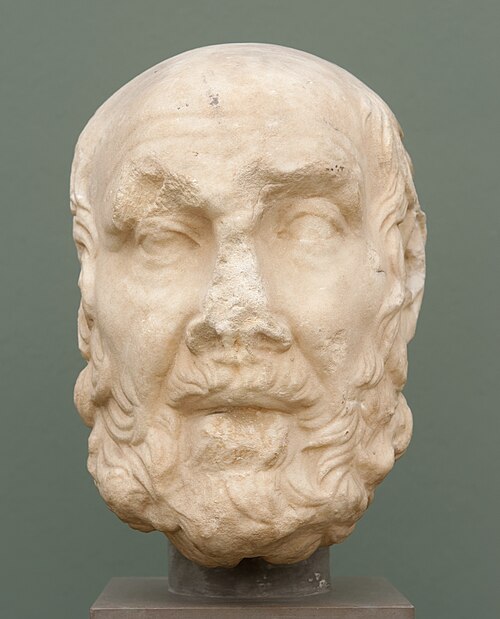
Dates: c. 331–c. 230 BCE
Period: Hellenistic period
Cleanthes, son of Phanias, came from Assos. He began as a boxer, reached Athens “with four drachmas only,” and ended as head of the Stoic school in succession to Zeno.1
His greatest work is the Hymn to Zeus, 39 lines of Greek verse preserved in the anthology of Stobaeus. It praises Zeus as the ruler who steers the whole world by law, and it ends with a prayer for the understanding by which Zeus governs.2
Cleanthes worshipped Zeus by name and joined that worship to a philosophy of the Logos. Zevism counts him among the clearest links in its chain: a thinker who prayed to Zeus for wisdom and asked to be made fit to receive it.
LIFE AND CONTEXT
Johan Thom dates his birth to the archonship of Aristophanes, 331/0 BCE, and his death to that of Jason, 231/0 or 230/29 BCE. Diogenes Laertius says he “was at first a pugilist” before he came to philosophy.3
He had no money in Athens and paid for his studies with his hands. “By night he used to draw water in gardens, by day he exercised himself in arguments,” and the work earned him the nickname Phreantles, the Well-lifter. He studied under Zeno for 19 years. Once he showed his companions a handful of small coin from his wages and said that “Cleanthes could even maintain a second Cleanthes, if he liked.”4
His fellow pupils called him “the ass.” He took the name, Diogenes says, as if “he alone was strong enough to carry the load of Zeno,” and others called him a 2nd Heracles for his toil. Mocked for timidity, he answered, “That is why I so seldom go wrong.”5
Zeno died in 262/61 BCE, and Cleanthes became scholarch.6 Diogenes lists some 50 titles by him, among them an Interpretation of Heraclitus in 4 books; Daniel Graham notes that “Cleanthes in particular commented on Heraclitus.”7 Chrysippus of Soli followed him as head.8
In old age he said, “I too am ready to depart; but when again I consider that I am in all points in good health and that I can still write and read, I am content to wait.” His gums became badly inflamed, and his doctors told him to fast for 2 whole days; when they allowed him food again, he refused, “declaring that he had already got too far on the road,” and fasted until he died.9
None of his books survives whole. The hymn reached later readers because Stobaeus copied it into his Anthology at 1.1.12.10
ATTAINMENTS
- He led the Stoic school for about 3 decades, from Zeno's death in 262/61 BCE to his own in 231/0 or 230/29 BCE, and handed it on to Chrysippus.10
- He composed the Hymn to Zeus, 39 verses in 3 movements: an invocation (lines 1–6), an argument (7–31) and a prayer (32–39).6
- He wrote some 50 works by Diogenes' list, including a 4-book Interpretation of Heraclitus.11
- He fixed the wording of the Stoic goal. Stobaeus credits Zeno with “living in agreement” and Cleanthes with the addition “with nature.”12
- His prayer to Zeus and Destiny outlived his books. Epictetus quoted it in the final chapter of his Enchiridion, where Carter's “Jove” is Zeus: “Conduct me, Jove, and you, O Destiny, / Wherever your decrees have fixed my station.”13
- He preserved Zeno's teaching through poverty, writing the lectures down “on oyster-shells and the blade-bones of oxen through lack of money” for paper.14
KEY STORIES
The Well-Lifter Before the Areopagus
His way of life drew an official question. Diogenes tells how Cleanthes “was brought into court to answer the inquiry how so sturdy a fellow as he made his living.”15
He didn't argue. He brought 2 witnesses: “the gardener in whose garden he drew water and the woman who sold the meal.” The court heard them. “The Areopagites were satisfied and voted him a donation of ten minas.” At 100 drachmas to the mina that came to 1,000 drachmas, 250 times the sum he'd brought to Athens.16
Zeno stepped in. He “forbade him to accept” the money, and Cleanthes went back to the well. Later the king Antigonus gave him 3,000 drachmas, and Antigonus once asked him why he drew water. “Is drawing water all I do?” Cleanthes answered. “What? Do I not dig?”16
The Insult in the Theatre
In the theatre one day, with Cleanthes sitting among the spectators, the poet Sositheus spoke a line aimed straight at him: “Driven by Cleanthes' folly like dumb herds.”17
Cleanthes “remained unmoved in the same attitude.” The crowd saw it and turned on the poet. They “applauded him and drove Sositheus off the stage.”17
Later Sositheus came to apologise, and Cleanthes accepted. He said that “when Dionysus and Heracles were ridiculed by the poets without getting angry, it would be absurd for him to be annoyed at casual abuse.” The Gods, in his reckoning, had taken worse from the stage than any philosopher, and a former boxer could take a verbal blow without striking back.17
The Hearth of the Universe
The astronomer Aristarchus of Samos explained the motions of the heavens with a moving Earth. Plutarch, in his dialogue On the Face in the Moon, has the speaker Lucius recall how Cleanthes reacted to it. The Stoic Pharnaces had just accused Lucius' side of “turning the universe upside down” by making the moon earthy. Lucius laughed and answered, “Oh sir, just don't bring suit against us for impiety.” Then he gave the precedent.18
Cleanthes, Lucius says, “thought that the Greeks ought to lay an action for impiety against Aristarchus the Samian on the ground that he was disturbing the hearth of the universe.” Aristarchus had tried “to save the phenomena by assuming that the heaven is at rest while the earth is revolving along the ecliptic and at the same time is rotating about its own axis.”19
The “hearth of the universe” was the Earth, fixed at the centre of the ordered cosmos. A moving Earth looked to Cleanthes like an offence against that order. Zevism keeps the episode in view because it tests the Temple's doctrine of the Good: reverence for the order was right, and a call to prosecute the man who explained it was wrong.
The Prayer to Zeus and Destiny
The hymn ends in a prayer that fills its last 8 lines. Cleanthes calls on Zeus to rescue human beings from their destructive ignorance and to grant them the insight by which Zeus governs all things with justice, so that they can return the honour with praise.20
A shorter prayer of his travelled further. Epictetus, teaching Stoicism under the Roman Empire, quoted it in the final chapter of his handbook: “Conduct me, Jove, and you, O Destiny, / Wherever your decrees have fixed my station. / I follow cheerfully; and, did I not, / Wicked and wretched, I must follow still.”21
Zevism reads the 4 lines as the shortest statement of a life lived in service of the Gods: Zeus leads, and the one who agrees goes where he's led willingly.
THE ZEVIST READING
The hymn addresses Zeus as the many-named ruler of nature who directs all things by law, and it tells human beings that they have their origin in him. The thunderbolt in his hand is the instrument of cosmic order, and through it he guides the common reason that runs through everything.22 Zevism receives the poem as worship of Zeus in the full sense, offered by a philosopher who didn't separate thought from prayer.
Zevism holds that the Logos originates with Heraclitus and that Zevism is the Logos restored. Cleanthes wrote 4 books on Heraclitus, and in the hymn he put the Logos into a prayer to Zeus.23
The middle of the hymn diagnoses human failure. Some chase reputation through strife, some chase profit without order, some chase bodily ease; they want the good and miss the law that would give their lives coherence.24 The closing prayer asks for the one remedy, understanding received from Zeus himself. Zevism names this the theurgic dimension of the path, Σοφία, joining one's intelligence to the intelligence of the Gods, and the aim it serves is ὁμοίωσις θεῷ κατὰ τὸ δυνατόν.25
The theatre shows the ethical dimension, Φρόνησις and Justice, in a single scene: Cleanthes held still under insult and then forgave the man who'd insulted him. The water-carrier's life shows the existential dimension. He drew water at night so that he could think by day, and at Zeno's word he turned down a gift that would have spared him the work. A life lived in service of ὁμοίωσις θεῷ looks like that: the body's labour put under the mind's aim.
The Aristarchus episode shows the limit of good will. Zevism defines the Good as Ma'at and Right together, right order joined to right act. Cleanthes' will was reverent, and his act was wrong. Zevism also teaches that unexplored darkness isn't evil; it's what one walks into with light, and Aristarchus had walked into the sky with a reasoning mind. Explored darkness becomes Light, so a discovery about the heavens belongs to the order of Zeus and can't offend it.
NOTES
1 Diogenes Laertius 7.168; Thom, Cleanthes' Hymn to Zeus, introduction.
2 Thom, introduction; Hymn to Zeus 1–39.
3 Thom, introduction; Diogenes Laertius 7.168.
4 Diogenes Laertius 7.168, 7.170, 7.176.
5 Diogenes Laertius 7.170–171.
7 Diogenes Laertius 7.174–175; Graham, “Heraclitus,” SEP.
9 Diogenes Laertius 7.174, 7.176.
10 Thom, introduction; SEP, “Stoicism,” §1.1.
11 Diogenes Laertius 7.174–175.
15 Diogenes Laertius 7.168–169.
18 Plutarch, On the Face in the Moon 6, 923A.
19 Plutarch, On the Face in the Moon 923A, tr. Cherniss.
21 Epictetus, Enchiridion 53, tr. Carter.
BIBLIOGRAPHY
Johan C. Thom, Cleanthes' Hymn to Zeus: Text, Translation, and Commentary, Mohr Siebeck, 2005; unrevised paperback 2006. Introduction, pp. 1–3; chronology, succession and transmission; publisher preview.
Diogenes Laertius, Lives of Eminent Philosophers 7.168–176, R. D. Hicks translation, Loeb Classical Library, 1925; LacusCurtius transcription.
Cleanthes, Hymn to Zeus, lines 1–39, preserved at Stobaeus 1.1.12; Greek text and E. H. Blakeney translation, The Hymn of Cleanthes, 1921.
Epictetus, Enchiridion 53 (numbered 52 on this page), Elizabeth Carter translation, Internet Classics Archive.
Plutarch, On the Face Which Appears in the Orb of the Moon 6, 923A, Harold Cherniss translation, Moralia vol. XII, Loeb Classical Library, 1957; LacusCurtius transcription.
Daniel W. Graham, “Heraclitus,” Stanford Encyclopedia of Philosophy, Stoic reception and Cleanthes' commentary.
Dirk Baltzly, “Stoicism,” Stanford Encyclopedia of Philosophy, §§1.1 and 4.1; succession, survival of works, the formulations of the goal.
Plato, Theaetetus 176a–b, Greek text, Perseus Digital Library.
CREDIT
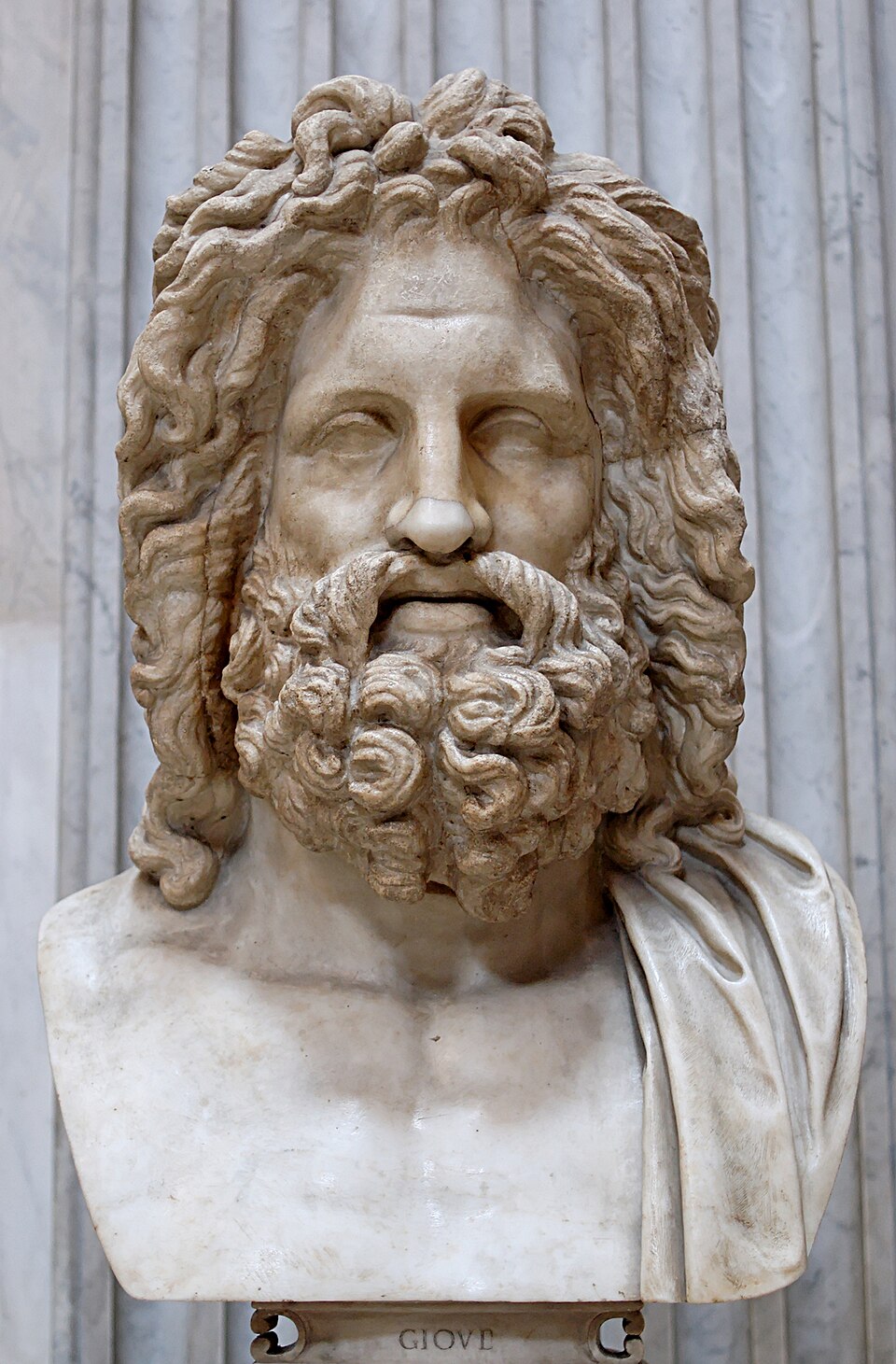
Picture: Roman bust of an unidentified philosopher, proposed by Thuri Lorenz as Cleanthes; the identification remains uncertain. Ny Carlsberg Glyptotek, IN 1795.
Ancient sculptor unknown; photograph Marie-Lan Nguyen, 2017; Wikimedia Commons; CC BY 4.0. Image record, CC BY 4.0.

The round picture in the lists of the personalities is cropped from it.