




9 min read
The Laughing Philosopher
Democritus of Abdera
author: High Priest Zevios Metathronos
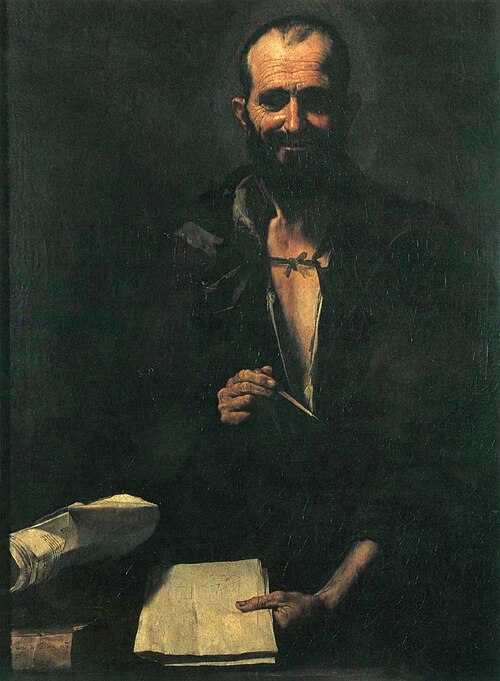
Dates: Born c. 460 BCE; active in the late 5th and early 4th centuries BCE; death date uncertain
Period: Classical (500–334 BCE)
Democritus of Abdera, building on the work of Leucippus, explained the whole visible world as the movement of invisible bodies through empty space. Diogenes Laertius sums up the doctrine in 1 line: “The first principles of the universe are atoms and empty space; everything else is merely thought to exist.”1
He was a mathematician too. Archimedes credited him as the first to state that a cone is 1/3 of the cylinder on the same base and height, and a pyramid 1/3 of the matching prism.2
Antiquity called him the laughing philosopher, for the weight he gave to cheerfulness.3 Zevism reads his work under the doctrine of Light and Darkness and under Prometheus, who gave humankind number: Democritus carried reason below the reach of the senses and came back with a structure.
LIFE AND CONTEXT
Democritus was a citizen of Abdera and was born about 460 BCE. Diogenes names his father as Hegesistratus, “though some say of Athenocritus, and others again of Damasippus.” He wrote of himself in the Lesser Diacosmos that he was “a young man when Anaxagoras was old, being forty years his junior.”4
He was a 3rd son and made an unusual choice when the family property was divided. Most authorities, Diogenes says, held that “he chose the smaller portion, which was in money,” because he needed it for travel. He went to Egypt to learn geometry from the priests and to Persia to visit the Chaldaeans. Some said he reached the Gymnosophists of India and Aethiopia as well.5
At home he worked in seclusion. He “cut off a little room in the garden round the house and shut himself up there.” He didn't chase fame abroad either. Of a visit to Athens he wrote, “I came to Athens and no one knew me.”6
His range was wide. Diogenes judged him “versed in every department of philosophy,” trained in physics, ethics, mathematics and the arts, and he lists a large body of works that Thrasyllus later arranged in groups of 4. Nearly all of them are lost, and the surviving reports rarely separate his share of the atomic theory from Leucippus's.7
The ethical sayings under his name need the same care. Some circulated under the similar name Democrates, and their authenticity varies from saying to saying.8
He lived to a great age. Diogenes reports that he reached his 109th year and received a public funeral “after a lifetime of more than a century.”9
ATTAINMENTS
- With Leucippus he made the full and the empty the elements of nature, and explained every difference between things by 3 differences among the atoms: shape, order and position. Aristotle illustrates them with letters: “A differs from N in shape, AN from NA in order,” and a letter turned on its side differs in position.10
- He separated the qualities the senses report from what exists: “by convention sweet and by convention bitter, by convention hot, by convention cold, by convention color; but in reality atoms and void.”11
- He worked out a connected physics of growth, alteration and coming to be. Aristotle wrote that he seemed “not only to have thought carefully about all the problems, but also to be distinguished from the outset by his method.”12
- He was the first to state that a cone is 1/3 of a cylinder, and a pyramid 1/3 of a prism, with the same base and height; Eudoxus proved both about 50 years later.13
- He wrote mathematical books titled On Numbers, On Geometry, On Tangencies, On Mappings and On Irrationals, and posed the problem of a cone sliced parallel to its base: are the 2 faces of the cut equal or unequal?14
- He described the soul as a body of spherical atoms, the kind he also called fire, and tied life to breathing.15
- With Anaxagoras he explained the Milky Way as starlight: “Anaxagoras, Democritus, and their schools say that the milky way is the light of certain stars.”16
- He set the goal of life as tranquillity, “a state in which the soul continues calm and strong, undisturbed by any fear or superstition or any other emotion.”17
KEY STORIES
The Reading of the Great Diacosmos
The travels had cost him everything. Back in Abdera, Diogenes says, “he was reduced to a humble mode of life because he had exhausted his means,” and his brother Damasus supported him.18
That put him in legal danger. “There was a law, says Antisthenes, that no one who had squandered his patrimony should be buried in his native city.” Democritus didn't wait for a prosecutor. Fearing “envious or unscrupulous prosecutors,” he “read aloud to the people his treatise, the Great Diacosmos, the best of all his works.”18
The city answered with a verdict of its own. He “was rewarded with 500 talents; and, more than that, with bronze statues as well.” When he died, the same people gave him a public funeral.18
Milk from a Black Goat
“Athenodorus in the eighth book of his Walks relates that, when Hippocrates came to see him,” Democritus “ordered milk to be brought, and, having inspected it,” told his guest that it was “the milk of a black she-goat which had produced her first kid.” He'd judged all of it from the milk. It “made Hippocrates marvel at the accuracy of his observation.”19
A maidservant had come with Hippocrates. On the 1st day Democritus greeted her, “Good morning, maiden.” On the next he said, “Good morning, woman.” The girl, Diogenes explains, “had been seduced in the night,” and the philosopher had read the change in her.19 Antiquity pictured him this way, as an observer who reasoned from a small sign to its hidden cause.
The Books Plato Wanted to Burn
“Aristoxenus in his Historical Notes affirms that Plato wished to burn all the writings of Democritus that he could collect.” The Pythagoreans Amyclas and Clinias stopped him. There was no point, they said: “already the books were widely circulated.”20
Diogenes adds a sharp observation. “Plato, who mentions almost all the early philosophers, never once alludes to Democritus, not even where it would be necessary to controvert him, obviously because he knew he would have to match himself against the prince of philosophers.”20
The books survived Plato and were lost later all the same. What remains of Democritus reached later readers through the quotations and summaries of others, above all Aristotle, who didn't share Plato's silence and argued with him at length.21
Hot Loaves at the Thesmophoria
Near the end, Diogenes says, “his sister was vexed that he seemed likely to die during the festival of Thesmophoria.” She feared that “she would be prevented from paying the fitting worship to the goddess,” for the Thesmophoria was held “in honour of Demeter Thesmophoros and celebrated by women.”22
“He bade her be of good cheer and ordered hot loaves to be brought to him every day.” He held them to his nostrils and so outlived the festival. Then, “as soon as the three festival days were passed he let his life go from him without pain.”23
His own physics had an account of such a thing. Aristotle reports that for Democritus the soul was made of spherical atoms, like “the motes in the air which we see in shafts of light coming through windows,” and that breathing held them in the body: “animals continue to live only so long as they are able to maintain this resistance.”24
Zevism reads the scene as reverence kept inside a philosopher's house: the old man held off his own death so that his sister could keep the rites of Demeter.
THE ZEVIST READING
The doctrine of Light and Darkness fits Democritus closely. Unexplored darkness isn't evil; it's what one walks into with light, and explored darkness becomes knowledge. No eye had seen an atom. Democritus reasoned his way below the senses, to bodies too small to perceive and the void they move in, and he came back with an account that made sweetness, colour and heat into effects of shape, order and position.25
Prometheus stands behind the mathematics. Aeschylus has the Titan say, “Yes, and numbers, too, chiefest of sciences, I invented for them.”26 The ratio of 1/3 for the cone and the pyramid is a gift of that kind, a measure that holds for every such solid.
His ethics reaches the 2 inner dimensions of the Zevist path. Meditation is τὸ δυνατόν, the capacity of power, and Ethics is Φρόνησις with Justice. A soul “calm and strong, undisturbed by any fear,” works from its full capacity and judges well. Democritus asked for that steadiness while he took the universe apart in thought, and Zevism holds that the 2 belong together.
The story of Plato's fire carries another lesson. Zevism honours transmitters as keepers of the source, and Amyclas and Clinias kept Democritus's books in the world when Plato wanted them gone. The books were lost later all the same, and what survives of the source now lives in the quotations of others, each one a transmitter's work.
NOTES
1 Diogenes Laertius 9.44, tr. R. D. Hicks; Sylvia Berryman, “Democritus,” Stanford Encyclopedia of Philosophy, §§1–2.
2 J. J. O'Connor and E. F. Robertson, “Democritus,” MacTutor.
3 Berryman, SEP, introduction.
4 Berryman, SEP, §1; Diogenes Laertius 9.34, 41.
7 Diogenes Laertius 9.37, 45–49; Berryman, SEP, §1.
10 Aristotle, Metaphysics 1.4, tr. W. D. Ross.
11 Berryman, SEP, §2, DK 68B9.
12 Aristotle, On Generation and Corruption 1.2, tr. H. H. Joachim.
13 MacTutor, citing Archimedes, Method.
14 MacTutor; Berryman, SEP, §6.
15 Aristotle, On the Soul 1.2.
16 Aristotle, Meteorology 1.8, tr. E. W. Webster.
17 Diogenes Laertius 9.45; Berryman, SEP, §7.
22 Diogenes Laertius 9.43; Encyclopaedia Britannica, “Thesmophoria”.
24 Aristotle, On the Soul 1.2, tr. J. A. Smith.
25 Aristotle, Metaphysics 1.4; Berryman, SEP, §2.
26 Aeschylus, Prometheus Bound 459–460, tr. H. W. Smyth.
BIBLIOGRAPHY
Sylvia Berryman, “Democritus”, Stanford Encyclopedia of Philosophy, substantive revision 7 January 2023; introduction, §§1–2, 6–7.
Diogenes Laertius, Lives of Eminent Philosophers 9.34–49, “Democritus”, tr. R. D. Hicks, Loeb Classical Library, 1925, LacusCurtius.
Aristotle, Metaphysics 1.4, tr. W. D. Ross, Internet Classics Archive; 985b4–20.
Aristotle, On Generation and Corruption 1.1–2, tr. H. H. Joachim, Internet Classics Archive.
J. J. O'Connor and E. F. Robertson, “Democritus of Abdera”, MacTutor History of Mathematics, University of St Andrews, 1999; Archimedes' Method on the cone and pyramid, mathematical titles.
Encyclopaedia Britannica, “Thesmophoria”.
Aristotle, On the Soul 1.2, tr. J. A. Smith, Internet Classics Archive.
Aristotle, Meteorology 1.8, tr. E. W. Webster, Internet Classics Archive.
Aeschylus, Prometheus Bound 459–460, tr. Herbert Weir Smyth, Theoi Classical Texts Library.
CREDIT
Picture: Democritus, a later imagined portrait by Jusepe de Ribera, c. 1630, Museo del Prado
Jusepe de Ribera; Wikimedia Commons; public domain. Image record, Public domain; PD-old-100-expired and faithful reproduction of public-domain artwork.

The round picture in the lists of the personalities is cropped from it.