




9 min read
Warrior Skald
Egill Skallagrímsson
author: High Priest Zevios Metathronos
The Poem That Gives Grief a Form
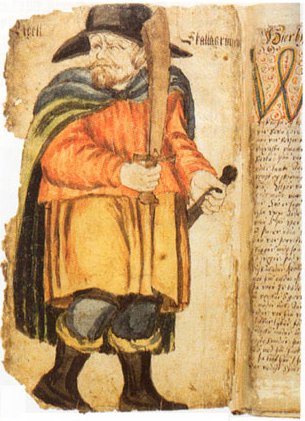
Dates: 10th century CE; precise birth and death dates are uncertain.
Period: Darkness (800–1000 CE).
Egill Skallagrímsson was an Icelandic chieftain, fighter and poet from Borg in western Iceland, and the hero of Egils saga. Encyclopaedia Britannica gives his life as about 910 to 990, from Borg to Mosfell. The long poems attributed to him are Höfuðlausn, a praise of King Eiríkr Bloodaxe; Arinbjarnarkviða, for his friend Arinbjǫrn; and Sonatorrek, the lament for his sons.1
His greatest attainment is 2 poems made under the worst pressure a poet can face. At York he composed a praise poem in a single night to save his own head. Years later, after his son drowned, he composed Sonatorrek, which Britannica calls a “deeply personal lament,” and it drew him back from the resolve to die.2
Egill's poems address the Gods of the North by name, and in Sonatorrek he names poetry as Odin's gift. Zevism reads him under Odin, who gave the mead of poetry “to the Æsir and to those men who possess the ability to compose.”3
LIFE AND CONTEXT
Almost everything about Egill's life comes from Egils saga, a later Icelandic family history with a poet at its centre, and it places many verses in his mouth. The Norwegian specialists Arne Halvorsen and Per Sveaas Andersen note that not all of those verses can be accepted as his.4
The saga makes him a man of quarrels as well as verses. As a young man, Britannica records, “he killed the son of King Eiríkr Bloodaxe” and “placed a curse upon the king, which he inscribed on a pole in magic runes.”2
The saga fills his life with rune-craft. W. C. Green, who translated it in 1893, noted in it “a belief in magic and spells, in the force of runes graved rightly or wrongly.” When Egill suspected poison in a drinking horn at a feast, he “scratched runes thereon, and smeared blood in them.”5
Arinbjǫrn, who followed Eiríkr to York, stayed Egill's friend through every quarrel with the king. A later verse of Egill's recalls the night at York as a gift of the God: “Of Odin's goblet / Overflowing dew / Each listening ear-mouth / Eagerly drank.”6
Egill and his wife Ásgerðr had sons, among them Böðvarr and Gunnar. Gunnar died first, and then Böðvarr drowned in a “violent south-west gale, against which ran the stream of the ebb.” Egill lived on to be, in Britannica's words, “old and blind,” and he composed a lament on his own senility.7
Sonatorrek reached modern readers by a thin thread. Michael Bintley notes that the complete text survives only in 17th-century paper manuscripts, although parts of it have medieval witnesses. He reads its tree imagery as a family's loss shown as damage to living growth.8
ATTAINMENTS
- He composed Höfuðlausn, “Head Ransom,” for Eiríkr Bloodaxe at York around 948, in what Britannica calls “a unique end-rhymed” metre. Arinbjǫrn advised a poem of 20 stanzas, and Britannica says Egill composed it “in a single night.”9
- His translator W. C. Green called Höfuðlausn “The earliest complete 'Drapa' that we have.”10
- He composed Sonatorrek, “Loss of Sons,” around 961, after the deaths of Böðvarr and Gunnar; the saga gives the whole poem in chapter 81.11
- He composed Arinbjarnarkviða, a long praise poem for his friend Arinbjǫrn, and a lament on his own old age and blindness.12
- The saga credits him with healing by runes: he found a sick girl's wrongly carved runes on a piece of whalebone, burned them and cut new ones, and she recovered.13
KEY STORIES
The Curse-Pole on the Island
Egill's quarrel with Eiríkr and Queen Gunnhildr came to a head in Norway. The saga tells how, when his ship was ready to sail, he went up onto an island. “He took in his hand a hazel-pole, and went to a rocky eminence that looked inward to the mainland. Then he took a horse's head and fixed it on the pole.”14
Then he spoke the curse: “Here set I up a curse-pole, and this curse I turn on king Eric and queen Gunnhilda.” “Here he turned the horse's head landwards.” Then, the saga goes on, “This spoken, he planted the pole down in a rift of the rock, and let it stand there.” On the pole he cut runes “expressing the whole form of curse,” and then he put to sea.15
The Head-Ransom at York
Years later Egill sailed for England, and his ship was wrecked on the coast of Northumbria: “Under sail they ran ashore, and came to land at Humber-mouth. All the men were saved, and most of the cargo, but as for the ship, that was broken to pieces.” Eiríkr was ruling at York, a short way inland, and Gunnhildr was with him. Egill rode to York, sought out Arinbjǫrn, and the 2 of them went before the king.16
The king was his enemy, and the queen more so. Arinbjǫrn told Egill how to use the night he had: “compose a song of praise about king Eric. I should think it had best be a poem of twenty stanzas.” He had a precedent. “Thus did Bragi my kinsman, when he was under the wrath of Bjorn king of Sweden; he composed a poem of praise about him in one night, and for it received his head.”17
The night went badly. Egill complained that “there sate a swallow by the window and twittered all night, so that I have never got rest for that same.” Green's note reads the bird plainly: “Of course, though it is not so said, Gunnhilda is 'the swallow' whose shape flits away presently.” Egill finished the poem all the same.18
He recited it before the king, and Eiríkr gave his judgment: “I give thee now thy head this time for this reason, that thou camest freely into my power.” Egill left York alive, and Green's text heads the poem “Head-Ransom.”19
Runes for Thorfinn's Daughter
On one of his journeys, the saga says, Egill lodged with a man named Thorfinn. His daughter Helga “had long been ill; her complaint was a pining sickness.” Egill searched, and “there he found a piece of whalebone whereon were runes.” He read them, cut the runes and scraped them off into the fire, then burned the whole piece.13
“Egil then graved runes, and laid them under the bolster of the bed where the woman lay. She seemed as if she waked out of sleep, and said she now felt well, but she was weak.” Egill gave the lesson in a verse: “Runes none should grave ever / Who knows not to read them; / Of dark spell full many / The meaning may miss.”13
The Loss of Sons
After Böðvarr drowned, Egill shut himself away and wouldn't eat. His daughter Þorgerðr came and said she'd share his fate. She'd had no supper, and “none will I have till I sup with Freyja,” she told him. “I can do no better than does my father: I will not overlive my father and brother.”20
Then she began to chew something. “I am chewing samphire, because I think it will do me harm,” she said. “Is samphire bad for man?” Egill asked. “Very bad.” He chewed some too, and soon complained, “This comes of eating samphire, one ever thirsts the more.” When the drink came, it wasn't water: “Now are we deceived; this is milk.”21
With her father alive and drinking, Þorgerðr gave him a task: a memorial poem for Böðvarr. The poem opens with the effort of speech itself, how hard it is “My tongue to move.” Near its end he turns to the God he'd quarrelled with and admits that “the friend of Mimir / On me hath bestowed / Some boot for bale, / If all boons I tell.” When the poem was done, Egill came back to his household and arranged the funeral observances.22
THE ZEVIST READING
Egill's own verse names Odin as the source of his art. The mead that Odin brought to the Æsir and to “those men who possess the ability to compose” is, in a later verse of Egill's, the “Odin's goblet” from which the hall drank at York.23 Zevism holds that spirituality forms a single chain from its inception to today and that the Gods of the North served the divine order under their own names. Egill stood inside that chain and knew whose gift he carried.
The rune story reads as a lesson in Ma'at. Egyptian religion named her “the personification of truth, justice, and the cosmic order” and set her against isfet.24 Signs cut without knowledge made a girl waste away, and signs cut with knowledge raised her from her bed. Sickness is a form of Izfet, and right knowledge rightly applied restores order in a body as it does in a city. Egill's own verse states the rule: no one should carve who can't read.
His record isn't clean. Britannica records that he killed a son of Eiríkr, and he answered the king with a curse. The Good in Zevism is the conjunction of Ma'at and Right, right order joined to right act from right will, and a killing in a feud doesn't meet that measure. The Temple honours the poems and the healing, and names the rest for what it was.
Sonatorrek shows what the gift is for. A father meant to starve himself after his son drowned, and his daughter turned him toward the one work he could still do. Zevism reads the aim of life as ὁμοίωσις θεῷ κατὰ τὸ δυνατόν, becoming like the divine “as far as possible.”25 Egill couldn't bring Böðvarr back. He could make something that outlasted the loss, and he found in that power the “boot for bale” the God had given him.
NOTES
1 Halvorsen and Andersen, “Egil Skallagrimsson,” Store norske leksikon; Britannica, “Egill Skallagrímsson”.
2 Britannica.
3 Snorri, Skáldskaparmál, Brodeur tr..
5 W. C. Green, The Story of Egil Skallagrimsson, introduction and p. 76.
7 Green, pp. 147, 169; Britannica.
8 Bintley, “Life-Cycles of Men and Trees in Sonatorrek,” pp. 1–2.
11 Britannica; Egils saga 81, Green tr..
12 Halvorsen and Andersen; Britannica.
13 Green, p. 160.
14 Green, p. 121.
15 Green, p. 122.
16 Green, introduction and p. 126; Britannica.
17 Green, p. 129.
18 Green, p. 130, and notes, p. 207.
20 Egils saga 81; Green, p. 170.
22 Egils saga 81; Green, pp. 171–173.
23 Skáldskaparmál; Green, p. 175.
BIBLIOGRAPHY
Arne Halvorsen and Per Sveaas Andersen, “Egil Skallagrimsson,” Store norske leksikon, updated 25 November 2024.
Encyclopaedia Britannica, “Egill Skallagrímsson”.
The Story of Egil Skallagrimsson, translated by W. C. Green, London: Elliot Stock, 1893; Internet Archive; introduction, pp. 76, 121–135, 147, 160, 169–175, and notes, p. 207.
Egils saga, chapter 81, including Sona-torrek, translated by W. C. Green (1893), Icelandic Saga Database. This edition's stanza numbering differs from some modern editions.
Michael D. J. Bintley, “Life-Cycles of Men and Trees in Sonatorrek”, Opticon1826, issue 6, spring 2009, pp. 1–3, especially p. 1 note 1 on textual transmission.
Snorri Sturluson, Skáldskaparmál, in The Prose Edda, translated by Arthur Gilchrist Brodeur, American-Scandinavian Foundation, 1916; Internet Sacred Text Archive; the mead of poetry.
Encyclopaedia Britannica, “Maat”.
Plato, Theaetetus 176a–b, Greek text, Perseus Digital Library.
CREDIT
Picture: Egill in a seventeenth-century Icelandic manuscript, AM 426 fol. This is a later artistic depiction, not a contemporary likeness.
Unknown seventeenth-century artist; Public domain (PD-Art; PD-old-100-expired); Wikimedia Commons. Image record, Public domain (PD-Art; PD-old-100-expired).

The round picture in the lists of the personalities is cropped from it.