




3 min read
Poet of the Gods' Welcome
Eyvindr skáldaspillir
author: High Priest Zevios Metathronos
The poet of the Gods’ welcome
Dates: c. 915–990 CE
Period: Darkness (800–1000 CE)
Region: Norway
Tradition: Old Norse religious poetry
Religion or tradition: Old Norse polytheism; the religious world of Hákonarmál.
Heresy status: No designation documented.
Eyvindr skáldaspillir made poetry a means of judging a ruler’s relationship with the Gods. His surviving works include Hákonarmál, commemorating King Hákon the Good, and material from Háleygjatal, associated with the ancestry of the earls of Hlaðir. The critical edition places his career across several Norwegian courts. He must be distinguished both from the magician Eyvindr kelda and from Earl Hákon Sigurðarson, a later patron with a similar name to the king.1
MAKING THE PROTECTION OF WORSHIP MEMORABLE
Eyvindr gave sanctuary protection a place in the praise by which a ruler would be remembered. Hákonarmál connects the king’s welcome among the Gods with his treatment of their sacred places. The poem therefore preserves a public standard of merit: authority carries duties towards the religious life of the people. Its artistic force helped that standard survive long after the court for which it was composed.2
His positive legacy is both literary and religious. He left later generations a sophisticated account of courage, death and divine welcome, while keeping the Gods central to the reckoning of human honour. The poem asks a community to remember the ruler’s stewardship alongside his strength. That remains a valuable use of praise.
A ROYAL DEATH PLACED BEFORE THE GODS
In Hákonarmál, battle is viewed from the perspective of the Valkyries and of Óðinn’s hall. The fallen king approaches a divine company that includes Hermóðr and Bragi. He initially fears the God who has allowed his death; reassurance and welcome follow. The poem makes death an encounter requiring interpretation, rather than treating victory as the sole measure of a life.3
One of its most significant judgments concerns the king’s treatment of sacred places. His reception is connected with his preservation of the Gods’ sanctuaries. This gives religious stewardship a place within the public reckoning of kingship. Military courage matters, but the poem also remembers what the ruler allowed to endure for the worshipping community.4
The poem’s pagan language should not erase the king’s Christian upbringing or the tensions surrounding his rule. Those tensions are part of the historical setting, and make the work more revealing: a poet employed inherited divine language to situate a complex ruler within the moral world of his audience.
MEMORY AS A FORM OF RESPONSIBILITY
Eyvindr’s work demonstrates the power of a religious poet to determine what a community remembers. A death can be narrated as mere loss, as political propaganda or as an occasion to examine courage, loyalty and sacred obligation. His poem chooses an image in which human conduct remains answerable before the Gods.
For the Zevist reader, his example is the responsible exercise of that power. Praise should name actual qualities and acts. Sacred poetry gains force when it connects the divine order with the duties of a lived human office. The poet’s craft becomes a means of educating judgment, and of carrying religious memory through political change.
NOTES
2 Hákon the Good’s Saga, chapter 32.
3 Poem preserved in Hákon the Good’s Saga, chapter 32.
BIBLIOGRAPHY
Russell Poole, editor, Eyvindr skáldaspillir, Skaldic Poetry of the Scandinavian Middle Ages, vol. I (2012), digital edition.
Snorri Sturluson, Heimskringla, Samuel Laing translation, Hákon the Good’s Saga, chapter 32, public-domain reading text. Snorri’s thirteenth-century narrative preserves poetry attributed to the tenth-century skald; the narrative and poetic layers should be distinguished.
CREDIT
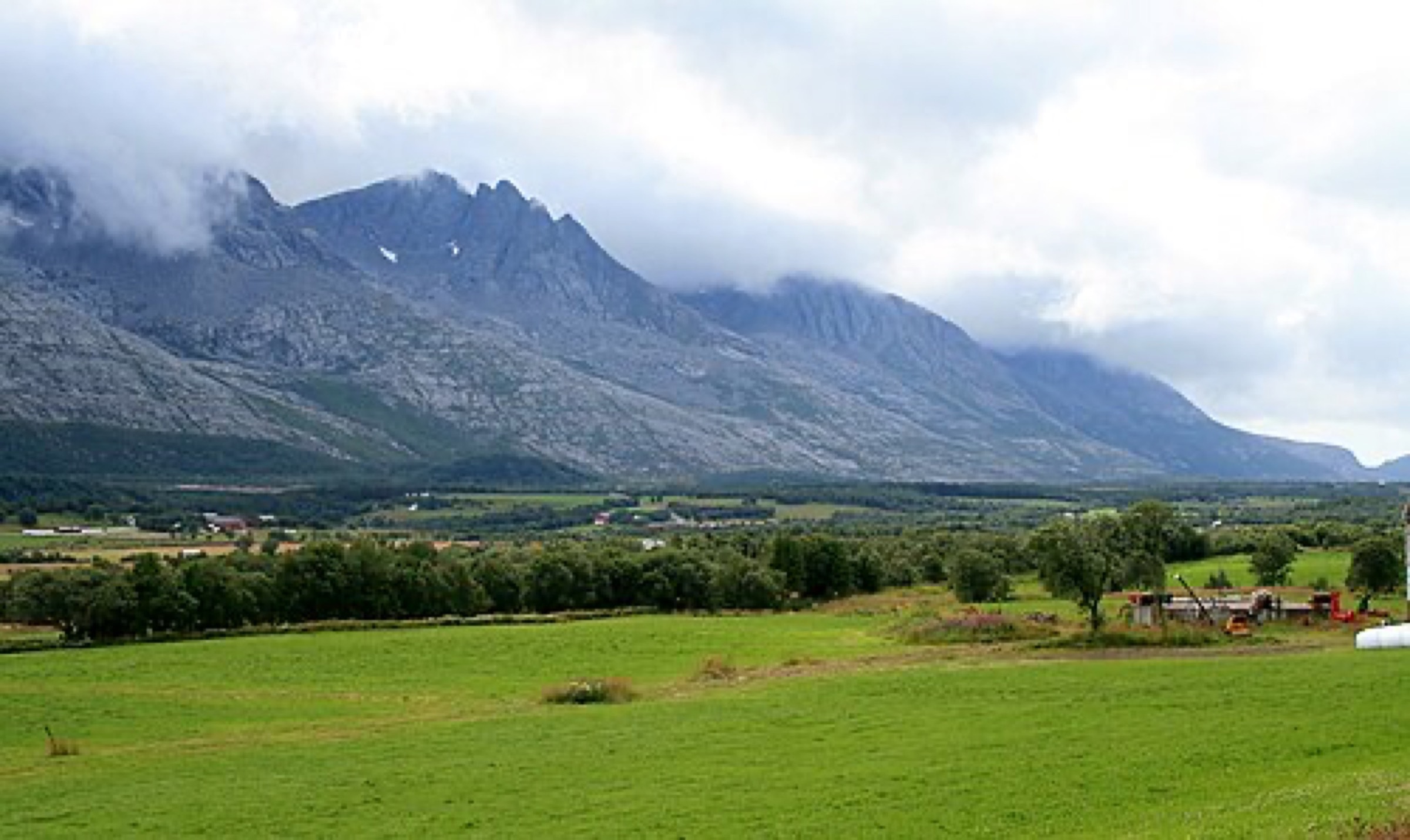
Picture: Associated landscape. Alsten in Alstahaug, Nordland, photographed in 2007, with the Seven Sisters in the background. The landscape belongs to Eyvindr’s home region; this is not a portrait or an identified view of his residence.
Credit: Mahlum. Source record, Public domain.

The round picture in the lists of the personalities is cropped from it.