




3 min read
Restorer of the Sanctuaries
Hákon Sigurðarson
author: High Priest Zevios Metathronos
The restorer of the northern sanctuaries
Dates: c. 937–995 CE
Period: Darkness (800–1000 CE)
Region: Norway
Tradition: Old Norse temple restoration
Religion or tradition: Old Norse polytheism; restoration and protection of the Gods’ worship.
Heresy status: No designation documented.
Hákon Sigurðarson, earl of Hlaðir, belongs in this collection because the restoration of traditional worship forms an identifiable part of his public reputation. The son of Sigurðr Hákonarson, he held power in Norway during the later tenth century. Contemporary praise poetry associates his rule with renewed sanctuaries and the return of the Gods to their places.1
GIVING DISRUPTED WORSHIP A FUTURE
The praise preserved in Vellekla credits Hákon with renewing sanctuaries and restoring the Gods to their places. This is a specific constructive achievement within the tradition’s account of his rule. It meant more than declaring an allegiance: the religious order was represented as becoming active again through restored sites and observance. Sundqvist’s study places that testimony within the defence of Norse religion.2
The human benefit of restoration lies in continuity. People regain a setting in which to gather, practise and transmit inherited knowledge. The service to the Gods lies in making their public honour possible again. Hákon’s contribution can be valued in these concrete terms: religious recovery entered the work of government and the visible life of the community.
RESTORATION AS AN ACT OF GOVERNMENT
The Olaf Tryggvason Saga preserves an episode in which Hákon leaves behind the Christian clerics assigned to accompany him, resumes sacrifice and interprets the appearance of ravens as a favourable sign. The same narrative incorporates verses crediting him with restoring worship after disruption. This is a later account, and its sequence cannot be treated as a contemporary diary; the embedded verse is a distinct source layer.3
The restoration has a material dimension. A sanctuary is a public place in which rites can recur, specialists can exercise their knowledge and a community can remember its obligations. To restore it is to restore the possibility of repeated practice. The religious significance attributed to Hákon therefore lies in sustained provision, beyond a ruler’s private profession of belief.
The verses also associate renewed worship with an ordered and fruitful world. Modern study of this material places it within the traditional expectations attached to rulers: maintaining the cult was bound up with peace, prosperity and the community’s relationship to divine powers.4
RELIGIOUS ACHIEVEMENT AND HISTORICAL SCALE
Hákon’s reign should not be reduced to an uncomplicated victory story. The saga gives a troubled account of its end, and praise poetry has its own political purposes. His inclusion identifies a specific, supported achievement: his association with the renewal of sanctuaries and ancestral worship. It does not require every act attributed to him to become an ethical model.
A ZEVIST READING
Hákon exemplifies the rebuilding of conditions in which the Gods can be publicly honoured. The lesson for a religious community is practical: recover the knowledge, restore the place, support those who serve it and establish the means for worship to continue. Restoration becomes durable when it enters ordinary institutions and repeated observance.
His story also shows why the history of religion must attend to buildings and resources. A shrine destroyed or closed can interrupt generations of practice. A shrine restored can give that practice a future.
NOTES
1 Discussion of Vellekla and pagan resistance.
3 Olaf Tryggvason Saga, chapter 28.
4 Scholarly analysis, chapter 9.
BIBLIOGRAPHY
Snorri Sturluson, Heimskringla, Samuel Laing translation, Olaf Tryggvason Saga, especially chapter 28, public-domain text.
Olof Sundqvist, The Demise of Norse Religion: Dismantling and Defending the Old Order in Viking Age Scandinavia (De Gruyter, 2024), chapter 9, “Pagan defenders and rebellions against Christian kings in Trøndelag,” pp. 293–320, especially the analysis of Vellekla 15–17, open scholarly chapter.
CREDIT
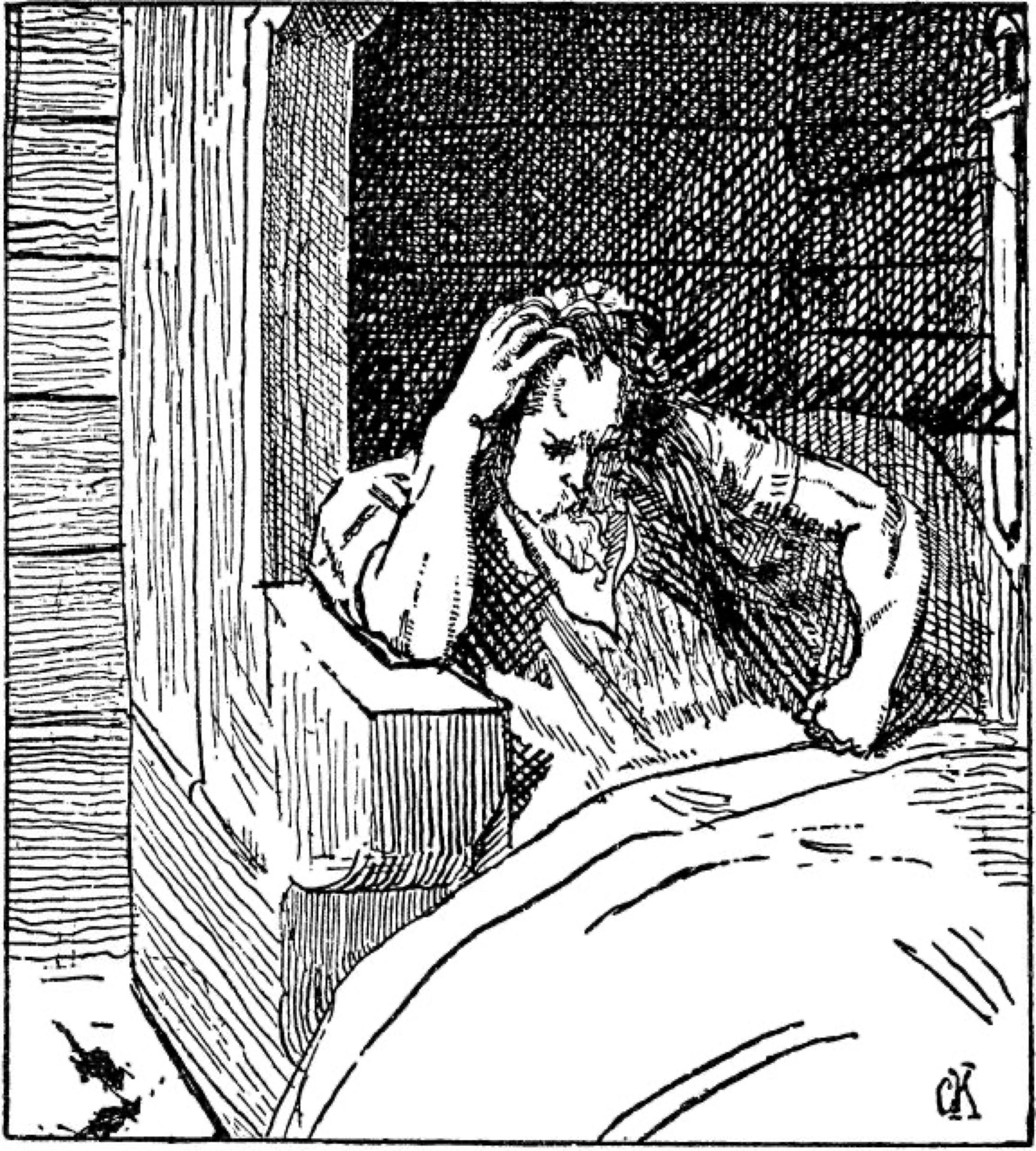
Picture: Later saga illustration. Christian Krohg’s illustration of Earl Hákon lying awake in thought, published in the 1899 Heimskringla. A later artistic representation.
Credit: Christian Krohg. Source record, Public domain.

The round picture in the lists of the personalities is cropped from it.