






3 min read
Scholar of the Kami
Hayashi Razan
author: High Priest Zevios Metathronos
The scholar who brought ethical learning into relation with the kami
Dates: 1583–1657 CE; relevant work before 1650
Period: Renaissance (1336–1650 CE)
Region: Japan
Tradition: Confucian and Shinto thought
Religion or tradition: Neo-Confucian thought combined with Shinto; associated with Ritō Shinchi Shintō.
Heresy status: No designation documented.
Hayashi Razan joined public scholarship to an interpretation of Shinto informed by Confucian learning. He served the early Tokugawa government and developed the approach known as Ritō Shinchi Shintō. His life continued beyond this collection’s upper date, but his Honchō jinjakō, a study of Japanese shrines, is provisionally dated to 1638–1645 in Mollard’s chronology.1
RELIGIOUS IDENTITY AND THE STUDY OF THE KAMI
Razan combined Neo-Confucian learning with Shinto and developed the approach known as Ritō Shinchi Shintō. The scholarly account of his religious orientation places reverence for the kami in relation to Confucian principles. He belongs to that Japanese intellectual and religious setting; no Christian heresy designation applies.2
Knowledge of the Gods: a Zevist interpretation. His study of shrines and attempt to relate reverence to ethical formation provide the direct connection. For the Temple, his work illustrates how learning about the Gods can enter the cultivation of character and the preservation of sacred institutions. That interpretation honours the specific Shinto and Confucian forms through which he worked.
JOINING LEARNING, REMEMBRANCE AND ETHICAL FORMATION
Razan’s work in history, official writing and the study of shrines preserved material through which later readers could investigate Japan’s past and religious landscape. His establishment of a place for honouring Confucius at the Shinobugaoka Academy also brought learning and ceremony together in an institutional setting. These were concrete activities through which his scholarship entered public life.3
His positive contribution is the creation and organization of resources for continuing study. Within his account of Shinto and Confucian learning, reverence for the kami stood in relation to questions of conduct and order. For Zevist readers, this provides a historical example of spiritual education concerned with the formation of the person and with institutions capable of preserving that education beyond one teacher’s lifetime.
LEARNING EXPRESSED IN INSTITUTIONS
Razan’s scholarship included official documents, genealogy and history. He also established a place for the ritual honouring of Confucius at the Shinobugaoka Academy. Kokugakuin’s account identifies his later religious orientation with Shinto and describes the relationship he proposed between Shinto and Confucian teaching.4
These activities show the breadth of his undertaking. Questions of learning, conduct, historical memory and worship belonged to the same intellectual life. The shrine study gives a particularly direct connection with the religious landscape, while the academy illustrates the creation of a setting in which learning and ceremony could recur.
A ZEVIST INTERPRETATION
Razan is relevant to an account of spiritual growth that includes the formation of character. Religious study raises questions about the obligations a person accepts and the habits through which those obligations are fulfilled. His work provides a historical setting in which ethical learning and reverence for the kami were deliberately considered together.
His example also encourages attention to institutions. A teacher’s influence becomes more durable when there are books, places and practices through which other people can continue the work. The academy and the shrine record represent different means of creating that continuity.
Razan’s political service and religious polemics belong to his own historical circumstances. The specific Zevist relevance developed here is his effort to connect learning, ordered conduct and religious understanding. The shrine study gives that effort a tangible expression before 1650.
NOTES
1 Yazaki Hiroyuki, “Hayashi Razan”; Mollard, discussion and chronology of the Honchō jinjakō.
2 Kokugakuin University, “Hayashi Razan”.
3 Kokugakuin University’s account.
4 Yazaki.
BIBLIOGRAPHY
Yazaki Hiroyuki, “Hayashi Razan,” Encyclopedia of Shinto, Kokugakuin University, scholarly entry.
Nicolas Mollard, “Minamoto no Tametomo aux Ryûkyû : une lecture historique du Yumiharizuki de Bakin,” Japon pluriel 9 (2013), pp. 147–156, especially illustration 1, study and textual chronology.
CREDIT
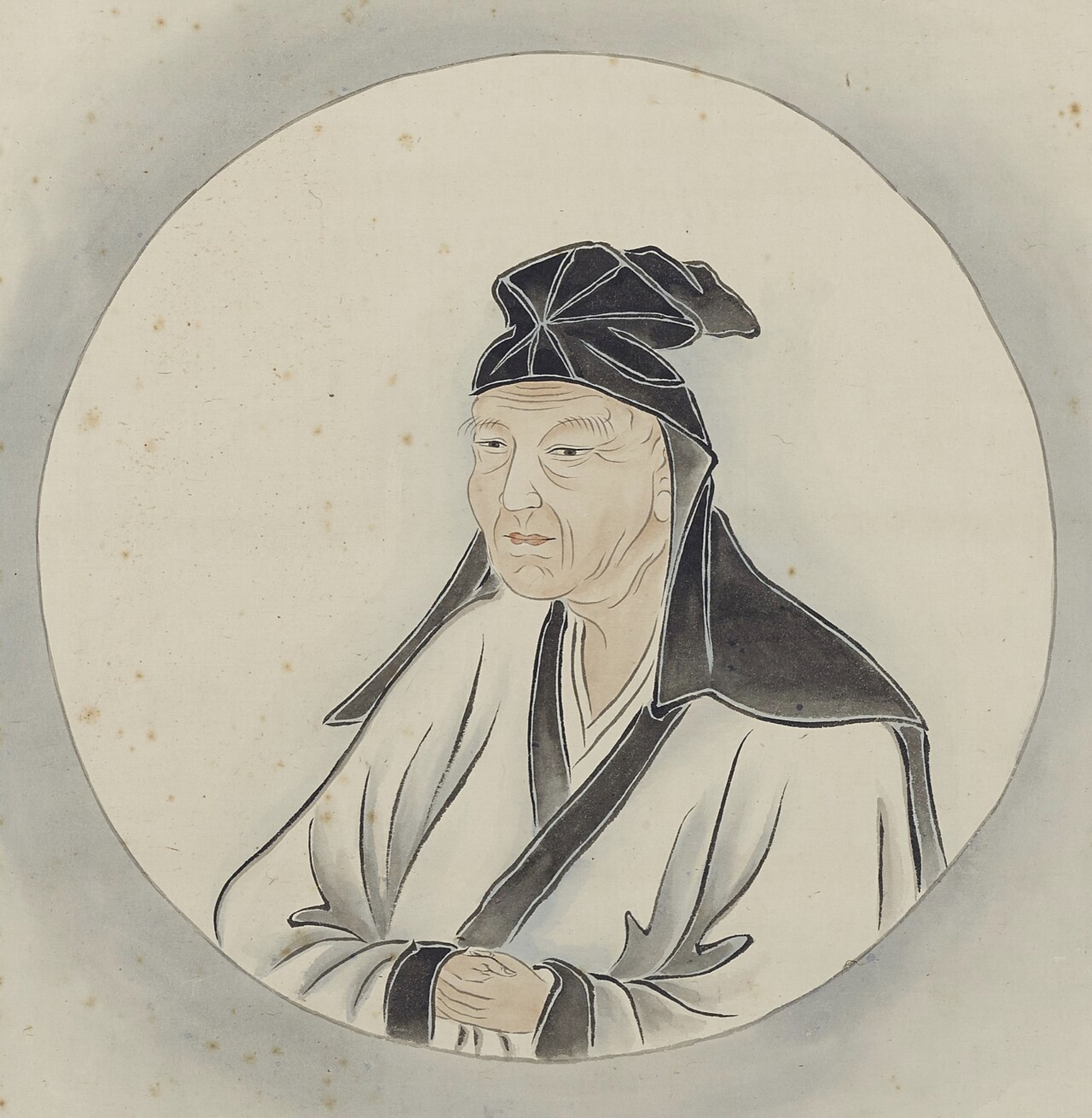
Picture: Historical portrait. Historical portrait of Hayashi Razan, preserved in Kyoto University Library’s digital collection, record rb00033894. The source record does not identify the artist or establish the date.
Credit: Unknown author. Source record, Public domain.

The round picture in the lists of the personalities is cropped from it.