





3 min read
Philosopher of Hidden Powers
Heinrich Cornelius Agrippa
author: High Priest Zevios Metathronos
Sacred learning defended against the suppression of books
Dates: 1486–1535/1536 CE
Period: Renaissance (1336–1650 CE)
Region: German lands, France and the Low Countries
Tradition: Christian occult philosophy
Religion or tradition: Christianity: occult philosophy drawing upon ancient and esoteric traditions.
Heresy status: Christian Heretic: writings condemned or denounced as heretical.
Heinrich Cornelius Agrippa sought to restore magic as a learned and sacred discipline. His De occulta philosophia brought natural, celestial and religious questions into an ambitious account of hidden powers. He wrote within a Christian intellectual world, while drawing on philosophical and esoteric inheritances that made his work controversial.1
BOOKS THAT AUTHORITIES TRIED TO RESTRAIN
Theologians at Louvain condemned De vanitate as scandalous, impious and heretical; the Sorbonne also condemned the Paris edition. Agrippa answered with an Apologia and a Querela. Publication of De occulta philosophia was then obstructed after the inquisitor Conrad Köllin denounced it. The protection of Hermann, archbishop of Cologne, helped secure publication.2
“Christian Heretic” therefore identifies condemnation and denunciation of his Christian writings. It should be read with those particular actions in view, rather than as an invented account of a single trial determining every aspect of his belief.
A RESOURCE FOR THE STUDY OF SACRED POWERS
Agrippa’s project treated magic as a body of knowledge requiring philosophical foundations and responsible understanding. Its scope joined the elemental, celestial and intellectual worlds. The resulting work became an important point of reference for subsequent occult learning.3
The positive contribution is the effort to make a difficult inheritance available for sustained study. A written system permits later readers to distinguish arguments, compare sources and decide what to practise. His replies to his opponents also preserved his own voice within the controversy.
HONORARY REMEMBRANCE IN THE TEMPLE
Zevist devotional interpretation. Agrippa is remembered here as a soul who wished to understand and increase the human capacity for spiritual action. The Temple sees his attraction to celestial and sacred powers as an engagement with the knowledge of the Gods. His historical Christian commitments and his use of ancient sources form the circumstances in which that engagement took shape.
His misfortune lay in the insecurity of the work: a book could be denounced, its printing interrupted and its future made dependent upon a protector. These restrictions did not extinguish his inquiry, but they shaped the conditions under which it could be pursued. The account concerns this documented pressure, without inventing an otherwise unrecorded private conversion.
For the labour and opposition borne in preserving the sacred arts, Agrippa receives honorary mention. In the Temple’s understanding, this is remembrance for what was endured for the sake of the Gods’ knowledge, including by those who approached it through the language available to them.
May his next incarnation offer a freer field for study and practice. May knowledge, ethical judgment and spiritual strength grow together, and may the Gods guide him without the pressure of enforced concealment.
NOTES
1 Stanford Encyclopedia of Philosophy.
3 Stanford, the reform of magic.
BIBLIOGRAPHY
Stanford Encyclopedia of Philosophy, “Heinrich Cornelius Agrippa von Nettesheim”, especially sections 1–2 and the discussion of his religious philosophy.
CREDIT
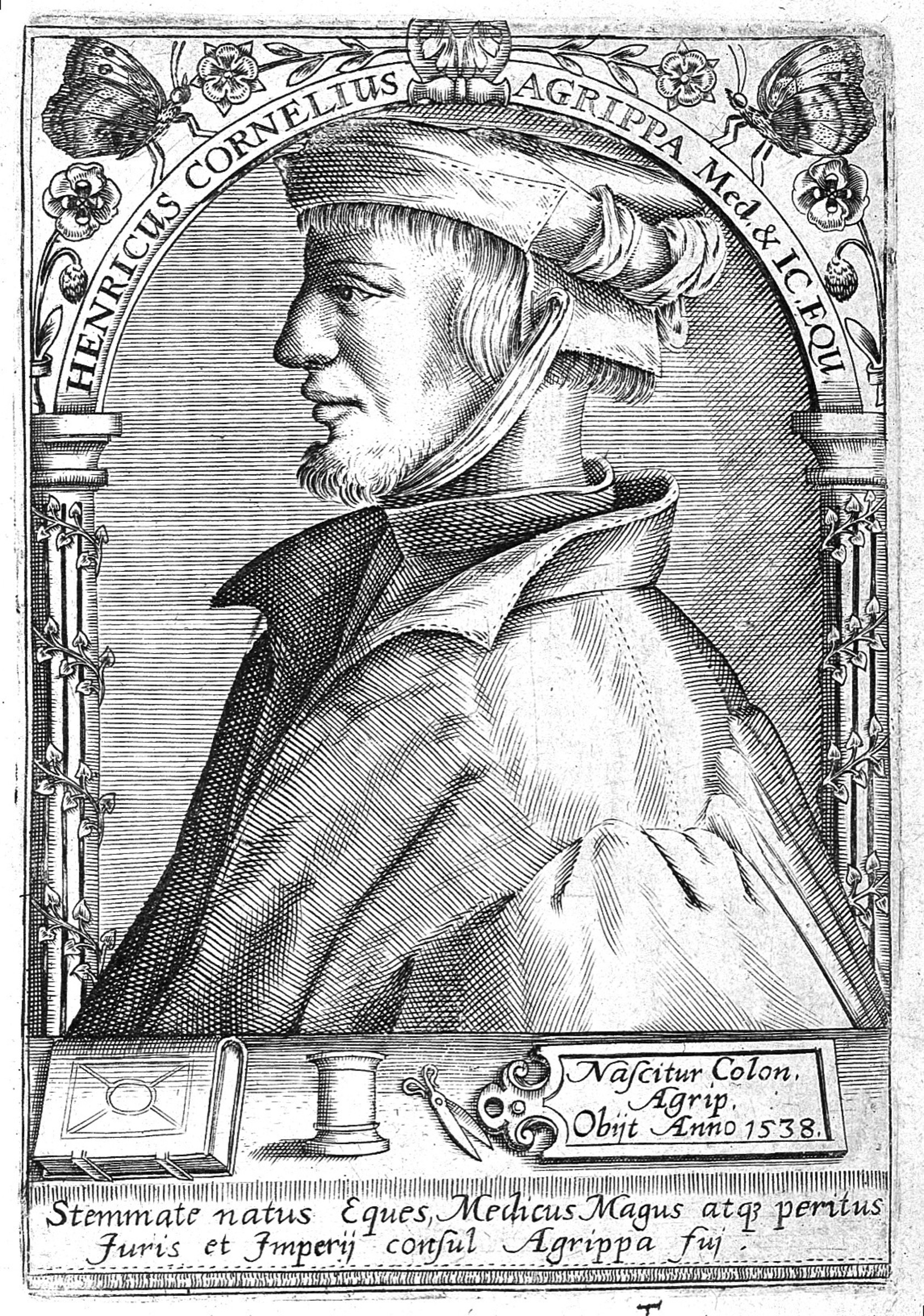
Picture: Historical print portrait. Historical print portrait identified by the Wellcome Collection as Henricus Cornelius Agrippa, image L0000100. The artist and date are not securely supplied in the image record used here. The full downloaded frame is preserved.
Credit: Unidentified printmaker; Wellcome Collection, L0000100. Source record, Collection record, CC BY 4.0. Faithful enlargement; no new image content added.

The round picture in the lists of the personalities is cropped from it.