





10 min read
Computer Pioneer
Konrad Zuse
author: High Priest Zevios Metathronos
Dates: 1910–1995
Period: Modern period
Konrad Zuse was a Berlin civil engineer who built computers to take the routine sums of his trade off the engineer's desk. Between 1935 and 1945 he designed and built the Z1, Z2, Z3 and Z4, “freely programmable binary floating-point calculators” made from metal parts and telephone relays.1
His best-known machine, the Z3, was shown to a group of scientists in Berlin on 12 May 1941. It took its program from an external tape, so a new task needed a new tape and no rewiring, and the archive that keeps his papers counts it among “the world's first working programmable, fully automatic computing machines.” He also wrote a notation for such programs, the Plankalkül, and used it to design a chess program.2
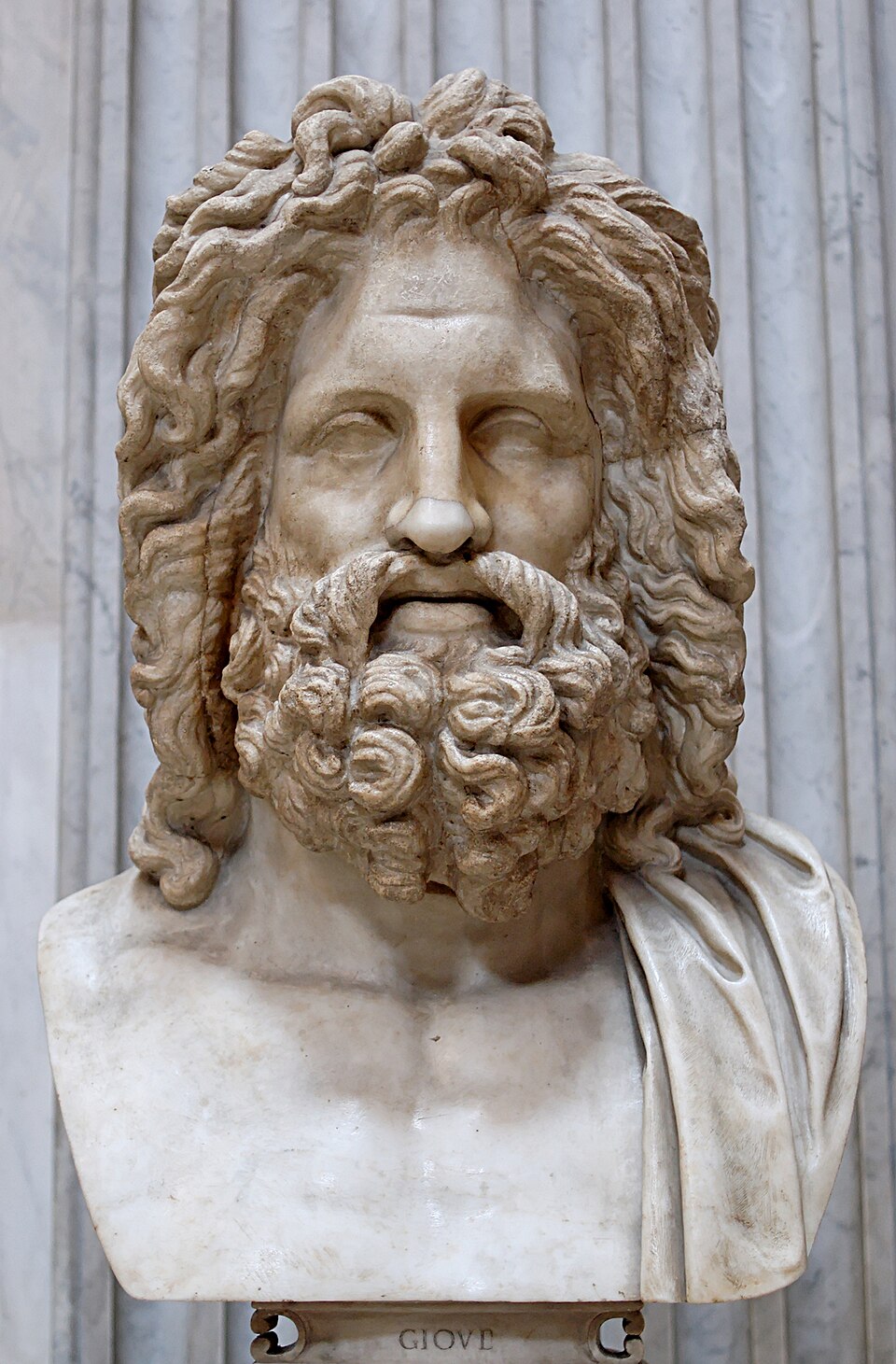
Zevism reads his work under Hephaestus, the divine smith and maker of machines, and under Theuth, who in Plato's Phaedrus invented number and calculation. Zuse gave calculation a body of sheet metal and relays, so that the rote steps could pass to a machine and the engineer's mind was free for the problem itself.3
LIFE AND CONTEXT
Zuse was born in Berlin-Wilmersdorf on 22 June 1910 and grew up in Braunsberg, East Prussia, where he went to the humanist gymnasium. He was a good painter, and he'd first meant to study architecture. He entered the Technische Hochschule of Berlin-Charlottenburg in 1927, settled on civil engineering and took his degree in 1935.4
Civil engineering meant statics, and statics meant forms. The archive describes how “static calculations were performed by filling out forms in which all necessary formulas had been pre-printed.” The engineer only entered his data and followed the printed path, and Zuse drew the conclusion: “surely a machine could do this work.” He joined the Henschel aircraft works in Berlin to work on stress analysis, resigned a few months later and turned inventor.5
The war set the terms of the next decade. Zuse was called up in 1939 and served 6 months in the army. MacTutor states that “the Third Reich's Aerodynamic Research Institute funded his work,” and a member of the Reich Air Ministry supervised the ministry's orders to his company. The German Aircraft Research Institute used the Z3 for statistical analyses of wing flutter.6
By 1941 he was working for Henschel again, and that year he started his own business, the Zuse Ingenieurbüro und Apparatebau in Berlin. The archive calls it “the first company founded with the sole purpose of developing computers.” Allied bombing destroyed the Z1 and the Z3 in Berlin in 1943. In 1944–45 he worked out the Plankalkül, which Britannica calls “the first real programming language.”7
After the war his firm took the name Zuse KG and “flourished,” building many more machines. The German courts were harder to please. His application of 1941 for the Z3 “was definitively not granted in 1967 by a German judge, who declared it to lack inventiveness.” His profession had already judged otherwise: in 1965 he received the Harry Goode Memorial Award.5
He kept thinking past the machine. In Rechnender Raum (Calculating Space), a paper of 1967 and a book of 1969, he proposed that the universe itself might be computed, perhaps by a cellular automaton; MIT issued an English translation in 1970. Zuse died at Hünfeld, near Fulda, on 18 December 1995, aged 85.8
ATTAINMENTS
- He built the Z1 between 1936 and 1938, after designing it in 1935–36. It was a binary, program-controlled machine of thin metal sheets and rods with no relays at all, clocked at 1 Hz by a vacuum cleaner motor.9
- The Z2 of 1940 tested the next step, with an integer processor built out of relays joined to the mechanical memory of the Z1.5
- The Z3, operational in 1941, carried the logical design of the Z1 into electrical parts. It had a 22-bit word and ran at about 5–10 Hz, and its floating-point unit handled “the exceptional values plus infinity, minus infinity and undefined.”10
- He wrote the Plankalkül in 1944–45, one of the first high-level programming languages, and used it to design a chess-playing program.11
- The Z4, built between 1942 and 1945, became “the second digital computer in the world to be sold, beating the Ferranti Mark 1 by five months and the UNIVAC I by ten months.” It worked at ETH Zurich from 1950 and at the Franco-German research institute at Saint-Louis until 1959.12
- His Berlin firm of 1941 was, in the archive's words, “one of the first commercial computer production companies.”13
- Between 1986 and 1989, in his late 70s, he rebuilt the Z1, constructing “thousands of elements” again. The rebuilt machine is on display at the German Museum of Technology in Berlin.14
KEY STORIES
The Machine in the Living Room
Zuse started building in 1936, in his parents' flat in Berlin. The archive says plainly that “he was allowed to use the living room.” There, over 2 years, he assembled thin metal sheets and rods into a calculating machine. Its memory, MacTutor records, consisted of “layers of metal bars between layers of glass.” The only electrical part was a vacuum cleaner motor that drove the clock at 1 cycle per second.15
No institution paid for it. Money came from his parents, his sister Lieselotte, some students of the fraternity AV Motiv and a backer named Kurt Pannke. The Z1 was finished in 1938. Its parts needed such exact synchronisation that the machine “was never very reliable in operation.”14
The bombs of December 1943 destroyed it. Zuse didn't let it go. In 1986, 43 years later, he decided to build it again, made thousands of its elements a 2nd time and finished in 1989. The rebuilt Z1 now stands in the German Museum of Technology in Berlin.14
2,000 Tubes and a Walkout
Helmut Schreyer, an electronic engineer and a friend, suggested building with vacuum tubes. In 1938 the 2 men showed some electronic circuits to a small group at the university. Someone asked how many tubes a computing machine would need. “When they said that 2000 tubes and several thousand other components would be necessary, the audience simply left in disbelief.”16
Zuse stayed with relays. In 1940 he built the Z2 with a relay processor, and he persuaded the state's aviation research office to pay part of the cost of the Z3. The Z3 ran in 1941 with the logical design of the Z1 in electrical parts.16
On 12 May 1941 he showed it to “an audience of scientists including the professors Alfred Teichmann and Curt Schmieden.” The program came in on external tape. The machine had no conditional branch, so it couldn't choose its own next step. It was still a working, automatic, programmable calculator, and the Computer History Museum notes that Zuse built it “working in complete isolation from developments elsewhere.”17
A Differential Equation for Stiefel
The Z4 was nearly ready when the Red Army closed on Berlin. “To prevent it from falling into the hands of the Soviets,” the machine left the city in February 1945 for Göttingen, where it was finished in a facility of the Aerodynamic Research Institute headed by Albert Betz. Then a Wehrmacht truck carried it to Hinterstein, a small village in Bavaria.18
In 1949 a Swiss mathematician came to see it. Eduard Stiefel, at whose request ETH Zurich had founded an Institute for Applied Mathematics on 1 January 1948, had just come back from a stay in the United States, where he'd inspected American computers. He posed a differential equation, and Zuse “immediately programmed the Z4 to solve it.” Stiefel then decided to get the machine for Zurich.19
ETH rented it for 5 years, and it was installed there in August 1950, now with a conditional branch and a Mercedes typewriter for output. Stiefel and his assistants, Heinz Rutishauser and Ambros Speiser, “could quickly start working on numerical methods and their applications.” The same staff went on to design and build a much faster electronic computer of their own, the ERMETH, between 1950 and 1956.20
THE ZEVIST READING
Plato's Theuth invented number, calculation, geometry and astronomy, and showed them to the king of Egypt.3 Zuse's machines carry that gift a step further. The engineer at his printed form was following a path laid down in advance, and Zuse saw that such a path could be handed to metal. Zevism reads it under Hephaestus as well, whose domain is the forge and the machine: the Z1 of rods and glass and the Z3 of relays are crafts of the smithy put in the service of number.
The living room is a picture of Light and Darkness. Zuse worked in his parents' living room, on money from family and friends, cut off from the work going on elsewhere. Unexplored darkness isn't evil; it's the place a maker walks into with light. The dark became knowledge when Stiefel's institute ran its first numerical methods on the Z4.
Rechnender Raum reaches toward the Logos. Heraclitus taught that all things come to pass according to a Logos, an account that holds whether men grasp it or not.21 Zuse's guess that the cosmos is itself computed is a modern engineer's form of that teaching, and Zevism reads it as the Logos seen from inside a machine shop.
The record also holds the war. His work was funded by the regime's aviation research and used for wing flutter analyses. The doctrine of the Good asks for right order and right act together, so Zevism honours the order built into the machines and their peaceful work at Zurich, and gives no honour to the war they were paid to serve.
Last comes the rebuilt Z1. In his late 70s Zuse made the lost machine again, part by part, and it now stands in a Berlin museum where anyone can study it. Zevism honours transmitters as keepers of the source, and here the maker kept his own.
NOTES
1 Konrad Zuse Internet Archive, project description.
2 Zuse archive, “Z3”; O'Connor and Robertson, “Konrad Zuse,” MacTutor.
4 MacTutor; Zuse archive, “Konrad Zuse”.
5 Zuse archive, “Konrad Zuse”; MacTutor.
6 MacTutor; Zuse archive, “Z3”.
7 Zuse archive, “Konrad Zuse”; Zuse archive, “Z1”; Britannica, “Konrad Zuse”.
8 Schmidhuber, “Zuse's Thesis”; MacTutor.
9 Zuse archive, “Z1”; Zuse archive, project description.
11 Britannica; MacTutor; Zuse archive, project description.
13 Zuse archive, project description.
15 Zuse archive, “Z1”; MacTutor.
16 Zuse archive, “Konrad Zuse”.
17 Zuse archive, “Z3”; Computer History Museum, “1941”.
18 Zuse archive, “Z4”; MacTutor.
19 Zuse archive, “Z4”; ETH Zurich, “History”.
20 ETH Zurich, “History”; Zuse archive, “Z4”.
21 Graham, “Heraclitus,” Stanford Encyclopedia of Philosophy.
BIBLIOGRAPHY
Konrad Zuse Internet Archive, Zuse Institute Berlin, “Konrad Zuse”, biography: studies, statics forms, Henschel, army service, Schreyer's 1938 presentation, the Z2 and Z3, the firm of 1941, Zuse KG and the 1967 patent ruling.
Konrad Zuse Internet Archive, project description: the machines of 1935–1945, the Plankalkül and the firm of 1941.
Konrad Zuse Internet Archive, “Z1”: design and construction 1935–1938, materials, clock, funding, destruction in December 1943 and the rebuilding of 1986–1989.
Konrad Zuse Internet Archive, “Z3”: presentation of 12 May 1941, specifications, tape program, absent conditional branch, Air Ministry supervision, wing flutter analyses, destruction and replica.
Konrad Zuse Internet Archive, “Z4”: construction 1942–1945, evacuation to Göttingen and Hinterstein, Stiefel's visit in 1949, delivery to ETH Zurich, Saint-Louis to 1959.
J. J. O'Connor and E. F. Robertson, “Konrad Zuse”, MacTutor History of Mathematics, University of St Andrews: birth, schooling, Henschel, Z1 memory, funding, Plankalkül and chess, Harry Goode Memorial Award, death at Hünfeld.
ETH Zurich, Seminar for Applied Mathematics, “History”: founding of the Institute for Applied Mathematics on 1 January 1948, rental and installation of the Z4 in August 1950, Rutishauser and Speiser.
Encyclopaedia Britannica, “Konrad Zuse”: the Plankalkül of 1944–45.
Computer History Museum, Timeline of Computer History, “1941”: the Z3 built in isolation, destroyed in late 1943 and reconstructed in the 1960s.
Jürgen Schmidhuber, “Zuse's Thesis”, his research pages at IDSIA, Lugano, undated: bibliography of Rechnender Raum (Elektronische Datenverarbeitung 8, 1967, pp. 336–344; Vieweg, Braunschweig, 1969; MIT translation Calculating Space, February 1970).
Plato, Phaedrus 274c–d, translated by H. N. Fowler, Perseus Digital Library.
Daniel W. Graham, “Heraclitus”, Stanford Encyclopedia of Philosophy: fragment B1 on the Logos.
CREDIT
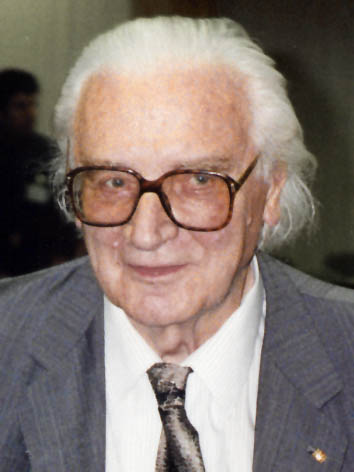
Picture: Konrad Zuse, June 1992
Wolfgang Hunscher, Konrad Zuse, 1992, via Wikimedia Commons; CC BY-SA 3.0. Image record, CC BY-SA 3.0.
.jpg)
The round picture in the lists of the personalities is cropped from it.