





3 min read
Temple Patron of Vijayanagara
Krishnadevaraya
author: High Priest Zevios Metathronos
The ruler who endowed the worship of the Gods
Dates: reign 1509–1529 CE
Period: Renaissance (1336–1650 CE)
Region: Vijayanagara, southern India
Tradition: Hindu temple patronage
Religion or tradition: Hinduism; strong devotion and patronage directed to Vishnu/Krishna, alongside Śiva worship.
Heresy status: No designation documented.
Krishnadevaraya’s religious importance is visible in the temple landscape of Vijayanagara. His patronage translated royal resources into sanctuaries, gifts and continuing worship. The Krishna temple at Hampi offers a specific example: official heritage interpretation associates its foundation with his victorious campaign at Udayagiri and dates it to 1513. The shrine was dedicated to Krishna in the form of the Divine child.1
ROYAL RESOURCES PLACED AT THE SERVICE OF WORSHIP
The Krishna temple at Hampi and the recorded provision for Prasanna Virupaksha give Krishnadevaraya’s patronage identifiable objects. Through foundations and grants, he directed royal resources towards places where Krishna and Śiva could be honoured. The work also gave architects, sculptors and religious specialists commissions through which their skills entered a lasting public monument.2
The human benefit lies in the sacred and artistic inheritance made available to subsequent generations. These places preserve evidence of religious practice, accomplished craftsmanship and organized patronage. His service to the Gods is clearest in the worship his provisions were intended to sustain. The ruler’s achievement becomes tangible through the people, objects and continuing activities supported by that commitment.
WORSHIP SUPPORTED BY MATERIAL PROVISION
The Archaeological Survey of India also records a grant in 1513 connected with the Prasanna Virupaksha temple. This provides an additional point of contact between the king and the institutions that maintained worship. The temple’s religious purpose depended upon continuing support as well as the original act of construction.3
Royal patronage must be read within its political setting. A temple could express conquest and legitimacy while also serving a real cult and its community. Those functions are historically intertwined. The ruler’s role as patron should also remain distinct from the work of the architects, sculptors, priests and other specialists who made the foundation operate.
A ZEVIST INTERPRETATION
Krishnadevaraya’s place in this collection rests on his provision for Divine worship. His example draws attention to a practical obligation of power: resources can establish conditions in which religious knowledge and ritual life endure.
The lesson concerns what patronage makes possible. A sanctuary provides space; its endowment supports repeated activity; its images give the worshipper a recognizable focus. Religious institutions require all three. The visible monument is only part of the undertaking.
A Zevist reading can therefore examine the king’s gifts as acts that joined authority to a sacred purpose. Their value is clearest when considered through the worship they sustained. This is a more specific basis for the profile than military success alone, and it leaves room to assess each action of a historical ruler on its own evidence.
NOTES
1 Government of India, “Krishna Temple”.
2 Official Krishna temple account; ASI record.
3 ASI Hampi Circle, “Royal Enclosure Area”.
BIBLIOGRAPHY
Ministry of Tourism, Government of India, “Krishna Temple, Hampi,” official site description.
Archaeological Survey of India, Hampi Circle, “Royal Enclosure Area,” section on Prasanna Virupaksha, site record.
CREDIT
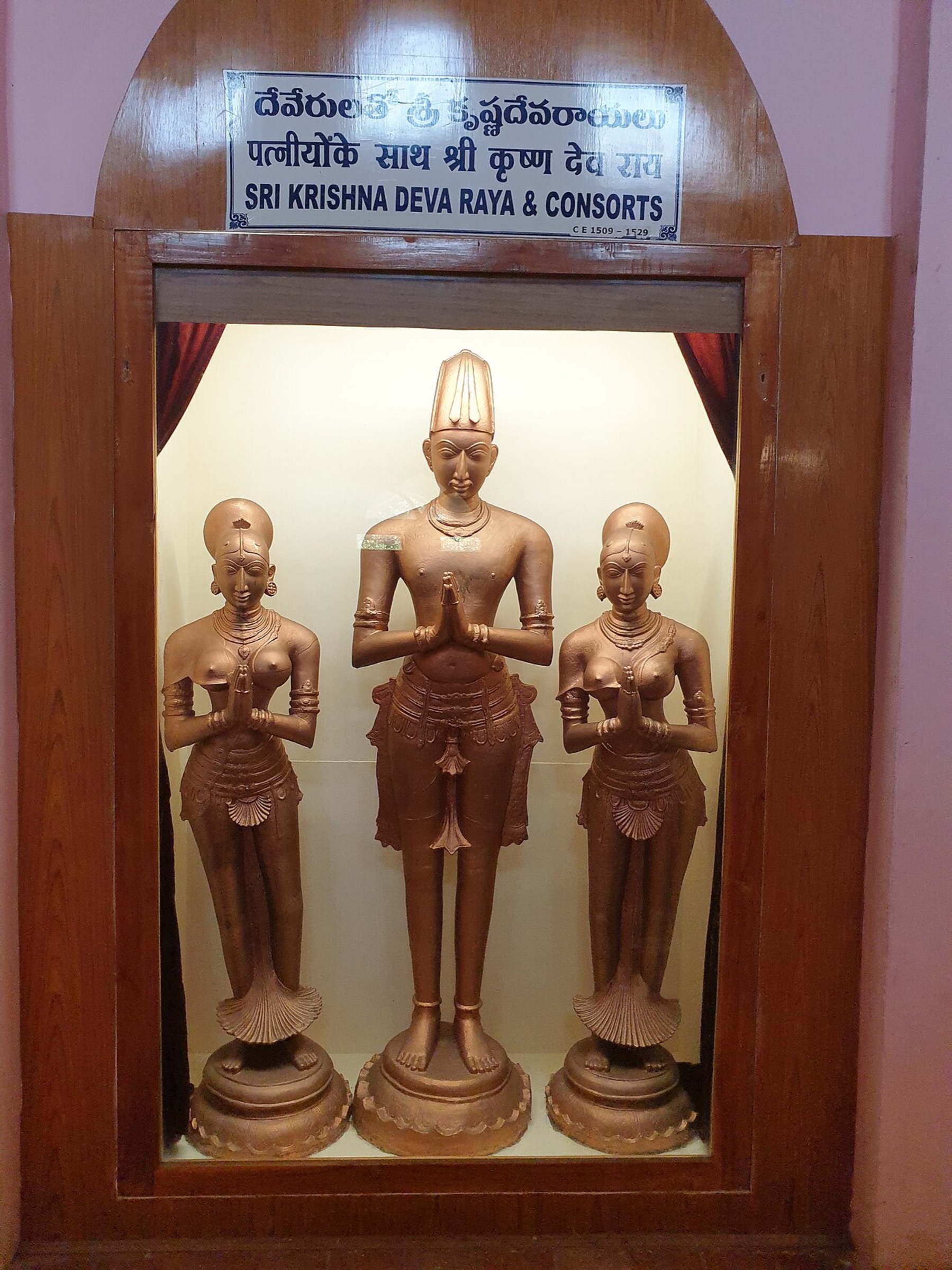
Picture: Named museum display. Statues of Chinnadevi, Krishnadevaraya and Tirumaladevi at Chandragiri Museum, photographed by Ravitheja Kumar Reddy C in 2022. Krishnadevaraya is the central figure.
Credit: Ravitheja Kumar Reddy C. Source record, CC BY-SA 4.0.

The round picture in the lists of the personalities is cropped from it.