





9 min read
Hero of Two Worlds
Marquis de Lafayette
author: High Priest Zevios Metathronos
Service, Recognition, and the Language of Rights
Name: Gilbert du Motier, Marquis de Lafayette
Dates: 1757–1834
Period: Enlightenment, 1650–1804, by the achievements emphasized here
Gilbert du Motier, Marquis de Lafayette, was a French nobleman who crossed the Atlantic at 19 to fight for American independence at his own expense. Congress made him a major general, and in 1781 he commanded 1 of the 3 American divisions in the Yorktown campaign.1
His greatest single act was a text. On 11 July 1789 he presented to France's National Assembly a draft Declaration of the Rights of Man, composed with Thomas Jefferson's advice. The declaration the Assembly adopted on 26 August opens: “Men are born and remain free and equal in rights.”2
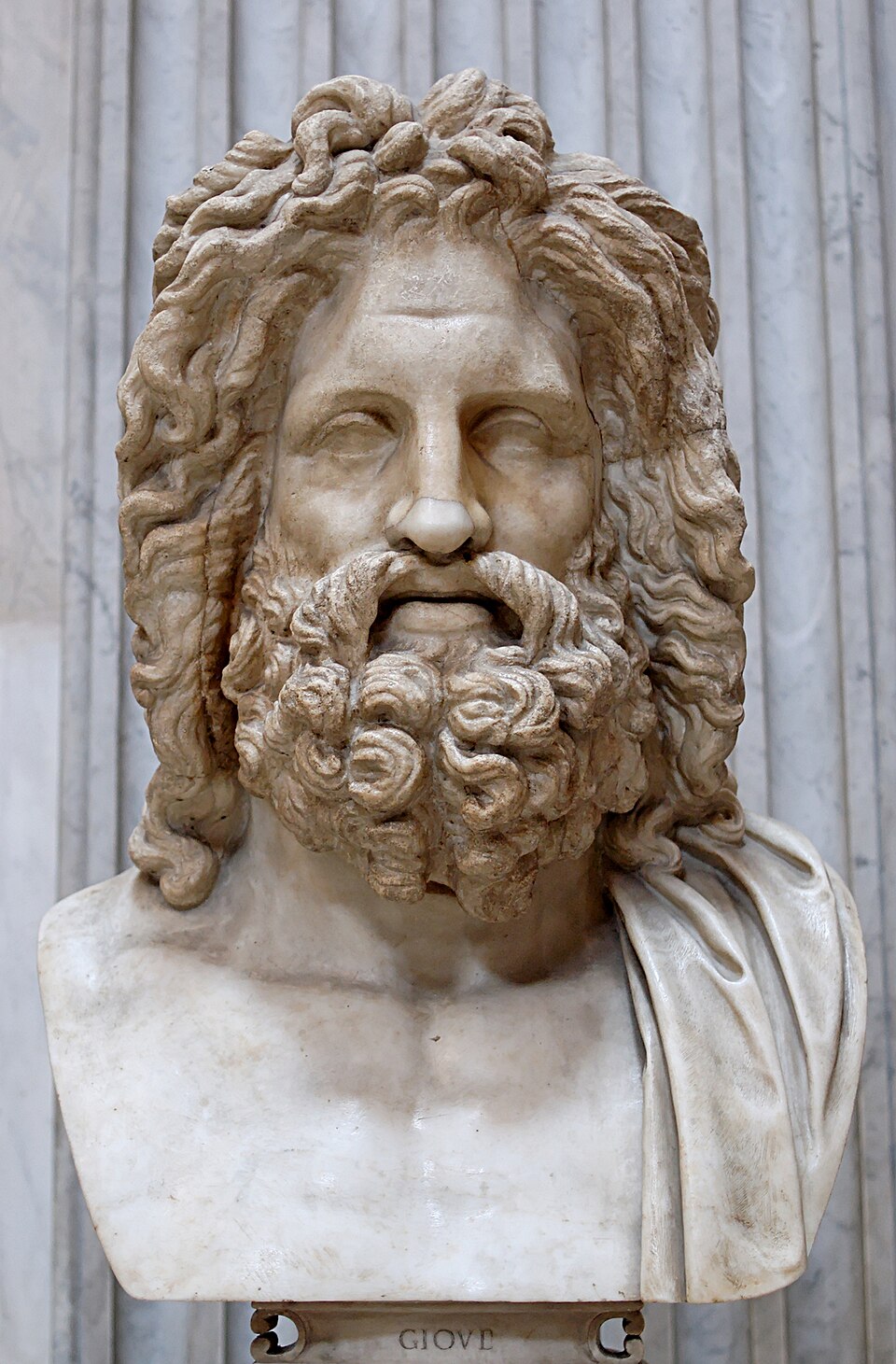
Zevism reads that work under Zeus, God of oaths and of just order, and under his daughter Dike. A declaration of rights is an attempt to write Ma'at, the right order of things, into the law of a nation.
LIFE AND CONTEXT
He was born at Chavaniac on 6 September 1757. “When Gilbert was two, his father died fighting in the Seven Years' War.” His mother died when he was 11, and he “inherited one of his nation's largest fortunes.” At 16 he married Adrienne de Noailles, from an even grander family than his own.3
In early 1777 he left France to seek service in the American Revolution, “offering to serve at his own expense,” and “the 19 year old was commissioned a major general in the Continental Army.” He was wounded at Brandywine that September. He served until January 1779, then went home to help prepare the French expeditionary force that later fought beside Washington.4
In 1781 he commanded the Continental forces in Virginia against Cornwallis and led 1 of the 3 American divisions in the Yorktown campaign. At the surrender in October, Mount Vernon's historian writes, “there was no prouder soldier” than he.5
In France's revolution he rose fast and fell hard. In 1789 he presented a draft declaration of rights to the National Assembly and was elected commander of the new national guard of Paris, and on 6 October his troops saved Louis XVI and Marie-Antoinette from a crowd that had invaded Versailles. On 17 July 1791, at the Champ de Mars, “Lafayette's guards opened fire, killing or wounding about 50 demonstrators.”6
Facing a trial for treason, he crossed to the Austrians on 19 August 1792, and they held him captive until 1797. He lived to see America again in 1824 and died in Paris on 20 May 1834, aged 76. “In accordance with his wishes,” he “was buried with dirt from Bunker Hill.”7
ATTAINMENTS
- He was commissioned a major general in the Continental Army at 19, having offered to serve at his own expense.4
- On his return to France in 1779 he “helped lay the groundwork for sending a French expeditionary force to serve under Washington.”4
- In 1781 he commanded the Continental forces in Virginia and became 1 of 3 division commanders in the American army during the Yorktown campaign.4
- His testimonial of 21 November 1784 for James, the enslaved man who had spied for him, supported the petition that freed James effective January 1787.8
- He drafted a declaration of rights in July 1789, sent it to Jefferson for his “observations” on 9 July, and presented it to the National Assembly on 11 July.9
- He was elected commander of the newly formed national guard of Paris in 1789, and on 6 October his troops saved the king and queen from the crowd at Versailles.7
- On 10 December 1824 he became “the first foreign citizen to address the U.S. House of Representatives.”7
KEY STORIES
Here to Learn
Lafayette explained his motive years later in his memoirs: “My heart was enlisted, and I thought only of joining my colors to those of the revolutionaries.” He landed in America on 13 June 1777, and the Park Service records that he “swore on the shore to commit himself to the cause.” Congress then made the 19-year-old a major general.10
In September 1777 he rode to Washington's camp along Brandywine Creek, south of Philadelphia. A rich young marquis with no battles behind him could easily have annoyed the commander. He didn't. “Washington was immediately taken with Lafayette, especially when the Marquis explained, ‘I am here to learn, not to teach.’”11
The lessons came fast. At the Battle of Brandywine that month he was shot in the leg, and he didn't leave the army.11
The Soldiers' Friend at Valley Forge
On 19 December 1777 the Continental Army marched into winter quarters at Valley Forge. That same day news reached Lafayette of his daughter's birth; he was a father for the 2nd time. He was serving then as an aide to Washington.12
He soon commanded a new division, “with enlistments decreasing and desertions increasing,” and he took it on himself to see that his troops lived “to the best possible standards.” The Park Service's account is brief: “He donated muskets and uniforms to men in need.”12
The men noticed. “Known as the soldiers' friend, Lafayette shared the hardships with his men, even when his rank entitled him to special privileges.” After the war he came back to Mount Vernon as Washington's guest, and wrote of their reunion: “Our meeting was very tender and our satisfaction was mutual.”13
James in the Crowd at Richmond
“In the spring of 1781, with William's permission, James volunteered to join the service of the Marquis de Lafayette.” James was enslaved by William Armistead of Virginia, and Lafayette needed eyes inside the British lines.8
He went over to the enemy himself. The Park Service tells it plainly: “James straggled into the British camp, convinced them he hated Americans, and worked his way into their graces by diligently and faithfully serving British officers.” He became a body servant to Benedict Arnold and then to Lord Cornwallis, and carried what he learned back to Lafayette.8
The victory at Yorktown didn't free him. On 21 November 1784 Lafayette wrote a testimonial to his services, and with its support the Virginia legislature freed him effective January 1787. He then added the surname Lafayette to his own, with the Marquis's full approval. In 1818, at about 70, he petitioned for and won a military pension.8
In 1824 the old general came back. “When the Marquis visited Richmond, he spotted his friend James in the crowd and invited him up onto his touring coach in front of the massive crowd.”8
The Draft of 11 July
In July 1789 Jefferson was in Paris, and Lafayette brought him a draft. On 9 July he asked for Jefferson's “observations” on “my bill of rights” before he took it to the National Assembly. The manuscript survives in the Library of Congress.14
On 11 July he stood up in the Assembly. “With Jefferson's help, he composed a draft of the Declaration of the Rights of Man and of the Citizen, which he presented to the Assembly on July 11.” The same year the new national guard of Paris elected him its commander.7
The Assembly approved its final text on 26 August. It wasn't the work of 1 man, and its 1st article reads: “Men are born and remain free and equal in rights. Social distinctions may be founded only upon the general good.” Article 2 named the rights: “liberty, property, security, and resistance to oppression.”15
THE ZEVIST READING
Hesiod sets Dike, Justice, beside her father: “whenever anyone hurts her with lying slander, she sits beside her father, Zeus the son of Cronos, and tells him of men's wicked heart.”16 A declaration of rights gives Dike a written voice in a nation's law. Zevism reads Lafayette's draft as Ma'at put into articles: an order in which the rights of every person stand ahead of rank.
The oath comes first. In Zevism Zeus guards oaths, and Lafayette's began on a beach in June 1777, when he swore “to commit himself to the cause.” He kept it through a wound, a winter and a siege, and in December 1824, at 67, he stood before the House of Representatives of the country he'd sworn to serve.17
The Temple's doctrine of the Good judges the man as well as the text. The Good is the conjunction of Ma'at and Right, right order carried out by a right act from a right will. The volunteer who gave muskets and uniforms to men in need, and the general who wrote the testimonial that helped James go free, meet that measure. The commander whose guards fired into a crowd at the Champ de Mars doesn't, whatever order he meant to keep.
Zeus also guards the bond between host and guest. Odysseus warns the Cyclops that Zeus “takes all respectable travellers under his protection, for he is the avenger of all suppliants and foreigners in distress.”18 Lafayette came to America as a foreigner, and in 1824 the country received him as its guest. At Mount Vernon “he went alone to visit the grave of George Washington, returning to his carriage with tears in his eyes.”11
A true record also restores Ma'at. James's service was secret by its nature, and Lafayette's 1784 testimonial put it on paper where a legislature could read it and act.
NOTES
1 National Park Service, “Marquis de Lafayette,” Yorktown.
2 Leepson, “Marquis de Lafayette,” Britannica; Avalon Project, Declaration of the Rights of Man.
3 Stockwell, “Marquis de Lafayette,” Mount Vernon; Leepson, Britannica.
5 NPS, Yorktown; Stockwell, Mount Vernon.
6 Leepson, Britannica, “The French Revolution”.
9 Library of Congress, Thomas Jefferson, item 184; Leepson, Britannica.
10 Stockwell, Mount Vernon; NPS, Valley Forge; NPS, Yorktown.
13 NPS, Valley Forge; Stockwell, Mount Vernon.
14 Library of Congress, Thomas Jefferson, item 184.
15 Avalon Project, Declaration of the Rights of Man, 1789.
16 Hesiod, Works and Days 256–262.
17 NPS, Valley Forge; Leepson, Britannica.
18 Homer, Odyssey 9, tr. Butler.
BIBLIOGRAPHY
U.S. National Park Service, “Marquis de Lafayette,” Yorktown Battlefield, updated 26 February 2015; service at his own expense, commission at 19, Brandywine, the French expeditionary force, the 1781 Virginia command and Yorktown.
U.S. National Park Service, “Marquis de Lafayette,” Valley Forge, updated 6 August 2019; muskets, uniforms and shared hardships.
U.S. National Park Service, “James Lafayette: A Legacy of Courage and Espionage”; volunteering in 1781, service in the British camp, testimonial of 21 November 1784, freedom effective January 1787, pension of 1818 and the Richmond meeting of 1824.
Mary Stockwell, “Marquis de Lafayette”, Digital Encyclopedia of George Washington, George Washington's Mount Vernon; childhood, marriage, memoir quotation, meeting with Washington, Yorktown and the visits of 1784 and 1824.
Marc Leepson, “Marquis de Lafayette”, Encyclopaedia Britannica, updated 2 September 2026, with the section “The French Revolution”; birth and death, the draft declaration, the national guard, Versailles, the Champ de Mars, captivity, the House address and burial.
Library of Congress, “Draft of Declaration of the Rights of Man”, Thomas Jefferson: A Revolutionary World, item 184; Lafayette's letter of 9 July 1789.
Declaration of the Rights of Man, 1789, approved 26 August 1789, Avalon Project, Yale Law School; articles 1–2.
Hesiod, Works and Days 256–262, translated by H. G. Evelyn-White, Theoi Classical Texts Library.
Homer, Odyssey, book 9, translated by Samuel Butler, Internet Classics Archive, MIT; 9.269–271.
CREDIT
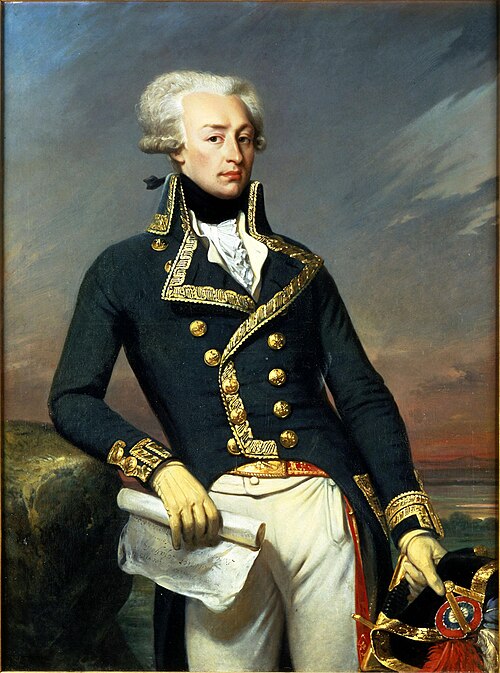
Image: Joseph-Désiré Court's 1834 portrait representing Lafayette as a lieutenant general in 1791. Public domain. Verified image record.

Joseph-Désiré Court (1797–1865) / Wikimedia Commons; Public domain. Image record, Public domain.
The round picture in the lists of the personalities is cropped from it.