





3 min read
Vedic Voice of Wholeness
Lopāmudrā
author: High Priest Zevios Metathronos
The Vedic voice of a life brought into wholeness
Dates: Rigvedic textual tradition; individual lifetime undated
Period: Ancient (6000–500 BCE)
Region: Vedic India
Tradition: traditional woman seer
Religion or tradition: Vedic religion: the traditional woman seer and dialogue voice Lopāmudrā.
Heresy status: No designation documented.
Lopāmudrā appears with Agastya in the dialogue hymn Ṛgveda 1.179. The transmitted attribution identifies both figures, and the poem gives Lopāmudrā a direct speaking role. Her contribution belongs within Vedic sacred literature itself, rather than a modern reconstruction of ancient spirituality.1
BRINGING HOUSEHOLD RESPONSIBILITY INTO SACRED DIALOGUE
Lopāmudrā’s voice gave Vedic literature a direct consideration of the relationship between ascetic effort and married life. She states her position, makes the passing of years consequential and calls for attention to the obligations of the relationship. The dialogue preserves her as an active participant in determining what a religious life should include.2
Her positive contribution is the force of that preserved speech. Human concerns of companionship, desire and responsibility receive serious consideration within a sacred text. For Zevist readers, this serves a religious understanding in which the ordering of life requires attention to real commitments. Lopāmudrā’s example honours the capacity to speak clearly about them and to seek a life whose chosen duties can be fulfilled together.
A SERIOUS CLAIM WITHIN THE HOUSEHOLD
The dialogue concerns the relationship between sustained religious discipline and married life. Lopāmudrā speaks of passing years and calls her husband toward their conjugal relationship. The poem concludes by bringing ascetic effort and the desire for family fulfilment into the same religious world. Its speakers and traditional attribution should be distinguished from an independently documented household biography.3
The hymn’s importance lies partly in its candour. A matter of embodied life becomes the subject of sacred dialogue. Lopāmudrā has a position to state, and the text preserves the force of her intervention. Her spiritual identity cannot be reduced to the fact that she is the wife of another sage.
A ZEVIST INTERPRETATION
Lopāmudrā contributes a model of deliberate speech about the shape of a religious life. Her voice asks how commitments can be fulfilled together and how a practitioner should attend to the responsibilities of a chosen relationship.
For Zevist study, the passage can support a thoughtful account of personality mastery. Mastery includes the ability to understand desire, obligation and purpose without evasion. It requires judgment about how the parts of a life are to be ordered.
Her inclusion therefore rests on the authority of her Vedic voice and on the spiritual seriousness of the dialogue in which she participates. Later legends may enrich her reception, but the ancient text already supplies a distinctive personality worthy of study.
NOTES
2 Ṛgveda 1.179; Wilson’s opening verse.
3 Ṛgveda 1.179.
PRIMARY SOURCES
Ṛgveda 1.179.1 and 1.179.4, H. H. Wilson translation and traditional attribution, opening verse, fourth verse.
Ṛgveda 1.179, Griffith edition. This edition renders part of the dialogue in Latin; the English discussion above also uses Wilson’s translation.
CREDIT
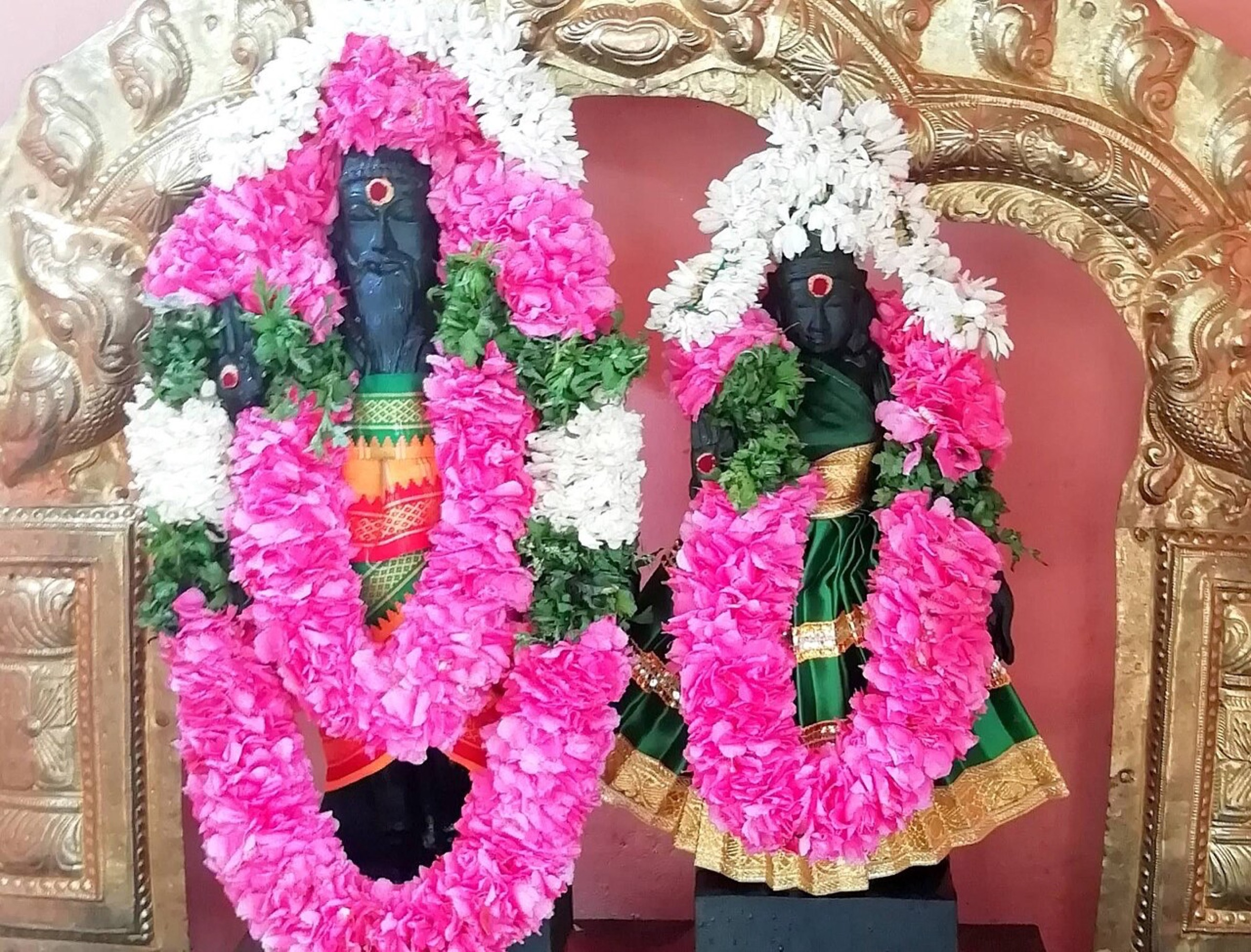
Picture: Traditional temple images. Agastya and Lopāmudrā at Sri Lobamudra Sameda Agasthiyar Temple, A. Vallalapatti, Madurai, photographed by Chaemba in 2019. Traditional religious images of the two figures.
Credit: Chaemba. Source record, CC BY-SA 4.0.

The round picture in the lists of the personalities is cropped from it.