






3 min read
Seeker of Immortality
Maitreyī
author: High Priest Zevios Metathronos
The seeker who asks for the knowledge that endures
Dates: early Upanishadic tradition, first millennium BCE
Period: Ancient (6000–500 BCE)
Region: Vedic India
Tradition: spiritual philosopher
Religion or tradition: Vedic / early Upanishadic tradition; inquiry into the Self and immortality.
Heresy status: No designation documented.
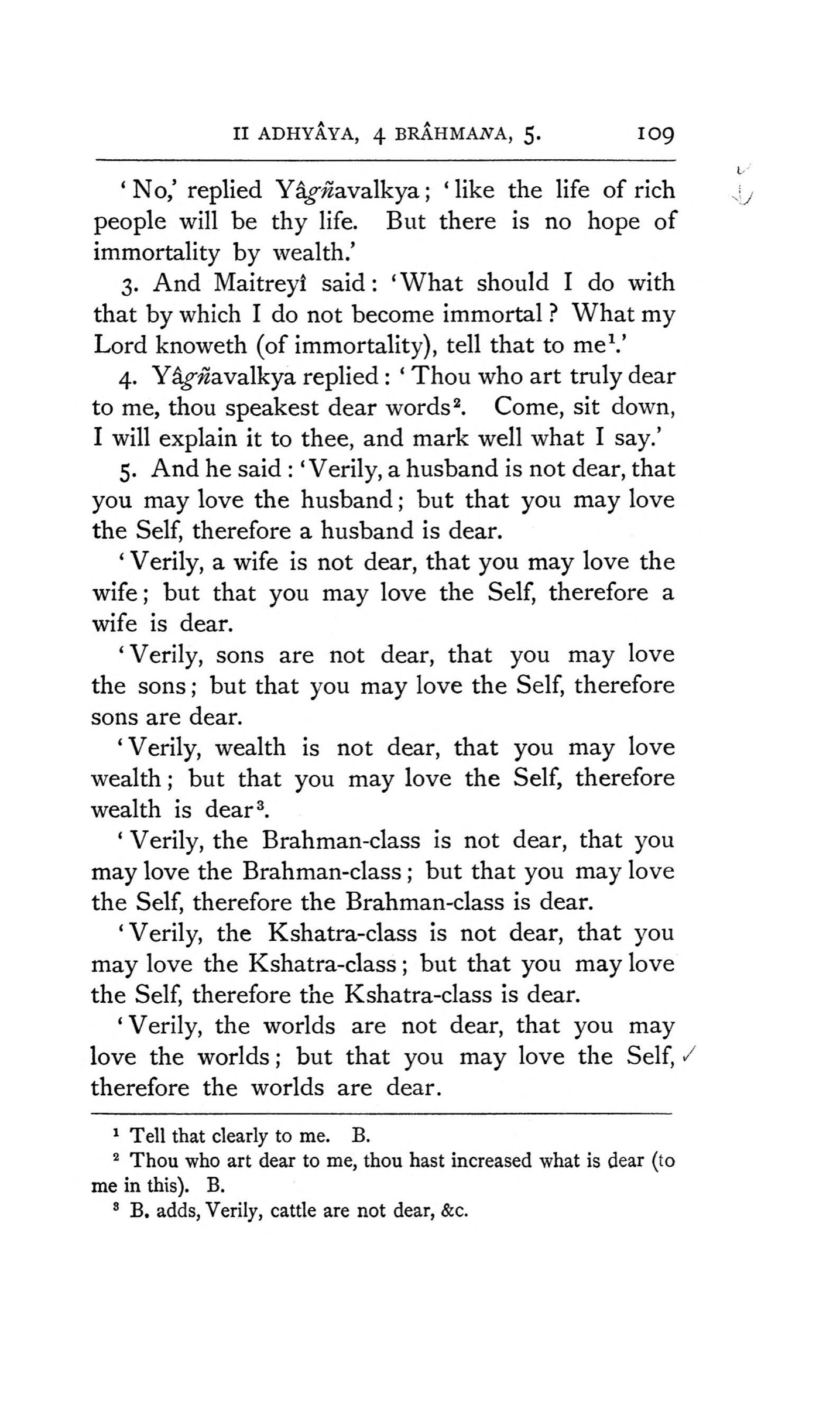
Maitreyī gives the Bṛhadāraṇyaka Upaniṣad one of its clearest statements of spiritual purpose. When Yājñavalkya proposes a division of household property, she asks whether possession of the whole earth’s wealth could bring immortality. His answer leads her to request the knowledge that could address her actual aim.1
ESTABLISHING A CLEAR SPIRITUAL AIM
Maitreyī’s question about wealth and immortality determines the direction of the teaching that follows. She asks whether an offered resource can accomplish the end she actually seeks, then requests instruction suited to that end. Her later expression of difficulty also creates an occasion for clarification. The dialogue owes its philosophical movement to her active participation.2
The human contribution is an enduring example of purposeful learning. Maitreyī keeps the aim in view, examines the proposed means and remains attentive when understanding becomes difficult. Its religious value lies in the seriousness given to knowledge of the Self and the pursuit of immortality. For this collection, her legacy strengthens the discipline of spiritual study: know what is being sought, ask directly and continue until the explanation becomes intelligible.
KNOWING WHAT ONE IS SEEKING
Her question establishes the subject of the ensuing instruction. Wealth can provide the conditions of a wealthy life; it cannot, in this dialogue, accomplish the end she has named. Maitreyī therefore asks to be taught what Yājñavalkya knows. The discussion turns toward the Self and the meaning of knowledge.3
Her participation continues through the difficulty of the teaching. She does not simply receive a memorable phrase and disappear from the discussion. The text gives her a response when the explanation becomes troubling, allowing the teacher to clarify his meaning. This makes the encounter an example of actual inquiry rather than ceremonial agreement.4
The evidence is the ancient dialogue and the spiritual personality it preserves. Precise modern biographical dates would exceed what that evidence establishes.
A ZEVIST INTERPRETATION
Maitreyī’s defining quality is clarity of aim. She judges an offered means according to what it can accomplish. That is a useful discipline for spiritual growth: first understand the end, then choose the study and practice relevant to it.
Her example also gives dignity to the question asked at the moment of difficulty. A student advances by making the point of uncertainty explicit. Understanding can then be corrected or deepened.
For Zevist readers, Maitreyī belongs among the ancient personalities because her pursuit is direct and demanding. She seeks enduring knowledge, asks for instruction and remains intellectually present within it. Her part in the dialogue supplies a model of purposeful learning that can guide subsequent application and renewed study.
NOTES
3 2.4.
4 2.4.12–14.
PRIMARY SOURCE
Bṛhadāraṇyaka Upaniṣad 2.4, especially verses 1–5 and 12–14, trans. F. Max Müller, Sacred Books of the East 15 (1884), full dialogue.
CREDIT
Picture: Facsimile of her dialogue. Maitreyī’s question and Yājñavalkya’s answer in Bṛhadāraṇyaka Upaniṣad 2.4, F. Max Müller’s 1884 translation, page 109. The image preserves a historical printed presentation of the dialogue.
Credit: F. Max Müller; Clarendon Press. Source record, Public domain.
The round picture in the lists of the personalities is cropped from it.