





3 min read
Devotional Poet of Krishna
Mirabai
author: High Priest Zevios Metathronos
The devotional poet whose allegiance could not be commanded
Dates: sixteenth century CE
Period: Renaissance (1336–1650 CE)
Region: northern India
Tradition: devotion to Krishna
Religion or tradition: Hinduism: Krishna bhakti, within the broader Vaiṣṇava devotional tradition.
Heresy status: No designation documented.
Mirabai is remembered as a woman whose devotion to Krishna prevailed over the claims of family rank and social obedience. Her voice survives through an extensive tradition of songs, performance and sacred biography. That tradition is historically layered: exact dates, particular life episodes and the authorship of individual poems are not equally secure. Nancy Martin’s study follows the making of Mirabai’s reputation through manuscript, oral and later historical materials.1
GIVING LATER WORSHIPPERS WORDS OF DEVOTION
The songs transmitted under Mirabai’s name gave generations of worshippers a forceful language for addressing Krishna. Their continued performance turned a remembered devotional life into something others could participate in through voice and attention. Martin’s study follows precisely this long formation of her religious inheritance through songs, stories and communities of reception.2
The contribution to humanity is an expressive tradition through which conviction, longing and constancy can be communicated. Its religious service is the sustained remembrance of Krishna. Mirabai’s voice also supplies an example of a woman whose spiritual allegiance remained central to the account of her life. Her legacy allows later practitioners to encounter that resolve in a form they can learn, sing and consider for themselves.
ALLEGIANCE EXPRESSED THROUGH SONG
The received life places Mirabai within a Rajput ruling environment and presents her attachment to Krishna as a source of conflict with expected conduct. Songs associated with her make the relationship with the God the centre of the speaker’s life. Their authority comes from the force of that allegiance and from their continuing religious performance.3
The historical devotional poet stands at the beginning of a much larger body of stories and songs subsequently placed under her name. Miracle narratives and familiar modern translations cannot simply be treated as a contemporary autobiography. The enduring devotional figure is itself a subject of serious historical study.4
A ZEVIST INTERPRETATION
Mirabai offers an example of religious constancy under pressure. Her remembered choice makes an exact demand upon the reader: to consider which commitments remain firm when obedience would bring comfort or approval.
Her relevance also lies in the formation of character through sustained attention. Devotional poetry gives the mind words to return to, and repeated singing makes that return an activity. Within a Zevist reading, such work can be understood as the deliberate cultivation of a relationship with the Divine.
The strength represented here is fidelity of purpose. It includes the willingness to endure misunderstanding and the ability to give that experience a form others can use. Mirabai’s place is grounded in her Krishna devotion and poetic inheritance. It does not depend upon certifying every legend attached to her name.
NOTES
1 Martin, Mirabai: The Making of a Saint.
2 Mirabai: The Making of a Saint.
3 “Mīrābāī,” Encyclopedia of Religion.
4 Martin.
BIBLIOGRAPHY
Nancy M. Martin, Mirabai: The Making of a Saint (Oxford University Press, 2023), publisher’s scholarly overview.
“Mīrābāī,” Encyclopedia of Religion, reference entry.
CREDIT
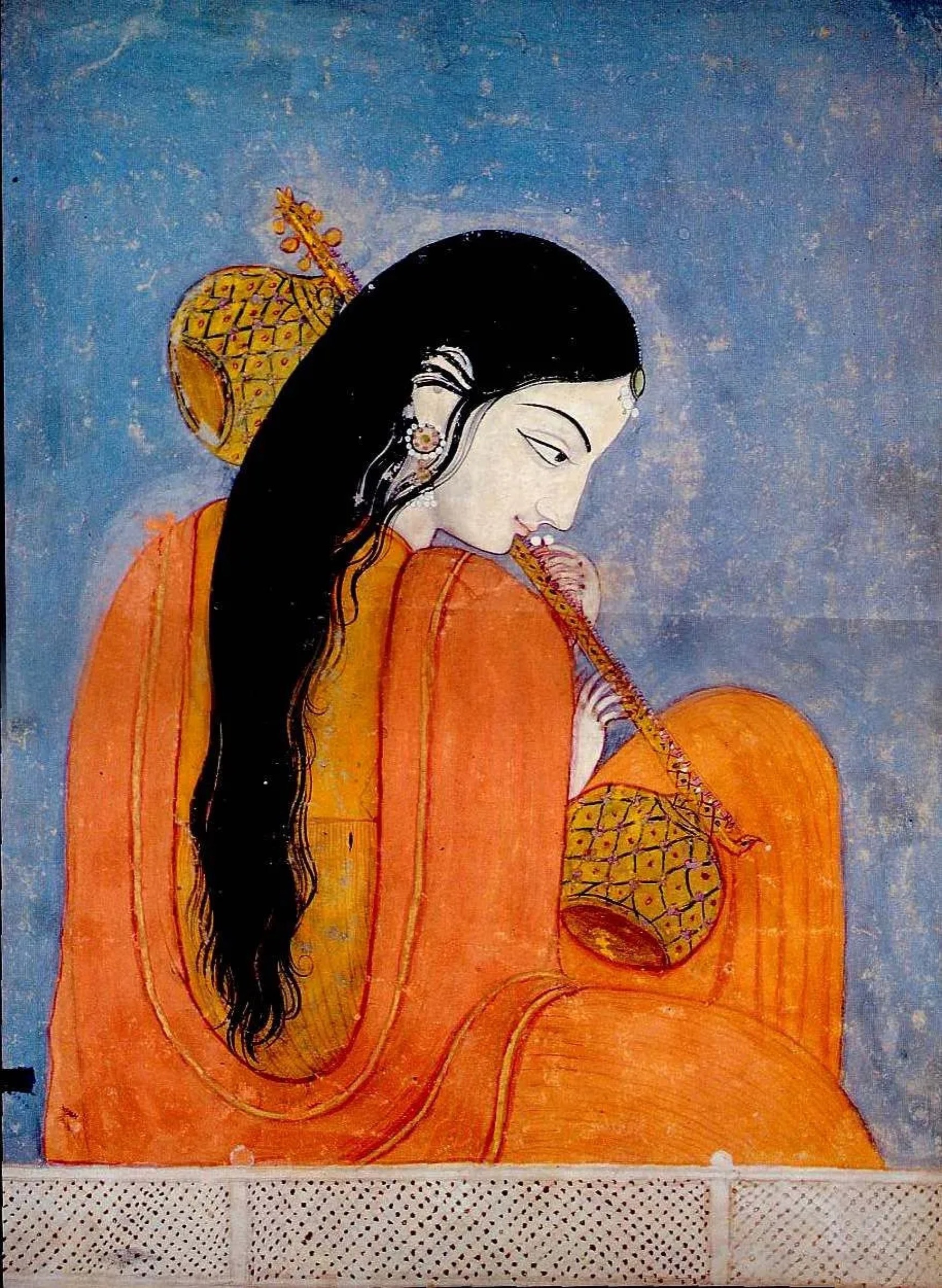
Picture: Traditional artistic depiction. Kangra painting of Mirabai playing the veena, by an unidentified artist. The historical painting represents the devotional poet; its precise date and her actual appearance are not established by the image record.
Credit: Unknown author. Source record, Public domain.

The round picture in the lists of the personalities is cropped from it.