




3 min read
Patron of the Templo Mayor
Motecuhzoma I Ilhuicamina
author: High Priest Zevios Metathronos
The ruler whose offerings survive beneath the sacred precinct
Dates: reign 1440–1469 CE
Period: Renaissance (1336–1650 CE)
Region: Tenochtitlan, Mesoamerica
Tradition: Mexica religion
Religion or tradition: Mexica / Aztec polytheistic religion; worship associated with Tlaloc and Huitzilopochtli.
Heresy status: No designation documented.
Motecuhzoma I Ilhuicamina belongs to the history of the Templo Mayor’s expansion and ceremonial provision. He is the fifteenth-century ruler, distinct from Motecuhzoma II of the Spanish invasion. Archaeological evidence supplies a particularly valuable foundation for his religious profile: offerings can be examined independently of later narratives about his character.1
GIVING DEVOTION AN ORGANIZED MATERIAL FORM
The offering deposits assigned to Motecuhzoma I’s reign reveal the coordination required for a major sacred dedication. Valued objects were gathered and deliberately arranged within the Templo Mayor’s construction. Their survival now gives researchers direct evidence of Mexica religious action, alongside the later written accounts of the rulers and their ceremonies.2
His constructive place in this history concerns the support of a sacred precinct honouring Tlaloc and Huitzilopochtli. The enduring human benefit is the cultural and archaeological knowledge preserved through that undertaking. For a Zevist reader, the deposits show how devotion could command planning, skilled labour and valued materials. The religious achievement becomes concrete through the care invested in the dedication and the evidence it left behind.
CONSECRATION AS AN ORGANIZED UNDERTAKING
The Templo Mayor Project assigns a group of six offering deposits to construction phase IVa, dated to his reign. Their related contents and placement support the researchers’ interpretation of a coordinated dedication. The deposits together contained 83 Mezcala-style greenstone figures. The proposed connection with spoils from campaigns in what is now Guerrero is an archaeological and historical interpretation, rather than an inscription naming every object’s donor.3
The temple precinct expressed a cosmological order through its arrangement and religious imagery. Its paired principal sanctuaries honoured Tlaloc and Huitzilopochtli. The objects placed within it belonged to this religious setting and to the political power that supported the ceremonies.4
A ZEVIST INTERPRETATION
The value of this profile lies in the recovery of a specific Indigenous religious achievement. The material record reveals preparation, coordinated labour and the deliberate placement of valued objects in sacred space. It makes the practice of religion visible at a scale that a bare list of rulers cannot convey.
For the Zevist reader, these remains invite serious study of how a people represented its relationship with the Gods. The interpretation should begin with Mexica names, concepts and archaeological contexts. Familiar European categories cannot substitute for that work.
Motecuhzoma’s inclusion rests on his position within this history of sacred patronage. The profile recognizes that devotion and imperial authority were intertwined, and identifies the concrete evidence through which the religious undertaking can now be studied.
NOTES
1 INAH, report on the Templo Mayor discoveries.
2 INAH report on the phase IVa offerings.
4 Museo del Templo Mayor, archaeological site guide.
BIBLIOGRAPHY
Instituto Nacional de Antropología e Historia, “Nuevos hallazgos del Proyecto Templo Mayor revelan una ceremonia colosal en época de Motecuhzoma Ilhuicamina,” 27 February 2026, research report.
Museo del Templo Mayor, Zona arqueológica, official archaeological guide.
CREDIT
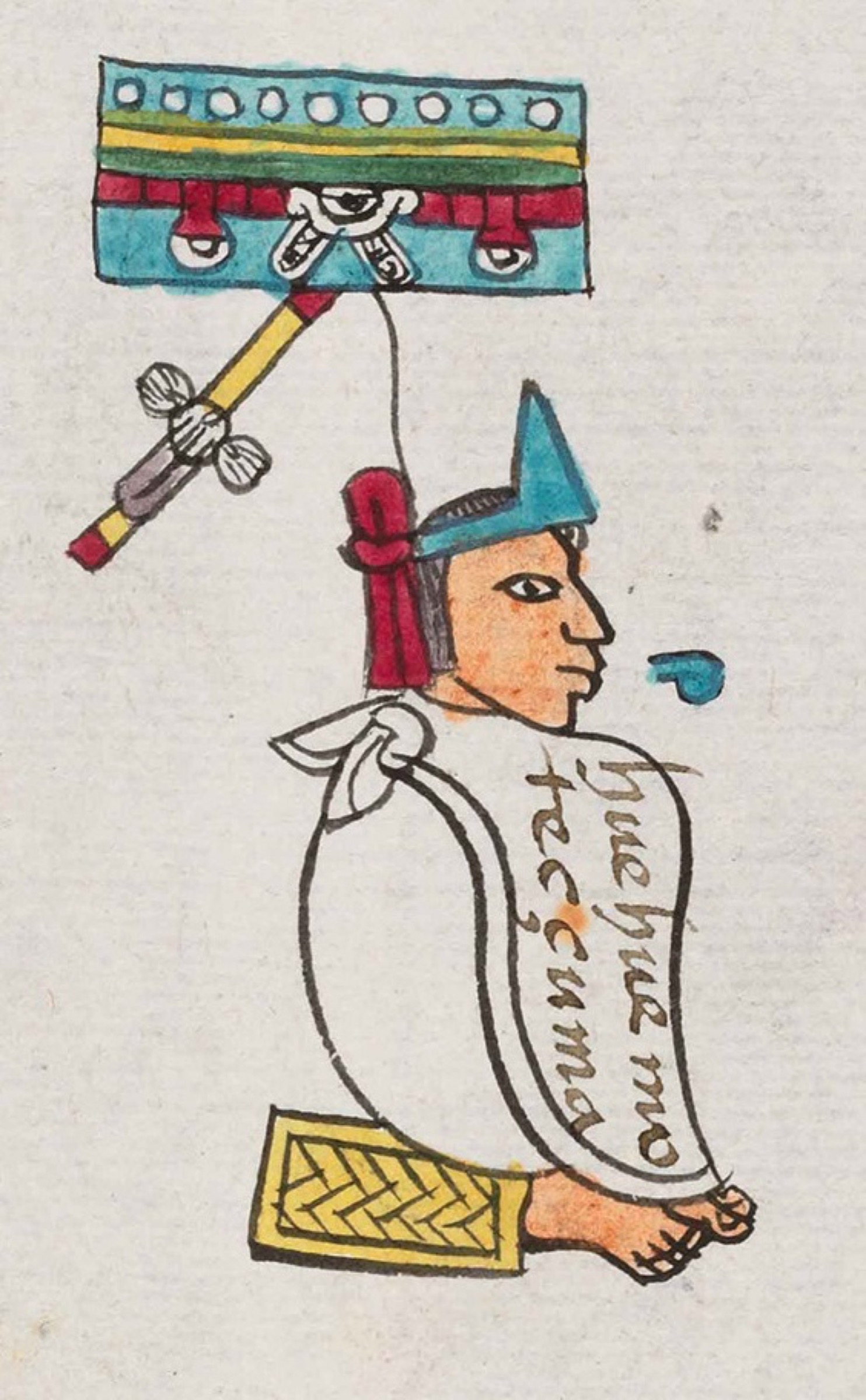
Picture: Early colonial pictorial witness. Motecuhzoma I as represented in the sixteenth-century Codex Mendoza. The named pictorial figure is the earlier ruler discussed here, not Motecuhzoma II.
Credit: Unidentified artist. Source record, Public domain.

The round picture in the lists of the personalities is cropped from it.