




9 min read
Poet King of Texcoco
Nezahualcoyotl
author: High Priest Zevios Metathronos
Flowers, Song and the Work That Outlives Us
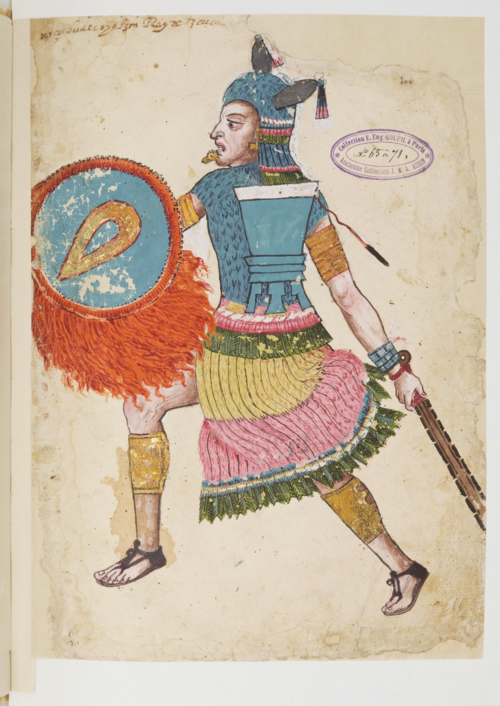
Dates: 1402–1472 CE.
Period: Renaissance (1336–1650 CE).
Nezahualcóyotl was lord of Tetzcoco from his coronation in 1431 to his death in 1472. At 16 he watched his father killed by the men of Azcapotzalco. He fought his way back to the throne, reigned for more than 40 years, and built dikes to shut off the salt waters of the lakes.1
Songs carry his name. One of them opens: “Yo, Nezahualcóyotl, lo pregunto: ¿Acaso de veras se vive con raíz en la Tierra?” The singer asks whether anyone truly lives rooted on the earth, and answers that even jade breaks and gold shatters.2
His religion was that of the Nahua, and in it he raised a tower with no image to Tloque Nahuaque, the Lord of the Near and the Nigh. Zevism reads him as a link in the chain of spirituality: a king under the Muses, who in Hesiod pour sweet dew on the tongues of princes, and a builder of Ma'at, the order that holds back the flood.
LIFE AND CONTEXT
He was born in Tetzcoco in 1402, the year 1-Rabbit, to Ixtlilxóchitl the Elder and Matlalcihuatzin. His tutors taught him in his father's palace, and his masters in the chief calmécac of Tetzcoco.1
In 1418 the people of Tezozómoc of Azcapotzalco killed Ixtlilxóchitl, and the prince fled. He won the favour of the lords of Huexotzinco and Tlaxcala and, above all, of his mother's kin, the Mexica of Tenochtitlan, who were starting their own war on Azcapotzalco.1
The war ended with the Tepanecs beaten. He was crowned in 1431 and settled for good in Tetzcoco 2 years later, backed by the alliance of México-Tenochtitlan. He advised the Aztec kings, and his reign of more than 40 years “aparece en los textos como una época de esplendor,” an age when the arts flourished.1
He lived 71 years. When he felt death coming he named his son Nezahualpilli as his successor, and he died in the year 6-Flint, 1472.1
The songs came down in alphabetic Nahuatl. The Cantares mexicanos is “the most important of the few collections of song texts in alphabetized Nahuatl surviving from the sixteenth century.” A related collection, the Romances de los señores de la Nueva España, was probably compiled around 1585 by the mestizo chronicler Juan Bautista Pomar.3
Who made them is disputed. León-Portilla reads many as the work of the Texcocan kings, while Bierhorst dated most of them “well into the colonial period” and “questioned the tradition of ascribing poems to Nezahualcoyotl.”4 León-Portilla himself threw out a poem printed in 1778 in José Joaquín Granados y Gálvez's Tardes americanas, full of “bóvedas de pestilentes polvos.” Nezahualcóyotl, he wrote, couldn't have used such metaphors, which were foreign to ancient Mexican thought.5
The songs had drums behind them. Between the headings of some songs and their texts, the Cantares mexicanos writes “percussion cadences, indicated by the four syllables ti, to, qui, and co.” Tomlinson thinks they “may well reflect pre-Hispanic oral mnemonic practices for teaching, disseminating, and preserving percussion cadences.”6
ATTAINMENTS
- He took back his father's lands by war. The Anales de Cuauhtitlán record that he conquered Coatlichan in 1430, and after the defeat of the Tepanecs he was crowned in 1431.1
- He settled in Tetzcoco in 1433 in alliance with México-Tenochtitlan and ruled for more than 40 years as counsellor to the Aztec kings.1
- He built palaces, temples, botanical gardens and zoological gardens.1
- He directed the building of causeways, the works that brought water to Mexico, and dikes “para aislar las aguas saladas de los lagos e impedir futuras inundaciones,” to cut off the salt waters of the lakes and stop future floods.1
- He raised a temple with a tall tower of several stages, standing for the levels of heaven, with no image in it, in honour of Tloque Nahuaque.1
- Songs under his name survive in the Cantares mexicanos, folios 16v, 17r and 70r, and in the Romances de los señores de la Nueva España, folios 19v and 35r.7
KEY STORIES
The Killing of Ixtlilxóchitl
In the year 4-Rabbit, 1418, the prince was 16. He “vio morir a su padre asesinado por las gentes de Tezozómoc de Azcapotzalco,” saw his father die at the hands of Tezozómoc's men. León-Portilla names the one who got him out: Tochihuitzin Coyolchiuhqui, “el forjador de cascabeles,” the bell-maker, a son of Itzcóatl, who helped him escape while the men of Azcapotzalco were killing his father.1
He spent the following years winning allies. He gained the favour of the lords of Huexotzinco and Tlaxcala and of his mother's people, the Mexica. When the Mexica turned on Azcapotzalco, he joined their war to free his father's lands.8
The Anales de Cuauhtitlán mark his first great gain: in the year 3-Rabbit, 1430, he conquered the lordship of Coatlichan. “Al fin, después de numerosas batallas,” the Tepanecs were broken. He was crowned in 1431, 13 years after his father's murder, and 2 years later he entered Tetzcoco to stay.8
The Tower Without an Image
One of his temples had “una elevada torre compuesta de varios cuerpos,” a tall tower of several stages that stood for the floors of heaven, and he put no image in it. He built it for Tloque Nahuaque, whom León-Portilla describes as “el dueño del cerca y del junto, el invisible como la noche e impalpable como el viento,” lord of the near and the nigh, invisible as night and impalpable as wind.1
The songs address a God they call Dador de la vida, the Giver of Life, and picture him as a painter. “Con flores escribes, Dador de la vida,” runs one in the Romances de los señores: with flowers he writes, with songs he colours and shades those who are to live on earth. Later he'll destroy eagles and jaguars, “águilas y tigres,” and “sólo en tu libro de pinturas vivimos, aquí sobre la Tierra.” Human beings live only in the God's painted book.9
In León-Portilla's reading the songs are a way of approach. Nezahualcóyotl claimed to have found the deep meaning of “flor y canto,” the Nahuatl expression for art and symbol, so that from the earth he could come near to “lo que está sobre nosotros y la región de los dioses y de los muertos.”10
A Prophecy at the Temple of Huitzilopochtli
This story comes from the 17th century, from the chronicler Fernando de Alva Ixtlilxóchitl. In his Historia de la nación chichimeca he wrote that in 1467, a year Ce Ácatl, “se acabó y fue el estreno del templo mayor de la ciudad de Tetzcuco,” the great temple of Huitzilopochtli. At its opening, he says, Nezahualcóyotl spoke.11
“En tal año como éste se destruirá este templo, que ahora se estrena,” the king said: in a year like this one the temple now opened will be destroyed. He asked who would be there to see it, his son or his grandson. The land would dwindle and the lords would come to an end. Birds would speak, and “el árbol de la luz, y de la salud y sustento” would arrive. He ended with a charge to the parents: raise the children from infancy in virtue and work.12
Baudot counts the years. From Ce Ácatl 1467 to the arrival of the Spaniards in 1519 is exactly 52 years, one Xiuhmolpilli, an “atadura de años.” Ixtlilxóchitl also said how such a life should be read. The old painters of the king's life, he wrote, had done what Xenophon did for Cyrus: “no fue tanto su intento escribir vida de un hombre en particular, cuanto pintar un buen rey.”13
THE ZEVIST READING
Hesiod says that when the daughters of great Zeus honour a prince at his birth, “they pour sweet dew upon his tongue, and from his lips flow gracious words,” and the people watch him “while he settles causes with true judgements.” He calls it “the holy gift of the Muses to men.”14 Nezahualcóyotl is the rare king whose name is carried by songs. The Nahuatl pairing in xochitl in cuicatl, flower and song, came in modern scholarship to stand for poetry itself, and Zevism reads that art under the Muses.15
The dikes belong to Ma'at. Egyptian religion named her “the personification of truth, justice, and the cosmic order” and set her against isfet.16 A flood that turns fresh water salt and drowns a city is Izfet in its plainest form. A wall that keeps the waters apart is order put into stone, and Zevism holds such works among the restorations of Ma'at, under Zeus as Sovereign of the Cosmos.
The songs also teach a discipline. “¿A dónde iremos donde la muerte no existe?” one asks: where can anyone go where death doesn't exist? It refuses to live weeping. “Que tu corazón se enderece: aquí nadie vivirá para siempre.” Let the heart stand straight; nobody lives here forever, and even princes came to die.17 Zevism reads that as Ethics, the dimension of Φρόνησις: a man sees the limit of his life and orders the life by it.
The tower without an image says something Zevism holds too. Tloque Nahuaque was “invisible como la noche,” and the king didn't try to paint him. Darkness that hasn't been explored isn't evil; it's the ground one walks into carrying light. The songs walk into it with the only light they have, flower and song, and ask whether anything on earth has roots.
His own life follows the pattern of the Creator. At 16 he lost his father and his inheritance. He didn't answer with lament. He built alliances, won back the city, then raised causeways, gardens, temples and dikes. Zevism calls that the work of the Creator against the andrapod, who sits among ruins and complains.
NOTES
1 León-Portilla, “Rasgos biográficos”.
2 León-Portilla, “Pensamiento de Nezahualcóyotl,” note 16.
3 Tomlinson, “Ideologies of Aztec Song,” pp. 362, 364.
5 León-Portilla, “Nezahualcóyotl, poesía y pensamiento”.
7 León-Portilla, “Pensamiento de Nezahualcóyotl,” notes 16–22.
9 León-Portilla, “Pensamiento de Nezahualcóyotl,” note 22.
10 León-Portilla, “Pensamiento”.
11 Baudot, “Nezahualcóyotl, príncipe providencial,” pp. 26–27.
12 Baudot, p. 27.
13 Baudot, p. 18.
17 León-Portilla, “Pensamiento,” note 19.
BIBLIOGRAPHY
Miguel León-Portilla, Humanistas de Mesoamérica I, “Rasgos biográficos”, Biblioteca Digital ILCE, Fondo 2000; birth, education, exile, reconquest, buildings, the tower for Tloque Nahuaque, succession and death.
Miguel León-Portilla, “Nezahualcóyotl, poesía y pensamiento (1402–1472)”, Biblioteca Digital ILCE, Fondo 2000; the forged poem of 1778.
Miguel León-Portilla, “Pensamiento de Nezahualcóyotl”, Biblioteca Digital ILCE, Fondo 2000; Spanish translations with manuscript folios, notes 16–22.
Georges Baudot, “Nezahualcóyotl, príncipe providencial en los escritos de Fernando de Alva Ixtlilxóchitl”, Estudios de Cultura Náhuatl 25 (1995), pp. 17–28; pp. 18, 26–27 used here.
Gary Tomlinson, “Ideologies of Aztec Song”, Journal of the American Musicological Society 48, no. 3 (1995), pp. 343–379; pp. 362–365 and 373.
Hesiod, Theogony 80–93, translated by H. G. Evelyn-White, Theoi Classical Texts Library.
Encyclopaedia Britannica, “Maat”.
CREDIT
Picture: Nezahualcoyotl depicted in the late-sixteenth-century Codex Ixtlilxochitl, folio 106r. This is a later representation of the fifteenth-century ruler.
Anonymous manuscript artist; Bibliotheque nationale de France facsimile; Public domain (PD-Art; PD-old-100-expired); Wikimedia Commons. Image record, Public domain (PD-Art; PD-old-100-expired).

The round picture in the lists of the personalities is cropped from it.