




3 min read
Renewer of the Sun's House
Pachacuti Inca Yupanqui
author: High Priest Zevios Metathronos
The royal patron of Cuzco’s sacred centre
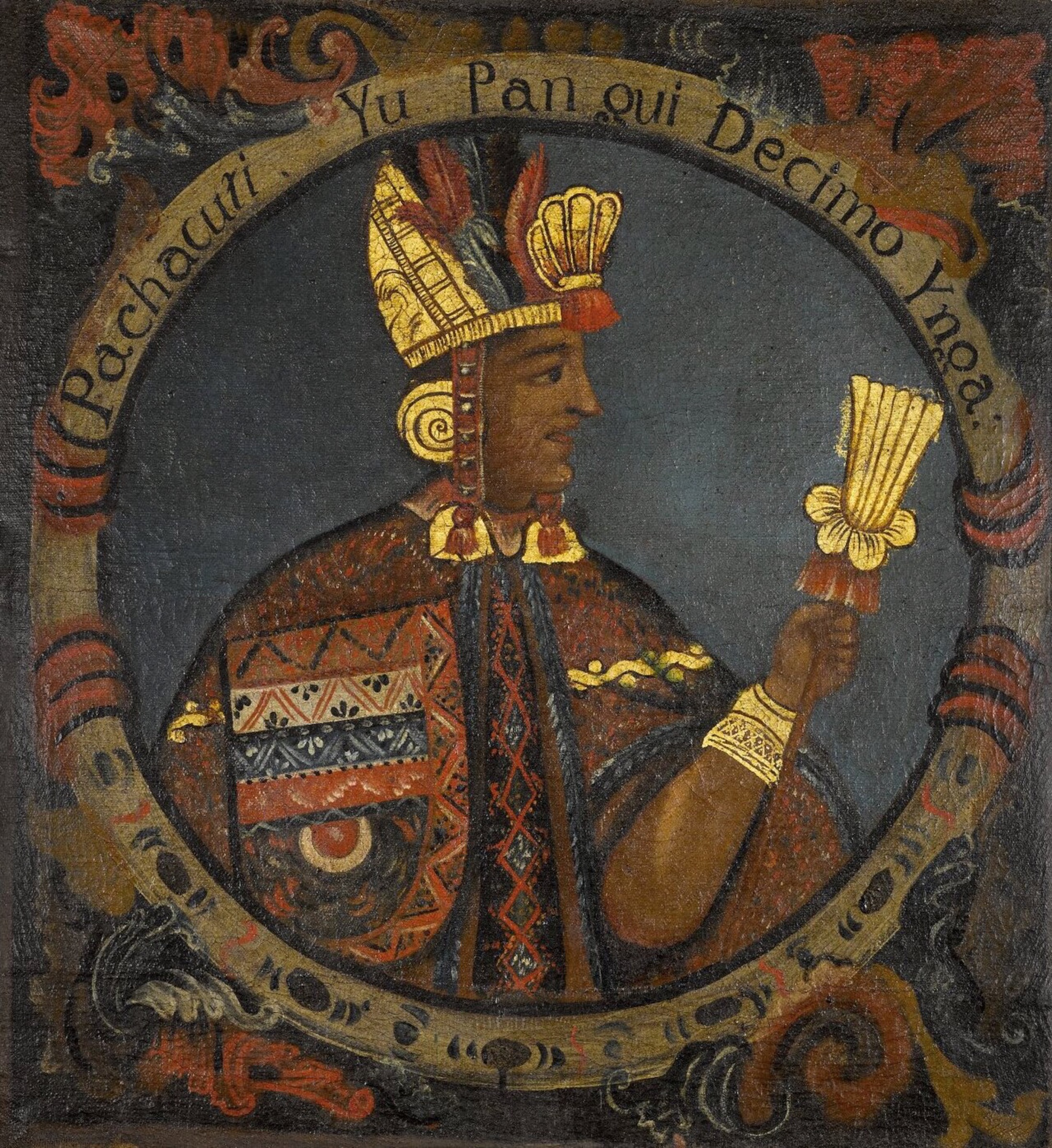
Dates: fifteenth century CE
Period: Renaissance (1336–1650 CE)
Region: Andes, South America
Tradition: Inca religion
Religion or tradition: Inca / Andean polytheistic religion; imperial sacred institutions including the worship of Inti.
Heresy status: No designation documented.
Pachacuti is closely associated with the monumental and religious transformation of Cuzco. The Coricancha, the city’s central sanctuary, is commonly attributed to his patronage, although the exact chronology of the surviving complex remains uncertain. Getty’s architectural record preserves that qualification and identifies the actual architects as unknown.1
PROVIDING FOR CUZCO’S SACRED CENTRE
The tradition of Pachacuti’s patronage connects him with the renewal and ceremonial provision of the Coricancha. Sarmiento’s account describes resources placed at the service of offerings and associates the ruler with the preservation of ancestral memory. The surviving complex and its later records together make this a substantial example of Andean sacred patronage.2
The positive contribution considered here is the provision of a central setting for divine worship and collective remembrance. Its human value includes the architectural and religious inheritance that remains available for study. Its service to the Gods concerns the honour given to Inti and the wider sacred order represented there. The achievement deserves attention in the particular language and history of the Andean world.
PROVISION FOR THE HOUSE OF THE SUN
Pedro Sarmiento de Gamboa’s sixteenth-century history credits Pachacuti with renewing the House of the Sun and enriching its ceremonial life. One episode describes the ruler observing offerings of food and drink and supplying precious vessels for that service. The account also connects him with the preservation and public presentation of ancestral memory.3
Sarmiento wrote after the Spanish conquest within a political project hostile to Inca sovereignty. His descriptions transmit valuable material, but his judgments and reported motives must not be accepted uncritically. The account is a colonial witness to remembered fifteenth-century religious work, rather than an eyewitness diary of Pachacuti’s reign.
The sanctuary itself served a wider Divine order, including Inti and Viracocha and shrines associated with celestial powers. Its religious and calendrical significance placed worship within the organization of the city.4
A ZEVIST INTERPRETATION
Pachacuti brings the Andean world into a collection concerned with the human inheritance of Divine worship. His contribution is studied through the specific Gods, places and practices of that world.
The relevant principle is the provision of lasting form for religious life. A sanctuary requires objects, skilled service, memory and recurring observance. The accounts of Pachacuti connect royal resources to those requirements.
His imperial power belongs to the same historical record and should remain visible. The profile’s Zevist interpretation concerns his sacred patronage and the importance of recovering Indigenous religious achievement through sources often written by its opponents. It does not make the colonial narrator’s hostility the measure of the tradition’s value.
NOTES
1 Getty CONA, “Coricancha Temple Complex”.
2 Getty’s architectural record; Sarmiento, chapters 30–31 and 36.
3 History of the Incas, chapters 30–31 and 36.
4 Getty.
BIBLIOGRAPHY
Getty Research Institute, CONA record 700009284, Coricancha Temple Complex.
Pedro Sarmiento de Gamboa, History of the Incas (1572), trans. Clements R. Markham (Hakluyt Society, 1907), chapters 30–31 and 36, primary account.
CREDIT
Picture: Later colonial-era portrait. Pachacuti, from a series of Inca rulers, 1750–1800, Brooklyn Museum, accession 1995.29.10. A later portrait, reproduced in the crop supplied by the source.
Credit: Unidentified artist. Source record, Public domain.
.jpg)
The round picture in the lists of the personalities is cropped from it.