





3 min read
Theologian of Devotion
Rūpa Gosvāmī
author: High Priest Zevios Metathronos
The theologian of cultivated devotion
Dates: sixteenth century CE
Period: Renaissance (1336–1650 CE)
Region: Vrindavan, India
Tradition: Caitanya Vaiṣṇava theology
Religion or tradition: Hinduism: Gauḍīya / Caitanya Vaiṣṇavism; systematic theology of Krishna bhakti.
Heresy status: No designation documented.
Rūpa Gosvāmī gave systematic expression to devotional experience. A disciple of Chaitanya and one of the six Gosvamins, he is particularly associated with the Bhaktirasāmṛtasindhu, a sustained account of devotion and its religious development. His work provides an exact reason for inclusion: the cultivation of the relationship with Krishna becomes a subject of careful instruction and analysis.1
TEACHING PEOPLE HOW DEVOTION DEVELOPS
Rūpa’s Bhaktirasāmṛtasindhu gave practitioners a systematic account of devotion, its cultivation and its experienced qualities. By bringing Sanskrit aesthetic thought into this religious inquiry, he provided a vocabulary for considering how practice shapes the person. The work could be studied and taught, allowing later readers to examine an experience that might otherwise remain difficult to describe precisely.2
His contribution to human understanding is the intellectual care given to religious emotion and conduct. His service to Krishna lies in directing that care towards the formation of devotion. For this collection, he exemplifies a teacher who gives practitioners tools for understanding their own discipline. The written work makes sustained instruction possible across generations, extending his service beyond those who could have learned from him personally.
GIVING EXPERIENCE AN INTELLIGIBLE FORM
Rūpa drew upon Sanskrit aesthetic thought to explain devotional rasa. In this setting, the term concerns the experienced savour of devotion. His theology treats devotion as an orientation that takes effect in conduct and culminates in absorption in the Divine. Rembert Lutjeharms shows how this experiential purpose coexists with a highly organized theological account.3
The distinction matters. An emotion may arise briefly; a religious discipline seeks to give the whole person a durable direction. Rūpa’s work supplies vocabulary through which a tradition can discuss that formation, teach it and distinguish its stages. David Haberman’s scholarly edition makes the Sanskrit text available with translation and explanatory notes.4
A ZEVIST INTERPRETATION
Rūpa represents the scholar who takes practice seriously enough to describe it precisely. His example invites the student to ask what a religious exercise is cultivating and how that cultivation affects attention, intention and conduct.
For Zevist study, this creates a fruitful comparison with the repeated movement from learning to application and back to deeper understanding. Experience becomes more useful when it can be examined through a disciplined vocabulary. Study becomes more consequential when it concerns a practice the student actually undertakes.
Rūpa’s theology retains its own Krishna-centred conclusions. His relevance here lies in the intellectual care he brought to devotion and in his insistence that the practitioner’s life is involved in the subject being studied.
NOTES
1 IGNCA, edition of the Bhaktirasāmṛtasindhu.
3 “An Ocean of Emotion,” pp. 175–178.
BIBLIOGRAPHY
Rūpa Gosvāmī, The Bhaktirasāmṛtasindhu, trans. David L. Haberman (2003), IGNCA edition record.
Rembert Lutjeharms, “An Ocean of Emotion: Rasa and Religious Experience in Early Caitanya Vaiṣṇava Thought,” in Caitanya Vaiṣṇava Philosophy (2014), pp. 175–230, author’s chapter.
CREDIT
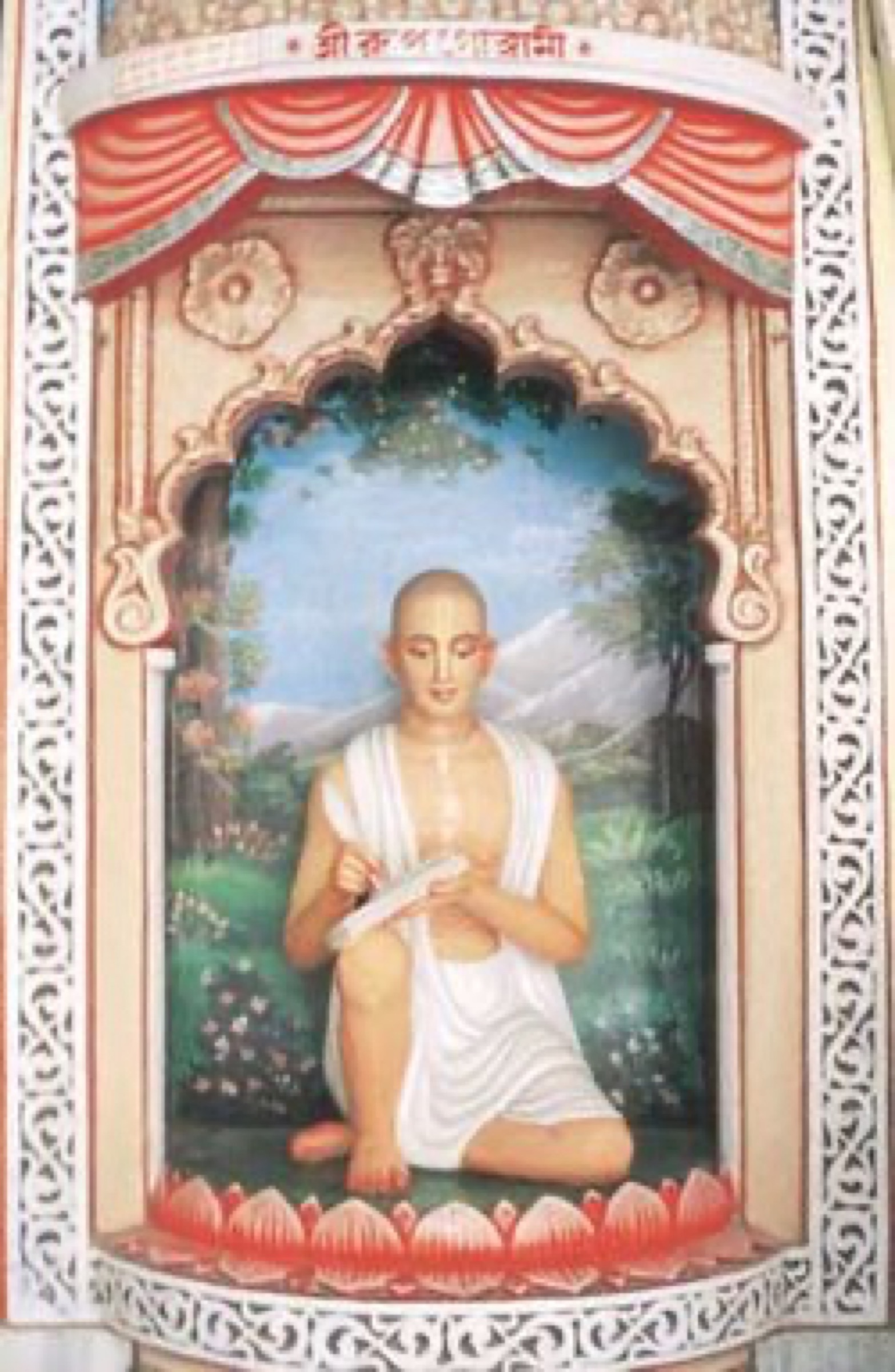
Picture: Traditional devotional depiction. A devotional representation identified as Rūpa Gosvāmī in the source record, shared by HareKrishnaPhotos in 2011. The original artist and date are not supplied; this is not a verified lifetime portrait.
Credit: HareKrishnaPhotos. Source record, CC BY-SA 3.0.

The round picture in the lists of the personalities is cropped from it.