





3 min read
Builder of Krishna Mandir
Siddhi Narasimha Malla
author: High Priest Zevios Metathronos
The patron who established Krishna’s temple in stone
Dates: reign 1619–1661 CE; Krishna Mandir, 1637
Period: Renaissance (1336–1650 CE)
Region: Patan, Nepal
Tradition: Hindu temple patronage
Religion or tradition: Hinduism in the Newar royal setting; prominent Krishna/Vaiṣṇava patronage.
Heresy status: No designation documented.
Siddhi Narasimha Malla’s place in the collection is anchored in Krishna Mandir at Patan. The temple belongs to his reign and to the religious life of the Kathmandu Valley. Conservation documentation dates it to 1637, before the collection’s 1650 boundary, although the king’s reign continued beyond it.1
MAKING SACRED NARRATIVES PART OF A LIVING CITY
Krishna Mandir placed episodes of the Rāmāyaṇa and Mahābhārata within the visible religious landscape of Patan. As royal patron, Siddhi Narasimha made resources available for a work in which worship and accomplished stone carving could serve one another. The monument provided a place for religious observance and a public encounter with sacred narrative.2
Its continuing importance is visible in the effort to restore and reopen it after the 2015 earthquake.3 The king’s positive legacy is therefore a foundation that later generations still judged worth caring for and using. Humanity received a work of religious art; Krishna’s worship received an enduring place within the city’s life.
A SACRED NARRATIVE MADE VISIBLE
The temple’s stone construction and rising śikhara form distinguish it within Patan’s monumental centre. Its sculptural programme includes scenes from the Rāmāyaṇa and Mahābhārata. The monument thus brings the sacred narratives into the worshipper’s physical surroundings. Nepal’s official heritage account identifies the king as its builder in the sense of royal patronage; the individual craftsmen deserve recognition as the makers of its executed form.4
The continuity of worship also gives the foundation a history beyond the original dedication. The temple’s restoration after the 2015 earthquake and reopening for worship illustrate the continuing religious importance of the place.5
A ZEVIST INTERPRETATION
Siddhi Narasimha’s achievement joins patronage to the public presence of Divine narratives. Sacred learning can reach a visitor through the form of a building and the scenes carved upon it. The temple makes that encounter available repeatedly and across generations.
For a Zevist reader, this gives a practical meaning to the preservation of wisdom. A ruler can direct resources toward places where knowledge, beauty and worship remain accessible. The task continues after construction, through maintenance and the transmission of the monument’s religious meaning.
The king is therefore included as a patron of Krishna worship, with a dated work that can be studied directly. His profile stands beside the architects’ profiles while preserving the distinction between commissioning a sacred building and personally designing it.
NOTES
1 Kathmandu Valley Preservation Trust, mission report.
2 Nepal Tourism Board’s Patan account.
3 Report on its return to worship.
4 Nepal Tourism Board, World Heritage Sites.
5 Restoration account quoting KVPT conservation leadership.
BIBLIOGRAPHY
Kathmandu Valley Preservation Trust, mission report, 18 April 2007, monument inventory, Heidelberg-hosted PDF.
Nepal Tourism Board, World Heritage Sites, Patan section, official booklet.
“On Janmasthami, Patan’s restored Krishna Mandir welcomes pilgrims again,” Onlinekhabar, 2018, conservation report.
CREDIT
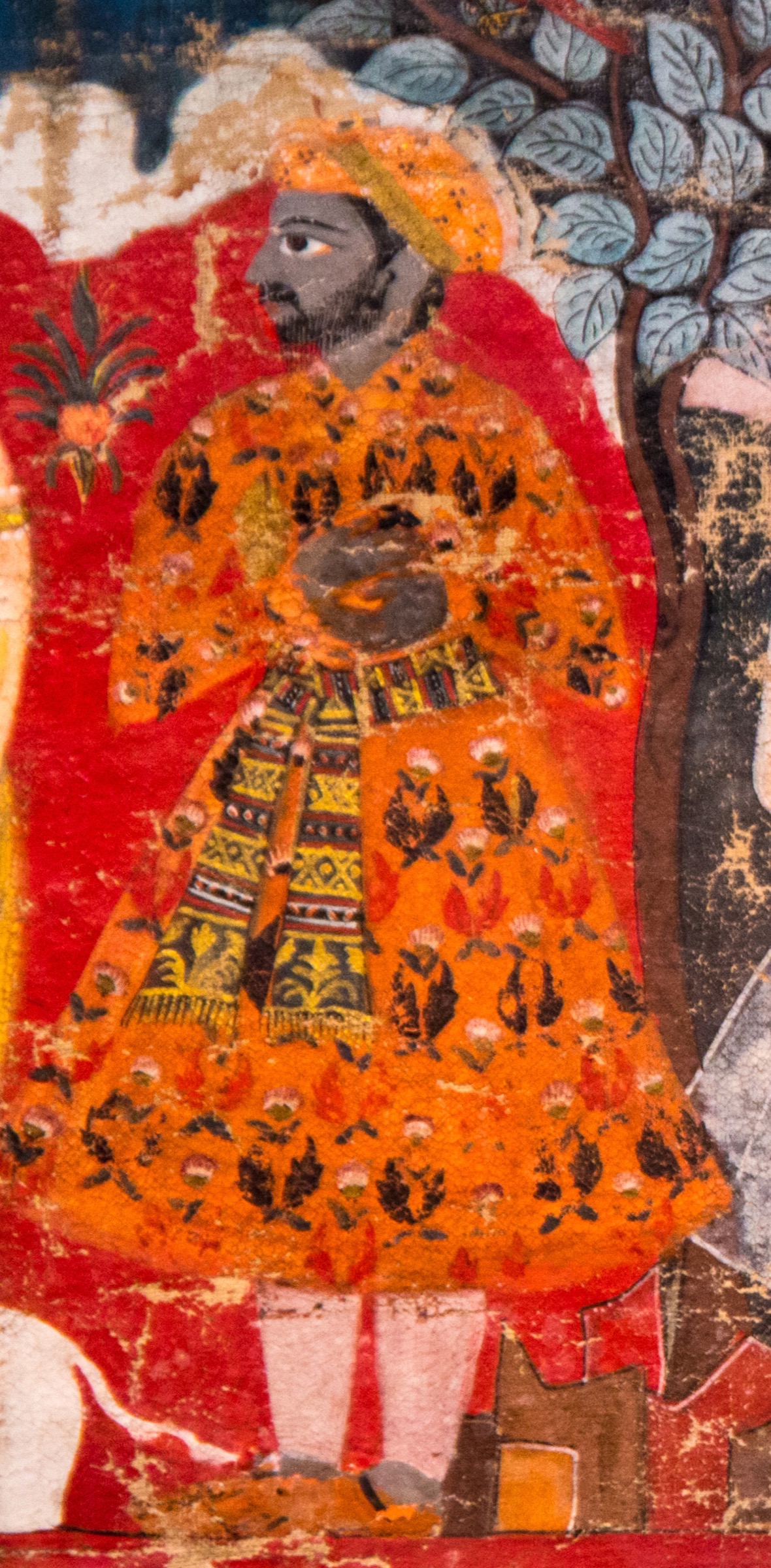
Picture: Portrait identified by the source. Portrait identified as the seventeenth-century Nepalese king Siddhi Narasimha Malla. Digital image credited to Alina Chan; the source record describes the work as a contemporary portrait.
Credit: Alina Chan. Source record, CC BY 4.0.

The round picture in the lists of the personalities is cropped from it.