






3 min read
Earl of Hlaðir
Sigurðr Hákonarson
author: High Priest Zevios Metathronos
The sanctuary patron of Hlaðir
Dates: died 962 CE
Period: Darkness (800–1000 CE)
Region: Norway
Tradition: Old Norse ritual patronage
Religion or tradition: Old Norse polytheism; communal sacrificial worship and sanctuary patronage.
Heresy status: No designation documented.
Sigurðr Hákonarson, earl of Hlaðir, represents a form of religious leadership exercised through the provision and protection of communal worship. He was the father of Hákon Sigurðarson, who later became a principal defender of Norway’s traditional cults. The surviving accounts place Sigurðr at the centre of sacrificial gatherings in Trøndelag during the reign of Hákon the Good.1
HOSPITALITY THAT SUSTAINED A RELIGIOUS COMMUNITY
The account of Sigurðr paying for a communal feast gives his generosity a practical form. Food, gathering and worship were brought together through his provision. His mediation with Hákon the Good likewise placed the community’s inherited rites before a ruler who wished to change its religion. These are the particular acts for which the saga remembers him favourably.1
For the people attending the feast, religious patronage meant participation in a shared occasion supported by someone willing to bear its cost. For the Gods’ worship, it meant the continued availability of places and rites. Sigurðr’s example gives generosity a direction: personal resources become useful when they sustain the activities through which a community understands and honours its sacred inheritance.
MAKING WORSHIP POSSIBLE
Snorri describes Sigurðr as a generous host who paid the cost of a major feast himself. The account also preserves verse by Kormákr praising his relationship with sanctuaries and the Gods. It is significant that the praise concerns provision: worship requires places, materials, food, skilled officiants and the willingness to sustain a gathering. The earl’s religious responsibility appears in what he made possible for others.2
In the following chapters, Sigurðr mediates between a king inclined towards Christianity and communities committed to their inherited rites. The narrative presents his diplomacy as an attempt to keep royal government and communal religious life from breaking apart. Its speeches are literary reconstructions, not recorded proceedings. Even so, the story preserves an important understanding of the earl’s office: he stood between coercive change from above and the rites by which his people understood their place in the world.3
THE EVIDENCE BEHIND THE PORTRAIT
The biography comes principally through later saga history, but the poetic material provides an earlier layer of testimony about sanctuary patronage. Modern scholarship examining the relationship between rulers and cult sites treats such verse as important evidence while maintaining the distinction between the age of a poem and the age of its prose setting.4
THE ZEVIST SIGNIFICANCE OF STEWARDSHIP
Sigurðr’s place in this collection rests on the practical support of the Gods’ worship. He offers a useful corrective to a purely inward account of religious development: a tradition also needs people who maintain its material conditions and accept responsibility for its continuity.
The example is concrete. Hospitality can serve religion; wealth can sustain instruction and ceremony; political intelligence can protect a community’s ability to worship. In a Zevist reading, these are forms of active service. The quality to study is the conversion of personal capacity into enduring religious provision.
NOTES
1 Hákon the Good’s Saga, chapters 16–18.
2 Chapter 16.
4 Roland K. Brennan, doctoral study, discussion of Sigurðardrápa.
BIBLIOGRAPHY
Snorri Sturluson, Heimskringla, Samuel Laing translation, Hákon the Good’s Saga, chapters 16–18; Harald Grey-cloak’s Saga, chapter 5, public-domain text.
Roland K. Brennan, Pre-Christian Anglo-Saxon Worship: A Semantic Study (PhD thesis, University College London, 2021), discussion of cult-site patronage and Sigurðardrápa, p. 203, institutional repository PDF. This supports the interpretation of poetic evidence, not the literal authenticity of saga speeches.
CREDIT
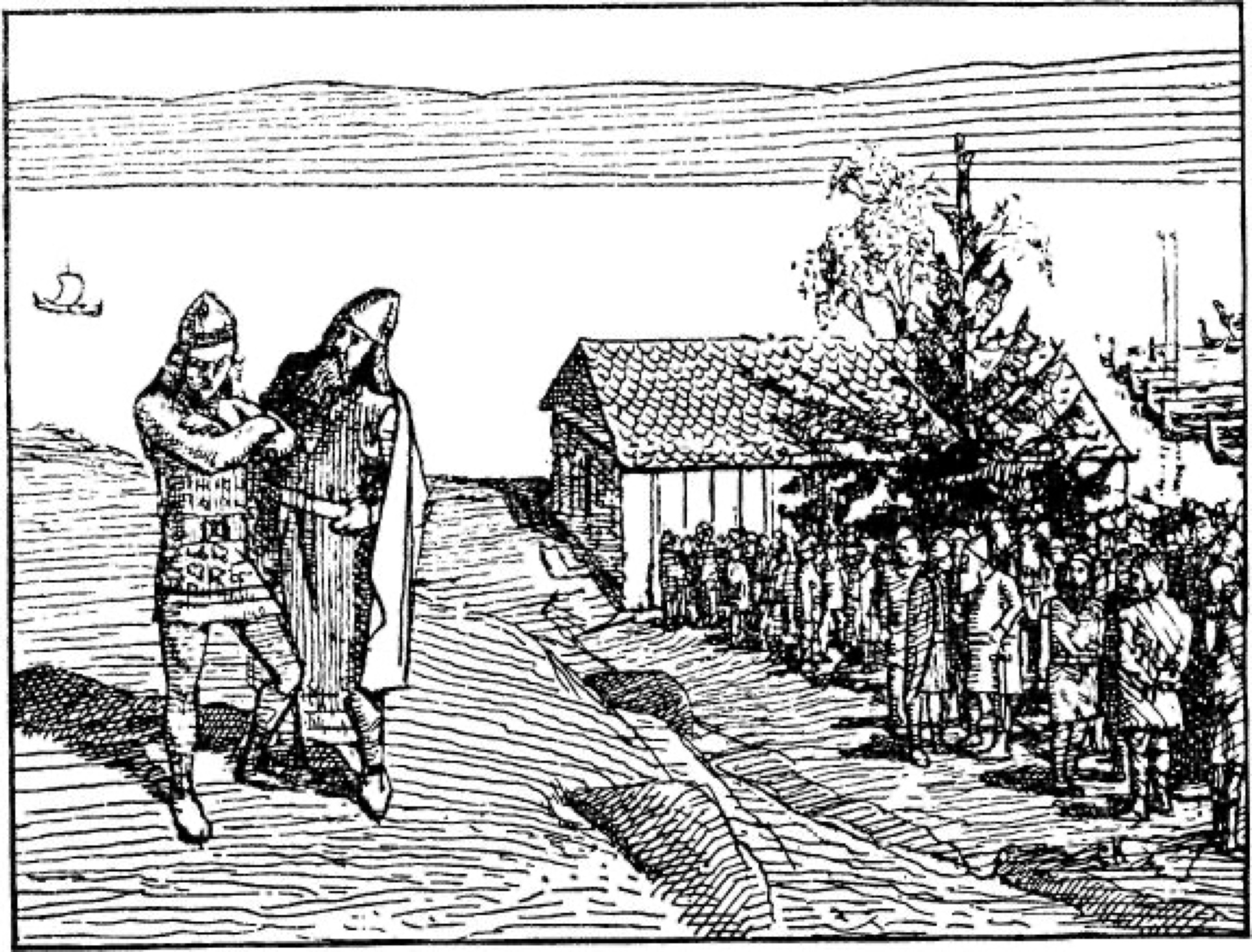
Picture: Later saga illustration. Christian Krohg’s illustration of Earl Sigurðr persuading the king, published in the 1899 Heimskringla. A later imagining of the saga episode.
Credit: Christian Krohg. Source record, Public domain.

The round picture in the lists of the personalities is cropped from it.