





3 min read
Architect of Mewar
Sūtradhāra Maṇḍana
author: High Priest Zevios Metathronos
The architect who gave sacred proportion a durable form
Dates: fifteenth century CE
Period: Renaissance (1336–1650 CE)
Region: Mewar, India
Tradition: Hindu architectural and iconographic tradition
Religion or tradition: Hindu architectural and iconographic tradition; sacred building and the representation of the Gods.
Heresy status: No designation documented.
Maṇḍana belongs in this collection through the union of religious learning and construction. Associated with the court of Rana Kumbha, he was an architectural master and writer whose work connected the making of buildings with the disciplined representation of the Gods. His significance rests on identifiable architectural literature and a historical courtly setting.1
MAKING SACRED KNOWLEDGE USABLE BY BUILDERS
Maṇḍana’s architectural and iconographic treatises gave later makers a written resource for the construction of temples and the representation of Divine forms. Recording proportions and distinguishing attributes made knowledge available beyond the memory of one workshop. The value of such a work grows through consultation: another builder can return to its prescriptions when planning, teaching or correcting a design.2
His contribution to humanity is the preservation of technical and artistic knowledge within a religious craft. His service to the Gods lies in helping that craft achieve recognizable, deliberate sacred forms. A measured design can become a sanctuary used by generations; a clear prescription can help generations of craftsmen acquire competence. Maṇḍana’s authorship gave that transmission a durable instrument.
ARCHITECTURE AS A LEARNED RELIGIOUS ART
The Rajasthan heritage documentation associates Maṇḍana with the architectural culture of Chittorgarh and Kumbhalgarh. His Prāsādamaṇḍana concerns temple architecture, while the Devatāmūrtiprakaraṇa concerns Divine images and their prescribed forms. The relevant achievement is the transmission of rules by which sacred form could be conceived, measured and executed. Individual monuments should still be attributed case by case; association with a royal building programme does not establish his personal design of every structure within it.3
A treatise gives the craft a life beyond its first commission. It allows later makers to consult, compare and correct their work. In Maṇḍana’s case, the religious subject matter makes this particularly consequential: an error in proportion or iconographic identity can alter what a sacred image communicates. The architect therefore has an intellectual responsibility as well as a manual one.
A ZEVIST INTERPRETATION
Maṇḍana represents the maker whose devotion becomes exact work. For a Zevist reader, his example places beauty beside knowledge and sustained training. The intention to honour the Gods must pass through the practical disciplines that make that intention visible.
His place among the personalities also broadens the meaning of spiritual accomplishment. A temple requires people able to translate a religious conception into a structure that others can enter and use. Architecture can serve prayer through proportion, ordered movement and the distinction of sacred space. Studying Maṇḍana encourages attention to that material service, including the patient transmission of craft to successors.
NOTES
1 UNESCO nomination dossier, Hill Forts of Rajasthan.
2 Rajasthan’s UNESCO nomination dossier.
3 Nomination dossier; ICOMOS evaluation, 2013.
BIBLIOGRAPHY
Government of India, Hill Forts of Rajasthan, World Heritage nomination dossier, sections on architectural tradition and Maṇḍana, UNESCO PDF.
ICOMOS, Evaluations of Nominations of Cultural and Mixed Properties, addendum, 2013, Rajasthan evaluation, UNESCO PDF.
CREDIT
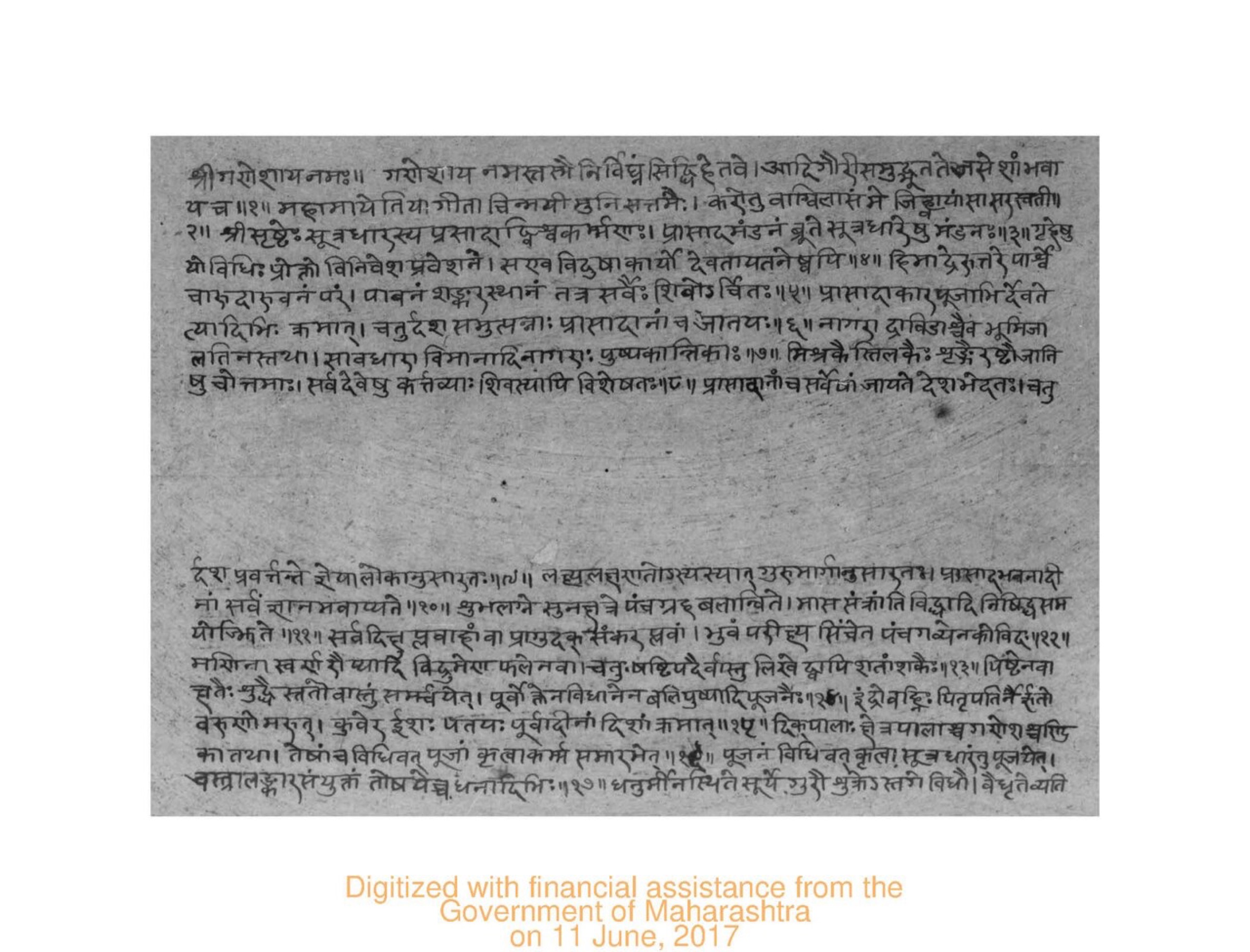
Picture: Manuscript of his architectural work. PDF page 2 of a manuscript of the Prāsādamaṇḍana of Sūtradhāra Maṇḍana, Asiatic Society of Mumbai MS_00000405, Granth Sanjeevani item 16528. A later manuscript copy, catalogued as Vikrama Saṃvat 1926 (approximately 1869 CE), preserving his architectural work.
Credit: Sūtradhāra Maṇḍana (work); unidentified manuscript scribe; Asiatic Society of Mumbai. Source record, Public domain.
The round picture in the lists of the personalities is cropped from it.