





3 min read
Philosopher of Living Nature
Tommaso Campanella
author: High Priest Zevios Metathronos
The study of nature and sacred power continued in confinement
Dates: 1568–1639 CE
Period: Renaissance (1336–1650 CE)
Region: Calabria, Naples, Rome and Paris
Tradition: Dominican Christianity, natural philosophy and magic
Religion or tradition: Christianity: Dominican philosopher with interests in natural magic and astrology.
Heresy status: Christian Heretic: condemned on suspicion of heresy; later tried for heresy and rebellion.
Tommaso Campanella entered the Dominican Order as a young man and developed a philosophy joining nature, sensation, magic and religion. His encounter with Bernardino Telesio helped shape his conviction that inquiry should examine the world itself. The pursuit became entangled with ecclesiastical prosecution and political rebellion.1
INQUIRY CONTINUED THROUGH IMPRISONMENT
Arrested in 1594, Campanella was condemned on suspicion of heresy and required to abjure. Following the Calabrian conspiracy of 1599, he faced proceedings for both heresy and rebellion. He spent almost twenty-seven years imprisoned in Naples and remained detained after his transfer to Rome. Much of his major writing emerged from these constrained circumstances.2
The designation Christian Heretic records the heresy proceedings and the earlier condemnation on suspicion. His imprisonment cannot accurately be attributed to the study of ancient philosophy alone: political action was also part of the case.
A CONTINUING INVESTIGATION OF NATURE AND SACRED POWER
Campanella’s works explored natural magic and the relations among living things, celestial influences and divine order. Later, Urban VIII sought his astrological expertise. The scholar who had been imprisoned could become useful to the highest ecclesiastical authority.3
His constructive legacy includes the writings he managed to produce despite the loss of liberty. They preserve a mind still attempting to understand nature, improve human life and give learning a comprehensive form. The survival of that work is a substantial achievement in itself.
HONORARY REMEMBRANCE IN THE TEMPLE
Zevist devotional interpretation. Campanella is remembered as an unfortunate soul whose desire for knowledge and spiritual advancement survived circumstances that could have broken the work entirely. The Temple reads his concern with living nature, celestial power and ancient philosophy as an engagement with the knowledge of the Gods. His own religious ambitions were Christian; this is the Temple’s interpretation of the deeper significance of his inquiry.
His case gives the cost of restriction a concrete measure: years of life passed in confinement while thought continued to seek a wider world. He was able to write, but lacked the ordinary freedom to direct his life and pursue his work. Religious and political pressures were intertwined.
For the suffering endured while preserving and developing this field of sacred learning, Campanella receives honorary mention. Within the Temple’s remembrance, such perseverance is honoured for the sake of the Gods, without reducing every episode of his political life to a religious quest.
May his next incarnation be free of the prison and the compelled recantation. May he meet the Gods’ wisdom openly, cultivate his powers with sound judgment, and find conditions in which learning can become free and fruitful practice.
NOTES
1 Stanford Encyclopedia of Philosophy.
2 Stanford, biographical sketch.
3 Stanford, natural magic and the Roman years; ILIESI’s documentary account of the 1628 papal consultations.
BIBLIOGRAPHY
Stanford Encyclopedia of Philosophy, “Tommaso Campanella”, sections 1, 3 and 7.
ILIESI, Archivio Tommaso Campanella: documentary chronology of the papal consultations.
CREDIT
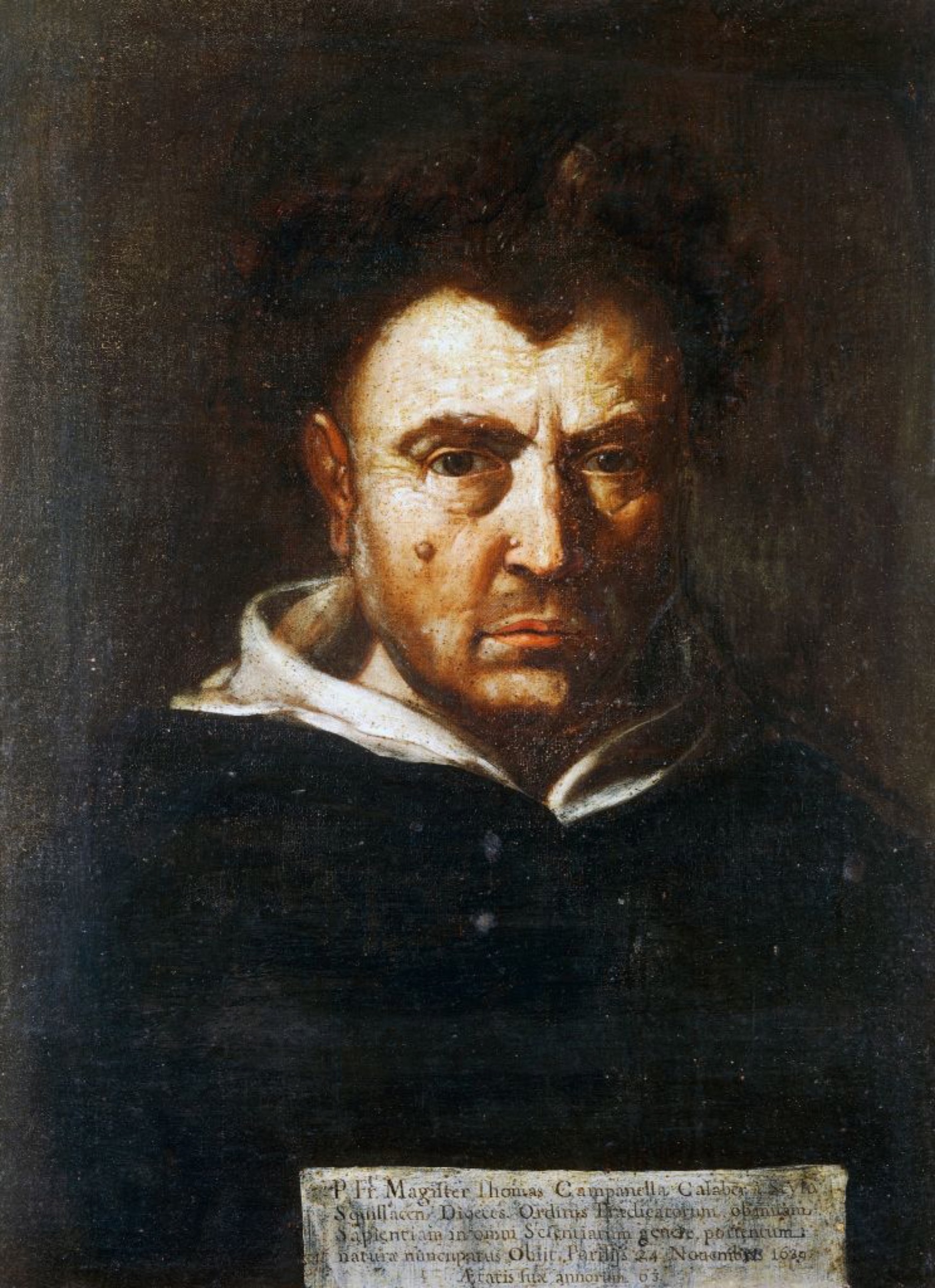
Picture: Seventeenth-century portrait. Francesco Cozza, portrait of Tommaso Campanella, seventeenth century, Collezione Camillo Caetani, Sermoneta. The source identifies both sitter and artist; it does not establish a precise date or a sitting from life.
Credit: Francesco Cozza; Collezione Camillo Caetani. Source record, Public domain. Faithful enlargement; no new image content added.

The round picture in the lists of the personalities is cropped from it.