




9 min read
Reformer of Lagash
Urukagina of Lagash
author: High Priest Zevios Metathronos
A Sacred Obligation toward the Vulnerable
Dates: Flourished in the 24th century BCE.
Period: Ancient.
Urukagina, whose name is also read Iri-kagina and Uruinimgina, ruled Lagash around 2350 BCE, the last of its rulers before Umma sacked the city. He's remembered for a set of reform texts, written on clay cones, that list the abuses of former days and the laws he put in their place.1
The reforms were concrete. He dismissed the tax inspectors, cut the fees that priests charged for a burial by more than half, and bound himself before the God Ningirsu not to hand the orphan and the widow over to the powerful.2
Zevism reads Urukagina as a lawgiver in the chain of spirituality, serving Zeus's order under the name of Ningirsu. His texts describe right order in Sumerian terms: fair measure, a fair price and protection for the weak, which Zevism calls Ma'at.
LIFE AND CONTEXT
Lagash had grown rich under the dynasty of Ur-Nanshe and the wars of Eannatum against Umma. Britannica calls Eannatum's Stele of the Vultures a monument “erected to celebrate the victory of King Eannatum over the neighbouring state of Umma.” King describes the cost: “New taxes were levied, and, to ensure their collection, a host of inspectors and other officials were appointed whose numbers would constantly tend to increase.”3
Urukagina broke with that house. “That Urukagina did not obtain the throne by right of succession is clear from the total absence of any genealogies in his inscriptions,” King wrote. “He does not even name his father.” He followed Lugal-anda, and where earlier rulers had called themselves patesi, he “rejects it in favour of that of ‘king.’”4
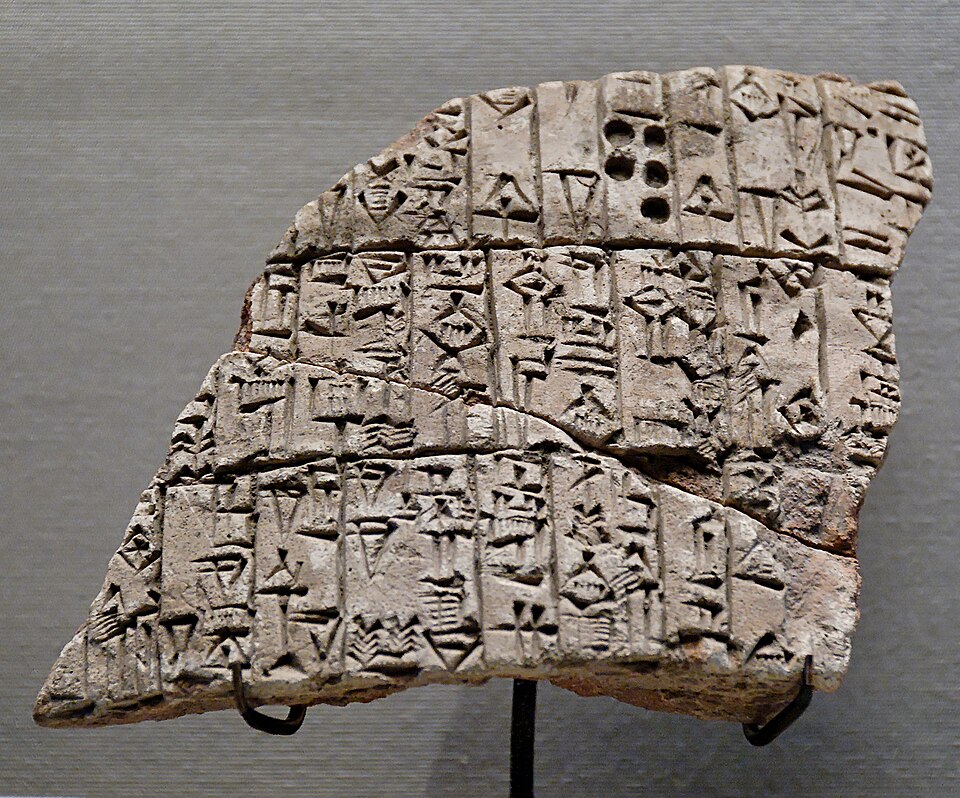
His reforms survive in 3 versions. At least 2 of them set 2 pictures side by side: first the oppression that had lasted “since distant days, from the beginning,” then the changes by which Urukagina “claimed that he had ameliorated the people's lot.” A clay cone of this kind in the Louvre stands 28 cm high and came from Girsu, modern Tello.5
He built for the Gods as his predecessors had. Besides Ningirsu's great temple, the Eninnu, he built or restored 2 other temples for the God, with temples for Bau, Ningirsu's wife, and for 2 of Ningirsu's sons, Dunshagga and Galalim. A cone fragment in the Louvre names the Eninnu and the E-siraran, the temple of Nanshe. He also cut or improved a canal to the quarter called Nina and built a reservoir that he made, he said, “like the midst of the sea.”6
His reign ended in ruin. Lugal-zaggisi, ruler of Umma and son of its ruler Ukush, attacked Lagash itself, and “the city of Lagash, which had been beautified and enriched by the care of a long line of successful rulers, was laid waste and spoiled.” King judged that Lagash “appears never to have recovered from the blow.”7
King also weighed the reformer's part in that fall. He thought Urukagina, “actuated by the best of motives,” had dismantled a military administration without replacing it, and wrote: “When war threatened he must have found himself without an army and without the means of raising one.”8
ATTAINMENTS
- He handed the ruler's estates back to the Gods. In the house and field of the ruler he “installed Ningirsu, their master,” in those of the women's quarters the Goddess Bau, and in those of the children the God Dunshagga.9
- He dismissed the granary inspectors, the fishery inspectors, the boat inspectors and the inspectors of flocks and herds, and removed officials who had taken bribes from the priests.9
- He cut the fee for an ordinary burial from 7 urns of drink, 420 loaves, 120 measures of grain, a garment, a kid, a bed and a seat to 3 urns, 80 loaves, a bed and a kid. The assistant's fee fell from 60 to 30 measures of grain.10
- He ended the fees for divination by oil, 1 shekel to the diviner, 1 to the grand vizier and 5 to the ruler, and the fees of 5 shekels and 1 that the ruler and the vizier took when a man put away his wife.11
- He gave the humble a legal right to refuse. A great man who wanted a subject's good ass or his house had to pay a fair price, and if the owner wouldn't sell, he “should have perfect liberty to refuse without any risk to himself.”12
- He released citizens held for debt and made his pledge for the orphan and the widow with Ningirsu himself.13
- He built or restored 3 temples of Ningirsu, the Eninnu among them, with temples for Bau, Dunshagga and Galalim and shrines for Ningirsu's daughters, and dug a canal and a reservoir for the quarter of Nina.14
KEY STORIES
Inspectors Down to the Sea
Urukagina's texts open with the bad old days. The rulers before him had taken the temple's beasts and land: “The oxen of the gods, he tells us, were employed for the irrigation of the lands given to the patesi; the good fields of the gods formed the patesi's holding and his place of joy.”15
The officials had spread everywhere. “Within the limits of the territory of Ningirsu,” Urukagina says, “there were inspectors down to the sea.” Priests joined in: they “entered the gardens of the poor and cut down the trees or carried off the fruits,” and kept on good terms with the palace by sharing the temple grain with its people.16
Then the text turns. Urukagina moved the Gods back into the property the palace had taken. King read the act as a statement of what a ruler is: he “only received his throne as a trust to be administered in the interest of the god; his fields, and goods, and all that he possessed were not his own property but Ningirsu's.”9
The Price of a Grave
Death had become expensive in Lagash. When a body was laid in the grave, the presiding priest had claimed 7 urns of drink, 420 loaves, 120 measures of grain, a garment, a kid, a bed and a seat. Urukagina cut the list to 3 urns, 80 loaves, a bed and a kid.10
Other fees went the same way. A man who wanted the future read in oil poured on water had paid a shekel to the diviner, another to the grand vizier and 5 to the ruler. A man who put away his wife had paid 5 shekels to the ruler and 1 to the vizier. Urukagina “tells us that after his accession the patesi, the vizir, and the diviner took money no more.”11
He reached into ordinary life as well. In the old days, if a man built a fish-pond, “his fish were taken and he had no redress.” Under the new law a great man who wanted his neighbour's house had to pay a fair price, and the owner could refuse. Workers at forced labour, who hadn't been given water to drink, now got it.12
A Covenant with Ningirsu
Urukagina didn't present the laws as his own invention. King notes that he “regards his reforms as due to the direct intervention of Ningirsu, his king, whose word it was he caused to dwell in the land; and it was not with his people but with Ningirsu that he drew up the agreement to observe them.”17
The cone records the rest. Urukagina freed citizens who had been held for debt, and he bound himself before the God not to deliver the orphan and the widow to the powerful man.18 “In his reign, he says, to the widow and the orphan the strong man did no harm.” In place of servitude, he declared, he had established liberty.19
The Sin of Umma
The fall of Lagash is known from a strange tablet. It looks like the household accounts of the palace archive, but it isn't a royal inscription. It holds an indictment of the men of Umma, and its writer went from shrine to shrine. Of the temple of Gatumdug it says, “they have set fire to the temple of Gatumdug; they have carried away the silver and the precious stones, and have destroyed the statue!” The refrain comes back again and again, at the temple of Nina, at Kinunir, and in the field of Ningirsu, where “they have removed the grain.”20
Then the writer passed judgment. “The men of Umma, by the despoiling of Lagash, have committed a sin against the god Ningirsu! The power that is come unto them, from them shall be taken away! Of sin on the part of Urukagina, king of Girsu, there is none. But as for Lugal-zaggisi, patesi of Umma, may his goddess Nidaba bear this sin upon her head!”21
THE ZEVIST READING
Hesiod's Justice, “the daughter of Zeus,” sits beside her father “and tells him of men's wicked heart, until the people pay for the mad folly of their princes who, evilly minded, pervert judgement and give sentence crookedly.”22 Urukagina's covenant has the same shape under a Sumerian name. He answered to Ningirsu for the orphan and the widow, and Zevism reads that answer as service to the sovereign order it calls Zeus's.
Egyptian religion named Ma'at “the personification of truth, justice, and the cosmic order” and set her against isfet.23 An inspector in every district, a priest in the poor man's garden and a grave priced beyond a family's means are Izfet in the form of administration. Urukagina's lists of fees, cut to a known and lower measure, restored a piece of Ma'at that anyone could check.
The doctrine of the Good asks for Ma'at and Right together: right order, and a right act from a right will. Urukagina's will isn't in doubt, and his acts restored order inside the city. King's verdict adds the other side. A ruler also keeps the order that guards the city, and when the army was gone, Umma burned the temples of Lagash.
The lament keeps his name clean: “Of sin on the part of Urukagina, king of Girsu, there is none.” Zevism honours that record. In its doctrine Zeus holds Ma'at as Sovereign of the Cosmos, and a ruler who serves that order has to keep both the law inside the city and the wall around it.
NOTES
1 Musée du Louvre, Cône d'Urukagina, AO 3278; L. W. King, A History of Sumer and Akkad, p. 252.
2 King, pp. 255, 258; ETCSRI, URU-KA-gina 01, xii 23–28.
3 Britannica, “Lagash”; King, p. 253.
5 King, p. 252; Louvre, AO 3278.
6 King, p. 259; Louvre, AO 4598 A–B.
8 King, p. 261.
9 King, p. 255.
11 King, p. 257.
12 King, p. 256.
13 ETCSRI, URU-KA-gina 01, xii 13–28; King, p. 258.
14 King, p. 259.
15 King, p. 254.
17 King, p. 258.
18 ETCSRI, URU-KA-gina 01, xii 13–28.
21 King, p. 264.
22 Hesiod, Works and Days 256–262, tr. Evelyn-White.
BIBLIOGRAPHY
Electronic Text Corpus of Sumerian Royal Inscriptions, Oracc, URU-KA-gina 01, RIME 1.09.09.01; xii 13–28, English translation.
Musée du Louvre, Cône d'Urukagina, AO 3278; description, material, dimensions, find-place and dating.
Musée du Louvre, Fragment de cône inscrit au nom d'Urukagina, AO 4598 A–B; inscription naming the Eninnu and the E-siraran.
L. W. King, A History of Sumer and Akkad, London, Chatto and Windus, 1910, Internet Archive; chapter 6, pp. 250–265, with the lament over Lagash translated on p. 264.
Hesiod, Works and Days 256–262, translated by H. G. Evelyn-White, Theoi Classical Texts Library.
Encyclopaedia Britannica, “Maat”.
Encyclopaedia Britannica, “Lagash”; the Stele of the Vultures and Eannatum's war with Umma.
CREDIT
Picture: Inscribed cone fragment of Urukagina, Louvre AO 4598 A–B. An artifact associated with the ruler, not a portrait. Photograph by Marie-Lan Nguyen, 2007; released into the public domain by its creator.

Photograph: Marie-Lan Nguyen, 2007, public domain, via Wikimedia Commons. Image record, Public domain, released by creator.

The round picture in the lists of the personalities is cropped from it.