





3 min read
Seer of the Greater Self
Vāmadeva
author: High Priest Zevios Metathronos
The seer remembered for knowledge of the greater Self
Dates: Rigvedic and early Upanishadic textual traditions
Period: Ancient (6000–500 BCE)
Region: Vedic India
Tradition: ṛṣi
Religion or tradition: Vedic religion: Rigvedic seer tradition, later received in Upanishadic teaching about Brahman.
Heresy status: No designation documented.
Vāmadeva is the seer associated with the fourth book of the Ṛgveda. His later religious importance is especially visible in the Bṛhadāraṇyaka Upaniṣad, which invokes him as an example of realized knowledge. The connection allows his profile to follow a Vedic utterance into its subsequent philosophical interpretation.1
CARRYING A VEDIC UTTERANCE INTO DEEPER SELF-INQUIRY
The utterance associated with Vāmadeva became a point of reference for the Bṛhadāraṇyaka Upaniṣad’s account of knowing Brahman. The Upanishad names the seer and interprets his words as an expression of realization. That connection allowed an earlier sacred verse to participate in a sustained inquiry into the identity and understanding of the knower.1
The positive legacy is the continuity of that demanding question across different forms of sacred literature. Human thought received an invitation to examine the self beyond its immediate descriptions. Divine knowledge became a matter for sustained understanding. A Zevist reader can value this inheritance as an example of a religious utterance becoming more consequential through repeated study and interpretation.
A STATEMENT CARRIED INTO PHILOSOPHY
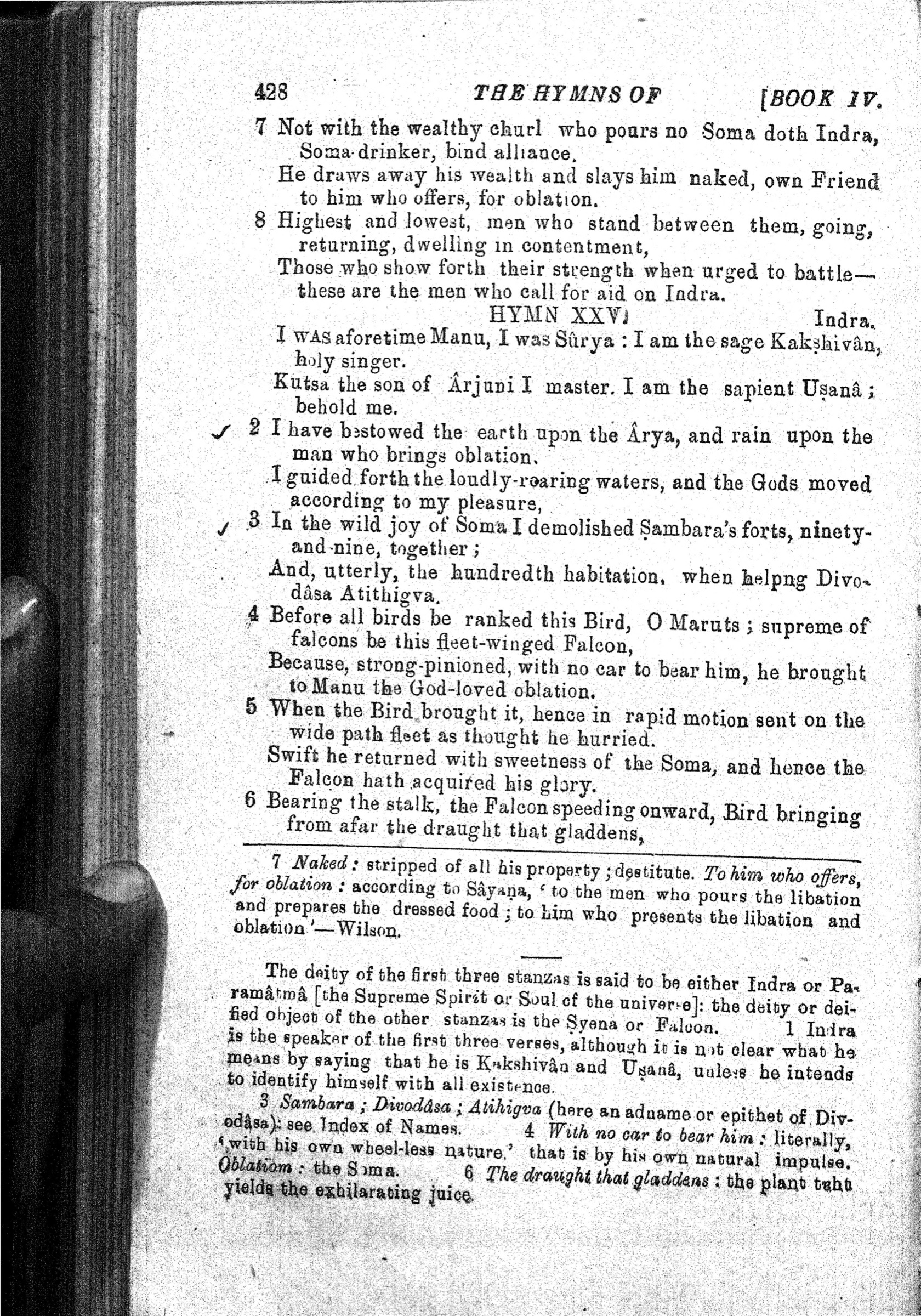
The opening of hymn 4.26 speaks through identifications with Manu and Sūrya and continues with accounts of Divine power. The Upanishad quotes the opening in its discussion of the knowledge of Brahman, explicitly naming Vāmadeva. This is evidence for a developed interpretive tradition around the verse, rather than proof that every later philosophical distinction was already formulated by its earliest poet.2
The important spiritual question is the scope of self-knowledge. The Upanishadic reading presents knowledge that changes the knower’s understanding of identity. The seer becomes an authoritative example because the statement expresses an attained recognition within that tradition.
A ZEVIST INTERPRETATION
Vāmadeva’s profile concerns the demand to deepen what is meant by knowing oneself. Ordinary descriptions of personality and social position do not exhaust the religious inquiry into the self. The cited texts invite a more searching consideration of the relationship between human awareness and the Divine.
A disciplined reader can study the difference between reciting a statement and understanding the realization it is intended to express. That distinction gives a practical direction to meditation and renewed study: language must become intelligible in the life of the practitioner.
Vāmadeva therefore belongs among the ancient sages for the enduring spiritual interpretation attached to his utterance. His contribution is represented through its textual history, without inventing dates, journeys or teachings absent from the evidence.
NOTES
1 Ṛgveda 4.26; Bṛhadāraṇyaka 1.4.10.
PRIMARY SOURCES
Ṛgveda 4.26.1–3, trans. R. T. H. Griffith, hymn.
Bṛhadāraṇyaka Upaniṣad 1.4.10, trans. F. Max Müller, Sacred Books of the East 15 (1884), Upanishadic interpretation.
Indira Gandhi National Centre for the Arts, Vedic Heritage Portal, “Rigveda,” maṇḍala and seer-family table, for traditional family-book attribution.
CREDIT
Picture: Facsimile of the associated hymn. Ṛgveda 4.26 in R. T. H. Griffith’s The Hymns of the Rigveda, volume I, 1920 printing, page 428. This historical printed page illustrates the utterance discussed in the article, not the sage’s appearance.
Credit: R. T. H. Griffith; Arthur Probsthain. Source record, Public domain.
The round picture in the lists of the personalities is cropped from it.