




10 min read
Great Composer
Vangelis Papathanasiou
author: High Priest Zevios Metathronos
Music for the Human Journey into the Cosmos
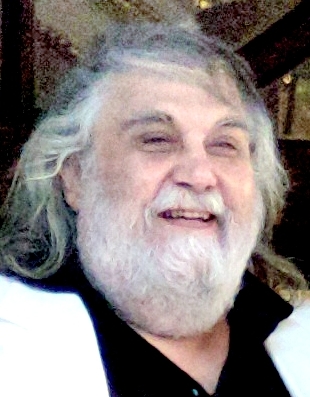
Dates: 1943–2022
Period: Modern era, 1900–present
Vangelis, born Evangelos Odysseas Papathanassiou, was a Greek composer who taught himself the piano as a small child and made his name at a bank of electronic instruments.1 His score for Chariots of Fire won the Academy Award for Original Score on 29 March 1982, and its opening theme went to the top of the Billboard Hot 100.2
The cinema made him famous. Later, space agencies took up his music as the sound of their missions: NASA's Mars Odyssey, ESA's comet chaser Rosetta and NASA's Juno at Jupiter each received music from him, and in 2018 ESA aimed a broadcast of his music toward a black hole.3
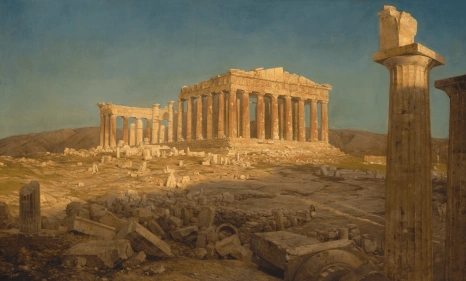
Zevism receives this work under Apollo, lord of the lyre, and the Muses. In June 2001 Vangelis staged Mythodea at the Temple of Zeus in Athens and gave the music to NASA's Mars mission, setting a new frontier before the house of the Sovereign of the Cosmos.4
LIFE AND CONTEXT
Vangelis was born on 29 March 1943 in Agria, near Volos in Thessaly. “His father, Odysseus, was in the property business, and was an enthusiastic amateur runner as well as a music lover.” His mother, Foteini Kyriakopoulou, had trained as a soprano but didn't sing professionally. The boy started on the piano at 4 and had lessons from 6, yet he refused to learn notation.5
He explained the refusal in his own terms. “Music is not something that's written,” he said. “Everything that's noted down comes after the music is created … Music is immediate, wild, unpredictable, multidimensional.” He did later take some piano lessons with the Greek composer Aristotelis Koundouroff, and as a teenager he got his first Hammond organ and painted it gold.6
At 20 he and 3 friends formed the band Forminx in Athens, which did well in Greece. He then went to Paris and founded Aphrodite's Child with Demis Roussos. Their debut single, “Rain and Tears,” borrowed heavily from Pachelbel's Canon and became a major hit across Europe. The band's 3 albums sold more than 20 million copies in Europe, and the last, 666, came out in 1972.7
In 1974 he moved to London and built Nemo Studios, named for Captain Nemo of Jules Verne's novel. In London he recorded with Jon Anderson of Yes as Jon and Vangelis, and he liked to catch a performance in a single pass. “I won't even rerecord a thing if I play a bum note,” he told Beat Instrumental in 1975.8
Film work followed. After Chariots of Fire he scored Ridley Scott's Blade Runner in 1982. Scott recalled hearing the music for the opening shot of Los Angeles: “Honestly, my hairs stood on end. He was the soul of the movie.” The 2 men worked together again on 1492: Conquest of Paradise (1992), and Vangelis later scored Oliver Stone's Alexander (2004).9
Vangelis died of heart failure in a hospital in Paris on 17 May 2022, aged 79. Greece's prime minister, Kyriakos Mitsotakis, wrote that “Vangelis Papathanassiou is no longer among us” and called him an “electronic sound trailblazer.”10
ATTAINMENTS
- He won the Academy Award for Original Score for Chariots of Fire at the 54th ceremony on 29 March 1982, ahead of John Williams (Raiders of the Lost Ark), Randy Newman (Ragtime), Dave Grusin (On Golden Pond) and Alex North (Dragonslayer).11
- The Chariots of Fire theme reached No. 12 in Britain and became a No. 1 hit in the United States in 1982.12
- With Aphrodite's Child he made 3 albums that together sold more than 20 million copies in Europe.13
- He scored 2 films for Ridley Scott, Blade Runner (1982) and 1492: Conquest of Paradise (1992); the soundtrack album of 1492 sold 4 million copies.12
- Mythodea, his 1st recording for Sony Classical, was issued as the music for NASA's 2001 Mars Odyssey mission after its premiere in Athens on 28 June 2001.4
- He wrote Rosetta (2016), 13 tracks describing the 10-year flight of ESA's comet chaser, dedicated to “everyone who made the mission possible.”14
- NASA set his music to its animation of Juno's flyby of Ganymede on 7 June 2021 and of the craft's 34th pass of Jupiter less than a day later.15
- The Minor Planet Center of the International Astronomical Union named asteroid 6354 Vangelis after him; Eugène Delporte had found the body at Uccle on 3 April 1934.16
KEY STORIES
The Empty Seat on Oscar Night
On 29 March 1982, at the Dorothy Chandler Pavilion, Kathleen Turner and William Hurt presented the Oscar for Original Score. The field was strong. John Williams was up for Raiders of the Lost Ark, Randy Newman for Ragtime, Dave Grusin for On Golden Pond and Alex North for Dragonslayer. The award went to Vangelis for Chariots of Fire.11
The composer wasn't in the hall. The Academy's acceptance-speech record for the award reads “Winner not present,” and the 2 presenters accepted the statuette for him. The same evening Chariots of Fire won Best Picture for its producer, David Puttnam.17
He had written the score by imagining himself into the film. “I try to put myself in the situation and feel it,” he told Richard Harrington of The Washington Post. “I'm a runner at the time, or in the stadium, or alone in the dressing room … and then I compose … and the moment is fruitful and honest, I think.”13
The single climbed to No. 1 in America. The Irish Times judged that “the fact that Chariots of Fire won the best picture Oscar probably owed much to the impact of Vangelis's music.”12
Myth and Ode at the Temple of Zeus
On 28 June 2001 Vangelis premiered Mythodea at the Temple of Zeus in Athens. He'd taken an earlier work of his own and expanded the score for his 1st recording with Sony Classical. The sopranos Kathleen Battle and Jessye Norman sang the solo parts.18
Sony described the evening as “a highly theatrical production using projected images of space from NASA's Jet Propulsion Laboratory, as well as mythological icons.” Vangelis had coined the title himself, “fusing the words 'myth' and 'ode' to describe a vital connection between the past and the future.”4
The music carried the name of a spacecraft. When Sony released the album in November 2001, Odyssey had arrived at Mars a few weeks before. It would “circle the planet approximately once every 11 hours for 917 days, a full Mars year, and will send back images and data.”4
Zevism reads that evening as a return to the source. The music for a Mars probe was heard first at the temple of Zeus, and mythological icons shared the screens with pictures of space.
A Voice Sent Toward a Black Hole
When Stephen Hawking died in 2018, Vangelis composed a tribute for his interment.19 On 15 June 2018 Hawking's ashes were laid in Westminster Abbey, and ESA astronaut Tim Peake read at the service. At 13:42 CEST the 35-metre antenna of ESA's Cebreros station, 77 km west of Madrid, began to transmit Hawking's voice set to the new music.20
The target was 1A 0620-00, a black hole that shares a binary system with an orange dwarf star. Günther Hasinger, ESA's Director of Science, put the distance in human terms: “It is fascinating and at the same time moving to imagine that Stephen Hawking's voice together with the music by Vangelis will reach the black hole in about 3500 years, where it will be frozen in by the event horizon.”20
Hawking's daughter Lucy spoke for the family. “Around the time that our father was laid to rest, the Vangelis composition with our father's voice was broadcast into space,” she said. “This is a beautiful and symbolic gesture that creates a link between our father's presence on this planet, his wish to go into space, and his explorations of the universe in his mind.”20
THE ZEVIST READING
Apollo presides over this life. The Homeric Hymn tells how the infant Hermes built a lyre from a tortoise shell and later handed it to Apollo, who tried each string: “Awesomely it sounded at the touch of the god, while he sang sweetly to its note.”21 The lyre is a made thing, a craft of Hermes perfected under Apollo's hand. Vangelis's instruments were wire and circuitry, and he played them in the same office: shaping sound into an order that people can feel.
He named that order himself. “For me, music is science more than art,” he told NPR. “It is the main code of the universe.”13 Zevism calls the structured order of existence Ma'at and holds that Zeus keeps it as Sovereign of the Cosmos. Measure and rhythm are Ma'at in sound, and a composer who works by ear and refuses the written score still answers to them.
The space music belongs to the doctrine of Light and Darkness. Unexplored darkness isn't evil; it's what one walks into with light, and explored darkness becomes knowledge. Engineers carried instruments to Mars, to a comet and to Jupiter. Vangelis carried the public after them, and ESA said the Rosetta album would keep the mission “in the public memory and imagination, long after the official press releases and web stories are forgotten.”22
The Hawking broadcast took that doctrine to its edge. A human voice and a Greek composer's melody left Cebreros for a black hole, the one region from which no light returns. Zevism reads the transmission as light sent into the deepest dark there is, a message that knowledge doesn't stop at the horizon of what can be seen.
Mythodea brings the reading back to Athens. Zevism holds that one must return to the source and that the source holds priority as knowledge travels forward. A composer who set a mission to Mars before the Temple of Zeus in Athens, and named the work for myth and ode together, kept the old house in the line of the new discoveries.
NOTES
1 Tim Peacock, uDiscover Music, 19 May 2022; Andrew Limbong, NPR, 19 May 2022.
2 Academy of Motion Picture Arts and Sciences, 54th Academy Awards; NPR.
3 Sony Classical, 9 November 2001; ESA, “ESA and music”; NASA, 14 July 2021; ESA, 15 June 2018.
5 The Irish Times, obituary, 28 May 2022.
6 The Irish Times; The Washington Post, 19 May 2022.
7 Associated Press, 19 May 2022; The Irish Times; The Washington Post.
8 The Washington Post; Associated Press.
9 The Washington Post; The Irish Times.
10 NPR; Associated Press.
11 Academy, 54th Academy Awards.
12 The Irish Times.
14 ESA, “ESA and music”; ESA Rosetta blog, 29 July 2016.
16 The Irish Times; NASA JPL Small-Body Database, 6354 Vangelis.
17 Academy Awards Acceptance Speech Database, Music (Original Score), 1982.
18 Sony Classical, 9 November 2001.
19 Associated Press.
21 Homeric Hymn to Hermes 39–51, 496–502.
BIBLIOGRAPHY
Tim Peacock, “Vangelis, Oscar-Winning ‘Blade Runner,’ ‘Chariots Of Fire’ Composer Dies At 79”, uDiscover Music, 19 May 2022; birth name and electronic instruments.
Academy of Motion Picture Arts and Sciences, “The 54th Academy Awards, 1982”, ceremony date, Music (Original Score) nominees and winner, Best Picture; with the Margaret Herrick Library's Academy Awards Acceptance Speech Database, record 054-14, presenters and “Winner not present.”
Andrew Limbong, “Vangelis, composer of Chariots of Fire music, dead at 79”, NPR, 19 May 2022; Billboard Hot 100, death in Paris.
Associated Press, “Vangelis, the Greek ‘Chariots of Fire’ composer, dies at 79”, 19 May 2022, as published by KSAT; Forminx, Paris, London, Hawking tribute, Mitsotakis statement.
“Vangelis obituary: Oscar-winning Chariots of Fire composer”, The Irish Times, 28 May 2022; family, training, “Rain and Tears,” chart positions, 1492 sales, asteroid.
“Vangelis, Oscar-winning composer of ‘Chariots of Fire’ theme, dies at 79”, The Washington Post, 19 May 2022; Hammond organ, album sales, Nemo Studios, quotations of Vangelis and Ridley Scott.
Sony Classical, “Mythodea: Music for The NASA Mission: 2001 Mars Odyssey”, news release, 9 November 2001.
European Space Agency, “New Vangelis album inspired by ESA's Rosetta mission”, Rosetta blog, 29 July 2016; and “ESA and music”, section “Vangelis: a soundtrack for space.”
European Space Agency, “ESA honoured to take part in Hawking tribute”, 15 June 2018.
NASA, “Juno Flies Past the Moon Ganymede and Jupiter, With Music by Vangelis”, 14 July 2021.
NASA Jet Propulsion Laboratory, Small-Body Database record for 6354 Vangelis (1934 GA), discovery data.
Homeric Hymn to Hermes 39–51 and 496–502, H. G. Evelyn-White translation, Theoi Classical Texts Library.
CREDIT
Picture: Vangelis, 26 July 2012. Photograph by Ian Patterson; cropped version by StuivertjeWisselen.
Ian Patterson; crop by StuivertjeWisselen / Wikimedia Commons; CC BY 2.0. Image record, CC BY 2.0.
.jpg)
The round picture in the lists of the personalities is cropped from it.