





3 min read
Friend of Varuṇa
Vasiṣṭha
author: High Priest Zevios Metathronos
The seer of Divine friendship and sacred responsibility
Dates: Rigvedic period; individual lifetime undated
Period: Ancient (6000–500 BCE)
Region: Vedic India
Tradition: ṛṣi and priestly lineage
Religion or tradition: Vedic religion: the Vasiṣṭha seer and priestly lineage, including hymns to Varuṇa.
Heresy status: No designation documented.
Vasiṣṭha stands at the centre of the priestly inheritance associated with the seventh book of the Ṛgveda. The name belongs both to a revered seer and to the lineage through which hymns were transmitted. A family collection should not be converted into a modern claim that one person wrote every verse within it. The clearest evidence for his spiritual character is the poetry that names him.1
A LANGUAGE FOR FRIENDSHIP WITH THE DIVINE
The Vasiṣṭha tradition preserved a form of prayer in which a person can remember divine friendship, acknowledge responsibility and ask for its renewal. Hymn 7.88 gives that relationship a vivid scene: the seer and Varuṇa together upon the waters. Its survival has left later readers a finely shaped expression of religious intimacy joined to seriousness of conduct.1
The human gift is a vocabulary for examining the quality of one’s relationship with the sacred. The service to the God is the preservation of attentive praise and a desire to remain worthy of his favour. Within this collection, Vasiṣṭha’s contribution is found in that enduring instruction through poetry, carried by the seer’s name and the lineage associated with it.
FRIENDSHIP WITH VARUṆA
Hymn 7.88 presents Vasiṣṭha in a striking relationship with Varuṇa. Its imagery places the seer and the God together in a boat upon the waters. It remembers an earlier friendship, asks for its renewal and describes Divine action in the making of the seer. The human speaker seeks protection while acknowledging the seriousness of his relationship with the God.2
The poem gives sacred knowledge a relational character. The seer speaks, remembers and asks; the God is addressed as a living source of guidance and favour. The hymn’s movement between intimacy and responsibility gives it unusual depth. It contains a direct expression of the desire to remain worthy of Divine friendship.
A ZEVIST INTERPRETATION
Vasiṣṭha offers a strong model for prayer joined to the examination of one’s conduct. The practitioner approaches the Divine with the intention to understand and improve. Friendship with the Gods involves sustained attention to the relationship and to the quality of the life brought before them.
His example also places spiritual attainment within a tradition of skilled speech. The hymn has been shaped so that memory, praise and petition work together. Studying its form can deepen the meaning of recitation.
The relevant practice is a repeated return: learn the sacred words, consider what they ask of the speaker, pray with understanding and return to study with greater attention. Vasiṣṭha’s remembered intimacy with Varuṇa supplies an ancient Vedic expression of that continuing relationship.
NOTES
1 Ṛgveda 7.88.
2 7.88.3–7.
SOURCES AND STUDY
Ṛgveda 7.88, especially verses 3–7, R. T. H. Griffith’s public-domain translation, primary hymn.
Stephanie W. Jamison and Joel P. Brereton, The Rigveda (Oxford University Press, 2020), scholarly introduction and textual chronology.
Indira Gandhi National Centre for the Arts, Vedic Heritage Portal, “Rigveda,” maṇḍala and seer-family table, for traditional family-book attribution.
CREDIT
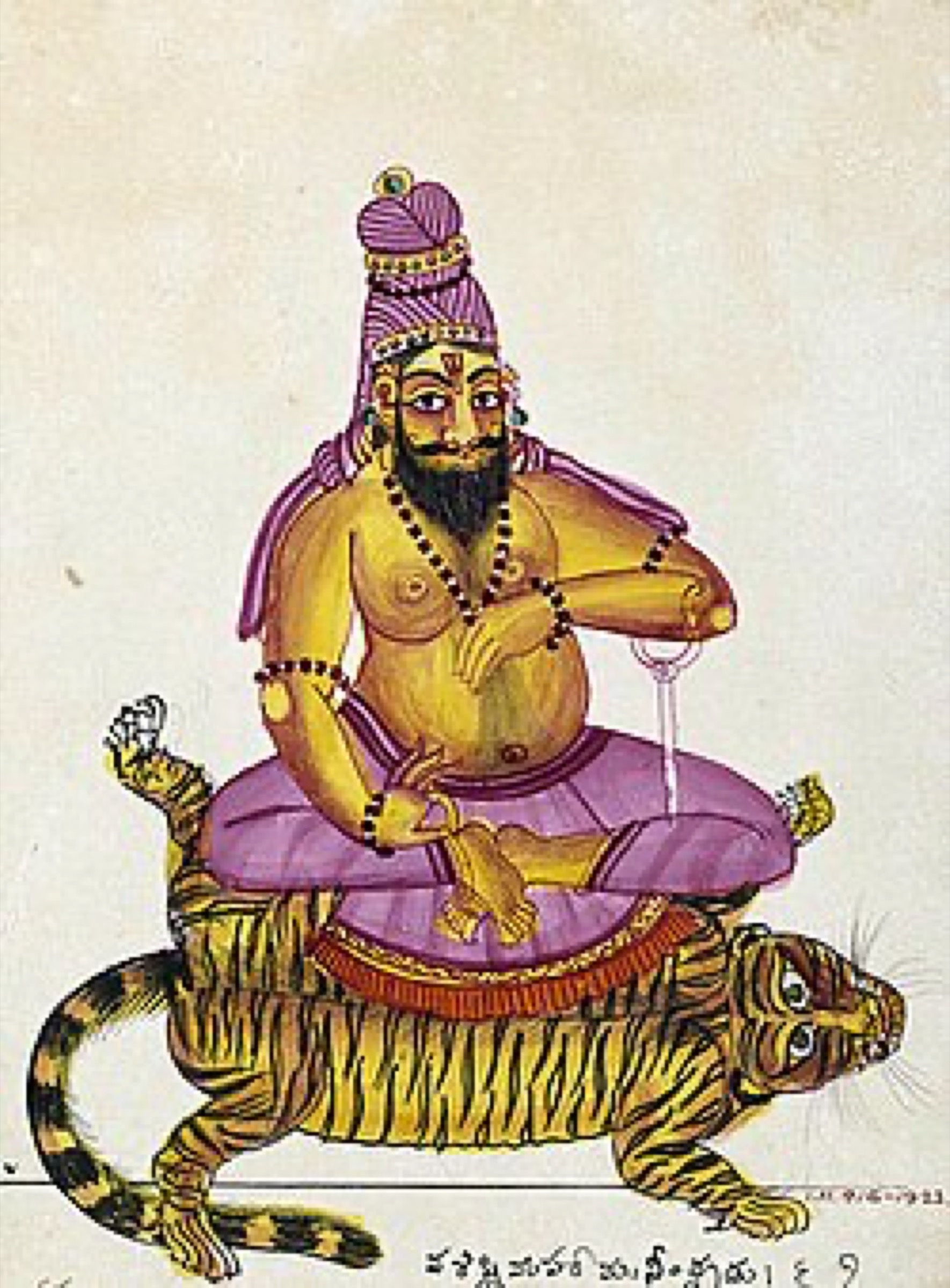
Picture: Traditional artistic depiction. Maharishi Vasiṣṭha seated on a tiger skin, painting dated 1820–1825, Victoria and Albert Museum, O404810. A traditional representation made long after the Vedic period.
Credit: Unknown author. Source record, Public domain.

The round picture in the lists of the personalities is cropped from it.