









3 min read
Seer of the Gāyatrī
Viśvāmitra
author: High Priest Zevios Metathronos
The seer who sought the awakening of sacred thought
Dates: Rigvedic period; individual lifetime undated
Period: Ancient (6000–500 BCE)
Region: Vedic India
Tradition: ṛṣi and hymn tradition
Religion or tradition: Vedic religion: the Viśvāmitra seer tradition, including the Gāyatrī verse to Savitṛ.
Heresy status: No designation documented.
Viśvāmitra is associated with the third book of the Ṛgveda, including the celebrated verse addressed to Savitṛ at 3.62.10. The Vedic evidence gives him an enduring place in the history of sacred utterance. Later stories of his austerities belong to a further layer of tradition; the present profile begins with the hymns themselves.1
DIRECTING PRAYER TOWARDS THE IMPROVEMENT OF THOUGHT
The Gāyatrī verse associated with Viśvāmitra’s tradition places the movement of thought within a prayer to Savitṛ. Its purpose gives the hymn a lasting human importance: the worshipper seeks an illuminated capacity to understand and act. The river dialogue offers a second resource, presenting a seer whose carefully directed speech seeks passage through a powerful natural setting.2
These texts gave later generations sacred forms through which intelligence, purpose and divine reverence could be considered together. Their service to the Gods lies in the precise attention given to Savitṛ and the river powers. Their positive human legacy is a model of prayer that seeks the development of the mind and then directs that mind towards a definite undertaking.
THE MIND TURNED TOWARD DIVINE ILLUMINATION
The Savitṛ verse, widely known as the Gāyatrī, brings reverence for Divine splendour together with a request concerning the activity of thought. Its neighbouring verses continue the themes of understanding, praise and worship. The passage offers a concise image of a mind seeking direction from a Divine power.3
Another hymn dramatizes Viśvāmitra’s address to the rivers Vipāś and Śutudrī. The rivers answer the speaker, who asks for passage. The poem presents sacred speech within a landscape that has power and agency, connecting human movement with an appeal to the river deities.4
A ZEVIST INTERPRETATION
Viśvāmitra’s importance is especially clear in a religion that connects study with the improvement of the mind. The prayer to Savitṛ concerns what the student becomes able to perceive and understand. It gives learning a spiritual direction.
The river dialogue adds a complementary quality: the seer attends to the world through which he moves. He speaks to powers that require recognition, and his utterance has a definite purpose. Sacred speech becomes an active relationship with the Divine order encountered in life.
For Zevist study, these two passages can be read together. One asks for the right movement of thought; the other shows thought taking the form of a considered appeal. The reader is invited to make understanding effective through words and action, then to return to the text with the experience gained.
NOTES
1 Ṛgveda 3.62.
3 3.62.10–12.
4 3.33.
PRIMARY SOURCES
Ṛgveda 3.62.10–12, Savitṛ passage.
Ṛgveda 3.33, dialogue with the rivers.
Both links reproduce R. T. H. Griffith’s public-domain translation. The traditional association concerns Viśvāmitra and his lineage, rather than a securely dated modern biography.
Indira Gandhi National Centre for the Arts, Vedic Heritage Portal, “Rigveda,” maṇḍala and seer-family table, for traditional family-book attribution.
CREDIT
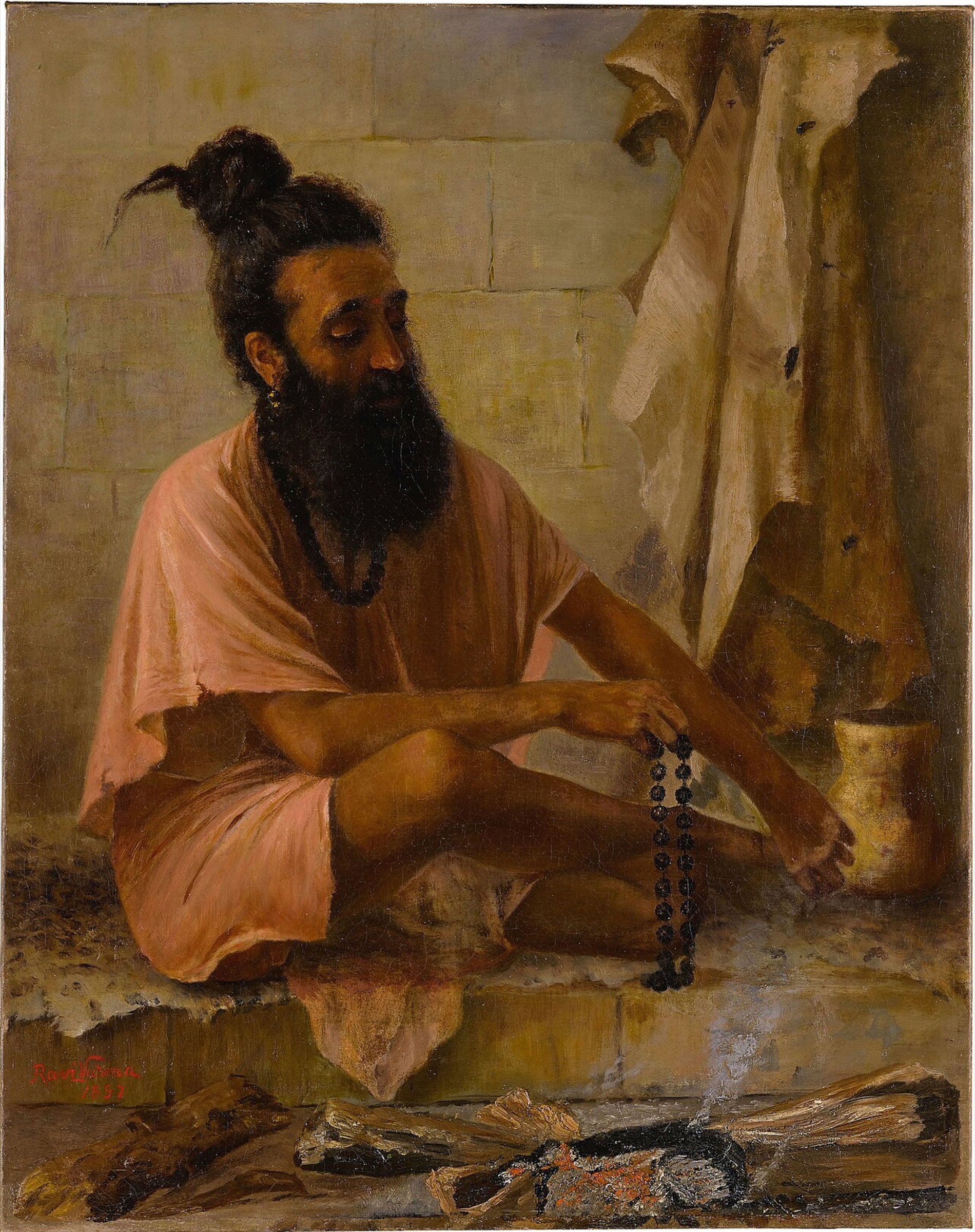
Picture: Traditional artistic depiction. Raja Ravi Varma, Viśvāmitra in Meditation, 1897. The artist depicts the sage with prayer beads beside a small fire; the work is a later traditional image.
Credit: Raja Ravi Varma. Source record, Public domain.

The round picture in the lists of the personalities is cropped from it.