




9 min read
Scholar of the Gods
Walter F. Otto
author: High Priest Zevios Metathronos
Learning to Encounter the Greek Gods
Dates: 1874–1958 CE
Period: Modern Era, 1900–present
Major works: 1929, 1933 and 1956
Walter Friedrich Otto was a German classical philologist who spent the second half of his career arguing that the Greek Gods are real forms in which the world shows itself. His Die Götter Griechenlands (1929), put into English by Moses Hadas as The Homeric Gods, states the claim plainly: “In their world the divine is not superimposed as a sovereign power over natural events; it is revealed in the forms of the natural, as their very essence and being.”1
He followed it with Dionysos in 1933 and Theophania in 1956, and he led a school of scholars at Frankfurt who studied Greek and Roman religion from the sources.2 Zevism counts him among the keepers of the source. His phrase for the Greek gift, “the faculty of seeing the world in the light of the divine,” names the Zevist doctrine of Light from the scholar's side.
LIFE AND CONTEXT
Otto was born on 22 June 1874 at Hechingen in Hohenzollern, the son of the pharmacist Hermann Ernst Otto and Elisabeth Becker. He began in Protestant theology at Tübingen in 1892–93 and moved to classical philology. From 1894 to 1897 he studied at Bonn under Hermann Usener, Georg Löschke, Heinrich Nissen and Franz Bücheler, and took his doctorate there on the formation of Latin names.3
From 1898 he worked in Munich on the Thesaurus linguae Latinae, the great dictionary of Latin. He qualified as a university teacher in the summer of 1905 with a study of the Roman Goddess Juno. After chairs in Vienna (1911–13) and Basel (1913) he came to the new University of Frankfurt, which Cancik calls “seine fruchtbarste Wirkungsstätte,” the most fruitful place of his career, from 1914 to 1934.3
At Frankfurt he wrote Der Geist der Antike und die christliche Welt (1923), Die Götter Griechenlands (1929) and Dionysos (1933). In the following years he published Der junge Nietzsche (1936), Der griechische Göttermythos (1939) and Der Dichter und die alten Götter (1942), and in retirement Die Gestalt und das Sein (1955). From 1933 to 1945 he sat on the scientific committee of the Nietzsche Archive in Weimar and helped plan the historical-critical edition of Nietzsche's works and papers.3
The Nazi government moved him to Königsberg in 1934, and he stayed there until he escaped the city in 1944. After the war he taught at Munich and Göttingen, then at Tübingen from the autumn of 1946, first as guest professor and then in place of the dismissed Friedrich Focke. He retired in 1955.3
He married twice, first the painter Margarete Floerke and then the actress Kete Parsenow. His daughter Eva married the literary historian Max Kommerell. Otto died at Tübingen on 23 September 1958.3
ATTAINMENTS
- He published Die Götter Griechenlands in 1929; Moses Hadas's English translation, The Homeric Gods: The Spiritual Significance of Greek Religion, came out from Thames and Hudson in 1954.4
- His Dionysos: Mythos und Kultus (1933) runs in 19 sections from the birthplace of the cult through “The God Who Comes,” “The Symbol of the Mask,” “Ariadne” and “Dionysus and Apollo” to “Concluding Remarks on Tragedy.”5
- He published Theophania: Der Geist der altgriechischen Religion in 1956; it reached a 2nd edition in 1959.6
- He headed the “Frankfurter Schule” of Franz Altheim, Carl Koch, Kurt Riezler and Karl Schlechta, whose series Frankfurter Studien zur Religion und Kultur der Antike published research on Greek and Roman religion.3
- He was awarded the Kant Prize in 1943, against the will of the National Socialists.3
- His Latin scholarship produced Nomina propria Latina (1897–98), a habilitation on Juno (1905) and years of work on the Thesaurus linguae Latinae.3
KEY STORIES
Athena at the Threshold
Otto built his case from Homer's scenes. Near the end of the Odyssey Odysseus has shot his arrows at the suitors in his hall and stands at the threshold with his son and 2 servants. Otto sets down what happens next: “Before he begins the decisive battle Athena suddenly appears at his side in the guise of Mentor and urges him to strike out.”7
Homer tells it in more detail. Odysseus calls to the figure of Mentor beside him: “Mentor, lend me your help, and forget not your old comrade, nor the many good turns he has done you.” She doesn't win the fight for him. She “flew up to one of the rafters in the roof of the cloister and sat upon it in the form of a swallow.” At the turning point she “held up her deadly aegis, and the hearts of the suitors quailed.”8
For Otto the brevity is the point. “She is barely seen and heard before she disappears,” he writes.7 The Goddess comes as a friend's voice at the right moment, and the man then does the work himself. Otto didn't limit her to war. Athena, he wrote, “does stand by Achilles, Diomedes, and others of her favorites in battle, but she also helps Jason build his ship and Bellerophon tame his horse.”9
The Trial of Orestes
Early in his book Otto turned to the clash of 2 orders of Gods, and he found it staged in Aeschylus. “In the Eumenides,” he wrote, “we have a formal discussion of the two realms of the divine and their respective rights.” On 1 side stand the Erinyes, who “call themselves daughters of Night.” On the other stand Apollo and Athena.10
The case is Orestes. “Orestes has shed the blood of his own mother,” to avenge his father Agamemnon, and Apollo had ordered the deed. The Erinyes want only 1 fact. “They ask the accused, ‘Have you slain your mother?’ and his admission decides the issue.” Apollo “stands by him at the trial which, under the presidency of Athena, is to condemn or acquit him.”11
Athena won't decide it alone. She sets up a jury to judge cases of murder from then on and keeps “only one vote for herself.” She casts it for Orestes. “Without Athena's ballot Orestes would have been lost. He is acquitted, but only by a tie vote.” Then she reconciles the avenging Goddesses with the promise of high honours. Otto's verdict on the play: it “celebrates the institution of the Athenian court for cases of murder, by means of which the law and authority of the state supplants the bloody expiation of the old order.”12
From Frankfurt to Königsberg and Tübingen
The regime of 1933 wanted to break up the conservative circle around Kurt Riezler at Frankfurt. Otto belonged to it. In the autumn of 1934 the Hellenist Paul Maas had been driven from his chair at Königsberg under the racial laws, and the government sent Otto to take his place.3
Otto taught in East Prussia for 10 years. In 1943 he was awarded the Kant Prize, which Cancik records was given “zum Unwillen der Nationalsozialisten,” to the displeasure of the Nazis. In 1944 he got out of Königsberg ahead of the war's end. Because he was regarded as “unbelastet,” free of Nazi taint, he was a man in demand once the fighting stopped.3
Tübingen took him in the autumn of 1946, when he was 72. He came as a guest professor and then stood in for Friedrich Focke, who'd been removed from office. Cancik notes that Otto reached a wider public there above all through his “Vorlesungen für Hörer aller Fakultäten,” lectures open to students of every faculty.3
He kept writing after he retired in 1955. Theophania, his summary of the spirit of the old Greek religion, came out the next year, and a 2nd edition followed in 1959, after his death at Tübingen in September 1958.3
THE ZEVIST READING
Otto's central sentence is a Zevist sentence. The Greek gift, he wrote, was “the faculty of seeing the world in the light of the divine, not a world yearned for, aspired to, or mystically present in rare ecstatic experiences, but the world into which we were born.”13 Zevism teaches that darkness which hasn't been explored becomes Light when knowledge enters it, and that the Gods are met in the world that's here. Otto reached the same ground by philology, reading Homer closely enough to see the Gods acting inside ordinary events.
His reading of the Eumenides gives the doctrine of Ma'at and Right a scene. Blood for blood is the rule of Izfet, disorder feeding on itself. Athena answers it with a court, a vote and a settlement that gives even the Erinyes their honour. Hesiod has Justice, “the daughter of Zeus,” sit “beside her father, Zeus the son of Cronos” to tell him when she's wronged.14 Zevism reads the Areopagus the same way: right order under Zeus, carried out by right acts.
The scene at the threshold shows the 4th dimension of the path, Theurgy, where human intelligence joins the intelligence of the Gods. Athena is Σοφία in person. She stands beside Odysseus as a friend, gives the word at the right moment and leaves the deed to him. Jason's ship and Bellerophon's taming of the horse show the same help given to craft and skill. In each case the Goddess illuminates and the human acts.
The aim behind all 3 is the one Plato set for human life, likeness to the divine “as far as possible,” ὁμοίωσις θεῷ κατὰ τὸ δυνατόν.15 Otto wrote as a scholar who began in theology and chose the Greek texts. Zevism honours him as a keeper of the source, whose books still teach readers to see the world in the light of the divine.
NOTES
1 Otto, The Homeric Gods, p. 7.
2 Cancik, “Otto, Walter,” NDB 19.
3 Cancik, NDB.
4 Otto, The Homeric Gods, title page; Klostermann, Die Götter Griechenlands.
5 Indiana University Press, Dionysus: Myth and Cult, contents.
6 Cancik, NDB; Klostermann, Theophania.
7 Otto, The Homeric Gods, p. 45.
8 Homer, Odyssey 22, tr. Butler.
9 Otto, The Homeric Gods, p. 44.
10 Otto, The Homeric Gods, pp. 17–18.
11 Otto, pp. 19–20.
12 Otto, p. 21.
13 Otto, The Homeric Gods, p. 11.
14 Hesiod, Works and Days 256–262, tr. Evelyn-White.
BIBLIOGRAPHY
Hubert Cancik, “Otto, Walter”, Neue Deutsche Biographie 19 (1999), pp. 713–714; genealogy, career, works.
Walter F. Otto, The Homeric Gods: The Spiritual Significance of Greek Religion, translated by Moses Hadas, London: Thames and Hudson, 1954; pp. 7, 11, 17–21 and 44–45.
Walter F. Otto, Die Götter Griechenlands: Das Bild des Göttlichen im Spiegel des griechischen Geistes, first published Bonn: Friedrich Cohen, 1929; Klostermann, tenth edition, 2013, ISBN 9783465041849. Publisher's description.
Walter F. Otto, Dionysus: Myth and Cult, Indiana University Press paperback edition, 1995, ISBN 9780253208910; contents. German original Dionysos: Mythos und Kultus, 1933.
Walter F. Otto, Theophania: Der Geist der altgriechischen Religion, first published 1956; Klostermann, fourth edition, 2017, ISBN 9783465042921. Publisher's description.
Homer, Odyssey, book 22, translated by Samuel Butler, Internet Classics Archive, MIT.
Hesiod, Works and Days 256–262, translated by H. G. Evelyn-White, Theoi Classical Texts Library.
Plato, Theaetetus 176a–b, Greek text, Perseus Digital Library.
CREDIT
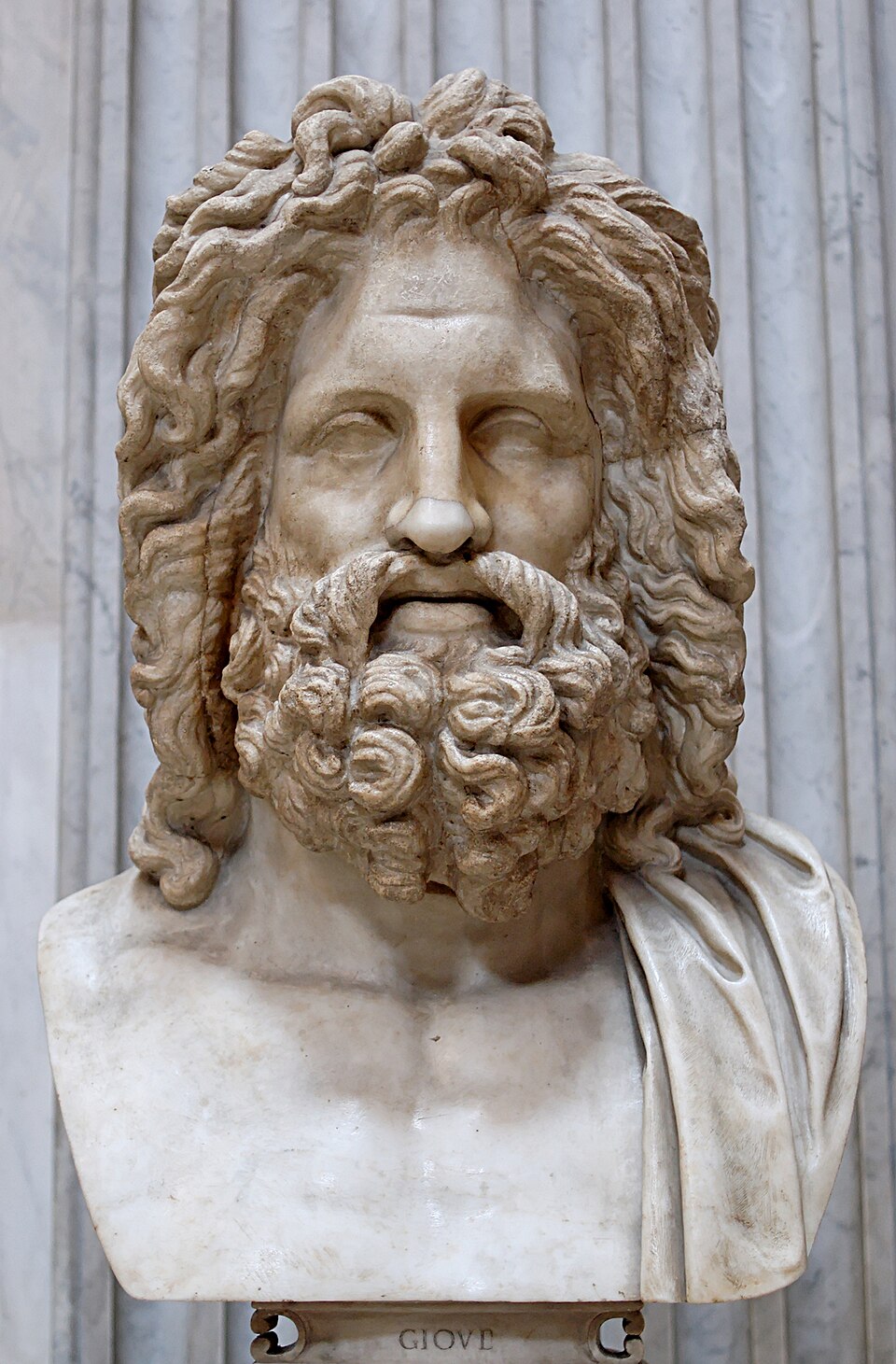
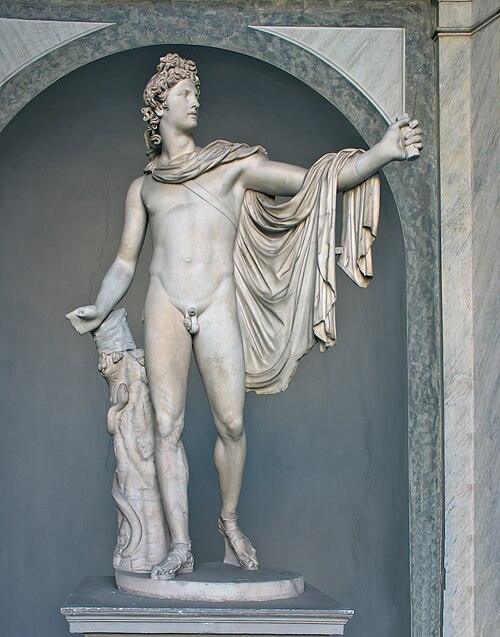
Image: Apollo Belvedere, Vatican Museums, photograph by Demetrios Karatassos, 19 February 2015, CC0. A thematic illustration of Greek Divine form, not a portrait of Otto.

Demetrios Karatassos / Wikimedia Commons; CC0 1.0. Image record, CC0 1.0.
The round picture in the lists of the personalities is cropped from it.