







3 min read
Teacher of Banteay Srei
Yajñavarāha
author: High Priest Zevios Metathronos
The teacher behind Banteay Srei
Dates: tenth century CE
Period: Darkness (800–1000 CE)
Region: Angkor, Cambodia
Tradition: Śaiva priesthood and temple foundation
Religion or tradition: Hinduism: Śaiva Brahmanical priesthood in the Khmer world.
Heresy status: No designation documented.
Yajñavarāha’s religious life is unusually accessible through an inscription associated with Banteay Srei. Foundation stela K.842 praises him as a learned Śaiva teacher and records the religious world in which his foundations operated. His importance is that of a priest, teacher and founder; the inscription does not establish that he personally drew the temple’s architectural plans.1
LEARNING DIRECTED TOWARDS RELIEF AND HOSPITALITY
The foundation inscription praises Yajñavarāha for assistance to people troubled by illness, poverty and ignorance. Its provisions also address hospitality and the continuation of Vedic recitation. Although the portrait is commemorative praise, these are explicit descriptions in a surviving source, and they show what the foundation wished to honour: learning expressed through care, instruction and the support of religious life.2
His contribution thus brings human welfare close to service of the Gods. The sanctuary was conceived within a wider pattern of responsibilities, with worship, resources and provision for others considered together. For Zevist readers, this is one of the collection’s clearest examples of spiritual ability put to constructive use: the learned person becomes valuable through what his knowledge enables him to give.
LEARNING MADE ACTIVE
The stela credits him with regular worship, offerings and yoga. It also praises his learning across several disciplines and his assistance to people facing illness, poverty and ignorance. As a commemorative eulogy, it offers an idealized portrait. Nevertheless, its choice of virtues is revealing: religious eminence is expressed through disciplined practice, education and useful service.3
The same source connects him with the establishment of liṅgas, religious residences and a network of foundations. Its administrative provisions address property, food for guests and continuing Vedic recitation. The temple’s religious purpose depended upon rules capable of sustaining it after the founder’s immediate involvement.4
A FAMILY’S SACRED WORK
The foundation belongs to a wider family setting. An additional inscription, K.574, records Yajñavarāha’s younger sister Jāhnavī establishing a liṅga of Īśvara. This is direct epigraphic evidence for her participation and a reminder that a famous male founder’s name does not exhaust the human work behind a sanctuary.5
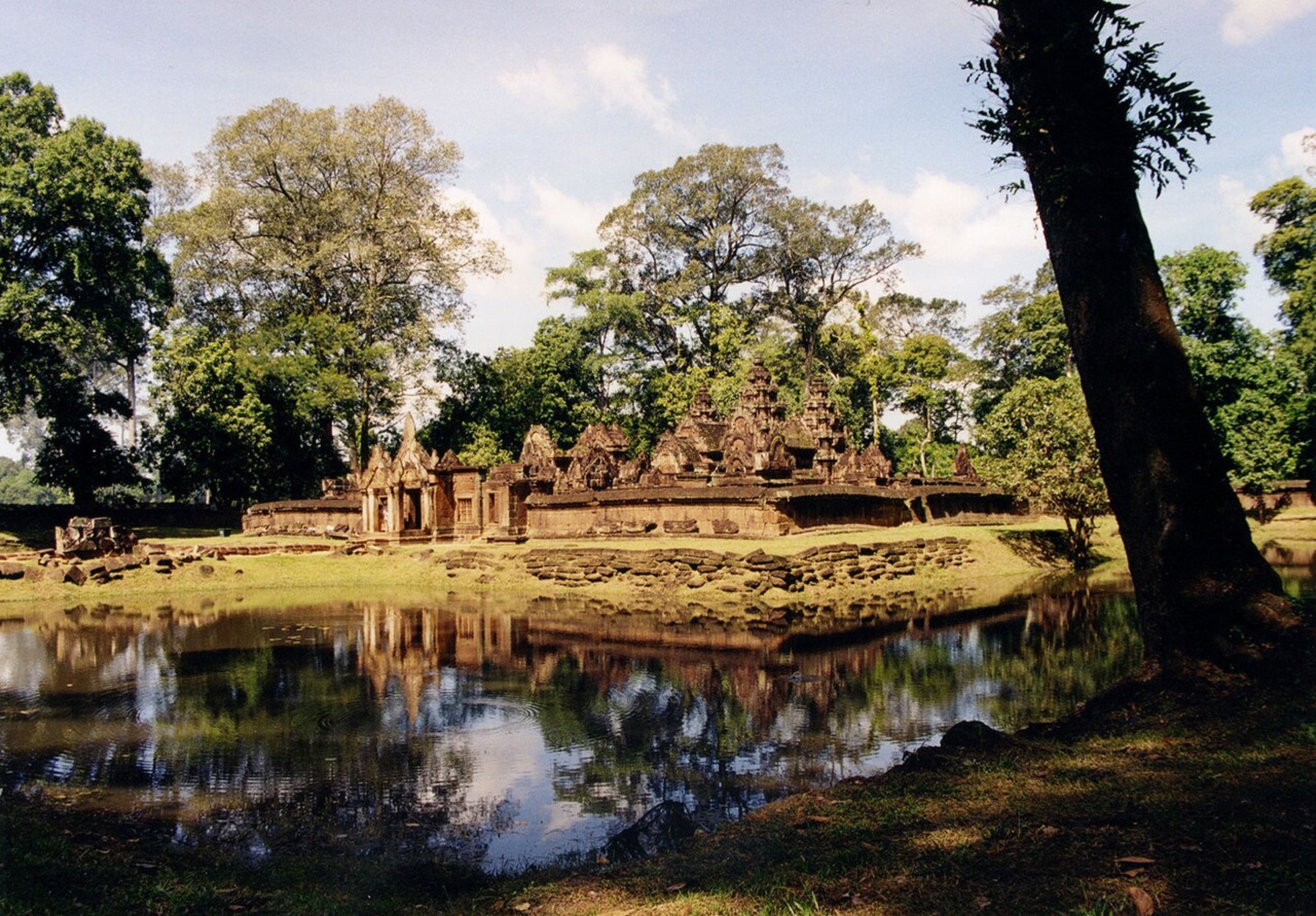
The building generally associated with the 967 foundation still gives this priestly activity a visible setting. Its importance in this profile lies in the conjunction of sacred learning and provision for worship, not in an unsupported claim that every carving embodies the founder’s personal design.
A ZEVIST EXAMPLE OF THE COMPLETE TEACHER
Yajñavarāha presents a strong example of knowledge expressed through responsibilities. Study, ritual and service appear together in the commemorative record. A religious teacher is praised for what he knows, how he practises and what his work enables others to receive.
For a Zevist student, the enduring lesson is that learning should become capable action. For a religious institution, it is that continuity requires arrangements: resources, instruction, hospitality and clear duties. A beautiful sanctuary becomes a living foundation when people can continue its work.
NOTES
1 DHARMA critical edition of K.842.
2 K.842, verses 16–26 and concluding provisions.
4 K.842, verse 26 and Old Khmer concluding section.
BIBLIOGRAPHY
Kunthea Chhom and Dominic Goodall, editors, K.842, foundation stela of Prasat Banteay Srei, DHARMA; includes George Cœdès’s French translation, Inscriptions du Cambodge I (1937), pp. 148–156. Verse references distinguish the eulogistic portrait from administrative provisions.
Chloé Chollet, with Dominic Goodall, K.574, Jāhnavī’s liṅga installation, DHARMA, digital epigraphic edition.
CREDIT
Picture: Associated sacred foundation. Banteay Srei, Angkor, photographed by Tsui in 2001. The temple is associated with the tenth-century foundation of Yajñavarāha and his family; this view illustrates the foundation, not the founder’s appearance.
Credit: Tsui. Source record, CC BY-SA 3.0.

The round picture in the lists of the personalities is cropped from it.