




9 min read
Master of Suika Shinto
Yamazaki Ansai
author: High Priest Zevios Metathronos
Reverence as a Discipline of Life
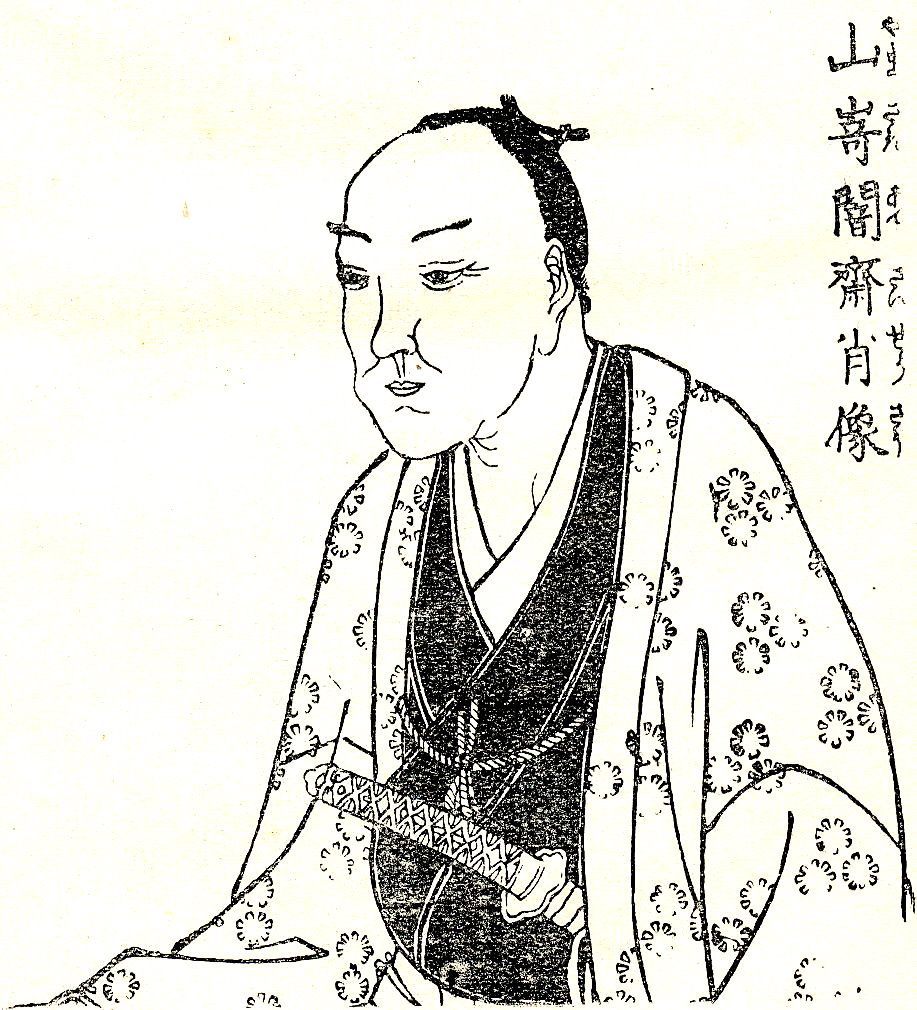
Dates: 1619–1682 CE
Period: Enlightenment
Yamazaki Ansai was a Kyoto teacher who left the Buddhist priesthood for the Neo-Confucian learning of Zhu Xi and then joined that learning to Shinto. Encyclopaedia Britannica sums up his teaching in 4 words, “Devotion within, righteousness without,” and credits him with “thousands of students.”1
His greatest attainment was a way of reading that became a way of living. He went past the commentaries of his day to Zhu Xi's own writings, compared passage against passage, and then taught that learning had to show in prayer, sincerity and purity of mind and body. His Shinto school, Suika Shinto, outlived him.2
Ansai was a Confucian and a Shinto initiate. Zevism reads his reverence as the ethical dimension of the path and his living shrine as a Japanese form of the aim Plato named, likeness to the divine as far as possible.
LIFE AND CONTEXT
Ansai was born in Kyoto in 1619, the son of Yamazaki Jōin, an acupuncture practitioner. As a boy and young man he practised Buddhism “at temples on Mount Hiei, at Myōshinji, and at the temple Gyūkōji in Tosa.”3
At 25 he changed course. He “studied the ‘Southern School’ (Nangaku) of Neo-Confucianism under Tani Jichū and Nonaka Kenzan,” gave up the monk's life and went back to Kyoto to study Neo-Confucianism and Shinto. Britannica says that “by the time he was 29, he had become a Confucian teacher.” John Tucker's entry in the Stanford Encyclopedia of Philosophy counts him, with Hayashi Razan, among the “orthodox proponents of the Cheng-Zhu teachings.”4
His Shinto rested on 2 teachings, “the ‘unity of deity and man’ (tenjin yuiitsu)” and “prudent propriety (tsutsushimi).” Without them, Nishioka explains, a student can't grasp “the concept that the age of humans is the age of the gods,” nor that of “human beings revered as living shrines.” To share in Amaterasu's virtue, Ansai held, a person had to “pray wholeheartedly to the deities and maintain the purity of a serene mind and body.”5
Influence came in 1665. He “was introduced to the shogunal regent Hoshina Masayuki, which led to his lasting influence in Masayuki's domain of Aizu.” In the same years he entered Shinto's secret lineages: the secret transmissions of Ise Shinto in 1669 from Kawabe Kiyonaga and of Yoshida Shinto in 1671 from Yoshikawa Koretari.6
Masayuki died in 1672, and Ansai went home to Kyoto, “putting all his efforts into lecturing, writing, and building up his academic circle.” He died there in 1682. His disciples split into 3 branches: Neo-Confucian, Shinto, and one that combined the 2.6
His teaching had a political edge that outlasted him. Suika Shinto held that the way of Amaterasu, the way of Japan, was the way of the emperor, who ruled by a “divine commission to rule as eternal as heaven and earth.” Britannica judges that this amalgamation “was one of the philosophical roots of the later extreme Japanese nationalism and emperor worship.”7
ATTAINMENTS
- He became a Confucian teacher in Kyoto before he was 30 and drew, in Britannica's words, “thousands of students, among whom were some of the greatest scholars.”8
- He rebuilt the study of Zhu Xi on primary texts. He worked “directly from original texts such as Shushi gorui and Shushi bunshū,” bypassing the standard commentaries, and compared them “in a strictly comparative way.”5
- He received the secret transmissions of Ise Shinto in 1669 and Yoshida Shinto in 1671 and joined them to Neo-Confucian teaching in a single system, Suika Shinto.9
- He wrote Bunkai hitsuroku (Reports of Encounters with Men of Culture), Nakatomi no harae Fūsuisō, essays on the Nakatomi Purification Formula, and Jindai no maki Fūyōshū, a collection on the chapter on the Age of the Gods.6
- He read the myths as models of character. Amaterasu is “a sage with the innate disposition of sagacity,” while “Susanoo and Ōnamuchi are sages who took great pains and put great exertion into their conduct.”5
- From 1665 he advised the shogunal regent Hoshina Masayuki, and his teaching took root in Masayuki's domain of Aizu.6
KEY STORIES
From the Temple to Zhu Xi's Own Pages
Ansai spent his youth in Buddhist robes. He trained on Mount Hiei, then at Myōshinji and at Gyūkōji in Tosa. At 25 he took up the Neo-Confucian “Southern School” under Tani Jichū and Nonaka Kenzan, and he didn't go back to the temple.6
In Kyoto he set out to read Zhu Xi as Zhu Xi had written. Most students of the day learned the master through standard compilations and commentaries. Ansai went to the Shushi gorui and the Shushi bunshū and laid passage beside passage to test one against another, research that Nishioka describes as done “in a strictly comparative way.”5
He wanted the reading to change the reader. His rule, as Britannica gives it, was “Devotion within, righteousness without”: reverence held in the mind and justice carried into action. By 29 he was teaching, and Britannica counts his students in thousands.8
The Mirror in the Living Shrine
In 1669 Kawabe Kiyonaga initiated Ansai into the secret transmissions of Ise Shinto. In 1671 Yoshikawa Koretari gave him those of Yoshida Shinto, and with them a title: Suika. The name came from the divine commission Amaterasu gave to Ninigi, and it recalls the saying that “the deities deign to descend in response to prayer, and divine protection is granted in response to rectitude.”10
Ansai then founded the Suika reisha, “a ‘living shrine’ (seishi) where he worshiped his own ‘mind-god’ (shinjin).” The shrine housed a mirror, and Ansai claimed that it held that mind-god. It wasn't an odd choice. Josephson Storm notes that mirrors “had long been tied to Shinto sanctuaries,” and Ise, whose secret teachings Ansai had received 2 years before, keeps the Sacred Mirror, “one of the Three Sacred Treasures of Japan.”11
Jason Ananda Josephson Storm tells how Ansai explained it. Playing on kagami, mirror, and kami, deity, Ansai declared: “The heart of the divine is like a bright mirror without a single speck of cloudiness.” In that way, Josephson Storm writes, he made the mirror “the manifest reflection of his divine mind.” The head of the Yoshida family endorsed the shrine and “publicly ratified his startling self-apotheosis by recognizing his divine name while still alive.”12
The Last Recitation
After Masayuki's death in 1672 Ansai returned to Kyoto for good. He lectured, wrote and built his circle. He'd already given a whole work, the Nakatomi no harae Fūsuisō, to the Nakatomi Purification Formula.6
The purification ritual kept among the Engishiki rites shows what such a formula does. In it offences are handed from God to God: a Maiden of the river current carries them down to the great sea plain, a Maiden of the swift cleansing swallows them, the Lord of the breath-blowing place blows them away, and a Maiden of swift banishment drives them out for good.13
The Encyclopedia of Shinto records that he “died while reciting the Purification Formula of the Nakatomi on the sixteenth day of the ninth month (October 7) 1682.” Britannica gives the day as 16 October.6
His school split after him. After his death “most of his teaching was transformed into a secret esoteric doctrine by Tamaki Masahide, Atobe Yoshiakira and others,” and Suika Shinto later waned under criticism from Kokugaku, the school of National Learning, and from Restoration Shinto.5
THE ZEVIST READING
Zevism holds that spirituality is one chain from its inception to today, and the chain runs through Japan under the names of the kami. The Temple reads Ansai's discipline as a link in the same chain and lets Amaterasu and his mind-god keep their names.
“Devotion within, righteousness without” is close to the ethical dimension of the Zevist path, Φρόνησις and Justice. The inward half is attention held steady; the outward half is right action toward others. Ansai asked for both at once, and he measured learning by what it did to the learner. That's the Zevist test of study as well. His reading of the myths, with its 2 kinds of sage, fits the doctrine of τὸ δυνατόν, capacity of power: Amaterasu reached virtue by nature, Susanoo by labour, and each went as far as his or her power allowed.
The saying behind the name Suika states a theurgic rule. The Gods descend in answer to prayer, and protection follows rectitude. Zevism calls Theurgy the joining of one's intelligence to the intelligence of the Gods, and it holds that purification prepares the joining. A man who died reciting a purification formula had practised that preparation to his last breath.
The mirror carries the aim of the whole path, likeness to the divine “as far as possible,” ὁμοίωσις θεῷ κατὰ τὸ δυνατόν.14 A mind cleared of cloud reflects what stands before it. Ansai's school went further and spoke of “human beings revered as living shrines.” Zevism reads ὁμοίωσις θεῷ as the literal elevation of human nature toward the divine, and it keeps the limit Plato set on it: as far as possible.
Egyptian religion named Ma'at “the personification of truth, justice, and the cosmic order.”15 The Good in Zevism is the conjunction of Ma'at and Right, the right order and the right act from a right will. Ansai's discipline of reverence meets that measure; the political theology that later fed extreme nationalism doesn't, and the Temple keeps the 2 apart.
NOTES
1 Britannica, “Yamazaki Ansai”.
2 Nishioka Kazuhiko, “Suika Shintō,” Encyclopedia of Shinto.
3 Nishioka, “Yamazaki Ansai,” Encyclopedia of Shinto.
4 Nishioka, “Yamazaki Ansai”; Britannica; Tucker, “Japanese Confucian Philosophy,” §4.6.
7 Nishioka, “Suika Shintō”; Britannica.
8 Britannica.
9 Nishioka, “Yamazaki Ansai”; Britannica.
10 Nishioka, “Yamazaki Ansai”; Nishioka, “Suika Shintō”.
11 Nishioka, “Yamazaki Ansai”; Josephson Storm, “The God in the Mirror”; Britannica, “Ise Shrine”.
12 Josephson Storm, “The God in the Mirror”.
13 The Yengishiki or Shinto Rituals, “The Purification Ritual”.
BIBLIOGRAPHY
Nishioka Kazuhiko, “Yamazaki Ansai,” Encyclopedia of Shinto, Kokugakuin University; birth, Buddhist training, turn to Neo-Confucianism, Hoshina Masayuki, the initiations of 1669 and 1671, the Suika reisha, works, death and disciples.
Nishioka Kazuhiko, “Suika Shintō,” Encyclopedia of Shinto, Kokugakuin University; textual method, the title Suika, the classes of sages, the way of the emperor and the later history of the school.
Jason Ananda Josephson Storm, “The God in the Mirror”, Center for the Study of World Religions, Harvard Divinity School, 30 March 2026; the living shrine, the mirror and the Yoshida recognition of 1671.
Encyclopaedia Britannica, “Yamazaki Ansai”; dates, teaching, students, Suika Shinto and later influence.
John Tucker, “Japanese Confucian Philosophy,” Stanford Encyclopedia of Philosophy, §§4, 4.2, 4.6 and 4.7.
Encyclopaedia Britannica, “Ise Shrine”; the Sacred Mirror kept at Ise.
The Yengishiki or Shinto Rituals, Internet Sacred Text Archive; “The Purification Ritual.”
Plato, Theaetetus 176a–b, Greek text, Perseus Digital Library.
Encyclopaedia Britannica, “Maat”.
CREDIT
Picture: Later representation of Yamazaki Ansai reproduced in a Japanese book published in 1914; it is not a contemporary life portrait.
Yūhōdō Shoten (1914 publication); original artist not identified on file page; Public domain (Commons PD-Japan; 1914 publication); Wikimedia Commons. Image record, Public domain (Commons PD-Japan; 1914 publication).

The round picture in the lists of the personalities is cropped from it.