





3 min read
Restorer of the Yoshida Library
Yoshida Kanemigi
author: High Priest Zevios Metathronos
The priest who rebuilt a tradition’s means of transmission
Dates: 1516–1573 CE
Period: Renaissance (1336–1650 CE)
Region: Japan
Tradition: Yoshida Shinto
Religion or tradition: Shinto: the Yoshida tradition.
Heresy status: No designation documented.
Yoshida Kanemigi combined ritual office, teaching and the recovery of religious learning. He became head of the Yoshida house as a child after a destructive succession dispute. In his mature career, he worked to restore its library and consolidate its interpretation of Shinto. These activities make him a distinct personality from Yoshida Kanetomo, already represented in the earlier collection.1
REBUILDING THE MEANS BY WHICH WORSHIP CONTINUED
Kanemigi’s recovery of the Yoshida library restored access to religious learning after a destructive succession dispute. His instruction of regional lords and shrine priests then helped carry that learning beyond the central household. Alongside his performance of rites, these activities supplied both texts and trained people for the continuation of Yoshida Shinto.2
The human contribution is the repair of a damaged chain of knowledge. The religious contribution is the continued availability of teaching and ceremonial competence in the worship of the kami. Kanemigi’s example shows recovery as a sustained undertaking: books must be gathered, their contents understood and capable recipients taught. He gave practical attention to each of those responsibilities, helping inherited knowledge become usable again.
RITES, BOOKS AND INSTRUCTION
Kanemigi performed rites at the imperial palace and Yoshida religious sites. He travelled to teach regional lords and shrine priests, and exercised authority in the distribution of ritual licences. During a visit to Ōuchi Yoshitaka in 1542–1544, he drafted the Shintō sōjō shō, a record relevant to initiation and religious transmission.3
This combination is his particular contribution. Ritual knowledge must be maintained in people as well as in manuscripts. A restored library makes texts available; instruction makes them intelligible; repeated rites sustain the community that uses them. Kanemigi’s recorded activities bring these responsibilities together.
A ZEVIST INTERPRETATION
His example directs attention to the work that follows damage or interruption. A tradition can possess a respected name while lacking the practical means to teach its inheritance. Recovery therefore requires effort at several levels: locating texts, sustaining ceremonial competence and forming capable successors.
For the Zevist student, this is a model of disciplined stewardship. Knowledge becomes a responsibility once it has been received. Its continued usefulness depends upon the care with which it is studied and transmitted.
Kanemigi also demonstrates how a religious teacher can serve beyond one central sanctuary. His journeys connected instruction to people who would practise elsewhere. That work gives his profile a concrete foundation in the history of the kami’s worship. The interpretation here concerns those acts of preservation and teaching, without turning a historically specific Shinto office into a modern institutional title.
NOTES
1 Itō Satoshi, “Yoshida Kanemigi”.
2 Kokugakuin University’s biographical entry.
3 Itō.
BIBLIOGRAPHY
Itō Satoshi, “Yoshida Kanemigi,” Encyclopedia of Shinto, Kokugakuin University, scholarly entry.
CREDIT
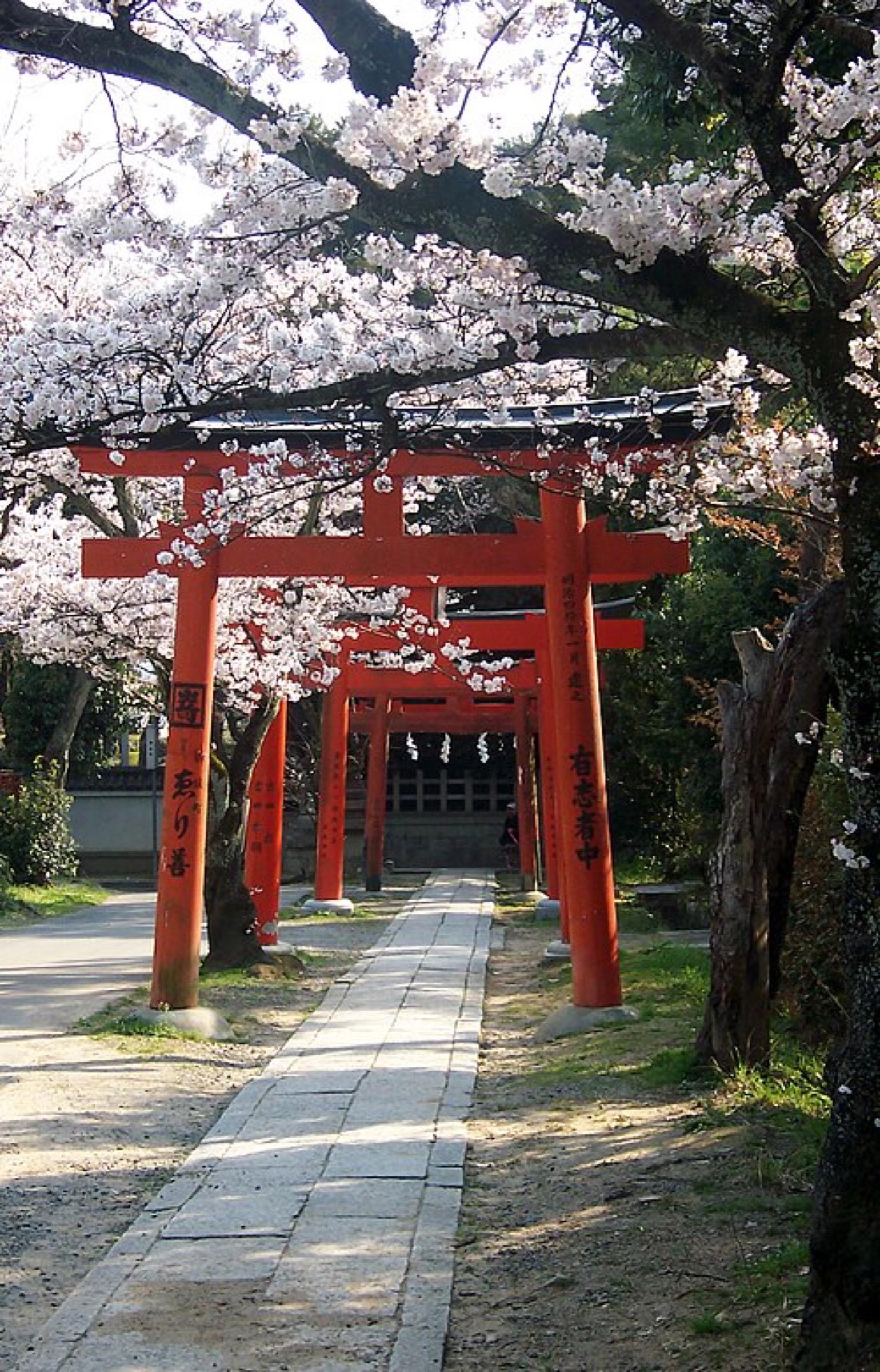
Picture: Associated religious site. Torii and flowering cherry trees at Yoshida Shrine, Kyoto, photographed by Chris Gladis in 2006. The shrine illustrates the institutional setting of the Yoshida tradition; the photograph does not claim to show an unchanged sixteenth-century structure.
Credit: Chris Gladis (MShades) from Kyoto, Japan. Source record, CC BY 2.0.

The round picture in the lists of the personalities is cropped from it.