




8 min read
Founder of Yoshida Shinto
Yoshida Kanetomo
author: High Priest Zevios Metathronos
Giving Sacred Memory a Living House
Dates: 1435–1511 CE
Period: Renaissance
Yoshida Kanetomo was a Shinto priest of Kyoto who turned his family's inherited learning into a school of its own, now called Yoshida Shinto. He wrote on the Age of the Gods in the Nihon shoki, on purification and on the principles of his system, and he issued priestly licenses and divine ranks from his house.1
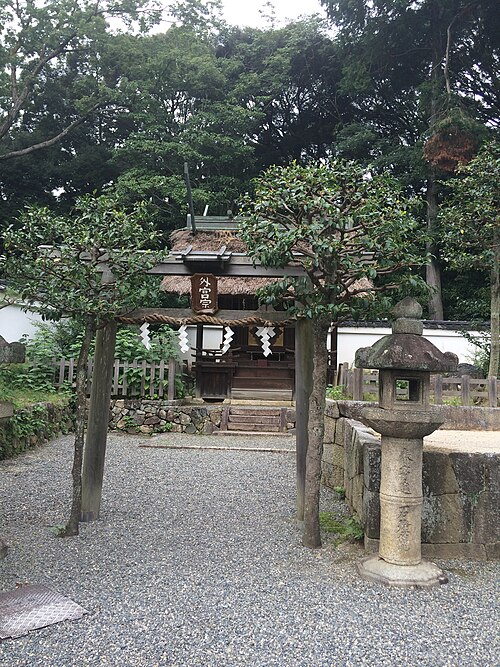
His greatest work was a building. The Ōnin War left Kyoto “almost in ruins,” and fire took his family's house and shrine. In 1484 he founded the Taigengū Saijōsho on Mount Yoshida as a center for the kami, and its ceremonial complex set an octagonal hall among representations of the Ise shrines.2
Zevism reads that hall as the work of a Creator among ruins and as a link in the chain of spirituality that runs through Japan under the names of its own Gods. Its ordering of many shrines around one center answers to the order Zeus holds as Sovereign of the Cosmos.
LIFE AND CONTEXT
Kanetomo was born in 1435 into the Yoshida, a priestly family of Kyoto. The family were scholars as well as priests. When Kokugakuin University showed the books and artworks the Yoshida had handed down, its exhibition stressed their study of ancient ritual and of the Nihon shoki, the chronicle whose opening book tells the Age of the Gods, and the many traditions that Yoshida Shinto took in.3
His world burned when he was in his 30s. The Ōnin War was “fought from 1467 to 1477, largely within the imperial capital of Kyōto,” after the Ashikaga shogunate had grown so weak that “a succession dispute provided the trigger.” The Yoshida residence burned in 1467, and the shrine the family served burned the next year.4
His teaching took shape around 1470, in the middle of the war. Itō Satoshi traces its parts to medieval Shinto, esoteric Buddhism and Daoist writings, though Kanetomo presented it as an entirely original transmission. He also claimed direct divine transmission and supreme authority over Shinto, and on that claim he handed out priestly licenses and divine ranks.5
The family changed its rites of death in his lifetime. Jason Ananda Josephson Storm of Harvard's Center for the Study of World Religions writes that the Yoshida “moved away from Buddhist funerary practices and began burying rather than cremating their departed, raising a small shrine over the grave and venerating their ancestor directly as a kami.”6
Kanetomo died in 1511. The family's classical texts and artworks passed down the generations, and parts of the collection were scattered in the 20th century. Kokugakuin University's library now holds a share of them and exhibited it in 2018.7
ATTAINMENTS
- In 1484 he founded the Taigengū Saijōsho on Mount Yoshida in Kyoto as a center for the kami, 16 years after the family shrine burned.8
- The ceremonial complex set an octagonal central building among representations of the Ise shrines and other sanctuaries, so that the kami of many shrines received worship in one ordered precinct.9
- He wrote on the Divine Age of the Nihon shoki, on purification and on the principles of his system; the Encyclopedia of Shinto lists these works under his name.8
- He built a complete doctrine with 2 levels, an exoteric teaching grounded in the classical narratives and an inner teaching of purification, ordered by heaven, earth and humanity with Kunitokotachi as the primordial kami.9
- He created a licensing system. From Yoshida he issued priestly licenses and divine ranks, on the strength of his claim to supreme authority over Shinto.8
- In his lifetime the family began to bury its dead with a small shrine over the grave and to venerate the ancestor directly as a kami, in place of Buddhist cremation.6
KEY STORIES
Fire in the Capital
The war came into Kyoto in 1467. The great families fought inside the city, and Britannica describes what followed them: “Where the families had fought, looting mobs moved in, leaving the imperial capital almost in ruins.”10
That year the Yoshida residence burned. The next year fire took the shrine the family served. Kanetomo was 33, a priest with his house and his sanctuary in ashes and 9 more years of war ahead.9
He didn't wait for peace. Around 1470 he was already teaching his new system, and Itō describes his answer to the losses as teaching, ritual organisation and construction. In 1484, 7 years after the fighting stopped, he raised the Taigengū Saijōsho on Mount Yoshida.8
At its center stood an octagonal hall. Around it he set representations of the Ise shrines and of other sanctuaries, so that a worshipper who climbed Mount Yoshida stood in one ordered precinct that gathered many shrines.9 A priest who'd lost his shrine to a burning city had built a new house for the kami, and Zevism counts that among the works of the Creator.
The Reed-Shoot Between Heaven and Earth
The Nihon shoki begins before the world had a shape. In W. G. Aston's translation: “Of old, Heaven and Earth were not yet separated, and the In and Yo not yet divided. They formed a chaotic mass like an egg which was of obscurely defined limits and contained germs.”11
Then the mass divided. “The purer and clearer part was thinly drawn out, and formed Heaven, while the heavier and grosser element settled down and became Earth.” Between them something appeared: “It was in form like a reed-shoot. Now this became transformed into a God, and was called Kuni-toko-tachi no Mikoto.”12
Kanetomo wrote on this Age of the Gods and built his theology on its first figure. His system made Kunitokotachi the primordial kami and ordered everything after him by the relation of heaven, earth and human beings.13
It kept 2 levels of teaching. The outer one stayed with the classical narratives, the reed-shoot and the Gods born after it. The inner one, the counterpart to that exoteric teaching, dealt with purification.9
The Treasures of Ise
Britannica calls Ise “one of the principal shrines of Shintō.” Its Inner Shrine “is dedicated to Amaterasu Ōmikami, the sun goddess and traditional progenitor of the Japanese imperial family,” and “The Sacred Mirror, one of the Three Sacred Treasures of Japan (Sanshu no Jingi), is preserved there.” The Outer Shrine belongs to Toyouke, “the deity of food, clothing, and housing.” Since the 7th century its buildings had been rebuilt every 20 years.14
Kanetomo had already brought Ise into his precinct in model form, with representations of its shrines set around the octagonal hall. In 1489 he went further. He asserted that the divine treasures of Ise had descended to his own sanctuary on Mount Yoshida.13
The claim fitted the authority he'd built over nearly 2 decades: direct divine transmission, supreme authority over Shinto, and licenses and ranks issued from his own house. The Encyclopedia of Shinto records the descent of the treasures as Kanetomo's assertion, and it stood on the same claim of direct transmission as every license he'd issued.8
THE ZEVIST READING
Zevism holds that spirituality is one chain from its inception to today, with links in Japan as in Sumer and Egypt, and the Temple lets Kanetomo's kami keep their own names. His life fits the doctrine of the Creator and the andrapod. The andrapod lives among ruins and answers them with complaint, attack and nostalgia; the Creator restores and builds, because creation is open forward and requires work. With Kyoto almost in ruins and his shrine in ashes, Kanetomo taught through the war and raised a new precinct within 7 years of its end.
The inner teaching of purification touches the 4th dimension of the Zevist path, Theurgy, the joining of one's own intelligence to the intelligence of the Gods. Purification is the preparation for that joining. Kanetomo made it the inward half of his doctrine, and the Temple reads that choice as sound.
The octagonal hall speaks to Ma'at. Egyptian religion named her “the personification of truth, justice, and the cosmic order” and set her against isfet.15 Kanetomo gathered the Gods of many shrines around one center and gave each a place. Zevism reads such ordering as the work of Zeus, Sovereign of the Cosmos, who keeps every God's honour in its place.
Truth belongs to that order. Hesiod says that “whenever anyone hurts her with lying slander,” Dike, the daughter of Zeus, “sits beside her father, Zeus the son of Cronos, and tells him of men's wicked heart.”16 Zevism gives the source priority, so a claim to speak from it has to be true. Putting the chronicle's first kami at the head of his system was a return to the source. Calling a teaching built from Buddhist and Daoist parts an entirely original transmission wasn't, and neither was the claim to Ise's treasures.
The Good in Zevism is the conjunction of Ma'at and Right, the right order and the right act from a right will. The Temple honours the builder and the teacher, whose hall and doctrine stand on their own work, and it weighs his claims by that standard. A share of the books his family handed down is now in the library of Kokugakuin University.
NOTES
1 Itō Satoshi, “Yoshida Kanetomo,” Encyclopedia of Shinto.
2 Britannica, “Ōnin War”; Itō, “Yoshida Shintō,” Encyclopedia of Shinto.
3 Itō, “Yoshida Kanetomo”; Kokugakuin University Museum, “Shinto and Yoshida Lineage”.
4 Britannica, “Ōnin War”; Itō, “Yoshida Shintō”.
5 Itō, “Yoshida Shintō”; Itō, “Yoshida Kanetomo”.
6 Josephson Storm, “The God in the Mirror”.
7 Kokugakuin University Museum.
11 Nihongi, book 1, tr. Aston.
12 Nihongi, book 1.
13 Itō, “Yoshida Kanetomo”; Itō, “Yoshida Shintō”.
16 Hesiod, Works and Days 256–262.
BIBLIOGRAPHY
Itō Satoshi, “Yoshida Kanetomo,” Encyclopedia of Shinto, Kokugakuin University; biography, the Saijōsho of 1484, writings, licenses and ranks, and the claim of 1489.
Itō Satoshi, “Yoshida Shintō,” Encyclopedia of Shinto, Kokugakuin University; the fires of 1467 and 1468, the octagonal complex, Kunitokotachi and the sources of the doctrine.
Kokugakuin University Museum, “Shinto and Yoshida Lineage: Kokugakuin University Library Collections”, exhibition announcement, 3 March 2018.
Jason Ananda Josephson Storm, “The God in the Mirror”, Center for the Study of World Religions, Harvard Divinity School, 30 March 2026; Yoshida funerary practice.
Nihongi, part 1, translated by W. G. Aston, 1896, Internet Sacred Text Archive; book 1, the opening of the Age of the Gods.
Encyclopaedia Britannica, “Ōnin War”.
Encyclopaedia Britannica, “Ise Shrine”.
Hesiod, Works and Days 256–262, translated by H. G. Evelyn-White, Theoi Classical Texts Library.
Encyclopaedia Britannica, “Maat”.
CREDIT
Picture: The Gekū shrine within the Saijōsho Daigengū complex at Yoshida Shrine, Kyoto, photographed in 2016. A modern view of the sacred setting associated with Kanetomo’s tradition.
A-komiyama; CC BY-SA 4.0; Wikimedia Commons. Image record, CC BY-SA 4.0.

The round picture in the lists of the personalities is cropped from it.