




| Language | Name of Tiresias | Attestation |
|---|---|---|
| Classical Greek | Τειρεσίας (Teiresias) | Homer (8th century BCE onward) |
| Latin | Tiresias | Propertius (16 BCE) |
15 min read
TIRESIAS
author: High Priest Zevios Metathronos
co-author: Novice Priest Karnonnos
I. Names
The Greek name is Τειρεσίας, normally transliterated Teiresias or Tiresias. The etymology is not completely secure, but the name has naturally been discussed beside Greek words of omen, sign, marvel, and divine sight especially the group around τέρας. That makes the name appropriate for a figure whose entire mythic identity concerns signs, prophecy, and seeing what ordinary mortals cannot see. It is not a transparent title like “the seer,” but a personal heroic name that later became almost proverbial for prophetic vision.1,2
The earliest surviving clear literary attestation of Tiresias is in the Odyssey. Circe tells Odysseus that he must go down to the house of Hades to consult the soul of the Theban Tiresias, the blind seer, and Book XI then stages the actual encounter with his ghost. This appears to be the first extant appearance of Tiresias in Greek literature; the poem already treats him as an established Theban prophet with a mythic past.3,4
The name is written in Greek with the normal heroic masculine ending -ίας: Τειρεσίας. In Latin and English reception it appears as Tiresias, while Teiresias is the closer scholarly transliteration of the Greek spelling. None of these should be treated as a separate being from the Theban prophet.
Sources: Beekes, Etymological Dictionary of Greek, (2010); Chantraine, Dictionnaire étymologique de la langue grecque, (2009); Heubeck and Hoekstra, A Commentary on Homer’s Odyssey, (1989); Van Nortwick, “Essays on Book 11,” Dickinson College Commentaries.1,2,3,4
II. The Seer, Tiresias
Tiresias contended with the forces of fate and necessity to become someone divine. His story is representative of the strangest and most preternatural episodes in Greek mythology. A Theban by birth and said to assist that city for hundreds of years, he was one of the mystical prophets of Apollo, and people across Hellenic civilization attested to his strange labors that eventually led to the divine ascension of the serpent, becoming a kind of living archetype for the Great Work.
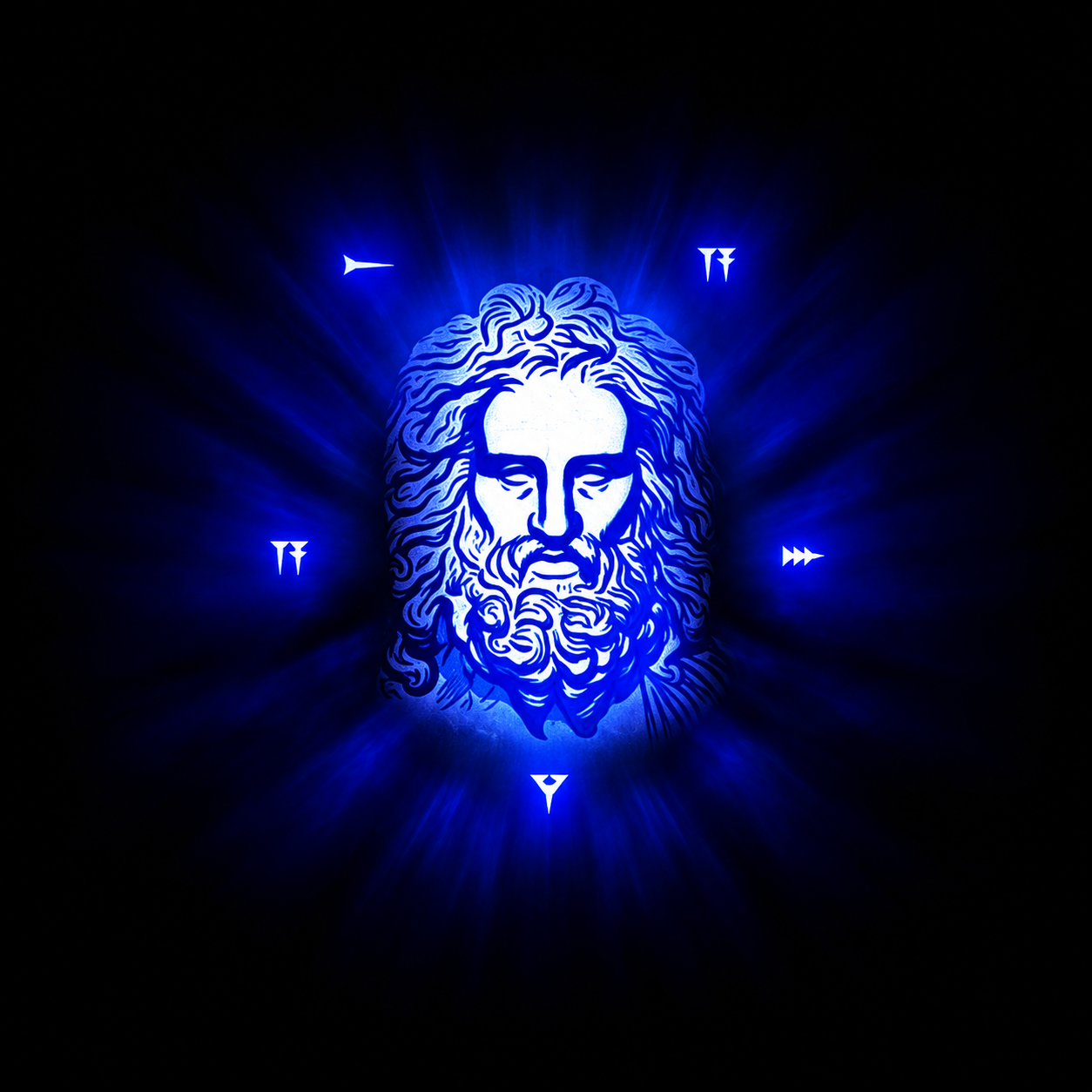
 Tiresias
Numerous writers wrote about Tiresias at length. The story is formulated this way: the seer walks among nature, deciding in being incensed to strike mating snakes on Mount Cyllene or Mount Cithaereon with his staff, consequently, out of punishment or some other mysterious vehicle, he is transformed into a woman; after a certain amount of time, he strikes another set of snakes and is turned back into a man.5 Due to that strange episode, he is always chosen as the one who can resolve a dispute about the sexes between Zeus and Hera. The most fleshed out of these origin stories is located in the Metamorphoses of Ovid.6 The divine Jove, in good humor at a banquet with Juno, states that women are able to enjoy a greater pleasure in love, an idea with which she disagreed. To resolve the argument, he stated the sagacious Tiresias among humans must be able to understand “both sides of love”, as Tiresias had struck two snakes mating with his staff and was transformed into a woman for seven years, reverting to his manhood by the eighth when seeing the twin serpents and striking them again. When summoned by the two divinities, Tiresias took the side of Jupiter, making Juno so enraged as to physically blind him. Jove, taking pity on the seer, granted him the powers of mysterious divine sight.6,7
A variant myth is recited by Pherecydes concerning Tiresias and Athena at the spring of Hippocrene,8 but rendered more famous in Callimachus epic The Bath of Pallas.9 Tiresias, the son of Athena’s attendant Chariclo, is blinded for witnessing the virgin goddess naked when bathing. After Chariclo protests bitterly at her son’s treatment, Pallas compensates her by bestowing the power of divine sight on him. Athena also gives him the power to see eternally after death, a privilege very few have. Another myth attested by Apollodorus10 is that he died drinking from the spring called Tilphussa at night, and scholars assume upon this account that upon entering Hades, Persephone gave him the power of sight after death as told in the ancient Odyssey of Homer11, showing that the idea of his ability to see beyond mortality is ancient. Later myths give Tiresias even the power to not drink of the water of Lithi (forgetfulness). The poet Sostratus supposedly represented the lifecycle of the seer in an elegiac poem, as attested by the Byzantine antiquarian Eustathius12, but this work is lost. This rendition is said to be highly unusual in that the first incarnation of Tiresias is a girl who undergoes six subesequent changes of sex.
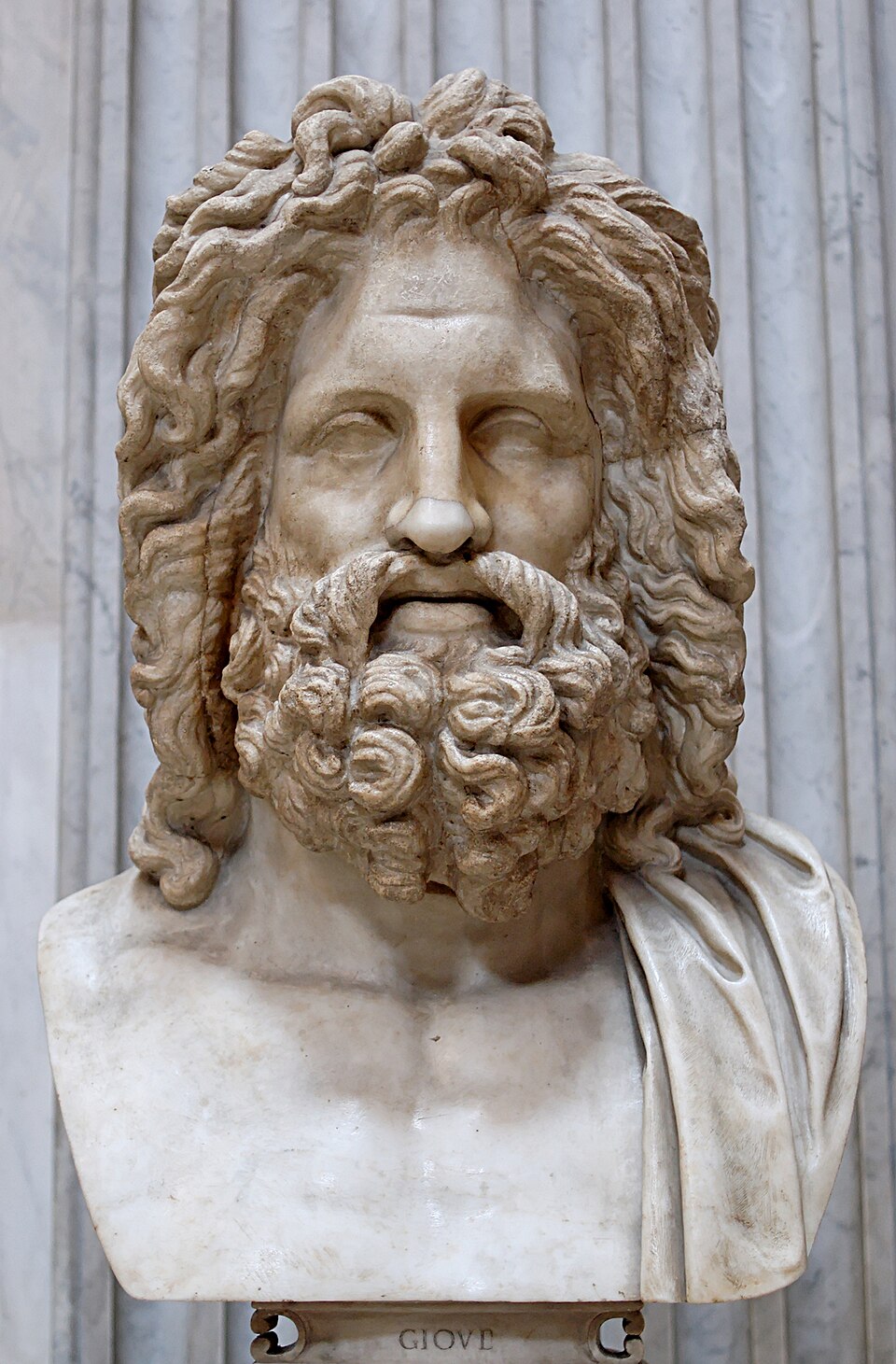
 Tiresias
In Book XI of Homer's Odyssey, perhaps the most prominent case, Odysseus journeyed to the Underworld to seek the counsel of the blind prophet Tiresias, acting on advice from Circe to learn how to return to Ithaca. The prophet foretells a difficult journey, warns against eating Helios's cattle, and predicts all the slaughter of the suitors.
Part III. The Epithets of Tiresias
Tiresias does not have a stable public sequence of cult epithets comparable to the divine temple-titles of Olympian gods. He did have tomb traditions, heroic local memory, and a strong Theban identity, but the names he is given are indicative of something altogether mysterious; οἴῳ πεπνῦσθαι, "for him alone to be wise" (or more poetically 'that he alone should possess wisdom') seems to refer to his role in the Odyssey as being able to commune with Hades.13,14
πέπνυμαι also means 'to breathe'; it appears to be a double entendre about life or the breath, to 'have breath within oneself'. Mantis tends to mean 'seer'.
| Epithet | Meaning | Domain |
|---|---|---|
| Θηβαῖος Τειρεσίας (Thebaios Teiresias) | Theban Tiresias | Theban saga |
| μάντις ἀλαός (Mantis Alaos) | Blind Seer | Prophecy, inner sight, Underworld wisdom |
| οἴῳ πεπνῦσθαι (Oioi Pepnusthai) | (Only One) Possessing Understanding | Unique consciousness after death |
| πάντα νωμῶν (Pada Nomon) | Handler of All Things | Tragic authority |
Sources: Cunliffe, A Lexicon of the Homeric Dialect, (1963); Schachter, “Tiresias,” in The Oxford Classical Dictionary, (2012).13,14
IV. Thebes
Tiresias was said to intervene in several generations of Theban life, sometimes, again, as many as seven. In the famous play Oedipus Rex by Sophocles, the unaware Oedipus, having seized control of Thebes after solving the inscrutable riddle of the sphinx, engages the seer in a demand to know what will alleviate the plague on the city. Oedipus was exposed by his father Laius of Thebes with his feet bound due to a prophecy from the Delphic oracle his son would kill him, but ended up being recovered and raised by a shepherd of Corinth. As an adult consulting the oracle himself, was told he must not go to his home, lest he kill his father and marry his mother. Thinking his home is Corinth, he sets off for Thebes, and at the Divided Way, he murders the vicious Laius after the latter attacks him. These events are hinted to be the cause of the plague. After an increasingly angry exchange due to Tiresias’ heavy refusal to state the cause, he mocks Tiresias as a mere worthless blind man, Tiresias reproaches the king for not having the sight to see in just what a dire situation he has encompassed himself in.
He emphatically claims that he is not here to punish, nonetheless, through his exceptional powers he can see the dictates of Apollo who is quietly designing the downfall of the Theban king.15 The irony of their exchange is deeply marked; Oedipus throughout the play is completely ignorant of his parentage, ignorant of the weight of his actions, ignorant of what choice to make, ignorant of the true conditions of his life, and so when confronting the seer, he is forced into a spiral of recognition from which he cannot escape. The psychic knower of fates, however, knows all and is pressed by his relentless and pushy hand, becoming something of a dramatic foil:
ΟΙΔΙΠΟΥΣ
ἀλλ᾿ ἔστι, πλὴν σοί· σοὶ δὲ τοῦτ᾿ οὐκ ἔστ᾿, ἐπεὶτυφλὸς τά τ᾿ ὦτα τόν τε νοῦν τά τ᾿ ὄμματ᾿ εἶ.
ΤΕΙΡΕΣΙΑΣ
σὺ δ᾿ ἄθλιός γε ταῦτ᾿ ὀνειδίζων, ἃ σοὶοὐδεὶς ὃς οὐχὶ τῶνδ᾿ ὀνειδιεῖ τάχα.
OEDIPUS
It has, except for you; you are without it, since you are blind in your ears, in your mind, and in your eyes.
TIRESIAS
It is sad that you utter these reproaches, which all men shall soon utter against you.
Sophocles, Oedipus Rex15
Seneca’s play on Oedipus shows a distinct contrast.16 He does not know what will befall the king from the outset; it is only through gruesome Etruscan practices of divination that he is able to do so with the assistance of his daughter, Manto. The two characters are tied together symbolically in experiencing divine punishment through the text, such as the use of the word ‘ictus’ to describe Tiresia’s bashing of the snake and Oedipus weaponry in his suicidal ideation.17 Both characters are given symbolic ties to Mount Cithareon. Interestingly, one Greek author mentioned that Tiresias was changed into a woman at a three-forked crossroad;18 exactly where the unaware Oedipus kills his father Laius tragically and condemns himself.
Another instance where Tiresias appears is in Antigone19, also by Sophocles. The latter king Creon of Thebes, the uncle of Oedipus, decides to honor his grand nephew Eteocles, son of Oedipus, while deciding that the other dead son of the tragic king, Polynices, must be humiliated ritualistically in being thrown to the birds and creates an edict that he must not be buried. The curse is due to the brothers having driven their father out, as elaborated in an intermediate play, Oedipus at Colona20, but Creon shows his questionable pursuit of the law numerous times during that play by invoking "the will of the Gods" where it does not apply. One courtier, Antigone, conducts proper funeral rites for the corpse out of decency; Cleon orders her to be held in a cave where she will indirectly starve to death. Again, Tiresias enters and warns that the body must be buried as the Gods are becoming increasingly enraged, and he warns the king that the whole of Greece will soon despise him if this is not done. In the end, Antigone hangs herself, and the son of Creon, Haemon, stabs himself and then his father. His wife Euridyce also commits suicide, leaving Creon with nothing. It is implied the ultimate hubris is that Creon, initially ignorant of proper procedure like Oedipus, insults and threatens the prophet of the Gods when clearly shown that he is contradicting the divine will for his own purposes, committing Sahiburah.
On a lighter note, Lucian uses Tiresias as a stock character in his Necromantia21 and Dialogues of the Dead22, in both cases sought out by the Cynic philosopher Menippus. In the latter he mocks prophetic pretensions by consistently asking aggressive questions about Tiresias’ experience as a woman leaving the latter no choice but to defer answering while in the former, he asks Tiresias, the only seer among the dead, “who has the happiest life?” Tiresias replies the ordinary man does, and to not take things seriously.
V. The Eye
As has been stated, the trials of Tiresias are allegorical and laden with ornate symbolism:
The Daemon Seere is fundamentally a title of function, not a being of malice, for "Seere" is the archaic root of our word "Seer" one who perceives beyond the veil of reality. This is a direct and deliberate allusion to Tiresias, the most renowned prophet of Ancient Greece, whose very existence became a template for the perfected initiate. Tiresias was not born a god, but achieved deification through the crucible of extreme trials and the acquisition of supernatural perception, embodying the ultimate potential of human consciousness expanded through ordeal. He is in the category of "men who became Demons" and therefore, was vilified in the Goetia and replaced by the marginal and deprecated word "Seere".
Seere, High Priest Hooded Cobra23
Seere represents the principle of clairvoyance and the power to traverse the boundaries of time and knowledge, just as Tiresias did. To invoke Seere is to align oneself with the current of spiritual sight, that allowed a mortal to witness the past, present, and future with such clarity that the gods themselves sought his counsel, elevating him from a man to a divine principle of prophetic power.
The story of Tiresias is a mystical allegory of the soul's journey through polarity to achieve unified vision. His first great trial was the transformation: upon striking two mating snakes, he was changed from a man into a woman, living as such for seven years, thus experiencing the totality of human existence in both masculine and feminine forms. This was not a punishment but an initiation, forcing him to transcend limited, single-gendered perception and embody the complete spectrum of human consciousness.
His second trial, the blinding by Hera for siding with Zeus in a dispute about who experiences greater pleasure, was the final severance from physical sight to grant him true inner vision. In exchange for his eyes, the gods granted him the gift of prophecy and a lifespan extended through seven generations. Tiresias's journey from seer to blind prophet to deified figure is the path of the adept: one must first integrate the dualities (male/female), then sacrifice the mundane senses (physical sight) (NOT LITERAL - But spiritual allegory) to awaken the divine senses (prophetic sight), ultimately achieving a form of immortality through the unique and invaluable power one brings to the cosmos. He is the proof that true sight is not of the eyes, but of the spirit, and that the greatest trials are the very mechanisms of deification.
VI. Philosophical Elements
Seneca the Younger’s own play on Oedipus interpreted his actions as a kind of heroism driven by moral ambivalence.24 Mere stubbornness, what the Stoa called “vicious constancy”25, is not necessarily analogous with the pursuit of virtue. Oedipus's unremitting desire in pursuing the truth arises from pride and fear. His emotional responses such his rage at Tiresias, his horror at discovery represent failures of cognitive assent. The great seer in Seneca’s renedition uses every tool in his arsenal to uncover the truth, showing his commitment to double checking and wisdom.
The impasse of Oedipus and Tiresias in Sophocles’ variation of the story, though laden with dramatic flourish, has a certain symbolic meaning. The former, whose name means “swollen foot”, is able to answer the riddle of the sphinx and to become a king, yet cannot understand himself. The Seer, on the other hand, has evolved beyond mundane sight; the cornerstones of his evolution are secure regardless of fleeting appearances. His eyes are opened; he can see all things from the position of a unified mind. Being ruled by the appetitive part and not the head, the foundation of the clever swollen-footed king at the height of his virility and power is built upon a lie that dangerously unfurls. This is deeply allegorical of all three Delphic maxims as woven by each author into the story as the first cause, and it is linked to the divine Apollo’s mastery over all prophecy.
As the High Priest said above, the story also shows the absolute necessity of integration of dualities in pursuing the Opus. Oedipus is so beyond the careful tying of the dualities that he infamously committed incest with his own mother by mistake, then, in dramatic opposition, ends up blinding himself out of fury by gouging out his own eyes, or, in Euripides' version,26 with a vengeful servant of Laius doing the act.
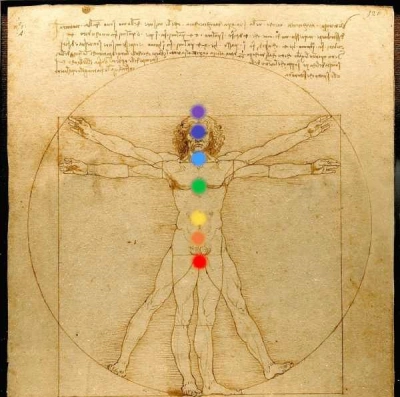
His powers represent control over the Third Eye and its truest integration as a divining tool, in other words, how to use this force properly. Imbalance on the lower Chakras and other mental problems can cause endless issues with any kind of psychic faculty; they require grounding and proper harnessing of the lower realms of the soul to function properly. The stories of Tiresias also warn against taking any particular vision as an assured fact, because this may not be true. and the failure of oracles is not uncommon, Tiresias represents the highest stage where all failure is conquered.
Sources and Bibliography
- Beekes, Robert S. P. Etymological Dictionary of Greek. 2 vols. Leiden: Brill, 2010. See omen/sign vocabulary around τέρας and related discussion relevant to Τειρεσίας.
- Chantraine, Pierre. Dictionnaire étymologique de la langue grecque: Histoire des mots. 2nd ed. Paris: Klincksieck, 2009. S.v. “τέρας.”
- Heubeck, Alfred, and Arie Hoekstra. A Commentary on Homer’s Odyssey. Volume II: Books IX–XVI. Oxford: Clarendon Press, 1989. See commentary on Odyssey 10.492 and Book 11.
- Van Nortwick, Thomas. “Essays on Book 11.” In Dickinson College Commentaries: Homer’s Odyssey. Carlisle, PA: Dickinson College Commentaries, n.d. See discussion of Tiresias’ first extant appearance in Greek literature.
- Hesiod. The Shield. Catalogue of Women. Other Fragments. Edited and translated by Glenn W. Most. Loeb Classical Library 503. Cambridge, MA: Harvard University Press, 2018. See fragments of the Melampodia concerning Tiresias.
- Ovid. Metamorphoses, Volume I: Books 1–8. Translated by Frank Justus Miller. Revised by G. P. Goold. Loeb Classical Library 42. Cambridge, MA: Harvard University Press, 1977. See 3.316–338.
- Hyginus. The Myths of Hyginus. Translated and edited by Mary Grant. University of Kansas Publications in Humanistic Studies 34. Lawrence: University of Kansas Press, 1960. See Fabulae 75.
- Pherecydes of Athens. Fragments. In Early Greek Mythography. Volume 1: Text and Introduction, edited and translated by Robert L. Fowler. Oxford: Oxford University Press, 2000. See fragment 92 on Tiresias and Athena.
- Callimachus. Callimachus: Hymns and Epigrams; Lycophron; Aratus. Translated by A. W. Mair and G. R. Mair. Loeb Classical Library 129. Cambridge, MA: Harvard University Press, 1921. See Hymn 5: The Bath of Pallas.
- Apollodorus. The Library, Volume II: Book 3.10–End; Epitome. Translated by James G. Frazer. Loeb Classical Library 122. Cambridge, MA: Harvard University Press, 1921. See 3.6.7 and related Theban material.
- Homer. Odyssey, Volume I: Books 1–12. Translated by A. T. Murray. Revised by George E. Dimock. Loeb Classical Library 104. Cambridge, MA: Harvard University Press, 1995. See 10.492–495 and 11.90–151.
- Eustathius of Thessalonica. Commentarii ad Homeri Odysseam. Vol. 2. Leipzig: Weigel, 1825. See p. 1665.44ff. on the Tiresias tradition attributed to Sostratus.
- Cunliffe, Richard John. A Lexicon of the Homeric Dialect. Norman: University of Oklahoma Press, 1963. S.vv. “μάντις,” “ἀλαός,” “πεπνῦσθαι,” and related Homeric formulae.
- Schachter, Albert. “Tiresias.” In The Oxford Classical Dictionary, edited by Simon Hornblower, Antony Spawforth, and Esther Eidinow. 4th ed. Oxford: Oxford University Press, 2012.
- Sophocles. Ajax. Electra. Oedipus Tyrannus. Edited and translated by Hugh Lloyd-Jones. Loeb Classical Library 20. Cambridge, MA: Harvard University Press, 1994. See Oedipus Tyrannus 300–462.
- Seneca. Tragedies, Volume II: Oedipus; Agamemnon; Thyestes; Hercules on Oeta; Octavia. Edited and translated by John G. Fitch. Loeb Classical Library 78. Cambridge, MA: Harvard University Press, 2004. See Oedipus.
- Michalopoulos, Charilaos N. “Tiresias between Texts and Sex.” EuGeStA: Journal of Gender Studies in Antiquity 2 (2012): 221–39.
- Antoninus Liberalis. The Metamorphoses of Antoninus Liberalis: A Translation with Commentary. Translated by Francis Celoria. London: Routledge, 1992. See metamorphosis traditions concerning Tiresias.
- Sophocles. Antigone. The Women of Trachis. Philoctetes. Oedipus at Colonus. Edited and translated by Hugh Lloyd-Jones. Loeb Classical Library 21. Cambridge, MA: Harvard University Press, 1994. See Antigone 988–1090.
- Sophocles. Antigone. The Women of Trachis. Philoctetes. Oedipus at Colonus. Edited and translated by Hugh Lloyd-Jones. Loeb Classical Library 21. Cambridge, MA: Harvard University Press, 1994. See Oedipus at Colonus.
- Lucian. Lucian, Volume II: Anacharsis; Menippus or the Descent into Hades; On Funerals; A Professor of Public Speaking; Alexander the False Prophet; Essays in Portraiture; Essays in Portraiture Defended; The Goddess of Surrye. Translated by A. M. Harmon. Loeb Classical Library 54. Cambridge, MA: Harvard University Press, 1915. See Menippus, or The Descent into Hades.
- Lucian. Lucian, Volume VII: Dialogues of the Dead; Dialogues of the Sea-Gods; Dialogues of the Gods; Dialogues of the Courtesans. Translated by M. D. Macleod. Loeb Classical Library 431. Cambridge, MA: Harvard University Press, 1961. See Dialogues of the Dead.
- Metathronos, Zevios. “Seere.” In private Zevist teaching text supplied in the source file.
- Staley, Gregory A. “Making Oedipus Roman.” In Sénèque, un philosophe homme de théâtre?, edited by Jean-Pierre Aygon, 111–24. Pallas 95. Toulouse: Presses Universitaires du Mirail, 2014.
- Weiss, Robin Leah. “Senecan Tragedy as Response to Stoic Critique.” Interface: Journal of European Languages and Literatures 15 (Summer 2021): 21–54. https://doi.org/10.6667/interface.15.2021.130.
- Euripides. Fragments: Oedipus–Chrysippus; Other Fragments. Edited and translated by Christopher Collard and Martin Cropp. Loeb Classical Library 506. Cambridge, MA: Harvard University Press, 2009. See fragments and testimonia for Oedipus.