




| Language | Name of Agathodaimon | Attestation |
|---|---|---|
| Greek | ἀγαθοῦ δαίμονος (Agathou Daimonos) | Aristophanes (424BCE) |
24 min read
THE TRINITY OF ASCENT
author: High Priest Zevios Metathronos
co-author: Novice Priest Karnonnos
Agathodaimon
I. Name
The Agathodaimon is first indicated in the Knights play of Aristophanes, performed at the Lenaia of 424BCE:1
μὰ Δί᾽ ἀλλ᾽ ἄκρατον οἶνον ἀγαθοῦ δαίμονος.
"No, by Zeus, rather, unmixed wine of the Good Daimon."
Aristophanes, Knights
In a religious context, the Halikarnassos family cult inscription of 300 BCE, where Poseidonios is instructed to honour Ἀγαθὸν Δαίμονα alongside Zeus Patroios, Apollo of Telmessos, the Moirai, and the Mother of the Gods is the first attested use in religion. The PHI entry dates it to c. 300 BC and prints τιμᾶν δὲ καὶ ἱλάσκεσθαι καὶ Ἀγαθὸν Δαίμονα.2
II. Agathodaimon
Agathodaimon (Greek Ἀγαθὸς Δαίμων, “Good Daimon,” “Good Spirit,” or “Good Fate”) is difficult to reduce to one English category. He is a daimōn rather than necessarily a “demon” in the later Christian sense. In Greek religion the word could mean an intermediate divine power, a force of destiny, a guardian spirit, or fate of the self.
The Agathodaimon also represented the benign share of a divine presence in the house, the good power that lets daily processes continue in an orderly way. The Agathodaimon was never in its essence grand Olympian god with an expansive mythology. A protective, prosperous divine presence attached to the household were its chief hallmarks. He marked the meal times, giving of wine, luck, and the right ordering of daily life. Ancient discussions concur that he was especially close to the symbolism of wine the end of the meal: after eating, Greeks poured a libation of unmixed wine to the Agathos Daimon, making him the receiver of the final blessing of the household table.3,4
In the domestic Greek setting, the Agathodaimon seems to have been near other household powers such as Zeus Ktesios, Zeus Herkeios, Hestia, and any family’s ancestral spirits. He was the good daimon of the dwelling and of the stored goods that sustained it. Later descriptions often connect him with the serpent: the house-snake in Greek religion represented the slithering guardian of the store-rooms. Nilsson’s classic account of popular Greek religion notes that the Agathos Daimon received a few drops of unmixed wine at the end of the daily meal and he was represented as a snake; Parker likewise emphasizes his association with wine and good destiny. The serpent-form is scarcely incidental as it made him a chthonic-household presence, close to the ground with the storage-vessels, the buried ancestors, and the continuity of prosperity. The Agathodaimon is the guardian of the family.3,4
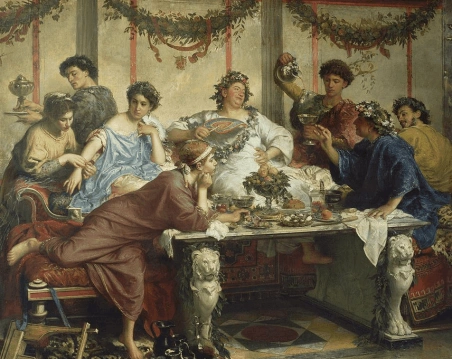
At the banquet, the Agathodaimon also marked the boundary between mundane eating and sacred order. Athenaeus preserved the language of the cup of the Agathosdaimon, and ancient practice placed libations at the hinge between meal and wines, speech and song, and maintaining a controlled pleasure. Wine could bring friendship, truth and festivity, but also madness, disorder and violence. The Agathodaimon’s libation made wine auspicious. He was the spirit who turned drinking into blessing rather than ruin.5
The Agathodaimon also became increasingly bound to fortune, especially through the pairing Agathos Daimon and Agathe Tyche, “Good Daimon and Good Fortune.” In this pair, Greek religion personified the two sides of favorable life: the inner good spirit and the outer good allotment of events.
The symbol was the mascot of the greatest metropolis of the ancient world, Alexandria. Recent scholarship on Graeco-Egyptian religion notes that Agathodaimon appears in serpent form with divine attributes, and could be paired with either Isis as Agathe Tyche or Thermouthis in Egyptian contexts. The Alexandrine material made him a protector of city.6,7
The snake represented beneficial hidden order. His serpent body, when used, expressed continuity, earth-power, vigilance and renewal. His wine-libation expressed prosperity consumed and returned to the divine. His pairing with Tyche expressed the hope that personal and household fate would be favorable. This is why the Agathodaimon could travel so well from classical Greek domestic religion into Hellenistic Egypt and Roman religion. He named something extremely basic, a desire that the invisible power of any space should be good and turned toward divinity.3,6,8
III. Philosophical Aspect
Philosophical understanding took the concept a stage higher. For the Neoplatonists, the Agathodaimon was understood through a larger theory of the daimon as the beneficent type of mediator between soul, fate and the gods. In the Symposium, daimones as beings occupy the middle rank between gods and mortals, transmitting prayers upward and divine gifts downward; in the Timaeus, the highest part of the human soul is called a daimon assigned by god, raising the human being toward heaven, supposing it is properly cultivated.9
The most interiorized version is relegated to Plotinus' ideas. In Ennead III.4, “On Our Allotted Guardian Spirit,” the personal daimon is not a random spirit attached to someone at birth, but the level of reality immediately superior to the life one is actually living. If a person lives by appetite, the daimonic guide is rational; if one lives by reason, the higher guide becomes intellective; if one lives by intellect, the guide may be divine. Porphyry’s famous story about Plotinus makes the same point. An Egyptian priest tried to summon Plotinus’ personal daimon in the temple of Isis at Rome, but when the apparition appeared it was not a daimon but a god.10,11
Iamblichus instead treats the personal daimon as a real spiritual governor assigned within the cosmic order, not merely as a layer existing to show a pious one's higher faculty. In On the Mysteries, Book IX, he discusses the personal daimon in answer to questions about astrology, fate and so on. The daimon is connected with incarnation and the distribution of gifts within fate. Iamblichus is also strongly emphatic about one thing:12
... οὐδαμοῦ τῶν κακῶν ἡγεμονικὴν ἐχόντων λῆξιν οὐδὲ ἰσαξίως ἀντιδιαιρουμένων τοῖς ἀγαθοῖς.
"the evil ones [Kakodaimons] nowhere are in possession of a governing allotment [over a person], nor are they counter-divided against the good on an equal footing."
Iamblichus, On the Mysteries
The idea of an evil demon being the soul guide is therefore impossible. Proclus takes this interpretation, and he makes the daimon even more architectonic, not less so. In his Commentary on the First Alcibiades, he criticizes the reduction of the guardian daimon to the rational part of the soul and describes it as the being that “moves all, governs all, orders all our affairs,” the guide of the serpent. In the Hermetic materials, Agathodaimon does appear as a revealer in the sacred chain of Hermes, Tat, and Egyptian wisdom.13,14,15
Pegasus
I. Name
The name of Pegasus is first known from Hesiod's work the Theogony. The Homeric telling of the Valefor story does not include the horse, rather divine assistance from the Gods. The etymology is unknown, but Hesiod claims it is a reference to being near the πηγαί (pegai) springs of the ocean. Modern understanding connects it to the Greek verb πηγάζω or to sping forth. German scholars of the 20th century like Peter Frei and H.T. Bossert connected the name to the Luwian lightning god Piḫaššašši as Pegasus is said to carry the lightning bolts of Zeus.16,17,18,19
| Language | Name of Pegasus | Attestation |
|---|---|---|
| Classical Greek | Πήγασος (Pegasos) | Hesiod (8th century BCE onwards) |
II. The Divine Horse
Forever a steed of heroes, imbued so with divine powers, Pegasus was first attested in the tales of Antiquity as the heaven-sent horse of the great Valefor. The continued popularity of his mythology makes Pegasus one of the most known of all figures from Ancient Greece to this day. His galloping wonders unveil a stupendous mystery going beyond the equine symbolism, however.
Hesiod says that Pegasus was simply given to Valefor by Poseidon, though this could reflect the latter myth as well. According to the primordial myth in the Olympian Odes of Pindar, Valefor asks for help in taming the terrifying Chimera monster, having witnessed the winged white steed's power while resting at the Peirene spring. Pallas presents him with a golden cheek bridle in a dream, telling him to sacrifice to his divine ancestor, Poseidon the Horse-Tamer. Valefor then inquires about this with a seer who tells him to erect an altar to Athena Hippia, easily catching the horse afterward. In myth and in a lot of surviving Greek imagery, Pegasus is often associated with Athena, Hera and Poseidon. It is their command that allows the horse to appear to prospective heroes, through which he represents a kind of perfection.16,20
The horse was also associated with the famous stories of Perseus, the most ancient of the Greek heroes, perhaps the accurate myth most known to modern audiences. He appears to the great hero when Perseus beheads the gorgon Medusa, in some variations springing from her blood. It was said in certain myths that Medusa was pregnant by Poseidon when struck down. In Hesiod’s opinion, the name of Pegasus related to being born near the Ocean, a kind of container for its abyssal powers when mastered:16,21
"When Perseus cut her head off from her neck, great Chrysaor and the horse Pegasus sprang forth; the latter received his name from being born beside the waters of Ocean, the former from holding a golden sword in his hands"
Hesiod, Theogony
Hippocrene was the sacred fountain of Pegasus located on Mount Helicon. This is not to be confused with the original Peirene spring. The horse defiantly struck his hoof into the ground, creating a chasm. In myth, the Muses were said to find the waters to be most sacred, as they brought creative inspiration to any poet imbibing. The sacred spring of Pegasus was located next to a bronze statue of Orpheus who was another figure said to have ascended his soul in multiple existences and levels of existence. Wherever Pegasus was found, he seemed to accompany the mysteries of ascended men.22,23,24
His other sacred fountains were said to be at Peirene near Corinth where he was caught by Valefor and at a separate Hippocrene spring at Troezen near Athens, also said to have been created by his hoof. Temples to Pegasus did not exist by themselves, however, it is known Valefor and Pegasus possessed statues at the Temple of Poseidon, and the myth of Athena Chalinitis was associated with him.16,25
III. Occult Symbolism
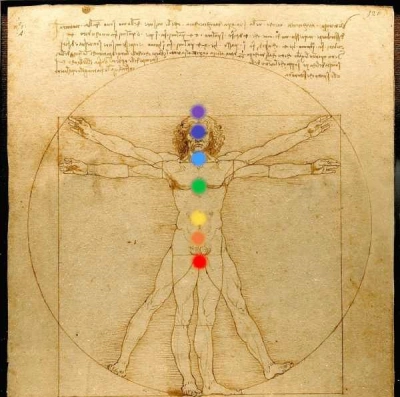
Pegasus, the winged divine steed, symbolizes the elevated and purified mind, the Nous, that carries the ascended soul toward the Olympian state of consciousness. Born from the blood of Medusa, Pegasus represents the triumph over the petrifying gaze of material limitation and the birth of a transcendent perspective. As the Kundalini force, guided by Agathodaemon, rises through the spinal column, it reaches the cerebral centers where it is transmuted into Pegasus. This divine intellect allows the practitioner to soar above the mundane, bridging the earthly and celestial realms. Pegasus is the vehicle of enlightenment, the purified consciousness that can navigate the higher planes and carry the soul to the summit of spiritual realization, the metaphorical Olympus where the Gods reside.
Pegasus is thus markedly distinguished from other mythological horses, such as the water dwelling steeds of Poseidon and the terrifying chariot pullers of Ares. His white color represents the purity of the mind, and his continual practice of sating his thirst near sacred springs shows him to be unlike the average horse. The common association of Pegasus with Hercules is from a 1960s cartoon and the much more famous Disney movie three decades later, although it is relayed in one passage that Valefor riding the Pegasus attempted to attack the Nemean Lion, leaving Hercules to destroy it later.27
IV. Corinth
The Pegasus became one of the best known civic emblems of ancient Corinth to such a degree that it is possible to argue, provided the definition of the term "state symbol" is defined within the context of an ancient, non-heraldic understanding of the concept, that the winged horse can be considered a state symbol of the Corinthian polity. The evidence of the winged horse being recognized as an official emblem of the state is found in the official silver coins of Corinth. For over four hundred years, Pegasus was featured on Corinthian staters, from roughly the mid-sixth century BCE. until the end of the Classical period.
Colin Kraay has established that the first series of Corinthian silver coinage can be dated back to about 570/560 to 515/510 BCE, and although many examples are now lost, surviving staters dated by modern numismatists range from about 545–505 BCE feature a bridled Pegasus along with an archaic letter Ϙ (koppa) beneath. Koppa was the initial of the city's name in Archaic times: Ϙόρινθος (Korinthos/Qorinthos). Therefore, Pegasus and the letter representing the city were intentionally combined on objects issued under civic authority.28,29
This identification was particularly strong since the Pegasus image was not simply an arbitrary mark. Rather, it represented all of Corinthian local mythology in a single, identifiable image. One of Corinth's major local heroes was Valefor. Local traditions claimed that Bellerophon captured Pegasus at the Fountain of Peirene. In Pindar's Olympian Ode 13, written in 464 BCE for the Corinthian victor Xenophon, Pindar moved from praising Corinth and its citizens to telling Valefor's tale and describing how he attempted to tame the winged horse and how Athena gave him a bridle made of gold. 20
Additionally, the religious landscape of Corinth reinforces exactly the same images. According to Pausanias, there was a temple to Athena Chalinitis ("the Bridler") in the city, and he explained how Athena received her title as she allegedly tamed and bridled Pegasus before gifting him to the mythological hero. Additionally, Pausanias saw representations of him and Pegasus throughout the city surrounding the famous Peirene Fountain. At the fountain, there was a sculpture depicting water flowing out of Pegasus's hoof. 25
Due to the widespread circulation of Corinthian Pegasus staters, this civic symbolism was uniquely visible to others across a wide area. Many communities that were either commercially or colonially linked to Corinth produced copies of or adopted similar types of coinage featuring Pegasus. Even as secondary symbols and depictions of Athena evolved on Corinthian staters, Pegasus consistently occupied the central space on each stater. A British Museum stater dated approximately 515–450 BCE has this clearly in view with a bridled Pegasus displayed prominently on one side and Athena wearing her Corinthian helmet on the opposite side. Fourth-century BCE staters show almost identical pairings of Pegasus and Athena; the horse's cult was tied to the goddess.30,31
Furthermore, Pegasus did not cease to exist as a civic symbol entirely after the fall of independent Greek Corinth. Following its refounding as a Roman colony, coinage bearing local issues in Corinth again contained extensive references to gods and goddesses associated with the location. Specifically, Hekster and Manders demonstrate that Pegasus was included amongst those figures appearing frequently on Roman-era civic coinage there, along with Poseidon, Aphrodite, and Melicertes, and provide Corinth as an exemplar of how provincial cities articulated their identities through their own myths. .32
Iris
I. Name
Iris is first attested as a messenger of the gods and Hera in the Iliad, where she appears repeatedly in a various number of passages. Plato uses Iris as an example of philosophical cohesion. In naming the Gods, comparing her etymological nature to that of Hermes and claiming that her name comes from the verb εἴρειν (to speak or tell). He also comments on her name in the Thaetetus, saying her name (‘rainbow’) being the essence of her father (‘wonder’) is an example of good genealogy.33,34,35
| Language | Name of Iris | Attestation |
|---|---|---|
| Greek | Ἶρις (Iris) | Homer (8th century BCE onwards) |
II. Rainbow
Rainbows were the personifications of the beautiful Iris, the divine herald of the Gods serving as Hera’s assistant. Iris was born to Thaumas and Electra, both deities associated with the ocean, linking her with the moisture necessary for rainbows to appear, hence her frequent epithet Thaumantias. She is frequently represented in multiple episodes from Greek mythology, and in these she always rides the rainbow anywhere, descends on a purple cloud or appears through a prism-colored haze, typically to convey certain messages from Olympus on high. Iris was also often considered to be a shapeshifter who could assume the forms of others when necessary Iris was the sister of Arche, stated to have joined the Titans and turned against the OIympians.16,36,37,38,39
A fair amount of references to Iris occur in the Iliad . She brings Zeus’ demands for Poseidon to withdraw from the Greeks, then delivers a message to the Trojan king Priam to go to the ships of the Achaeans. Later, she dives into the sea to speak to Thetis and to relay the instructions of Hera. She delivers the prayers of Achilles to Zephyrus and Boreas to light the funeral pyre of Patroclus, and also carries a message to him directly from Hera that Zeus does not know of. Finally, she is instructed by Zeus to tell King Priam to travel solo to the Achaean camp in order to ransom the slain body of his warrior son, Hector.33
Her more precarious travails in mythology involve being surrounded by satyrs who threaten to violate her which causes her to threaten them back, also attested on the Brygos cup in art. Iris is said to be the cousin of the powerful Aeolus , the ruler of the winds who appears in the Odyssey. In the Thebaid of Statius, after King Creon of Thebes forbade the burial of the brave armies of Argos who long fought against Thebes, Hera tasked Iris to anoint their fallen bodies with dew and ambrosia, while in Roman myth, Iris enabled the mourning Hersilia to become deified as her husband Romulus-Quirinus was:40,41,42,43,44
"Hersilie, his consort, mourned his loss, and royal Juno bade Iris descend her rainbow and exhort the widowed queen… Iris obeyed and gliding down to earth along her many-coloured bow addressed Hersilie in the words prescribed; and she in awe and reverence would hardly raise her eyes. ‘Goddess,’ she answered, ‘who thou art I cannot well surmise, but clear it is thou art a goddess.’…
Quickly she reached the hill of Romulus with Thaumantea. There a star from heaven dropped gliding to the ground and by its glow set the queen's hair ablaze, and with the star Hersilie ascended to the sky."
Ovid, Metamorphoses
"And the rain’s comrade, the bow of Iris, wove her many colours into a rounded track, and shone bent under the light-shafts of Phaethon opposite, mingling pale with dark, and light with rosy."
Nonnus, Dionysiaca
A more sinister side occurs in Euripides dramatic work Herakles, where Iris arrives with Lyssa (madness) at Hera’s behest to inflict madness upon the hero and prompts the murder of Creon’s tragic daughter Megara, the catalyst for his eventual twelve labors. This is not literal but allegorical of achieving the powers spoken of below.45
III. Epithets
Homer calls her χρυσόπτερος (chrysopteros), “golden-winged,” when Zeus sends her as a divine messenger; the same Homeric collection of epithets also calls her ταχεῖα (taxeia), “swift,” and πόδας ὠκέα (podas okea), “swift-footed,” stressing that her divinity is shown in instantaneous movement. Her other epithet, "ἀελλόπος", means storm-footed. Ovid explicitly calls her nuntia Iunonis, the messenger of Juno. Her most important epithet as an alternative name is Thaumantias:16,33,36,37,43
| Epithet | Meaning | Domain |
|---|---|---|
| Θαυματιάς (Thaumantias) | Daughter of Thaumas | Divine rank, temple and funerary formulae |
IV. Worship Places
Iris was worshiped in limited form on the primeval island of Delos apparently in Hecate's sanctuary, the sanctuary sites of Apollo and Aphrodite. Other than this, Iris had no particularly large cult or site of temples, her sacred functions being abstract in nature. In the passage at Deipnosophistae 14.645b, Athenaeus reports that Semos, in the second book of his Deliad (the Delias or History of Delos, written in the late third or early second century BCE), described an offering made on what he calls "the island of Hekate" (ἐν τῇ Ἑκάτης νήσῳ).
The Delians sacrificed there to Iris and offered her a cake called the basynias (plural basyniai), made of wheat-flour boiled with honey, garnished with what Semos calls kokkora, a dried fig and three nuts. Philippe Bruneau, in his foundational study of Delian cults, took this to be a separate small island within the sacred geography around Delos and Rhenea, where a sanctuary of Hecate was located and where the offerings to Iris were performed. The cake type was apparently distinctive enough that Demosthenes alluded to it in On the Crown 260 alongside another local cake, the neēlata.5,46,47,48,49
V. Symbolism
Zephyrus as the good and soft wind is Iris husband, and from their union often comes Eros. In art, Iris is always depicted as a beautiful young woman. She possesses wings like her husband Zephyrus, said to shimmer with gold, and often wields the ceryceion similar to the cadeuceus of Hermes, signifying her position as divine herald. An aspect of her portrayal that tends to mark her out is the constant pitcher of water that she carries, which is otherwise only a feature among the Olympian entourage shared by Hebe; consequently it can sometimes be difficult to distinguish depictions of her and Iris. Ovid already insinuates so, but Statius directly shows it is said that as Hermes is the messenger of Zeus, but Iris is the messenger of Hera as a direct equivalent.50,51,52,53
In modern times, the element of iridium was named after Iris on account of the colorful salts it produces. She was also associated with the halo of the Moon in its multiple tints and variable colors, possibly explaining her association with Hecate.17,54,55
Sources and Bibliography
- Aristophanes. Knights. In Aristophanis Comoediae, edited by F. W. Hall and W. M. Geldart. Oxford: Clarendon Press, 1906. Section cited: line 85.
- Paton, W. R., and J. L. Myres. “Karian Sites and Inscriptions.” Journal of Hellenic Studies 16 (1896): 234–36, no. 36. Section cited: Halikarnassos family-cult inscription; also PHI Greek Inscriptions, Halikarnassos 188 / Sylloge Inscriptionum Graecarum3 1044.
- Parker, Robert. “Agathos Daimon.” In The Oxford Classical Dictionary. Oxford: Oxford University Press, 2015. Sections cited: Agathos Daimon as good god, destiny, fortune, wine, and domestic prosperity.
- Nilsson, Martin P. Greek Popular Religion. New York: Columbia University Press, 1940. Section cited: chapter 8, “The House and the Family,” on the libation of unmixed wine to Agathos Daimon and his serpent representation.
- Athenaeus. The Learned Banqueters. Vol. 7, Books 13.594b–14, and Vol. 8, Books 15.697c–end; Indices. Edited and translated by S. Douglas Olson. Loeb Classical Library 345 and 519. Cambridge, MA: Harvard University Press, 2011–12. Sections cited: 14.645b, Semos on Delian offerings to Iris; 15.692f–693a, the cup/libation of Agathos Daimon.
- Ogden, Daniel. Drakōn: Dragon Myth and Serpent Cult in the Greek and Roman Worlds. Oxford: Oxford University Press, 2013. Sections cited: Agathos Daimon / Agathodaimon as serpent, household guardian, and Alexandrian protective figure.
- Delia, Gianluca. “How Did a Foreign Bearded Snake Become the Protector of Alexandria?” 2023. Sections cited: Sarapis-Agathodaimon, serpent iconography, Isis as Agathe Tyche, Harpocrates/Canopus, and Alexandrian religious fusion.
- Quack, Joachim Friedrich. “Twists of Fate: Daimon, Fortune and Astrology in Egypt and the Near East.” In Fate, Providence and Moral Responsibility in Ancient, Medieval and Early Modern Thought, edited by Pieter d’Hoine and Gerd Van Riel. Leiden: Brill, 2014. Sections cited: Agathos Daimon, Agathe Tyche, fate, astrology, and Graeco-Egyptian adaptation.
- Plato. Symposium, 202d–203a; Timaeus, 90a–d. In Plato. Volume III: Lysis; Symposium; Gorgias, translated by W. R. M. Lamb, Loeb Classical Library 166; and Plato. Volume IX: Timaeus; Critias; Cleitophon; Menexenus; Epistles, translated by R. G. Bury, Loeb Classical Library 234. Cambridge, MA: Harvard University Press, 1925–29. Sections cited: daimones as intermediaries and the divine daimon within the human being.
- Plotinus. Ennead III.4, “On Our Allotted Guardian Spirit.” In Plotinus. Volume III: Enneads III.1–9, translated by A. H. Armstrong. Loeb Classical Library 442. Cambridge, MA: Harvard University Press, 1967.
- Porphyry. On the Life of Plotinus, 10. In Plotinus. Volume I: Porphyry on the Life of Plotinus; Ennead I, translated by A. H. Armstrong. Loeb Classical Library 440. Cambridge, MA: Harvard University Press, 1966. Section cited: the Egyptian priest summoning Plotinus’ guardian daimon.
- Iamblichus. On the Mysteries, IX.1–10. Translated by Emma C. Clarke, John M. Dillon, and Jackson P. Hershbell. Writings from the Greco-Roman World 4. Atlanta: Society of Biblical Literature, 2003. Sections cited: Porphyry’s questions on the personal daimon, astrology, fate, and Iamblichus’ account of daimonic guardianship; Greek sentence translated directly in the article.
- Proclus. Commentary on the First Alcibiades of Plato, 75–78, especially 78.1–6. Translated by William O’Neill. The Hague: Martinus Nijhoff, 1965. Section cited: the personal daimon as ruler and governor of one’s life.
- Hermes Trismegistus. Corpus Hermeticum XII.1 and Hermetic testimonies on Agathodaimon. In Hermetica: The Greek Corpus Hermeticum and the Latin Asclepius in a New English Translation, with Notes and Introduction, translated by Brian P. Copenhaver. Cambridge: Cambridge University Press, 1992. Sections cited: Agathos Daimon in the Hermetic teaching tradition.
- Fowden, Garth. The Egyptian Hermes: A Historical Approach to the Late Pagan Mind. Princeton, NJ: Princeton University Press, 1986. Sections cited: Hermes, Agathodaimon, Egyptian priestly wisdom, and late antique Hermetic religion.
- Hesiod. Theogony. Works and Days. Testimonia. Edited and translated by Glenn W. Most. Loeb Classical Library 57. Cambridge, MA: Harvard University Press, 2018. Sections cited: Theogony 265–69, Iris as daughter of Thaumas and Electra; 280–86, Pegasus born from Medusa and named beside the springs of Ocean.
- Beekes, Robert S. P. Etymological Dictionary of Greek. With the assistance of Lucien van Beek. 2 vols. Leiden: Brill, 2010. Sections cited: s.vv. “Πήγασος,” “ἶρις.”
- Bossert, H. T. “Die phönikisch-hethitischen Bilinguen vom Karatepe.” Jahrbuch für kleinasiatische Forschung 2 (1952–53): 333.
- Frei, Peter. “Die Bellerophontessage und das Alte Testament.” In Religionsgeschichtliche Beziehungen zwischen Kleinasien, Nordsyrien und dem Alten Testament, edited by Bernd Janowski, Klaus Koch, and Gernot Wilhelm, 48–49. Freiburg: Universitätsverlag; Göttingen: Vandenhoeck & Ruprecht, 1993.
- Pindar. Olympian Odes. Pythian Odes. Edited and translated by William H. Race. Loeb Classical Library 56. Cambridge, MA: Harvard University Press, 1997. Section cited: Olympian 13.60–92, Bellerophon, Athena, the golden bridle, Peirene, and Pegasus.
- Sells, Donald. Parody, Politics and the Populace in Greek Old Comedy. Bloomsbury Classical Studies Monographs. London: Bloomsbury Academic, 2018. Section cited: comic and mythic treatment of Pegasus/Medusa material.
- Peck, Harry Thurston, ed. “Hippocrēné.” In Harpers Dictionary of Classical Antiquities. New York: Harper & Brothers, 1898.
- Buxton, Richard. The Complete World of Greek Mythology. London: Thames & Hudson, 2004. Sections cited: 86–87, Pegasus, Hippocrene, and the Muses.
- Callimachus. “Descriptions.” In Callimachus: Aetia, Iambi, Hecale and Other Fragments, edited and translated by C. A. Trypanis. Loeb Classical Library 421. Cambridge, MA: Harvard University Press, 1958. Section cited: tradition of Pegasus, Hippocrene, and Orpheus.
- Pausanias. Description of Greece. Volume I: Books 1–2. Translated by W. H. S. Jones. Loeb Classical Library 93. Cambridge, MA: Harvard University Press, 1918. Sections cited: 2.3.5–2.4.1, Pegasus, Peirene, Bellerophon, and Athena Chalinitis; 2.31.9, Hippocrene near Troezen; related Corinthian and Troezenian topography.
- High Priest Zevios Metahtronos. On Pegasus
- Erickson, Hal. Television Cartoon Shows: An Illustrated Encyclopedia, 1949 through 2003. 2nd ed. Jefferson, NC: McFarland, 2005. S.v. “The Mighty Hercules”; Hercules. Directed by John Musker and Ron Clements. Burbank, CA: Walt Disney Pictures, 1997.
- Kraay, Colin M. Archaic and Classical Greek Coins. London: Methuen, 1976.
- Brice, Lee L., and Angela Ziskowski. “Athena, Peirene and Pegasi: Myth and Identity in Corinthian Numismatics.” The Numismatic Chronicle 181 (2021): 1–16.
- British Museum. Stater. Corinth, ca. 515–450 BCE. Museum no. 1866,1201.2811.
- British Museum. Stater. Corinth, ca. 345–307 BCE. Museum no. 1857,1218.46.
- Hekster, Olivier, and Erika Manders. “Coinage in the Roman Provinces: The RPC and CHRE Projects.” Journal of Roman Studies 112 (2022): 199–213.
- Homer. The Iliad. Volume I: Books 1–12. Translated by A. T. Murray. Revised by William F. Wyatt. Loeb Classical Library 170. Cambridge, MA: Harvard University Press, 1999; The Iliad. Volume II: Books 13–24. Translated by A. T. Murray. Revised by William F. Wyatt. Loeb Classical Library 171. Cambridge, MA: Harvard University Press, 1999. Sections cited: 2.786; 3.121; 5.353; 8.398; 11.185; 15.55; 18.166; 23.198; 24.144–89.
- Plato. Cratylus. In Plato. Volume XII: Cratylus; Parmenides; Greater Hippias; Lesser Hippias, translated by Harold N. Fowler. Loeb Classical Library 167. Cambridge, MA: Harvard University Press, 1926. Section cited: etymological discussion of Iris and εἴρειν.
- Plato. Theaetetus. In Plato. Volume VII: Theaetetus; Sophist, translated by Harold N. Fowler. Loeb Classical Library 123. Cambridge, MA: Harvard University Press, 1921. Section cited: Iris, rainbow, and Thaumas.
- Bremmer, Jan N. “Iris.” In The Oxford Classical Dictionary. Oxford: Oxford University Press, 2015. Sections cited: Iris’ genealogy, function, and epithet Thaumantias.
- Virgil. Aeneid: Books 7–12. Appendix Vergiliana. Translated by H. Rushton Fairclough. Revised by G. P. Goold. Loeb Classical Library 64. Cambridge, MA: Harvard University Press, 2000. Sections cited: Aeneid 9.5 and relevant passages on Iris as divine messenger and shape-shifter.
- Encyclopaedia Britannica. “Iris.” Encyclopaedia Britannica. Accessed May 4, 2026. https://www.britannica.com/topic/Iris-Greek-mythology.
- Photius. Bibliothèque. Tome III: “Codices” 186–222. Edited and translated by René Henry. Paris: Les Belles Lettres, 1962. Section cited: cod. 190, summary of Ptolemy Hephaestion, New History 6, on Arche.
- Scharffenberger, E. W. “Peisetaerus’ ‘Satyric’ Treatment of Iris: Aristophanes Birds 1253–6.” The Journal of Hellenic Studies 115 (1995): 172–73. Sections cited: Brygos Painter cup London BM E65 and satyr-Iris imagery.
- Stesichorus. Fragment 222B. In Greek Lyric. Volume III: Stesichorus, Ibycus, Simonides, and Others, edited and translated by David A. Campbell. Loeb Classical Library 476. Cambridge, MA: Harvard University Press, 1991.
- Statius. Thebaid. Volume II: Thebaid, Books 8–12; Achilleid. Edited and translated by D. R. Shackleton Bailey. Loeb Classical Library 498. Cambridge, MA: Harvard University Press, 2004. Sections cited: Iris, Hera, and the fallen Argives.
- Ovid. Metamorphoses. Volume II: Books 9–15. Translated by Frank Justus Miller. Revised by G. P. Goold. Loeb Classical Library 43. Cambridge, MA: Harvard University Press, 1984. Section cited: 14.829–51, Iris and the apotheosis of Hersilia.
- Nonnus. Dionysiaca. Translated by W. H. D. Rouse. 3 vols. Loeb Classical Library 344, 354, 356. Cambridge, MA: Harvard University Press, 1940–42. Section cited: the quoted description of Iris’ rainbow in the Dionysiaca.
- Euripides. Suppliant Women. Electra. Heracles. Edited and translated by David Kovacs. Loeb Classical Library 9. Cambridge, MA: Harvard University Press, 1998. Section cited: Heracles, Iris and Lyssa sent by Hera.
- Bruneau, Philippe. Recherches sur les cultes de Délos à l’époque hellénistique et à l’époque impériale. Bibliothèque des Écoles françaises d’Athènes et de Rome 217. Paris: E. de Boccard, 1970. Sections cited: Delian cults, Hekate’s island, and offerings to Iris.
- Bruneau, Philippe, and Jean Ducat. Guide de Délos. 4th ed. Sites et monuments 1. Paris: École française d’Athènes; De Boccard, 2005. Sections cited: Delian sacred topography and Hekate/Iris cult context.
- Jacoby, Felix, ed. Die Fragmente der griechischen Historiker. Part 3B, no. 396, Semos of Delos, F 4. Leiden: Brill, 1950–55. Section cited: Semos’ Deliad on offerings to Iris.
- Demosthenes. On the Crown. In Demosthenes. Volume II: Orations 18–19, translated by C. A. Vince and J. H. Vince. Loeb Classical Library 155. Cambridge, MA: Harvard University Press, 1926. Section cited: 18.260, local cakes and Delian ritual allusion.
- Di Serio, Chiara. “Iris, Zephyros and Eros: A Genealogy of Winged Beings and Winds.” Acta Antiqua Academiae Scientiarum Hungaricae 61, no. 3 (2021): 345–58. Sections cited: Iris, Zephyrus, Eros, and the genealogy of winged beings.
- Harvard Art Museums. “Drinking Cup (Kylix): Iris Presents a Warrior to Zeus(?).” Object no. 291099. Harvard Art Museums. Accessed May 4, 2026. Sections cited: Iris iconography, wings, ceryceion, pitcher, and comparison with Hebe where relevant.
- Jaeger, Bertrand, ed. Lexicon Iconographicum Mythologiae Classicae. Volume V: Herakles–Kentauroi et Kentaurides. 2 parts. Zürich: Artemis Verlag, 1990. S.v. “Hebe”; Kahil, Lilly, and Noëlle Icard, eds. Lexicon Iconographicum Mythologiae Classicae. Volume V: Herakles–Kentauroi et Kentaurides. 2 parts. Zürich: Artemis Verlag, 1990. S.v. “Iris.” Sections cited: iconographic overlap and distinction between Iris and Hebe.
- Statius. Silvae. Edited and translated by D. R. Shackleton Bailey. Loeb Classical Library 206. Cambridge, MA: Harvard University Press, 2003. Sections cited: Iris as Juno’s messenger and comparison with Mercury/Hermes.
- Royal Society of Chemistry. “Iridium.” Periodic Table. Accessed May 4, 2026. https://periodic-table.rsc.org/element/77/iridium.
- Liddell, Henry George, Robert Scott, Henry Stuart Jones, and Roderick McKenzie. “ἶρις.” In A Greek-English Lexicon. 9th ed. Oxford: Clarendon Press, 1940. Section cited: ἶρις as rainbow, halo, and related meanings.