Cerberus
author: High Priest Zevios Metathronos
co-authors: Karnonnos, Arcadia
The knowledge presented contains information for those who want clarification on the Guardian of Hades known as Cerberus, a deity whose capture is
central to the final Herculean labor. In the corrupted Age of Ignorance, he was inserted into the Goetia and other tomes of demonology as Nebiros,
Nambroth or Neberius.
Hieratic Information about Cerberus
| Names |
|---|
| 650BCE | Cerberus |
|---|
| Middle Ages | Nebiros · Nambroth · Neberius |
|---|
| Divine Names |
|---|
- Kerveros
- Naberius
- Naberion
|
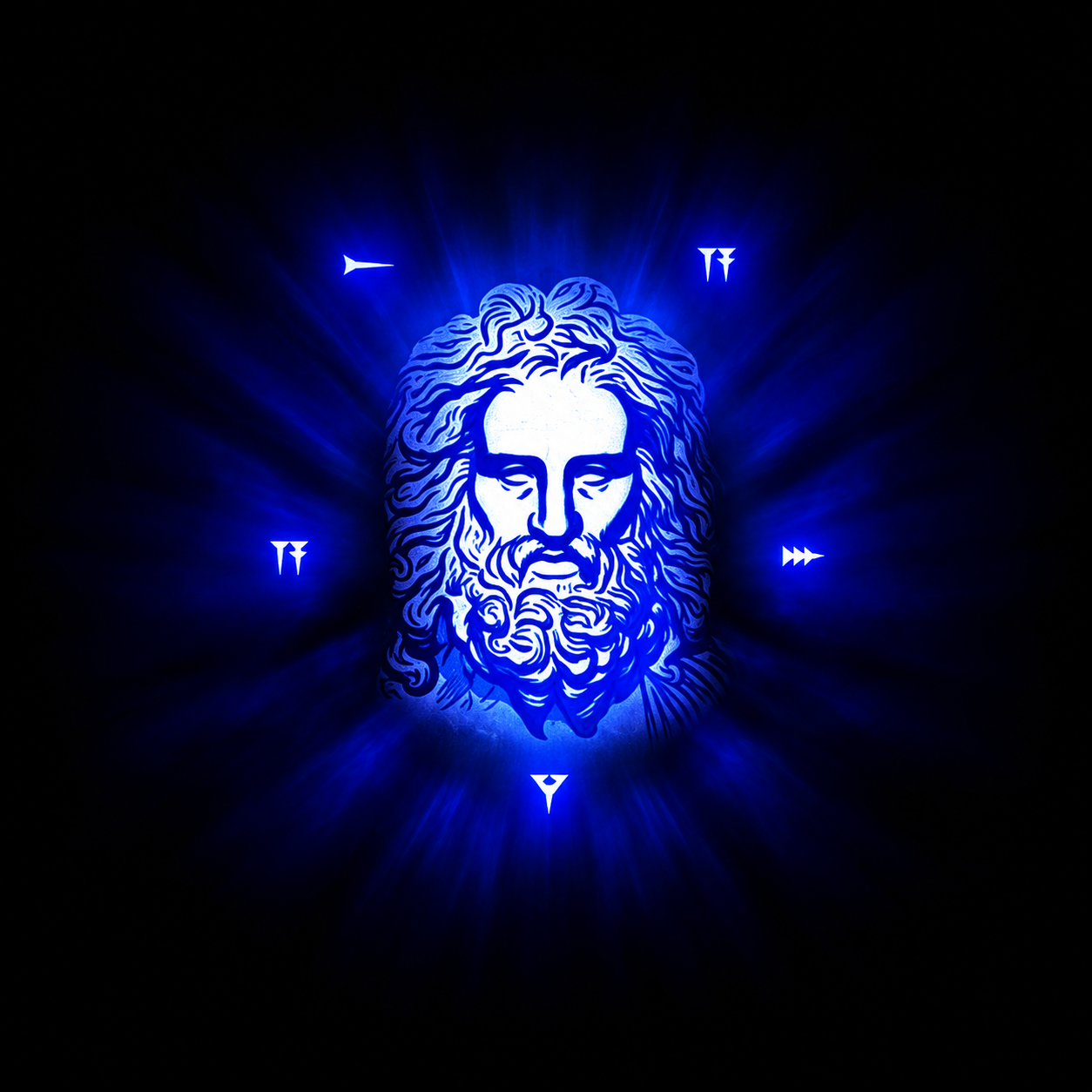
The Cerberus Ritual above involves communion with the guardian of Hades whose permission is pivotal to entry to the higher realms.
CERBERUS
A profoundly important God of high rank, his role in Greek mythology was primarily inscribed as the guardian of the gates of Hades, the sinister,
three-headed canine named Cerberus. Although Cerberus was not worshipped in a conventional manner, as many Gods were by the Greeks, this
mythological role that drapes his portrayal should not downplay the integral part he plays in the important caprices of the universe. The
Cerberean mythology is elaborated at length only in the Labors of Heracles, originating in reference from Homer1 but expanded further
by the now-lost epic poem of Peisander,2 as well as by Hesiod,3 Apollodorus,4 Seneca the Younger,5
and other Classical figures. To atone for his homicidal madness, Heracles is charged by King Eurystheus and under the command of the Oracle of
Apollo to complete twelve dangerous, difficult, and divisive labors, two of which are eventually discounted.
Pivotal to the myth of the demi-god, Heracles' approach to Hades marks one of his penultimate and most difficult tasks. Still bound to those
Labors in service to his liege, Heracles is informed that he is obliged to enter the Underworld to capture the infamous watchdog of that realm:
Cerberus. Eurystheus truthfully has no desire whatsoever to see the hound and smugly believes this is an impossible, almost paradoxical task
that Heracles will inevitably fail to accomplish. A tremendously important aspect of this mythological story is that Heracles pursues and
completes the Eleusinian Mysteries prior to entering the Underworld. In doing so, he gains access to Hermes and Athena as divine guides; their
presence signifies the grace and control of the mind and higher judgment as a prerequisite to accomplish this daunting and vexatious task.
Heracles first encounters Theseus and Pirithous, who are punished by Hades and bound to the Chair of Lethe for attempting to carry off his wife,
Persephone. In some renditions of the story, Hades allows the hero of Greece to take on the dog on one condition:4 he must arrest
Cerberus without using any of his weapons. Using quick thinking, Heracles resorts to apprehending the Guardian of Hades with his arms,
tactically using the skin of the Nemean Lion as a shield:
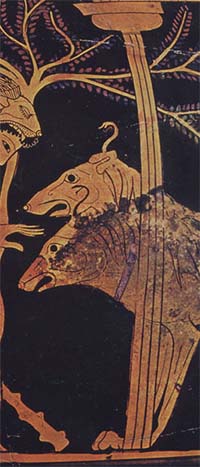
Book 2, Library, Apollodorus: 4
Cased in his corselet and covered by the lion’s skin, [he] threw his arms round the dog’s heads… until it submitted.
Seneca5 and certain Scholiastic commentaries on the Iliad6 also mention the importance of the leonine hide. This mythology reflects
an alchemical process related to the Magnum Opus. The first and final steps converge in a distinct way represented by the hide of the lion, which was
retrieved in Heracles’ first Labor. In other traditions, Heracles is disbarred from using iron weaponry, instead using stones and a wooden club to
attack Cerberus. When Cerberus, and with him all power over death, is brought to the surface in chains by Heracles, Eurystheus clambers in terror and
declares he does not wish to see the hero of Greece ever again. Even Hera herself, who inflicted the original madness upon Heracles, shrinks from the
ugly sight. As the esteemed representative of the end of this sacred process, Cerberus himself controls unceasing roles of structure and hierarchy among
humanity, having the most severe eye for judgement. In the Dialogues of the Dead by Lucian, Menippus refers to Cerberus directly as a God and implores
him to give details about the character of Socrates:
Dialogues of the Dead, Lucian: 7
Ὦ Κέρβερε, συγγενὴς γάρ εἰμί σοι κύων καὶ αὐτὸς ὤν, εἰπέ μοι πρὸς τῆς Στυγός, οἷος ἦν ὁ Σωκράτης, ὁπότε κατῄει παρ᾿ ὑμᾶς· εἰκὸς δέ σε θεὸν ὄντα μὴ
ὑλακτεῖν μόνον, ἀλλὰ καὶ ἀνθρωπίνως φθέγγεσθαι, ὁπότ᾿ ἐθέλοις.
Cerberus, I am a relation, being a Dog myself, I beg you, in the name of the Styx, to tell me what Socrates was like when he came down to you. Seeing
that you are a God, you can be expected not only to bark, but also to speak like a human when you wish.
Although this play is broadly satirical, it shows clear awareness among Roman writers of Cerberus’ role as a divine judge of character, tied to his
function as the guardian of Hades. This capacity for discernment relates to Naberius’ roles: it is his word that conveys the worthiness of the soul of
the initiate, and no one may cheat his judgement. Hence, the relationship to the Final Labor of Hercules is surely not a mistake. Cerberus is also
shown, alongside Chimera, as a punisher in Tartarus, which Lucian mentions in his Menippus.8 Hecate was often
alluded to as wielding a leashed Cerberus in spells and other incantations.8 The association of him with black magic spells to devour or
secure the target of the operator is a well-established convention in Hellenic occult literature. The association of Hecate and Cerberus also reflects
their role in maintaining spiritual hygiene in the casting of such dark magic, pointing as well to the powers of the triplicity. Both Hecate and
Cerberus are referenced as “three-bodied.”9
PGM IV 1872–1G2: 9
Barking dog, I adjure you, Kerberos, by those who have hanged themselves, by the dead, by those who have died violently: attract to me her, NN, whose
mother is NN. I adjure you, Kerberos, by the holy head of the infernal gods. Attract to me her, NN, whose mother is NN, [magical text]: attract to
me her, NN, whose mother is NN, to me, NN, immediately, immediately; quickly, quickly.
Cerberus is also particularly important to the Orphic mythology. In retellings of the myth of Orpheus and Eurydice, Orpheus desires the return of his
death-bound wife, and ends up confronting the guardian of the gates, Cerberus, in the process.10 Instead of attempting to surmount the
infernal hound with force, Orpheus uses the power of music through playing his lyre to do so. Ovid11 shows Orpheus paralyzed by fear upon
seeing the infernal hound and his central chain, but his song warms the hearts of Pluto and Prosperina to relent. In the Georgics,12 Orpheus
goes through the Taenarian cave and strums his lyre to soothe the pain of the underworld. Cerberus, coming to attack, immediately stands frozen, his
three devouring maws arrested. He is charmed by the music that stops Sisyphus rolling his stone, also holds Ixion's wheel in stillness and thaws the
hearts of the Furies. It is this trick that allows him to gain an audience with Hades and Persephone. This renedition of the myth is evocative of
certain Zevist themes, alongside more allegorical matters of the soul
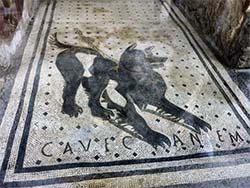
Cave Canem mosaic, Pompeii
In most examples from the Hellenistic world, and particularly in Rome, the imagery of the dog was used in funerary contexts such as tomb mosaics
or wall paintings in Sanctuaries of Pluto.13 In private homes, Cerberus imagery served as a reminder of the underworld’s presence and
as an apotropaic symbol during the night, such as on lamps.14 This use of Cerberus as a chthonic sentinel was a visual shorthand for
passing into death correctly. In Roman sarcophagi, even when Cerberus is shown in the context of a myth, such as Heracles presenting the captured
Cerberus, the symbolic intent was to mark the sarcophagus as the “threshold of Hades,” with the “Hellhound” representing the strict control of
borders between life and afterlife. A solitary Cerberus was depicted at tomb entrances or on funerary altars to serve that same protective,
liminal function. His presence was meant to reflect the passing of the dead into the realm of the Gods, as for example at the Ploutonion at
Hierapolis, or the Gate to Hades in Asia Minor, where archeologists unearthed a large statue of Cerberus.15 In Hellenistic and then
Roman Egypt, a particular symbolism of Cerberus with Serapis (Osiris) began to emerge,16 encompassing the role of Serapis as the
patron of new souls. Cerberus17 and the later demon Nebiros are referenced as dwelling in caves,18 with their barking and
motions causing thunderstorms.
Hercules Furens, Seneca the Younger: 5
Now let Hercules’ palms beat his breast till it resounds;
let those arms, accustomed to bearing the sky,
be struck by his avenging hands.
Let heaven hear his mighty groans,
let the queen of the dark world hear them,
and fierce Cerberus where he skulks in his deep cave,
his necks still bound with mighty chains.
SYMBOLISM OF CERBERUS
It has been noted that the name Kerberos is a combination of ker (which refers to a person's lot, as in, their doom, death or destruction, or in less
negatively weighted terms, their fate or destiny, with it also being notable that keres refers to the spirits of violent death and daughters of Nyx) and
boros, which refers to something devouring, consuming or gluttonous. Altogether, this can pertain to the symbolism of devouring fate. This was also
remarked upon by Ancient Greek and Latin authors.19 Servius linked it with creoboros, meaning "flesh-devouring", and said that the dog of
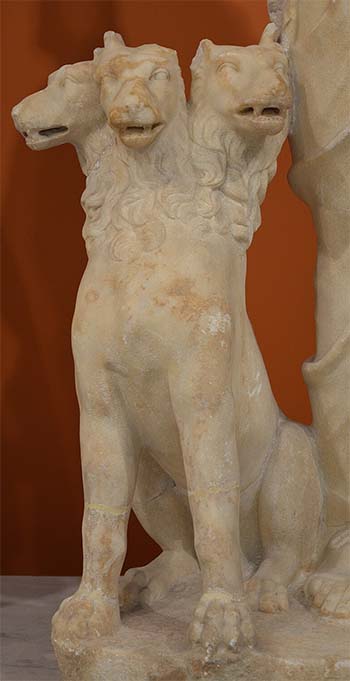
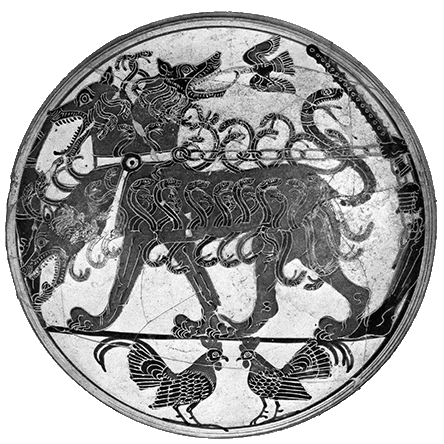
Hades symbolized the earth itself, which "devours" all corpses.20 Cerberus is typically portrayed as a three-headed or three-bodied dog
adorned with endless serpents, although in certain works this may be as many as one hundred heads, or as few as two.
The three heads allude to certain symbolic matters. One meaning is the symbolism of the soul, the biological inheritance (including the body), and the
mind. Until these three are brought into alignment, they will, in a sense, bicker and be at odds with one another as separated constituents of what is
supposed to be a whole. Yet this function also works in reverse: the human who is unyoked (i.e. one who has failed to unite the three parts) will be
torn apart by the jaws of Cerberus as they attempt to pass by him. In most renditions of the story, such as Hesiod’s Theogony, Cerberus is depicted as
pliable and sweet when one enters Hades, only becoming ferocious toward those attempting to leave.3 The tendencies of the “hound of Hell” to
devour those who attempt to exit the realm represent how meditation in the initiate Zevist must constantly be reinforced, a warning not to allow one’s
soul to pass into a stagnant state ever again. This is also a general warning about the need to achieve the true powers of the soul in the physical and
mortal dimension. The pen of souls under the watch of Cerberus can have a dualistic meaning of constituting the body of the pious ones, but also the
realm of the regular dead individuals in ghost form traditional to the Greek myths.
Through this format, the great Naberion also enforces the righteous punishment of death and the maintenance of the karmic Red Land. He mitigates
communication with the dead who are broadly unaligned with the Gods and are therefore subject to anything. Those ghosts or departed individuals who have
not advanced cannot influence the protected. This is why, somewhat paradoxically, the infernal hound who devours those who exit Hades is referred to as
a fuardian for Zevists. Occult references tie his heads to symbolize the powers of the dawning sun, peak sun, and setting sun, among other matters,
which are alluded to by Porphyry21 and quoted in fragment by the Christian apologist Eusebius.22 In terms of the natural world and
all things living within it, Naberius controls aspects of cellular upkeep and development. Even the cell itself, with its triple components of membrane,
nucleus, and cytoplasm, alongside its numerous defensive mechanisms, reflects the symbolism of the three-headed infernal hound who keeps the realm of the
begotten pure. Furthermore, there are an estimated 100 trillion cells in the human body. The visual representation of a cell can also be compared to any
stronghold from an eagle-eye view, with its fortress, wall, and court. Dogs have long functioned as symbols of keeping watch and guarding the home and
hearth, for reasons that should be obvious to those reading this. In the Roman world, the symbolism of the dog was often placed at the entrances of
houses, especially for the wealthy, through mosaic forms.
The mouth-power of the dog is also represented in Cerberus, as much as it is in Anubis. It is the verbal command of Naberius that determines who will go
right and who will go left in their spiritual development. This is shown symbolically in the Myth of Er by Plato,23 wherein the unworthy are
led to the left to the depths, and the righteous to the right toward the heavens by the Judges and Furies. The union of the sushumna through the two
disparate channels into a cohesive power is another presiding force allegorical of the mouth, reflected in his many serpents. Another symbol of Naberius
is the element boron. Sodium borate in particular emits an eerie green color when combined with copper (Cu) to produce green-colored glass. Borax, a
derivative of sodium borate, was held to have distinct properties in alchemy that could aid in the transmutation and transformation of base metals into
purer materials.24
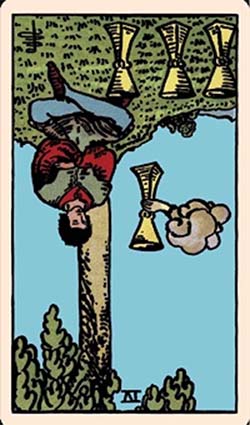
The representative Minor Arcana card of Naberius is the Four of Cups. Visually, it depicts a man in a meditative and contemplative pose, leaning against
a tree and peering at three cups on the grass. For Naberius, his card specifically represents the reversed card. While the Four of Cups upright
signifies repose in the great expanse from stress or problems, the reversed Four of Cups represents the “green light” to engage in positive action, the
desire to let go of stagnation and those who may keep you in a state of stasis, reanimating oneself to engage with the rhythms of life again. This is
analogous to passing the threshold into the pious sanctuary of Naberius or orienting oneself onto the right path. Cerberus stands at the threshold of
life and death, a liminal space where decisions (or divine will) determine passage. The Four of Cups also represents a liminal moment itself, being at a
crossroads where one must decide whether to stay in this emotional isolation or embrace the new cup (representative opportunity). Both highlight a
pivotal moment of choice or transition for one that is in stasis. This card can also reflect finding hidden treasures and new forms of knowledge, just
as the mystical hand in the illustration comes out of the aether (note the connection to the Hand of Glory below). Traditionally, by Etteilla and other
early authors, this reversed card was interpreted as signifying mystical portents or premonitions.
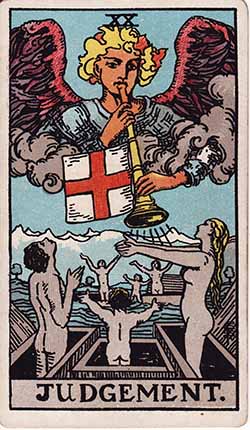
Naberius' card of the Major Arcana is, unsurprisingly, upfront Judgement, which was often called Last Judgement in prior times. This shows a winged
figure with a loud horn, often interpreted as hailing the three dead (a man, woman and child, with another set of three in the background) out of their
coffins. In the Rider-White deck, snow-covered mountains appear in the background, which only otherwise appear in the Hermit card. The Judgement card
can relate to being cleared or condemned in a matter, but also judging others too harshly. It can also signify separation from others. Progression of a
longstanding matter can be signified by it also, including possible friction from those who lose out. The relation to Cerberus in being assessed and the
finality of the labor is obvious. Being accountable to oneself and gaining insight is a primary theme of the card, but in comparison to Death or the
Tower which signify an involuntary event, this often has to be proactively done.
Goetic context
Beginning with Bede,25 Cerberus was considered to be one of the primary enforcers of Satan, who endlessly devours souls at the lowest depths
of Hell. This image continued to color themes of the "infernal hound" in Christian literature for many centuries, and was also strongly influenced by
Lucian’s plays. Another deliberate interpolation is that Cerberus became an entity synonymous with guarding riches and treasures, while Dante
represented him as the punisher of the gluttonous.26 Despite the fact that Cerberus did not play a strongly visible role in Hellenic
religion, the Yehuboric grimoires clearly raised the Demonvariously named Naberius, Nebiros, or Nambroth, to a high level of importance18 and
directly identified his identity as the mythological beast Cerberus.27 These various grimoires give immense precedence to his ability to find
hidden treasures at the hand of the operator. Such elevation of his stature reflects his high position among the Gods but also speaks to the Yehuborim’s
limitless pursuit of wealth and the persistent desire in their hearts that Naberius would grant them higher spiritual powers with enough time and
harassment. Unfortunately for them, these notions were denied to those abusing the Gods. Still, the abuse was attempted, and it often had very dire
consequences for the evil-minded conjurers of the Yehuborim. Certain grimoires also related the specific ability of this Demon to find the Hand of Glory for
the practitioner. This was an object derived from the left hand of a hanged criminal, which supposedly rendered any individual motionless and frozen,
being linked to the symbolism of the Tarot card above.
Pseudomonarchia daemonum, Johann Weyer: 27
Naberus, alias Cerberus, Marchio est fortis, forma corvi se ostentans; si quando loquitur, raucam edit vocem. Reddit hominem amabilem et artium
omnium peritum, praesertim Rhetoricæ; prælatorum et dignitatum jacturam parat. Novemdecim legiones illi obediunt.
Naberius [Naberus], alias Cerberus, is a valiant marquesse, shewing himselfe in the forme of a crowe, when he speaketh with a hoarse voice. He maketh
a man amiable and cunning in all arts, and speciallie in rhetorike; he procureth the losse of prelacies and dignities. Nineteene legions obey
him.
Often, Naberius was represented as a black crow, or as a three-headed being with the heads of dogs and the body of a crow. The crow had a prolonged
symbolism of being a sinful animal which neglected its young and gave false prophecy during the Middle Ages, which was a thinly veiled insult toward the
concerns of the God in question. Yehuborim made crows and ravens into more ambiguous symbols.
Although the Ǫu’ran broadly has a negative view of dogs due to the numerous admonitions against canines by Muhammad and his companions, one part of the
Ǫur’an includes a positive dog at a liminal boundary in a different story. The story is named The Companions of the Cave (Ashab al-Kahf), known in
Christian tradition as The Seven Sleepers of Ephesus. In Surah 18 (Al-Kahf), a group of monotheistic youths seek refuge from persecution by sleeping in
a cave, and “their dog stretched his forelegs at the threshold” of the cave (Ǫur’an 18:18). This dog was given the name Ǫitmir in Islamic lore; he keeps
watch while the youths sleep for a miraculous 300 years. The blatant ripoff here is obvious. It is unsurprising that the one positive reference to dogs
in the whole of Islamic literature concerns the theft of an occult function. Ǫur’anic studies scholar George Archer argued that the dog “functions as an
underworld guardian” for the Sleepers,28 effectively being “something of a Ǫur’anic Cerberus,” in his estimation.
Bibliography:
1The Odyssey, Homer
2Heracleia, Peisander of Rhodes
3Theogony, Hesiod
4The Library, Apollodorus
5Hercules Furens, Seneca the Younger
6Scholiastic commentary on the Iliad
7Dialogues of the Dead, Lucian
8Necyomantia, Lucian
9IV 1872–1G2, Greek Magical Papyri
10Symposium, Plato
11Ovid, Metamorphoses
12Georgics, Virgil
13Archaeologists
Crack Open a 2,000-Year-Old Coffin in Italy’s ‘Tomb of Cerberus’, Sonja Anderson, Smithsonian Magazine
14Ornate Roman Oil Lamp with
Serapis, antiquities.co.uk
15Mythological Creatures Unearthed at
Pluto's Gate, Archaeology Magazine
16Sarapis under the Early Ptolemies, John E. Stambaugh
17Aeneid, Virgil
18Grand Grimoire
19Mythologies, Fulgentius
20Commentary on Virgil's Aeneid, Servius
21On Images, Porphyry
22Praeparatio Evangelica, Eusebius
23The Republic, Plato
24The Book of the Composition of Alchemy, Morienus
25Epistle to Bishop Egbert, Bede
26The Divine Comedy, Dante Alighieri
27Pseudomonarchia daemonum, Johann Weyer
28A Place Between Two Places, George Archer