




9 min read
Melek Taus: The God of the Yezidis Is Zeus
author: High Priest Zevios Metathronos
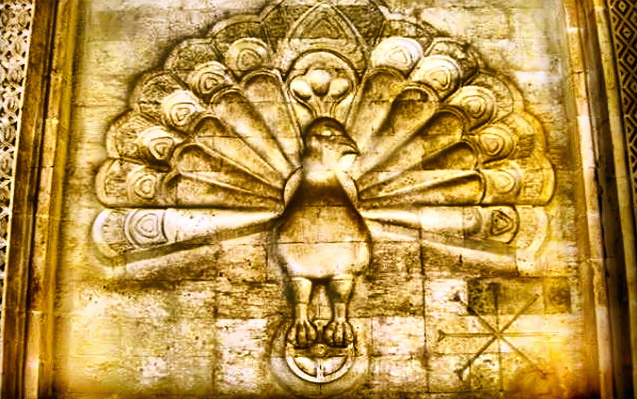
The Yezidis are a people of the Kurdish mountains. Their heartland is in northern Iraq, around the valley of Lalish, where the tomb of Sheikh Adi stands; they speak Kurmanji, and nearly all their sacred hymns have come down by word of mouth.1 Their neighbours called them devil worshippers. What they believe is something else, and it is older than the name.
What the Yezidis Believe
In the Yezidi account of creation, God first made the world as a pearl, small and closed, and kept it so for an age before remaking it as it is now. In that time He called seven holy beings into existence, made a covenant with them and gave the world into their care.1 The foremost of the seven is Tawûsê Melek, Melek Taus, the Peacock. The Black Book tells it plainly: on the first day God created "Melek Anzazîl, and he is Ṭâ’ûs-Melek, the chief of all", and then "he made Melek Ṭâ’ûs ruler over all".2
The Yezidis honour him through the sanjaq, sacred images of the peacock that the qawwals, the reciters of the hymns, carry from village to village in the procession called the tawusgerran, the circling of the peacock.1 Their prayer turns to the sun: the ideal is to pray facing it at its rising, at noon and at its setting.1 And they will not speak the name Shaitan; to say it is an unforgivable insult to Melek Taus.1 Their Black Book gives the reason: other sects claim that their god "came from heaven, despised and driven out by the great God", and "in this they have erred", for he is "one of the above-mentioned seven gods".2 On that slander, read Melek Taus: The Inverted God of the Yezidis.
The Gods Behind the Black Book
The Black Book says openly where the Yezidi faith began: "Before Christ came into this world our religion was paganism. King Ahab was from among us. And the god of Ahab was called Beelzebub."2 It names the holy beings of the Yezidis beside the gods of the old world, telling how Melek Taus appointed kings for them "besides the kings of ancient Assyria, Nisroch, who is Našir-ad-Dîn; Kamush, who is Melek Fahr-ad-Dîn, and Artâmîs, who is Melek Šams-(ad-)Dîn".2 Nisroch is the god in whose house Sennacherib of Assyria worshipped (2 Kings 19:37);3 Kamush and Artâmîs are, in our reading, Chemosh of Moab and Artemis. By their own book, three of the seven holy beings are ancient Gods under Yezidi names.
Why Melek Taus Is Zeus
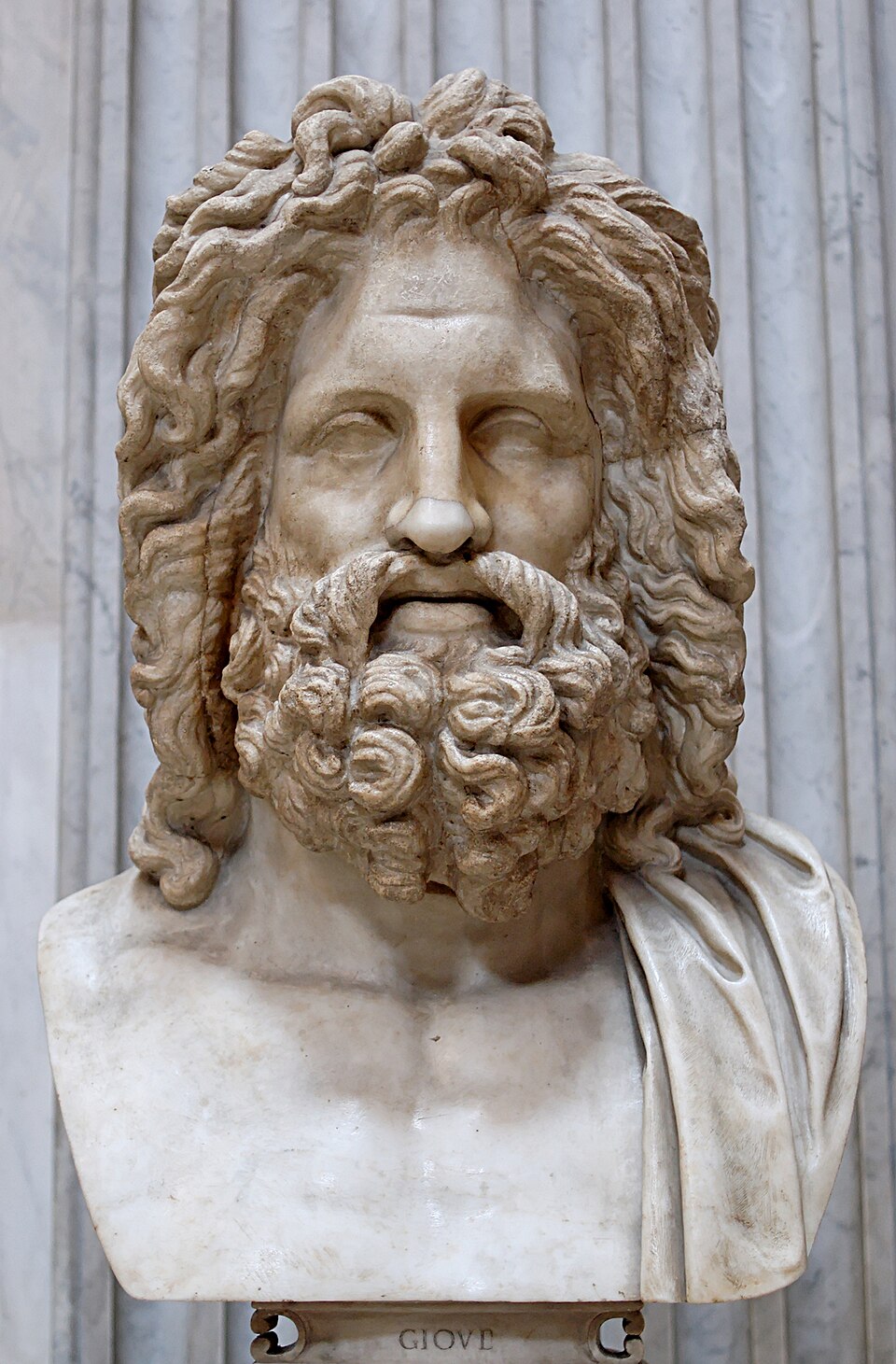
Cosmologically, the Temple reads the God of the Yezidis as Zeus. These are the correlations.
- The King over all. Melek Taus is "the chief of all", made "ruler over all" by the Creator, the first of the seven to whom the world is entrusted.1,2 Zeus holds the same place among the Gods: Homer calls him "the father of men and gods".4
- The Lord of Heaven. The Black Book makes the god of Ahab the god of the Yezidis before Christ.2 The Bible says that Ahab took to wife Jezebel, daughter of the king of the Zidonians, "and went and served Baal, and worshipped him" (1 Kings 16:31).3 The Phoenicians, Philo of Byblos records, called the lord of heaven "Beelsamen, which is in the Phoenician language 'lord of heaven,' and in Greek 'Zeus.'"5 In our reading, the god of Ahab is Zeus.
- The sky and the sun. The Yezidis pray toward the sun at its rising, noon and setting,1 and one of the seven holy beings is Šams-ad-Dîn, whose name means the Sun of the Faith. Zeus is the God of the bright sky: his name, like the Sanskrit Dyaus, comes from the Indo-European root for shining and the day.6
- The peacock. The peacock is Melek Taus's own image.1 Among the Greeks it was the bird of Hera, the wife of Zeus: at her temple near Argos, Pausanias saw a peacock of gold and gleaming stones given by the emperor Hadrian, "because they hold the bird to be sacred to Hera".7 The bird of the Yezidi God is the bird of the house of Zeus.
- The same slander. Both were made into the Devil by the same religions. Muslims and Christians called Melek Taus Satan,1 and the Book of Revelation put "Satan's seat" at Pergamum (Revelation 2:13), which scholars identify with the Great Altar of Zeus there.8 On the proof, read The Abrahamic Inversion.
- An ancient root. Scholars find that the Yezidi accounts of creation have much in common with those of ancient Iran, and have suggested that the ancestors of the Yezidis venerated a benign creator who set the world in motion.1 The Temple counts that Sky Father of the Indo-Iranians, under his names Dyaus and Ahura Mazda, among the names of Zeus.
The King over all, the Lord of Heaven, turned to the sun, whose bird belongs to the house of Zeus, and whom the Abrahamic religions called Satan: in the Temple's reading, the God the Yezidis revere as Melek Taus is Zeus. On their holy book, read the Al Jilwah.
Melek Taus, the King over all, is Zeus.
Sources
- Christine Allison, "Yazidis i. General," Encyclopaedia Iranica (2004; updated 2017). https://www.iranicaonline.org/articles/yazidis-i-general-1
- Isya Joseph, Devil Worship: The Sacred Books and Traditions of the Yezidiz (Boston: R. G. Badger, 1919), "Mashaf Reš (The Black Book)," pp. 36–49. sacred-texts.com
- The King James Bible: 1 Kings 16:31; 2 Kings 19:37. https://ebible.org/eng-kjv2006/1KI16.htm
- Homer, Iliad 1.544, trans. A. T. Murray (Loeb Classical Library, 1924). Perseus
- Philo of Byblos, in Eusebius, Preparation for the Gospel 1.10, trans. E. H. Gifford (1903). https://www.tertullian.org/fathers/eusebius_pe_01_book1.htm
- Julius Pokorny, Indogermanisches etymologisches Wörterbuch (1959), pp. 183–187, root dei-, "to shine", in the Indo-European Lexicon of the University of Texas at Austin. https://lrc.la.utexas.edu/lex/master/0322
- Pausanias, Description of Greece 2.17.6, trans. W. H. S. Jones (Loeb Classical Library, 1918). Perseus
- Adela Yarbro Collins, "Satan's Throne: Revelations from Revelation," Biblical Archaeology Review 32.3 (May/June 2006). https://www.baslibrary.org/biblical-archaeology-review/32/3/7