



43 min read
☩ TEMPLE OF ZEUS ☩
The Festival Psalms · Psalm VI: The Psalm of Thalysia · Consualia · Lammas · Lughnasadh
To Demeter, Lady of the Grain, Thesmophoros, Nurse of Mankind, for Lammas, the Feast of the First Loaf, on the 1st of August, when the Sun stands at 15° Leo
THE FESTIVAL PSALMS · PSALM VI · Ψαλμὸς τοῦ Πρώτου Θερισμοῦ
author: High Priest Zevios Metathronos
72 passages · 72 to Demeter · Homeric-Ionic hymnic cola · Ancient Greek, transliteration, English, in 3 columns
#How the Psalm Is Used
This Psalm belongs to Thalysia · Consualia · Lammas · Lughnasadh: The First Harvest of Demeter and is sung within its Rite at the points the festival page marks. It may also be read on its own on the day, before the altar or under the sky, as a complete prayer. Within the Temple's practice a ritual is a direct theurgical act; the Psalm gathers the mind and turns it toward the Gods, and gives the Rite its voice.
Each passage stands in 3 columns, read down the page: the Ancient Greek, the transliteration and the English. The Ancient Greek is the text itself. The transliteration carries the sound, in the Modern Greek liturgical reading used throughout the Temple's rituals and its Ancient Hymn Library: ee as in see, oo as in moon, th as in thin, kh as in loch, v for beta, f for phi, every consonant sounded.
The English carries the sense. A Zevist who doesn't yet read Greek sings the English and speaks the Greek of the first and last line of each movement; a Zevist who does, sings the Greek and lets the English stand beside it.
In a gathering the Chorus carries the Greek and the assembly answers the last line of every passage in English. Alone, read it through without hurry; 72 passages take about 40 minutes spoken, and the Rite allows for it. The Psalm is composed in the hymnic register of the Homeric and Orphic Hymns, in epithets, vocatives and the formulas of κλῦθι and χαῖρε, and it draws its lines from the ancient sources named at the end of the page.
Where a line is quoted from antiquity, it's quoted exactly; where the Temple composes, it composes in the same tongue.
#The Key of the Psalm
| Movement | Greek title | English title | To | Passages | Isopsephy of the title |
|---|---|---|---|---|---|
| I | Ἡ Σιτοδότειρα | The Giver of Grain | Demeter | 1 to 12 | 1078 |
| II | Ὁ Θερισμός | The Harvest | Demeter | 13 to 24 | 704 |
| III | Ὁ Ἄρτος | The Bread | Demeter | 25 to 36 | 741 |
| IV | Ἡ Τροφὸς τῶν Ἀνθρώπων | The Nurse of Mankind | Demeter | 37 to 48 | 4288 |
| V | Λουγνασάδ | Lughnasadh, the Feast of Lugh | Demeter | 49 to 60 | 759 |
| VI | Ἡ Εὐχαριστία | The Thanksgiving | Demeter | 61 to 72 | 1635 |
The Psalm holds 72 passages in 6 movements of 12 (72 to Demeter). 72 is the number of the fifths of the circle: 72 × 5° = 360°, the wheel of the year drawn whole; 72 years are 1 degree of the precession of the equinoxes, 1 day of the Great Year. 12 is the number of the months and of the Olympians. The isopsephy of the Names in the Greek is counted, not guessed: ΔΗΜΗΤΗΡ = 468, ΔΗΩ = 812.
The titles of the movements carry their own numbers in the table. The Psalm speaks in 2 voices at once: the plain voice of praise, which anyone may sing, and a veiled voice that names the stations of the inner rite in the order in which they're passed. The second voice isn't explained on this page. Those who have passed the stations will read it without help; those who haven't, lose nothing by singing the first.
#I · The Giver of Grain · Ἡ Σιτοδότειρα (Demeter)
| № | Ancient Greek | Transliteration | English |
|---|---|---|---|
| 1 | Δήμητρ' ἠΰκομον, σεμνὴν θεόν, ἄρχομ' ἀείδειν, αὐτὴν ἠδὲ θύγατρα τανύσφυρον· οὕτως ὁ παλαιὸς ὕμνος ἀνοίγεται, καὶ οὕτως ὁ Ναὸς τὴν ἑορτὴν τοῦ πρώτου ἄρτου ἀνοίγει. | Deemeetr' eeeekomon, semneen theon, arkhom' aeidein, afteen eede theegatra taneesfeeron· ootos o palaios eemnos anoigetai, kai ootos o Naos teen eorteen too protoo artoo anoigei. | Of Demeter the lovely-haired, the holy Goddess, I begin to sing, of her and of her slender-ankled daughter: so the old hymn opens, and so the Temple opens the feast of the first loaf. |
| 2 | Κλῦθι, Δήμητερ, Δηοῖ, Μῆτερ, Σιτοδότειρα, χρυσάορε, Ὡρηφόρε, Καρποφόρε, ἡ πάντα τὰ ζῶντα τρέφουσα· ὁ Ἥλιος ἐν μέσῳ τοῦ Λέοντος ἵσταται, καὶ τὸ πρῶτον δράγμα τέμνεται, καὶ σόν ἐστιν. | Kleethi, Deemeeter, Deeoi, Meeter, Sitodoteira, khreesaore, Oreefore, Karpofore, ee panta ta zonta trefoosa· o Eelios en meso too Leontos istatai, kai to proton dragma temnetai, kai son estin. | Hear, Demeter, Deo, Mother, Giver of Grain, of the golden sword, Lady of the seasons, bringer of the fruits, who feed all that lives; the Sun stands in the middle of the Lion, and the first sheaf is cut, and it is yours. |
| 3 | Πρὸ σοῦ οἱ ἄνθρωποι βαλάνους ἤσθιον καὶ τοὺς ὠμοὺς καρποὺς τῆς ὕλης· σὺ τὸν σῖτον ἔδωκας καὶ τὸ ἄροτρον καὶ τὸν νόμον τὸν σὺν αὐτοῖς, καὶ τὸν βοῦν τὸν ἕλκοντα, καὶ τὸν μύλον τὸν στρεφόμενον, καὶ τὸν ἄρτον τὸν μεριζόμενον. | Pro soo oi anthropoi valanoos eesthion kai toos omoos karpoos tees eelees· see ton siton edokas kai to arotron kai ton nomon ton seen aftois, kai ton voon ton elkonta, kai ton meelon ton strefomenon, kai ton arton ton merizomenon. | Before you men ate acorns and the raw fruits of the wood; you gave the grain and the plough and the law that goes with them, and the ox that pulls, and the mill that turns, and the loaf that is shared. |
| 4 | Θεσμοφόρε, Νομοφόρε· οἱ νόμοι τοῦ ἀγροῦ οἱ πρῶτοι νόμοι, ὁ ὅρος, ἡ ὥρα, τὸ μέρος τοῦ ἐργάτου, ἡ δεκάτη τῆς θεᾶς· ὁ πολιτισμὸς ἀγρὸς σὺν φραγμῷ, καὶ σὺ τὸν φραγμὸν ἔγραψας. | Thesmofore, Nomofore· oi nomoi too agroo oi protoi nomoi, o oros, ee ora, to meros too ergatoo, ee dekatee tees theas· o politismos agros seen fragmo, kai see ton fragmon egrapsas. | Thesmophoros, Law-Bearer: the laws of the field are the first laws, the boundary, the season, the share of the labourer, the tithe of the Goddess; civilisation is a field with a fence, and you drew the fence. |
| 5 | Κέρης ἐν Ῥώμῃ, ἧς τὸ ὄνομα ἐν παντὶ σίτῳ· Νισάβα τῆς Σουμερίας, Δέσποινα τοῦ σίτου καὶ τοῦ καλάμου· Ῥενενουτὲτ τῆς Αἰγύπτου, ἡ ἀσπὶς τοῦ θερισμοῦ· Σὶφ τοῦ Βορρᾶ, ἧς ἡ κόμη ὁ χρυσὸς τοῦ ἀγροῦ· Ταλτίου τῆς Ἰβερνίας, ἡ ἀποθανοῦσα τὸ πεδίον τῷ ἀρότρῳ καθαίρουσα· ἡ Μήτηρ τοῦ Σίτου μία ὑπὸ πάντα οὐρανόν. | Kerees en Romee, ees to onoma en panti sito· Nisava tees Soomerias, Despoina too sitoo kai too kalamoo· Renenootet tees Aigeeptoo, ee aspis too therismoo· Sif too Vorra, ees ee komee o khreesos too agroo· Taltioo tees Ivernias, ee apothanoosa to pedion to arotro kathairoosa· ee Meeteer too Sitoo mia eepo panta ooranon. | Ceres in Rome, whose name is in every cereal; Nisaba of Sumer, Lady of the grain and of the reed pen; Renenutet of Egypt, the serpent of the harvest; Sif of the North, whose hair is the gold of the field; Tailtiu of Ireland, who died clearing the plain for the plough: the Grain Mother is 1 under every sky. |
| 6 | Καὶ ἡ Ἶσις σή, ἡ πρώτη τὸν στάχυν τοῦ πυροῦ ἐν τῷ ἀγρῷ εὑροῦσα, Διόδωρος λέγει, καὶ τὸν ἄρτον διδάξασα· καὶ ἡ Μήτηρ τοῦ Σίτου πάσης κώμης τῆς Εὐρώπης, τὸ ὕστατον δράγμα ὡς γυνὴ ἐνδεδυμένον καὶ οἴκαδε σὺν ᾠδῇ φερόμενον. | Kai ee Isis see, ee protee ton stakheen too peeroo en to agro evroosa, Diodoros legei, kai ton arton didaxasa· kai ee Meeteer too Sitoo pasees komees tees Evropees, to eestaton dragma os geenee endedeemenon kai oikade seen odee feromenon. | Isis too is yours, who first found the ear of wheat in the field, Diodorus says, and taught the bread; and the Corn Mother of every village in Europe, the last sheaf dressed as a woman and carried home with singing. |
| 7 | Ἄλλαξον τὸ ὄνομα κατὰ τὴν γλῶσσαν, Ζευϊστά, καὶ μηδὲν τῆς Μητρὸς ἄλλαξον· ὁ στάχυς ὁ αὐτὸς στάχυς ἐν τῇ Ἀττικῇ καὶ ἐν Αἰγύπτῳ καὶ ἐν τῇ κοιλάδι τοῦ Βοΐνε· ἡ χεὶρ ἡ τέμνουσα αὐτὸν ἐν τῷ ὀνόματι αὐτῆς τέμνει. | Allaxon to onoma kata teen glossan, Zevista, kai meeden tees Meetros allaxon· o stakhees o aftos stakhees en tee Attikee kai en Aigeepto kai en tee koiladi too Voine· ee kheir ee temnoosa afton en to onomati aftees temnei. | Change the name by the tongue, Zevist, and change nothing of the Mother; the ear of grain is the same ear in Attica and in Egypt and in the Boyne valley; the hand that cuts it cuts it in her name. |
| 8 | Μῆτερ τῆς Κόρης, ἣ εἰς τὰ πεδία τῆς Νύσης δι' ἄνθη ἦλθε καὶ οἴκαδε οὐκ ἐπανῆλθεν, ὁ ψαλμὸς τοῦ Σεπτεμβρίου περὶ τούτου ᾄσεται· σήμερον ἡ Κόρη ἔτι ἄνω, καὶ ἡ Μήτηρ ἐν τῷ ἀγρῷ γελᾷ τὰς ἀγκάλας πλήρεις ἔχουσα. | Meeter tees Korees, ee eis ta pedia tees Neesees di' anthee eelthe kai oikade ook epaneelthen, o psalmos too Septemvrioo peri tootoo asetai· seemeron ee Koree eti ano, kai ee Meeteer en to agro gela tas ankalas pleereis ekhoosa. | Mother of the Maiden, who went to the fields of Nysa for flowers and didn't come home, the Psalm of September will sing of that; today the Maiden is still above, and the Mother is laughing in the field with her arms full. |
| 9 | Χλόη, ἡ Χλωρά, ἐν τῷ ἔαρι· Καρποφόρος, ἡ Καρπὸν φέρουσα, νῦν· Ἀνησιδώρα, ἡ Δῶρα ἀνιεῖσα, ἡ τὴν γῆν πλέον ἀποδιδόναι ἢ ἔλαβε ποιοῦσα· οἱ τριάκοντα κόκκοι ἐν τῷ στάχυϊ ἡ ἀριθμητική σου. | Khloee, ee Khlora, en to eari· Karpoforos, ee Karpon feroosa, neen· Aneesidora, ee Dora anieisa, ee teen geen pleon apodidonai ee elave poioosa· oi triakonta kokkoi en to stakheei ee arithmeetikee soo. | Chloe, the Green, in the spring; Karpophoros, Fruit-Bearer, now; Anesidora, Sender-up of gifts, who make the earth give back more than it took; the 30 grains in the ear are your arithmetic. |
| 10 | Πολυφόρβη, ἡ Πάντα τρέφουσα, ἧς οἱ μαστοὶ οἱ δύο θερισμοὶ τοῦ ἔτους· ὁ πρῶτος ὁ σῖτος, καὶ ὁ δεύτερος ὁ καρπός, καὶ ὁ Ζευϊστὴς σοὶ δι' ἀμφοτέρους εὐχαριστεῖ, καὶ τὸν τρίτον αἰτεῖ, ὅς ἐστιν ὁ θερισμὸς τῆς ψυχῆς. | Poleeforvee, ee Panta trefoosa, ees oi mastoi oi deeo therismoi too etoos· o protos o sitos, kai o defteros o karpos, kai o Zevistees soi di' amfoteroos efkharistei, kai ton triton aitei, os estin o therismos tees pseekhees. | Polyphorbe, All-Nourishing, whose breasts are the 2 harvests of the year; the first is the grain, and the second is the fruit, and the Zevist thanks you for both, and asks for the third, which is the harvest of the soul. |
| 11 | Ἐν Ἀθήναις ὁ στάχυς τὸ σύμβολόν σου ἐπὶ τῶν νομισμάτων, ἡ μήκων καὶ ἡ δᾲς παρ' αὐτόν· ἡ μήκων διὰ τὸν ὕπνον τοῦ σπέρματος, ἡ δᾲς διὰ τὴν ζήτησιν ἐν τῷ σκότει· τρία σημεῖα, καὶ τὸ ὅλον ἔτος τοῦ ἀγροῦ ἐν αὐτοῖς. | En Atheenais o stakhees to seemvolon soo epi ton nomismaton, ee meekon kai ee das par' afton· ee meekon dia ton eepnon too spermatos, ee das dia teen zeeteesin en to skotei· tria seemeia, kai to olon etos too agroo en aftois. | In Athens the ear of grain was your emblem on the coins, the poppy and the torch beside it; the poppy for the sleep of the seed, the torch for the search in the dark; 3 signs, and the whole year of the field is in them. |
| 12 | Χαῖρε, Δήμητερ, Σιτοδότειρα, ἐν τῇ πρώτῃ ὥρᾳ τοῦ θερισμοῦ· ἑβδομήκοντα δύο στροφὰς σοὶ φέρομεν, ὅσοι οἱ κόκκοι ἐν ἀγαθῷ στάχυϊ καὶ ἡμίσει· δέξαι τὴν πρώτην, ὡς δέχῃ τὸ πρῶτον δράγμα. | Khaire, Deemeeter, Sitodoteira, en tee protee ora too therismoo· evdomeekonta deeo strofas soi feromen, osoi oi kokkoi en agatho stakheei kai eemisei· dexai teen proteen, os dekhee to proton dragma. | Hail, Demeter, Giver of Grain, in the first hour of the harvest; 72 passages we bring you, as many as the grains in a good ear and a half; receive the first, as you receive the first sheaf. |
#II · The Harvest · Ὁ Θερισμός (Demeter)
| № | Ancient Greek | Transliteration | English |
|---|---|---|---|
| 13 | Τὸ δρέπανον τὸ ἀρχαιότατον ὄργανον τοῦ ἀνθρώπου μετὰ τὴν χεῖρα, καὶ τὸ σχῆμα αὐτοῦ ἡ Σελήνη· ὁ θεριστὴς κύπτει, καὶ ὁ καυλὸς πίπτει, καὶ ὁ ἀγρὸς ἐν μιᾷ ἡμέρᾳ ἀλλάσσεται· ὁ θερισμὸς ἡ μία ἀμετάστρεπτος πρᾶξις τοῦ ἔτους, καὶ ἐν τῷ ὀνόματί σου πράσσεται. | To drepanon to arkhaiotaton organon too anthropoo meta teen kheira, kai to skheema aftoo ee Seleenee· o theristees keeptei, kai o kavlos piptei, kai o agros en mia eemera allassetai· o therismos ee mia ametastreptos praxis too etoos, kai en to onomati soo prassetai. | The sickle is the oldest tool of man after the hand, and its shape is the Moon; the reaper bends, and the stalk falls, and the field is changed in a day; the harvest is the year's one irreversible act, and it's done in your name. |
| 14 | Τέμε τὸ πρῶτον δράγμα σὺν τοῖς ῥήμασι, καὶ ἀπόθου αὐτό, καὶ μὴ ἀλόα· τὸ πρῶτον δράγμα τῆς θεᾶς ἐστι, καὶ ἐπὶ τὸν βωμὸν ἔρχεται, καὶ μένει ἕως τοῦ ἔαρος· ὁ σπόρος τοῦ ἐπιόντος ἔτους ἐν αὐτῷ, καὶ ἡ θεὰ αὐτὸν φυλάσσει. | Teme to proton dragma seen tois reemasi, kai apothoo afto, kai mee aloa· to proton dragma tees theas esti, kai epi ton vomon erkhetai, kai menei eos too earos· o sporos too epiontos etoos en afto, kai ee thea afton feelassei. | Cut the first sheaf with the words, and set it aside, and don't thresh it; the first sheaf belongs to the Goddess, and goes on the altar, and stays till the spring; the seed-corn of the next year is in it, and the Goddess keeps it. |
| 15 | Θεόκριτος εἰς τὰ Θαλύσια ἐν Κῷ ἐβάδισε, τὴν ἑορτὴν τῶν ἀπαρχῶν τῆς Δήμητρος, καὶ ἐν ταῖς αἰγείροις καὶ ταῖς πτελέαις ἔκειτο τῶν τεττίγων ᾀδόντων, καὶ ἡ θεὰ ἐπὶ τοῦ σωροῦ ἔστη δράγματα καὶ μήκωνας ἐν ἀμφοτέραις ταῖς χερσὶν ἔχουσα. | Theokritos eis ta Thaleesia en Ko evadise, teen eorteen ton aparkhon tees Deemeetros, kai en tais aigeirois kai tais pteleais ekeito ton tettigon adonton, kai ee thea epi too soroo estee dragmata kai meekonas en amfoterais tais khersin ekhoosa. | Theocritus walked to the Thalysia on Cos, the feast of the first fruits of Demeter, and lay among the poplars and the elms while the cicadas sang, and the Goddess stood on the heap with sheaves and poppies in both hands. |
| 16 | Ὅμηρος τὰ Θαλύσια ἤδη ᾔδει· Οἰνεὺς αὐτῶν ἐπελάθετο, καὶ ἡ θεὰ τὸν κάπρον ἔπεμψεν· αἱ ἀπαρχαὶ κατεχόμεναι ὁ θερισμὸς ἀπολλύμενος· ὁ μὴ διδοὺς τὴν πρώτην μοῖραν τὰ λοιπὰ οὐ φυλάσσει. | Omeeros ta Thaleesia eedee eedei· Oinevs afton epelatheto, kai ee thea ton kapron epempsen· ai aparkhai katekhomenai o therismos apolleemenos· o mee didoos teen proteen moiran ta loipa oo feelassei. | Homer knew the Thalysia already: Oineus forgot them, and the Goddess sent the boar; the first fruits withheld are the harvest lost; the one who doesn't give the first portion doesn't keep the rest. |
| 17 | Αἱ Ἀθῆναι τὰς ἀπαρχὰς πάσης τῆς Ἑλλάδος εἰς Ἐλευσῖνα ἔπεμπον, κατὰ ψήφισμα, μέτρον ἐκ πάσης πόλεως, καὶ αἱ θεαὶ τὴν δεκάτην τοῦ ὅλου Ἑλληνικοῦ κόσμου ἐπὶ τῆς ἅλω αὐτῶν ἐδέχοντο· ὁ Ναὸς τὰς ἀπαρχὰς αὐτοῦ εἰς τὸν βωμὸν πέμπει, καὶ ὁ βωμὸς ἡ ἅλως. | Ai Atheenai tas aparkhas pasees tees Ellados eis Elefsina epempon, kata pseefisma, metron ek pasees poleos, kai ai theai teen dekateen too oloo Elleenikoo kosmoo epi tees alo afton edekhonto· o Naos tas aparkhas aftoo eis ton vomon pempei, kai o vomos ee alos. | Athens sent the first fruits of all Greece to Eleusis, by decree, a measure from every city, and the Goddesses received the tithe of the whole Greek world on their threshing floor; the Temple sends its first fruits to the altar, and the altar is the floor. |
| 18 | Ἡ Αἴγυπτος τὸ ἔτος ἤνοιγεν ὅτε ὁ Σῶθις ἀνέτελλε καὶ ὁ ποταμὸς σὺν αὐτῷ ἀνέβαινεν, Οὐεπὲτ Ῥενπέτ, τὸ Ἄνοιγμα τοῦ Ἔτους, ἐν τῷ καύματι τοῦ Λέοντος· ὁ θερισμὸς τῆς Αἰγύπτου ἤδη ἔσω, καὶ ἡ πλημμύρα ἡ τὸν ἐπιόντα ποιήσουσα ἤρκτο. | Ee Aigeeptos to etos eenoigen ote o Sothis anetelle kai o potamos seen afto anevainen, Ooepet Renpet, to Anoigma too Etoos, en to kavmati too Leontos· o therismos tees Aigeeptoo eedee eso, kai ee pleemmeera ee ton epionta poieesoosa eerkto. | Egypt opened its year when Sothis rose and the river rose with it, Wepet Renpet, the Opening of the Year, in the heat of the Lion; the harvest of Egypt was already in, and the flood that would make the next had begun. |
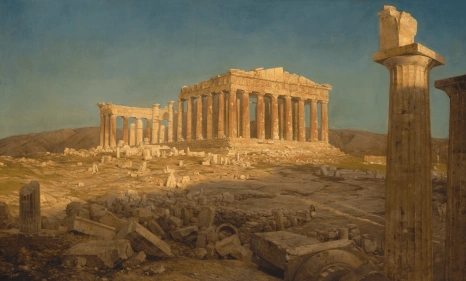
| 19 | Αἱ Ἀθῆναι τὰ Παναθήναια ἐν τέλει τοῦ θεριστικοῦ μηνὸς ἦγον, τὴν μεγίστην ἑορτὴν τῆς πόλεως, τὸν νέον πέπλον τῇ θεᾷ ἐπὶ νεὼς ἐπὶ τροχῶν φερόμενον, τὸν ὅλον δῆμον ἐν τῇ πομπῇ· ἡ ζῳφόρος τοῦ Παρθενῶνος ἡ πομπὴ ἐκείνη, καὶ ἔτι βαδίζει. | Ai Atheenai ta Panatheenaia en telei too theristikoo meenos eegon, teen megisteen eorteen tees poleos, ton neon peplon tee thea epi neos epi trokhon feromenon, ton olon deemon en tee pompee· ee zoforos too Parthenonos ee pompee ekeinee, kai eti vadizei. | Athens kept the Panathenaia at the end of the harvest month, the city's greatest feast, the new robe carried to the Goddess on a ship on wheels, the whole people in the procession; the frieze of the Parthenon is that procession, and it still walks. |
| 20 | Θέριζε ὃ ἐσπάρη· ὁ νόμος ἀρχαιότερος παντὸς βιβλίου, καὶ σὺ αὐτὸν ἐν τῇ γῇ ἔγραψας· ὃ ἐν Μαρτίῳ ἐφυτεύθη ἐν τῷ ἀγρῷ ἐν Αὐγούστῳ ἵσταται, καὶ οὐδὲν ἄλλο· ὁ ἀγρὸς οὐ ψεύδεται, καὶ ὁ θερισμὸς ἡ ἀλήθεια περὶ τοῦ ἔαρος. | Therize o esparee· o nomos arkhaioteros pantos vivlioo, kai see afton en tee gee egrapsas· o en Martio efeetefthee en to agro en Avgoosto istatai, kai ooden allo· o agros oo psevdetai, kai o therismos ee aleetheia peri too earos. | Reap what was sown: the law is older than any book, and you wrote it in the dirt; what was planted in March stands in the field in August, and nothing else does; the field doesn't lie, and the harvest is the truth about the spring. |
| 21 | Ἄνοιξον τὸν ἐσφραγισμένον χάρτην τοῦ Φεβρουαρίου νῦν, τὴν βουλὴν τῶν ἓξ μηνῶν, καὶ ἀνάγνωθι αὐτὸν ἐν τῷ ἀγρῷ τοῦ ἔτους, καὶ ζυγοστάτησον τὸ πραχθὲν πρὸς τὸ γραφέν· ἡ Ἑορτὴ τοῦ Πυρὸς τὴν κάμινον ἀνῆψεν· ὁ πρῶτος θερισμὸς τὸ μέταλλον δοκιμάζει. | Anoixon ton esfragismenon kharteen too Fevrooarioo neen, teen vooleen ton ex meenon, kai anagnothi afton en to agro too etoos, kai zeegostateeson to prakhthen pros to grafen· ee Eortee too Peeros teen kaminon aneepsen· o protos therismos to metallon dokimazei. | Open the sealed paper of February now, the resolution of the 6 months, and read it in the field of the year, and weigh what was done against what was written; the Feast of Fire lit the forge; the first harvest tests the metal. |
| 22 | Ὃ ἵσταται, εὐχαρίστει τῇ θεᾷ· ὃ ἔπεσε, μάνθανε ἐξ αὐτοῦ, ἄνευ προφάσεως· ὁ γεωργὸς ὁ τὸν ἀγρὸν αἰτιώμενος τῷ ἐπιόντι ἔτει τὸ αὐτὸ ἁμάρτημα φυτεύει· ὁ ἀληθὴς θεριστὴς ὁ θερισμὸν λαμβάνων. | O istatai, efkharistei tee thea· o epese, manthane ex aftoo, anef profaseos· o georgos o ton agron aitiomenos to epionti etei to afto amarteema feetevei· o aleethees theristees o therismon lamvanon. | What stands, thank the Goddess for; what fell, learn from, without excuse; the farmer who blames the field next year plants the same mistake; the honest reaper is the one who gets a harvest. |
| 23 | Ἀποτίθει τὸν σῖτον, καὶ μὴ θησαύριζε αὐτόν· ἡ σιταποθήκη διὰ τὸν χειμῶνα καὶ διὰ τὸν γείτονα, καὶ ἡ θεὰ ἡ πληρώσασα αὐτὴν βλέπει τί ἐξ αὐτῆς ἐξέρχεται· ὁ θερισμὸς ὁ μεριζόμενος ὁ θερισμὸς ὁ πάλιν ἐρχόμενος. | Apotithei ton siton, kai mee theesavrize afton· ee sitapotheekee dia ton kheimona kai dia ton geitona, kai ee thea ee pleerosasa afteen vlepei ti ex aftees exerkhetai· o therismos o merizomenos o therismos o palin erkhomenos. | Store the grain, and don't hoard it: the granary is for the winter and for the neighbour, and the Goddess who filled it watches what comes out of it; the harvest shared is the harvest that comes again. |
| 24 | Χαῖρε, Δήμητερ τοῦ δρεπάνου καὶ τοῦ δράγματος καὶ τῆς πλήρους ἅλω· ἡ πρώτη τομὴ πεποίηται, καὶ τὸ ἔτος πρὸς τὴν συναγωγὴν αὐτοῦ ἐστράφη· σύναγε καὶ ἡμᾶς, ὅταν ὁ ἀγρὸς ἡμῶν ὥριμος ᾖ, καὶ μὴ πρότερον. | Khaire, Deemeeter too drepanoo kai too dragmatos kai tees pleeroos alo· ee protee tomee pepoieetai, kai to etos pros teen seenagogeen aftoo estrafee· seenage kai eemas, otan o agros eemon orimos ee, kai mee proteron. | Hail, Demeter of the sickle and the sheaf and the full threshing floor; the first cut is made, and the year has turned toward its gathering; gather us too, when our field is ripe, and not before. |
#III · The Bread · Ὁ Ἄρτος (Demeter)
| № | Ancient Greek | Transliteration | English |
|---|---|---|---|
| 25 | Ἡ λειτουργία τοῦ ἄρτου, οἱ Ἄγγλοι τὴν ἡμέραν ἐκάλεσαν, ἡ λειτουργία τοῦ πρώτου ἄρτου, τοῦ ἐκ τοῦ πρώτου σίτου πεφθέντος καὶ εἰς τὸν βωμὸν πρὶν ἐσθίεσθαι ἐνεχθέντος· τὸν ἄρτον ἐφύλαξαν καὶ τῆς θεᾶς ἐπελάθοντο, καὶ ἡμεῖς τὸν ἄρτον αὐτῇ πάλιν φέρομεν. | Ee leitoorgia too artoo, oi Angloi teen eemeran ekalesan, ee leitoorgia too protoo artoo, too ek too protoo sitoo pefthentos kai eis ton vomon prin esthiesthai enekhthentos· ton arton efeelaxan kai tees theas epelathonto, kai eemeis ton arton aftee palin feromen. | Loaf-mass, the English called the day, the mass of the first loaf, baked from the first grain and brought to the altar before any was eaten; they kept the loaf and forgot the Goddess, and we bring her the loaf again. |
| 26 | Ἄληθε τὸν σῖτον, καὶ ἡ ἄλεσις τελετή· ὁ λίθος στρέφεται ὡς τὸ ἔτος στρέφεται· μάσσε τὸ φύραμα, καὶ ἡ μάξις τελετή· ἡ χεὶρ ἐργάζεται ὃ ἡ γῆ ἔδωκε· πέσσε τὸν ἄρτον, καὶ ἡ πέψις τελετή· τὸ πῦρ τελειοῖ ὃ ὁ Ἥλιος ἤρξατο. | Aleethe ton siton, kai ee alesis teletee· o lithos strefetai os to etos strefetai· masse to feerama, kai ee maxis teletee· ee kheir ergazetai o ee gee edoke· pesse ton arton, kai ee pepsis teletee· to peer teleioi o o Eelios eerxato. | Grind the grain, and the grinding is a rite: the stone turns as the year turns; knead the dough, and the kneading is a rite: the hand works what the earth gave; bake the loaf, and the baking is a rite: the fire finishes what the Sun began. |
| 27 | Ὁ ἄρτος τὸ σῶμα τῆς θεᾶς, εἰς βρῶσιν δεδομένον· οἱ Χριστιανοὶ τὴν ἔννοιαν ἔλαβον καὶ ἄνδρα ἐν τῷ ἄρτῳ ἔθηκαν· ὁ ἄρτος ἀεὶ γυνὴ ἦν, καὶ τὸ ὄνομα αὐτῆς Δημήτηρ. | O artos to soma tees theas, eis vrosin dedomenon· oi Khristianoi teen ennoian elavon kai andra en to arto etheekan· o artos aei geenee een, kai to onoma aftees Deemeeteer. | The loaf is the body of the Goddess, given to be eaten; the Christians took the idea and put a man in the bread; the bread was always a woman, and her name is Demeter. |
| 28 | Δημήτηρ δύο δῶρα ταῖς Ἀθήναις ἔδωκεν, Ἰσοκράτης εἶπε, τὰ μέγιστα πάντων· τοὺς καρποὺς τῆς γῆς, δι' οὓς οὐ θηριωδῶς ζῶμεν, καὶ τὴν τελετήν, ἧς οἱ μετασχόντες περὶ τῆς τοῦ βίου τελευτῆς καὶ τοῦ σύμπαντος αἰῶνος ἡδίους τὰς ἐλπίδας ἔχουσιν. | Deemeeteer deeo dora tais Atheenais edoken, Isokratees eipe, ta megista panton· toos karpoos tees gees, di' oos oo theeriodos zomen, kai teen teleteen, ees oi metaskhontes peri tees too vioo teleftees kai too seempantos aionos eedioos tas elpidas ekhoosin. | Demeter gave 2 gifts to Athens, Isocrates said, the greatest of all: the fruits of the earth, by which we don't live like beasts, and the rite, whose initiates have sweeter hopes about the end of life and all eternity. |
| 29 | Τὸ πρῶτον δῶρον τοῦ Αὐγούστου, τὸ δεύτερον τοῦ Σεπτεμβρίου, καὶ ἓν δῶρόν ἐστι· ὁ ἄρτος τοῦ σώματος καὶ ὁ ἄρτος τῆς ψυχῆς ἐκ τοῦ αὐτοῦ στάχυος ἔρχονται· ὁ μαθὼν ἐσθίειν ἤρξατο μανθάνειν ὁρᾶν. | To proton doron too Avgoostoo, to defteron too Septemvrioo, kai en doron esti· o artos too somatos kai o artos tees pseekhees ek too aftoo stakheeos erkhontai· o mathon esthiein eerxato manthanein oran. | The first gift is August's, the second is September's, and they are 1 gift; the bread of the body and the bread of the soul come from the same ear; the one who has learned to eat has begun to learn to see. |
| 30 | Τριπτόλεμος τὸ σπέρμα σου ἐν τῷ πτερωτῷ ἅρματι ὑπὲρ τὴν ὅλην γῆν ἔφερε, καὶ τὸν σπόρον παντὶ ἔθνει ἐδίδαξε, καὶ τὸ ἄροτρον ἦλθεν ὅπου ἐκεῖνος ἦλθεν· ἡ Ἐλευσὶς ἄρτον ἐξέπεμψε πρὶν φῶς ἐκπέμψαι. | Triptolemos to sperma soo en to pteroto armati eeper teen oleen geen efere, kai ton sporon panti ethnei edidaxe, kai to arotron eelthen opoo ekeinos eelthen· ee Elefsis arton exepempse prin fos ekpempsai. | Triptolemos took your seed in the winged chariot over the whole earth, and taught the sowing to every people, and the plough went where he went; Eleusis sent out bread before it sent out light. |
| 31 | Κλάσον τὸν ἄρτον καὶ δὸς τὸ πρῶτον κλάσμα τῇ θεᾷ καὶ τὸ δεύτερον τῷ ξένῳ· τὸ τρίτον σόν, καὶ γεύεται τῶν ἄλλων δύο· ἄρτος μόνος ἐσθιόμενος ἄλευρον· ἄρτος μεριζόμενος ἄρτος. | Klason ton arton kai dos to proton klasma tee thea kai to defteron to xeno· to triton son, kai gevetai ton allon deeo· artos monos esthiomenos alevron· artos merizomenos artos. | Break the loaf and give the first piece to the Goddess and the second to the stranger; the third is yours, and it tastes of the other 2; a loaf eaten alone is flour; a loaf shared is bread. |
| 32 | Ὁ κυκεὼν ὁ τὴν νηστείαν σου ἐν Ἐλευσῖνι λύσας κριθὴ καὶ ὕδωρ καὶ γλήχων ἦν· ἡ ἁπλουστάτη τροφὴ τοῦ ἀγροῦ, ἐν οἴκῳ βασιλέως πινομένη· ἡ θεὰ τὸ ἁπλοῦν ποτήριον λαμβάνει, καὶ τὸ ἁπλοῦν ποτήριον τὸ Μυστήριον. | O keekeon o teen neesteian soo en Elefsini leesas krithee kai eedor kai gleekhon een· ee aploostatee trofee too agroo, en oiko vasileos pinomenee· ee thea to aploon poteerion lamvanei, kai to aploon poteerion to Meesteerion. | The kykeon that broke your fast at Eleusis was barley and water and pennyroyal; the simplest food of the field, drunk in the house of a king; the Goddess takes the plain cup, and the plain cup is the Mystery. |
| 33 | Πέσσε τὸν ἄρτον ἐν σχήματι τοῦ Ἡλίου, στρογγύλον, ταῖς ὀκτὼ ἀκτῖσι τοῦ ἔτους κεχαραγμένον· ἢ ἐν σχήματι τοῦ δράγματος, ἢ ἐν σχήματι τῆς θεᾶς τὰς ἀγκάλας πλήρεις ἐχούσης· ὁ ἄρτος τοῦ Λάμμας τὸ ἔτος ἐδώδιμον γενόμενον. | Pesse ton arton en skheemati too Eelioo, strongeelon, tais okto aktisi too etoos kekharagmenon· ee en skheemati too dragmatos, ee en skheemati tees theas tas ankalas pleereis ekhoosees· o artos too Lammas to etos edodimon genomenon. | Bake the loaf in the shape of the Sun, round, scored with the 8 spokes of the year; or in the shape of the sheaf, or the shape of the Goddess with her arms full; the bread of Lammas is the year made edible. |
| 34 | Ὁ ζῦθος ἄρτος ῥεῖν μαθών, καὶ οἱ Αἰγύπτιοι τοῖς θεοῖς πρῶτον αὐτὸν ἐζύμουν· ὁ ζῦθος τοῦ Λάμμας καὶ τὸ μελίκρατον τοῦ θερισμοῦ αὐτῆς ὡς ὁ ἄρτος· ἡ θεὰ τοῦ σίτου θεὰ τούτου ὃ ὁ σῖτος γίγνεται. | O zeethos artos rein mathon, kai oi Aigeeptioi tois theois proton afton ezeemoon· o zeethos too Lammas kai to melikraton too therismoo aftees os o artos· ee thea too sitoo thea tootoo o o sitos gignetai. | Beer is bread that learned to flow, and the Egyptians brewed it for the Gods first; the ale of Lammas and the mead of the harvest are hers as the loaf is; the Goddess of the grain is the Goddess of what the grain becomes. |
| 35 | Δὸς ἡμῖν σήμερον τὸν ἄρτον τῆς ἡμέρας· ἡ εὐχὴ ἀρχαιοτέρα τοῦ δανεισαμένου αὐτήν· πᾶν ἔθνος τὴν Μητέρα τοῦ Σίτου τὸν ἄρτον ᾔτει πρὶν προφήτην τινὰ γεννηθῆναι· ἡμεῖς αὐτὸν σὲ αἰτοῦμεν, Δήμητερ, τῷ ἰδίῳ σου ὀνόματι. | Dos eemin seemeron ton arton tees eemeras· ee efkhee arkhaiotera too daneisamenoo afteen· pan ethnos teen Meetera too Sitoo ton arton eetei prin profeeteen tina genneetheenai· eemeis afton se aitoomen, Deemeeter, to idio soo onomati. | Give us this day the bread of the day: the prayer is older than the one who borrowed it; every people asked the Grain Mother for the loaf before any prophet was born; we ask it of you, Demeter, by your own name. |
| 36 | Χαῖρε, Δήμητερ τοῦ ἄρτου, ἧς τὸ σῶμα ἐπὶ πάσης τραπέζης· ὁ πρῶτος ἄρτος τοῦ ἔτους πρὸ σοῦ κλᾶται, καὶ ὁ Ναὸς ἐν τῇ παρουσίᾳ σου ἐσθίει, καὶ τρέφεται. | Khaire, Deemeeter too artoo, ees to soma epi pasees trapezees· o protos artos too etoos pro soo klatai, kai o Naos en tee paroosia soo esthiei, kai trefetai. | Hail, Demeter of the loaf, whose body is on every table; the first bread of the year is broken before you, and the Temple eats in your presence, and is fed. |
#IV · The Nurse of Mankind · Ἡ Τροφὸς τῶν Ἀνθρώπων (Demeter)
| № | Ancient Greek | Transliteration | English |
|---|---|---|---|
| 37 | Ὡς γραῦς μετημφιεσμένη εἰς Ἐλευσῖνα ἦλθες, πενθοῦσα, καὶ παρὰ τὸ Παρθένιον φρέαρ ἐκάθισας, καὶ αἱ θυγατέρες τοῦ Κελεοῦ σὲ οἴκαδε ἤγαγον τὸ παιδίον Δημοφῶντα τρέφειν· ἡ θεὰ τοῦ σίτου τροφὸς ἐν οἴκῳ βασιλέως ἐγένετο, καὶ οὐδὲν εἶπεν. | Os gravs meteemfiesmenee eis Elefsina eelthes, penthoosa, kai para to Parthenion frear ekathisas, kai ai theegateres too Keleoo se oikade eegagon to paidion Deemofonta trefein· ee thea too sitoo trofos en oiko vasileos egeneto, kai ooden eipen. | Disguised as an old woman you came to Eleusis, grieving, and sat by the Maiden Well, and the daughters of Keleos took you home to nurse the child Demophon; the Goddess of the grain became a nurse in a king's house, and said nothing. |
| 38 | Οὔτε ἄρτον οὔτε γάλα αὐτῷ ἔδωκας, ἀλλ' ἀμβροσίᾳ ἔχρισας καὶ ἐνέπνευσας, καὶ νύκτωρ ἐν τῇ καρδίᾳ τοῦ πυρὸς αὐτὸν ἔθηκας ὡς δαλόν, λάθρᾳ, καὶ ηὔξετο ὡς θεός, καὶ οἱ γονεῖς ἐθαύμαζον. | Oote arton oote gala afto edokas, all' amvrosia ekhrisas kai enepnefsas, kai neektor en tee kardia too peeros afton etheekas os dalon, lathra, kai eefxeto os theos, kai oi goneis ethavmazon. | You fed him no bread and no milk, but anointed him with ambrosia and breathed on him, and at night you laid him in the heart of the fire like a brand, unseen, and he grew like a God, and the parents wondered. |
| 39 | Μετάνειρα κατεσκόπησε καὶ ἀνέκραγε· τὸ τέκνον μου ἐν τῷ πυρί· καὶ σὺ αὐτὸν κατέθηκας καὶ εἶπας· νήϊδες ἄνθρωποι καὶ ἀφράδμονες, οὔτ' ἀγαθοῖο αἶσαν ἐπερχομένου προγνώμεναι οὔτε κακοῖο· ἀθάνατον ἄν σοι τὸν παῖδα ἐποίησα, νῦν δὲ θνῄσκειν δεῖ ὡς τοὺς λοιπούς. | Metaneira kateskopeese kai anekrage· to teknon moo en to peeri· kai see afton katetheekas kai eipas· neeides anthropoi kai afradmones, oot' agathoio aisan eperkhomenoo prognomenai oote kakoio· athanaton an soi ton paida epoieesa, neen de thneeskein dei os toos loipoos. | Metaneira spied and shrieked: my child in the fire! and you set him down and said: witless mortals, who can't tell good from evil when it comes; I would have made him deathless, and now he must die like the rest. |
| 40 | Τὸ πῦρ τῆς θεᾶς τὸ πῦρ τὸ ἀθάνατον ποιοῦν, καὶ ἡ μήτηρ ἡ τὸ τέκνον ἐξ αὐτοῦ ἕλκουσα, ἐξ ἔρωτος, τῷ ἔρωτι αὐτὸ κτείνει· ὁ Ζευϊστὴς παρὰ τῆς Μετανείρας μανθάνει τί μὴ ποιεῖν ὅταν τὸ πῦρ ἔλθῃ. | To peer tees theas to peer to athanaton poioon, kai ee meeteer ee to teknon ex aftoo elkoosa, ex erotos, to eroti afto kteinei· o Zevistees para tees Metaneiras manthanei ti mee poiein otan to peer elthee. | The fire of the Goddess is the fire that makes immortal, and the mother who pulls the child out of it, out of love, kills him with her love; the Zevist learns from Metaneira what not to do when the fire comes. |
| 41 | Τὸ Λάμμας τὸ πῦρ τοῦ Λέοντος· ὁ Ἥλιος ἐν μέσῳ τοῦ Λέοντος, ὁ θερμότατος μήν, ὅτε ὁ σῖτος ἐν τῷ ἀγρῷ τῷ πυρὶ τοῦ οὐρανοῦ ξηραίνεται πρὶν τμηθῆναι· ὁ στάχυς ὁ ἐν τῷ πυρὶ ἐκείνῳ στὰς ὁ στάχυς ὁ ἄρτος γιγνόμενος. | To Lammas to peer too Leontos· o Eelios en meso too Leontos, o thermotatos meen, ote o sitos en to agro to peeri too ooranoo xeerainetai prin tmeetheenai· o stakhees o en to peeri ekeino stas o stakhees o artos gignomenos. | Lammas is the fire of the Lion: the Sun in the middle of Leo, the hottest month, when the grain is dried in the field by the fire of heaven before it's cut; the ear that stands in that fire is the ear that becomes bread. |
| 42 | Οὕτως ἡ ψυχή· ἡ θεὰ αὐτὴν ἐν τῷ πυρὶ νύκτα μετὰ νύκτα τίθησιν, ἀόρατος, καὶ αὔξεται ὡς θεὸς τῶν γονέων θαυμαζόντων· ὁ μόνος κίνδυνος ἡ κραυγή, ἡ χεὶρ ἡ πρὸ ὥρας αὐτὴν ἐξέλκουσα. | Ootos ee pseekhee· ee thea afteen en to peeri neekta meta neekta titheesin, aoratos, kai afxetai os theos ton goneon thavmazonton· o monos kindeenos ee kravgee, ee kheir ee pro oras afteen exelkoosa. | So the soul: the Goddess lays it in the fire night after night, unseen, and it grows like a God while the parents wonder; the only danger is the shriek, the hand that pulls it out too soon. |
| 43 | Εἶτα τὴν γραῦν ἀπέβαλες καὶ ὡς ἡ θεὰ ἔστης, καὶ ὁ οἶκος φωτὸς ἐπλήσθη, καὶ ναὸν ἐν Ἐλευσῖνι ἐκέλευσας, καὶ τὰς τελετὰς αὐτὴ ἐδίδαξας· ἡ τροφὸς τὸ Μυστήριον ἦν, καὶ τὸ Μυστήριον ἐν τῷ μαγειρείῳ ἦν ἀπ' ἀρχῆς. | Eita teen gravn apevales kai os ee thea estees, kai o oikos fotos epleesthee, kai naon en Elefsini ekelefsas, kai tas teletas aftee edidaxas· ee trofos to Meesteerion een, kai to Meesteerion en to mageireio een ap' arkhees. | Then you threw off the old woman and stood as the Goddess, and the house filled with light, and you commanded a temple at Eleusis, and taught the rites yourself; the nurse was the Mystery, and the Mystery had been in the kitchen all along. |
| 44 | Κουροτρόφε, Τροφὲ τῶν Νέων, σὺν Ἀρτέμιδι καὶ σὺν Ἑστίᾳ· αἱ τρεῖς θεαὶ τοῦ Φεβρουαρίου, τοῦ Μαΐου καὶ τοῦ Αὐγούστου αἱ τρεῖς τροφοὶ τῶν τέκνων τοῦ Ναοῦ· ὁ διδάξας παῖδα ἄρτον ὀρθῶς ἐσθίειν τὴν πρώτην τελετὴν αὐτὸν ἐδίδαξεν. | Koorotrofe, Trofe ton Neon, seen Artemidi kai seen Estia· ai treis theai too Fevrooarioo, too Maioo kai too Avgoostoo ai treis trofoi ton teknon too Naoo· o didaxas paida arton orthos esthiein teen proteen teleteen afton edidaxen. | Kourotrophos, Nurse of the Young, with Artemis and with Estia: the 3 Goddesses of February, May and August are the 3 nurses of the Temple's children; the one who teaches a child to eat bread rightly has taught him the first rite. |
| 45 | Ἐρυσίχθων τὸ ἄλσος σου ἔκοψε καὶ σὺ αὐτῷ λιμὸν ἔπεμψας, καὶ τὸν οἶκον αὐτοῦ ἔφαγε καὶ εἶτα ἑαυτόν· ἡ θεὰ ἡ τρέφουσα ἡ θεὰ ἡ λιμώττειν ποιοῦσα τὸν τὸν ἀγρὸν ὑβρίζοντα· Καλλίμαχος αὐτὸ ᾖσεν ἵνα μηδεὶς ἐπιλάθηται. | Ereesikhthon to alsos soo ekopse kai see afto limon epempsas, kai ton oikon aftoo efage kai eita eafton· ee thea ee trefoosa ee thea ee limottein poioosa ton ton agron eevrizonta· Kallimakhos afto eesen ina meedeis epilatheetai. | Erysichthon cut your grove and you sent him hunger, and he ate his house and then himself; the Goddess who feeds is the Goddess who starves the one who insults the field; Callimachus sang it so that no one would forget. |
| 46 | Τρέφε τοὺς Ζευϊστάς, Μῆτερ, ἐν τῷ σώματι, ὅ ἐστιν ὁ ἀγρός σου, καὶ ἐν τῷ νῷ, ὅς ἐστιν ἡ ἅλως σου, καὶ ἐν τῇ ψυχῇ, ἥ ἐστι τὸ πῦρ σου· καὶ μηδεὶς αὐτῶν πρὸ ὥρας ἐξελκέσθω. | Trefe toos Zevistas, Meeter, en to somati, o estin o agros soo, kai en to no, os estin ee alos soo, kai en tee pseekhee, ee esti to peer soo· kai meedeis afton pro oras exelkestho. | Feed the Zevists, Mother, in the body, which is your field, and in the mind, which is your threshing floor, and in the soul, which is your fire; and let none of them be pulled out too soon. |
| 47 | Ἡ μήτηρ ἡ τρέφουσα οὐχ ἡ μήτηρ ἡ χαριζομένη· τὸν Δημοφῶντα ἀμβροσίᾳ καὶ πυρὶ ἔθρεψας, οὐ γλυκέσι· ὁ Ναὸς τὰ τέκνα αὐτοῦ τρέφει τούτοις ἃ θεοὺς αὐτὰ ποιεῖ. | Ee meeteer ee trefoosa ookh ee meeteer ee kharizomenee· ton Deemofonta amvrosia kai peeri ethrepsas, oo gleekesi· o Naos ta tekna aftoo trefei tootois a theoos afta poiei. | The mother who nurses isn't the mother who indulges; you fed Demophon on ambrosia and fire, not on sweets; the Temple nurses its children on what makes them Gods. |
| 48 | Χαῖρε, Δήμητερ, Τροφὲ τῶν Ἀνθρώπων, ἡ παρὰ τὸ φρέαρ καθίσασα καὶ οὐ γνωσθεῖσα· κάθισον ἐν τῷ μαγειρείῳ τοῦ Ναοῦ τῇ νυκτὶ ταύτῃ, ὅπου ὁ ἄρτος πέσσεται, καὶ γνώσθητι ἐκεῖ, καὶ εὐχαριστήθητι. | Khaire, Deemeeter, Trofe ton Anthropon, ee para to frear kathisasa kai oo gnostheisa· kathison en to mageireio too Naoo tee neekti taftee, opoo o artos pessetai, kai gnostheeti ekei, kai efkharisteetheeti. | Hail, Demeter, Nurse of Mankind, who sat by the well and were not known; sit in the Temple's kitchen tonight, where the loaf is baked, and be known there, and be thanked. |
#V · Lughnasadh, the Feast of Lugh · Λουγνασάδ (Demeter)
| № | Ancient Greek | Transliteration | English |
|---|---|---|---|
| 49 | Λοὺγ ὁ μακρόχειρ τοὺς ἀγῶνας Ταλτίου τῇ τροφῷ αὐτοῦ ἱδρύσατο, ἣ ἀπέθανε τὸ μέγα πεδίον τῷ ἀρότρῳ καθαίρουσα, καὶ ᾔτησεν ἀγῶσι καὶ οὐ δάκρυσι μνημονεύεσθαι· οἱ Ἴβερνοι τὴν πανήγυριν τῆς Ταλτίου χίλια καὶ πεντακόσια ἔτη ἐφύλαξαν, καὶ ἡ πανήγυρις τοῦ θερισμοῦ αὐτῆς ἐστιν. | Loog o makrokheir toos agonas Taltioo tee trofo aftoo idreesato, ee apethane to mega pedion to arotro kathairoosa, kai eeteesen agosi kai oo dakreesi mneemonevesthai· oi Ivernoi teen paneegeerin tees Taltioo khilia kai pentakosia etee efeelaxan, kai ee paneegeeris too therismoo aftees estin. | Lugh of the long arm founded the games for Tailtiu his foster-mother, who died clearing the great plain for the plough, and asked that it be remembered with games and not with tears; the Irish kept the fair of Tailtiu for 1,500 years, and the harvest fair is hers. |
| 50 | Τροφὸς ἀποθανοῦσα τὸν ἀγρὸν ποιοῦσα· τοῦτο ἡ Δημήτηρ ὑπὸ Ἰβερνικὸν ὄνομα, καὶ ἡ ἑορτὴ ἡ ἀγῶσιν αὐτὴν τιμῶσα ἡ ἑορτὴ τῆς Μητρὸς τοῦ Σίτου· Λοὺγ ὁ υἱὸς ὁ αὐτὴν φυλάσσων, ὡς Τριπτόλεμος τὴν ἐκείνης ἐφύλασσε. | Trofos apothanoosa ton agron poioosa· tooto ee Deemeeteer eepo Ivernikon onoma, kai ee eortee ee agosin afteen timosa ee eortee tees Meetros too Sitoo· Loog o eeios o afteen feelasson, os Triptolemos teen ekeinees efeelasse. | A foster-mother who died making the field: that is Demeter under an Irish name, and the feast that honours her with games is the feast of the Grain Mother; Lugh is the son who keeps it, as Triptolemos kept hers. |
| 51 | Εἰς τοὺς λόφους ἀνέβαινον τῇ πρώτῃ Κυριακῇ τοῦ θερισμοῦ, εἰς τὰς κορυφάς, τὸ ὄρος τοῦ Πατρικίου καὶ τὴν Ῥῆκ, σὺν ἀγρίοις καρποῖς καὶ μουσικῇ καὶ τοῖς πρώτοις νέοις καρποῖς τῆς γῆς, καὶ τὸ ὄνομα τοῦ ἁγίου ἐπὶ τοῦ ὄρους οὐκ ἐδύνατο κρύψαι τίνος ἡ ἑορτὴ ἦν. | Eis toos lofoos anevainon tee protee Keeriakee too therismoo, eis tas koreefas, to oros too Patrikioo kai teen Reek, seen agriois karpois kai moosikee kai tois protois neois karpois tees gees, kai to onoma too agioo epi too oroos ook edeenato kreepsai tinos ee eortee een. | Up the hills they went on the first Sunday of the harvest, to the summits, Croagh Patrick and the Reek, with bilberries and music and the first new potatoes, and the saint's name on the mountain couldn't hide whose feast it was. |
| 52 | Λοὺγ ὁ Λέων τοῦ Ἡλίου ἐν μέσῳ τοῦ ζῳδίου αὐτοῦ, ὁ πολύτεχνος θεός, πάσης τέχνης δεσπότης, ὁ τὴν μάχην λίθῳ σφενδόνης νικήσας· ὁ θερισμὸς ἡ νίκη τοῦ Ἡλίου, καὶ ἡ θεὰ τὰ λάφυρα συνάγει. | Loog o Leon too Eelioo en meso too zodioo aftoo, o poleetekhnos theos, pasees tekhnees despotees, o teen makheen litho sfendonees nikeesas· o therismos ee nikee too Eelioo, kai ee thea ta lafeera seenagei. | Lugh is the Lion of the Sun at the middle of his sign, the skilled God, master of every art, who won the battle with a sling-stone; the harvest is the Sun's victory, and the Goddess gathers the spoils. |
| 53 | Γάμοι ἐν τῇ πανηγύρει τῆς Ταλτίου ἐγίγνοντο, εἰς ἐνιαυτὸν καὶ ἡμέραν, χεὶρ ἐν χειρὶ διὰ τρήματος τοίχου· ὁ θερισμὸς γάμος τοῦ Ἡλίου καὶ τοῦ ἀγροῦ, καὶ ὁ λαὸς ὑπ' αὐτὸν ἐγάμει· ὁ Ναὸς εὐλογεῖ ὃ ἐν τῷ Βελτάνε ἤρχθη καὶ ἐν τῷ Λάμμας ὥριμόν ἐστιν. | Gamoi en tee paneegeerei tees Taltioo egignonto, eis eniafton kai eemeran, kheir en kheiri dia treematos toikhoo· o therismos gamos too Eelioo kai too agroo, kai o laos eep' afton egamei· o Naos evlogei o en to Veltane eerkhthee kai en to Lammas orimon estin. | Marriages were made at the fair of Tailtiu, for a year and a day, hand in hand through a hole in a wall; the harvest is a wedding of the Sun and the field, and the people married under it; the Temple blesses what was begun at Beltane and is ripe at Lammas. |
| 54 | Ἱπποδρομίαι ἐπὶ τῆς ᾐόνος, πάλη ἐπὶ τοῦ λόφου, αἱ ἀπαρχαὶ κρινόμεναι, οἱ ἀοιδοὶ ἐν ἀγῶνι· οἱ ἀγῶνες τοῦ θερισμοῦ ἀγῶνες λαοῦ βεβρωκότος· λαὸς πεινῶν ἀγῶνας οὐκ ἔχει, καὶ ἡ θεὰ τοὺς ἀγῶνας ἔδωκε τὸν ἄρτον δοῦσα. | Ippodromiai epi tees eeonos, palee epi too lofoo, ai aparkhai krinomenai, oi aoidoi en agoni· oi agones too therismoo agones laoo vevrokotos· laos peinon agonas ook ekhei, kai ee thea toos agonas edoke ton arton doosa. | Horse races on the strand, wrestling on the hill, the first fruits judged, the bards in contest: the games of the harvest are the games of a people who have eaten; a hungry people has no games, and the Goddess gave the games by giving the bread. |
| 55 | Ὁ Ἥλιος ἐν τῇ πεντεκαιδεκάτῃ μοίρᾳ τοῦ Λέοντος ἡ καρδία τοῦ θέρους, ὡς ὁ Λέων ἡ καρδία τοῦ ζῳδιακοῦ· τὸ στερεὸν πῦρ, τὸ ζῴδιον τοῦ βασιλέως, τὸ ζῴδιον τῆς καρδίας· αἱ Ἑορταὶ τῶν Μυστηρίων ἐν τοῖς τέσσαρσι στερεοῖς ζῳδίοις ἵστανται, καὶ αὕτη ἡ τοῦ πυρός. | O Eelios en tee pentekaidekatee moira too Leontos ee kardia too theroos, os o Leon ee kardia too zodiakoo· to stereon peer, to zodion too vasileos, to zodion tees kardias· ai Eortai ton Meesteerion en tois tessarsi stereois zodiois istantai, kai aftee ee too peeros. | The Sun at 15° Leo is the heart of the summer, as the Lion is the heart of the zodiac; the fixed fire, the king's sign, the sign of the heart; the Mystery Holidays stand at the 4 fixed signs, and this is the fire one. |
| 56 | Ἡ Ἑορτὴ τοῦ Πυρὸς τὸ πῦρ ἀναφθέν, τὸ Βελτάνε τὸ πῦρ ἐν τῷ ὕψει, τὸ Λάμμας τὸ πῦρ ἄρτος γενόμενον, καὶ τὸ Σάμχαϊν ἔσται τὸ πῦρ διὰ τὸν χειμῶνα σκεπασθέν· τέσσαρα πυρά, ἓν ἔτος, καὶ ἡ θεὰ ἐπὶ τοῦ τρίτου. | Ee Eortee too Peeros to peer anafthen, to Veltane to peer en to eepsei, to Lammas to peer artos genomenon, kai to Samkhain estai to peer dia ton kheimona skepasthen· tessara peera, en etos, kai ee thea epi too tritoo. | Imbolc was the fire kindled, Beltane the fire at its height, Lammas the fire become bread, and Samhain will be the fire banked for the winter; 4 fires, 1 year, and the Goddess at the third. |
| 57 | Ζυγοστάτει τὸ ἥμισυ ἔτος ἐνθάδε· ἀπὸ τῆς Ἑορτῆς τοῦ Πυρὸς εἰς τὴν Ἑορτὴν τοῦ Ἄρτου ἓξ μῆνες ἀκριβῶς· ὃ τῇ φλογὶ τοῦ Φεβρουαρίου ἐβουλεύθη τῇ τοῦ Αὐγούστου θερίζεται· αἱ δύο ἑορταὶ αἱ δύο πλάστιγγες ἑνὸς ζυγοῦ, καὶ ὁ Ζευϊστὴς ἐπὶ τοῦ ζυγοῦ ἵσταται. | Zeegostatei to eemisee etos enthade· apo tees Eortees too Peeros eis teen Eorteen too Artoo ex meenes akrivos· o tee flogi too Fevrooarioo evoolefthee tee too Avgoostoo therizetai· ai deeo eortai ai deeo plastinges enos zeegoo, kai o Zevistees epi too zeegoo istatai. | Weigh the half-year here: from the Feast of Fire to the Feast of Bread is 6 months to the day; what was resolved by the February flame is harvested by the August one; the 2 feasts are the 2 pans of 1 balance, and the Zevist stands on the beam. |
| 58 | Ἀνάβηθι λόφον σήμερον, ὡς οἱ Ἴβερνοι ἀνέβαινον, καὶ βλέψον τοὺς ἀγροὺς ἄνωθεν· τὸ σχῆμα τοῦ ἔτους ἀπὸ τῆς κορυφῆς ὁρᾶται καὶ οὐκ ἀπὸ τῆς αὔλακος· ἡ θεὰ τὸν ὅλον ἀγρὸν ὁρᾷ, καὶ τῇ ἡμέρᾳ ταύτῃ τὴν ὄψιν δανείζει. | Anaveethi lofon seemeron, os oi Ivernoi anevainon, kai vlepson toos agroos anothen· to skheema too etoos apo tees koreefees oratai kai ook apo tees avlakos· ee thea ton olon agron ora, kai tee eemera taftee teen opsin daneizei. | Climb a hill today, as the Irish climbed, and look at the fields from above; the pattern of the year is seen from the summit and not from the furrow; the Goddess sees the whole field, and on this day she lends the sight. |
| 59 | Ἄγριοι καρποὶ ἐν τῇ χειρί, ἄρτος ἐν τῇ πήρᾳ, ἡ λύρα ἐπὶ τοῦ λόφου, οἱ νέοι καρποὶ τῆς γῆς ἑψόμενοι· ἡ ἑορτὴ τοῦ Λοὺγ οὐδέποτε μεγαλοπρεπὴς ἦν οὐδὲ ἔδει εἶναι· ἡ θεὰ τοῦ ἀγροῦ τῇ ἰδίᾳ τροφῇ τοῦ ἀγροῦ ἀρκεῖται. | Agrioi karpoi en tee kheiri, artos en tee peera, ee leera epi too lofoo, oi neoi karpoi tees gees epsomenoi· ee eortee too Loog oodepote megaloprepees een oode edei einai· ee thea too agroo tee idia trofee too agroo arkeitai. | Bilberries in the hand, bread in the bag, the fiddle on the hill, the new potatoes boiling; the feast of Lugh was never grand and never needed to be; the Goddess of the field is content with the field's own food. |
| 60 | Χαῖρε, Δήμητερ, ὑπὸ τὸ ὄνομα Ταλτίου, ἐπὶ τοῦ λόφου τῶν ἀγώνων· τὸ πεδίον κεκάθαρται, τὸ ἄροτρον ὑπὲρ αὐτὸ ἦλθεν, ὁ σῖτος ἀνέβη καὶ ἐτμήθη· μνημόνευε αὐτῆς ἀγῶσι καὶ οὐ δάκρυσιν, ὡς ᾔτησεν. | Khaire, Deemeeter, eepo to onoma Taltioo, epi too lofoo ton agonon· to pedion kekathartai, to arotron eeper afto eelthen, o sitos anevee kai etmeethee· mneemoneve aftees agosi kai oo dakreesin, os eeteesen. | Hail, Demeter, under the name of Tailtiu, on the hill of the games; the plain is cleared, the plough has gone over it, the grain has come up and been cut; remember her with games and not with tears, as she asked. |
#VI · The Thanksgiving · Ἡ Εὐχαριστία (Demeter)
| № | Ancient Greek | Transliteration | English |
|---|---|---|---|
| 61 | Ἡ εὐχαριστία τὸ πρῶτον ῥῆμα τοῦ θερισμοῦ καὶ τὸ ὕστατον· ὁ ἀγρὸς ἔδωκε, καὶ ὁ μὴ λέγων αὐτὸ ὡς θηρίον ἐσθίει· Δημήτηρ τὸν ἄρτον καὶ τὴν εὐχαριστίαν ὁμοῦ ἐδίδαξε, καὶ οὐ χωρίζονται. | Ee efkharistia to proton reema too therismoo kai to eestaton· o agros edoke, kai o mee legon afto os theerion esthiei· Deemeeteer ton arton kai teen efkharistian omoo edidaxe, kai oo khorizontai. | Thanks is the first word of the harvest and the last; the field gave, and the one who doesn't say so eats like a beast; Demeter taught the bread and the thanks together, and they aren't separated. |
| 62 | Ἡ ἀμοιβὴ ὁ νόμος τῆς Μάατ ἐν τῷ ἀγρῷ· ὃ δίδοται ἐπανέρχεται, τὸ σπέρμα τῇ γῇ καὶ ὁ ἄρτος τῷ βωμῷ καὶ τὸ μέρος τῷ γείτονι· ἡ θεὰ τοὺς λόγους φυλάσσει, καὶ ἰσορροποῦσι. | Ee amoivee o nomos tees Maat en to agro· o didotai epanerkhetai, to sperma tee gee kai o artos to vomo kai to meros to geitoni· ee thea toos logoos feelassei, kai isorropoosi. | Reciprocity is the law of Ma'at in the field: what is given returns, the seed to the earth and the loaf to the altar and the share to the neighbour; the Goddess keeps the accounts, and they balance. |
| 63 | Βλέψον ὀπίσω ὑπὲρ τοὺς ἓξ μῆνας καὶ ἀρίθμησον τί εἰσῆλθεν· οὐ τὸν σῖτον μόνον, ἀλλὰ τὸ ἔργον τελεσθέν, τὸν φίλον φυλαχθέντα, τὸ τέκνον αὐξηθέν, τὸ δίδαγμα μαθέν· πάντα ταῦτα θερισμός, καὶ διὰ πάντα ταῦτα εὐχαριστεῖται τῇ νυκτὶ ταύτῃ. | Vlepson opiso eeper toos ex meenas kai arithmeeson ti eiseelthen· oo ton siton monon, alla to ergon telesthen, ton filon feelakhthenta, to teknon afxeethen, to didagma mathen· panta tafta therismos, kai dia panta tafta efkharisteitai tee neekti taftee. | Look back over the 6 months and count what came in: not only the grain, but the work finished, the friend kept, the child grown, the lesson learned; all of it is harvest, and all of it is thanked for tonight. |
| 64 | Εὐχαρίστει καὶ τῷ Πατρί, οὗ ὁ ὑετὸς τὸν στάχυν ἐπλήρωσε, καὶ τῷ Ἡλίῳ, οὗ τὸ πῦρ αὐτὸν ἐξήρανε, καὶ τῇ γῇ, ἣ τὴν ῥίζαν ἔσχε, καὶ τῇ χειρί, ἣ τὰ λοιπὰ ἐποίησε· τέσσαρες εὐχαριστίαι δι' ἕνα ἄρτον, καὶ ἡ θεὰ πάσας ὑπὲρ τῶν ἄλλων δέχεται. | Efkharistei kai to Patri, oo o eeetos ton stakheen epleerose, kai to Eelio, oo to peer afton exeerane, kai tee gee, ee teen rizan eskhe, kai tee kheiri, ee ta loipa epoieese· tessares efkharistiai di' ena arton, kai ee thea pasas eeper ton allon dekhetai. | Thank the Father too, whose rain filled the ear, and the Sun, whose fire dried it, and the earth, which held the root, and the hand, which did the rest; 4 thanks for 1 loaf, and the Goddess receives them all for the others. |
| 65 | Δὸς τὸ δέκατον τοῦ εἰσελθόντος· ἡ δεκάτη ἀρχαιοτέρα πάσης ἐκκλησίας, καὶ οἱ Ἕλληνες εἰς Ἐλευσῖνα αὐτὴν ἔπεμπον καὶ οἱ Ἴβερνοι ἐν τῇ πανηγύρει ἐδίδοσαν· τὸ δέκατον τὸ ἐξερχόμενον τὸ σπέρμα τοῦ ἐπιόντος θερισμοῦ. | Dos to dekaton too eiselthontos· ee dekatee arkhaiotera pasees ekkleesias, kai oi Elleenes eis Elefsina afteen epempon kai oi Ivernoi en tee paneegeerei edidosan· to dekaton to exerkhomenon to sperma too epiontos therismoo. | Give away a tenth of what came in: the tithe is older than any church, and the Greeks sent it to Eleusis and the Irish gave it at the fair; the tenth that goes out is the seed of the next harvest. |
| 66 | Ἡ θεὰ τοῦ θερισμοῦ ἡ θεὰ τοῦ Μυστηρίου· τὰ δύο ὀνόματα ἓν ὄνομα· ὁ εὐχαριστήσας διὰ τὸν ἄρτον ἐν Αὐγούστῳ ἕτοιμος δειχθῆναι τὸν στάχυν ἐν Σεπτεμβρίῳ· τὸ Λάμμας τὸ πρόθυρον τῆς Ἐλευσῖνος. | Ee thea too therismoo ee thea too Meesteerioo· ta deeo onomata en onoma· o efkharisteesas dia ton arton en Avgoosto etoimos deikhtheenai ton stakheen en Septemvrio· to Lammas to protheeron tees Elefsinos. | The Goddess of the harvest is the Goddess of the Mystery; the 2 names are 1 name; the one who has thanked for the bread in August is ready to be shown the ear in September; Lammas is the vestibule of Eleusis. |
| 67 | Τέμε τὸν σῖτον καὶ ὁ καυλὸς πάλιν ἵσταται τῷ ἐπιόντι ἔτει· οὕτως τὸ σῶμα, οὕτως ἡ ψυχή· ἡ θεὰ ἡ τέμνουσα ἡ θεὰ ἡ σπείρουσα, καὶ τὸ δρέπανον ἐν τῇ αὐτῇ χειρὶ ἐν ᾗ τὸ σπέρμα. | Teme ton siton kai o kavlos palin istatai to epionti etei· ootos to soma, ootos ee pseekhee· ee thea ee temnoosa ee thea ee speiroosa, kai to drepanon en tee aftee kheiri en ee to sperma. | Cut the grain and the stalk stands again next year; so the body, so the soul; the Goddess who cuts is the Goddess who sows, and the sickle is in the same hand as the seed. |
| 68 | Εὐλογημένοι οἱ ἀγροὶ τῶν Ζευϊστῶν, καὶ αἱ χεῖρες αἱ ἐργασάμεναι αὐτούς, καὶ αἱ τράπεζαι ὅπου ὁ ἄρτος κλᾶται, καὶ οἱ βωμοὶ ὅπου τὸ δράγμα ἵσταται· εὐλογημένον τὸ ἔτος τὸ δόν, καὶ εὐλογημένη ἡ θεὰ ἡ δοῦσα αὐτό. | Evlogeemenoi oi agroi ton Zeviston, kai ai kheires ai ergasamenai aftoos, kai ai trapezai opoo o artos klatai, kai oi vomoi opoo to dragma istatai· evlogeemenon to etos to don, kai evlogeemenee ee thea ee doosa afto. | Blessed are the fields of the Zevists, and the hands that worked them, and the tables where the loaf is broken, and the altars where the sheaf stands; blessed the year that gave, and blessed the Goddess who gave it. |
| 69 | Φύλασσε τὸ πρῶτον δράγμα ἕως τοῦ ἔαρος, καὶ τὸν ὕστατον ἄρτον ἕως τοῦ ἐπιόντος πρώτου ἄρτου· τὸ ἔτος ἅλυσις ἄρτου, καὶ οὐδεὶς κρίκος ῥήγνυται ἕως ἡ θεὰ εὐχαριστεῖται· ὁ Ναὸς τὴν ἅλυσιν φυλάσσει. | Feelasse to proton dragma eos too earos, kai ton eestaton arton eos too epiontos protoo artoo· to etos aleesis artoo, kai oodeis krikos reegneetai eos ee thea efkharisteitai· o Naos teen aleesin feelassei. | Keep the first sheaf till the spring, and the last loaf till the next first loaf; the year is a chain of bread, and no link is broken while the Goddess is thanked; the Temple keeps the chain. |
| 70 | Δέξαι τὰ ἑβδομήκοντα δύο, Δήμητερ, ἓν ἑκάστῃ πεντάδι τοῦ κύκλου τοῦ ἔτους· ὁ τροχὸς ἀπὸ τοῦ σπόρου εἰς τὸν θερισμὸν ἐστράφη, καὶ ἡμεῖς αὐτὸν μετὰ σοῦ ἐστρέψαμεν· ὁ ἄρτος ἐπὶ τοῦ βωμοῦ, καὶ ὁ ψαλμὸς τετέλεσται, καὶ ἡ ἑορτὴ ἄρχεται. | Dexai ta evdomeekonta deeo, Deemeeter, en ekastee pentadi too keekloo too etoos· o trokhos apo too sporoo eis ton therismon estrafee, kai eemeis afton meta soo estrepsamen· o artos epi too vomoo, kai o psalmos tetelestai, kai ee eortee arkhetai. | Receive the 72, Demeter, 1 for each fifth of the circle of the year; the wheel has turned from the sowing to the reaping, and we have turned it with you; the loaf is on the altar, and the Psalm is finished, and the feast begins. |
| 71 | Εὐλογημένα τὰ ὀνόματά σου, Δήμητερ, Δηοῖ, Κέρης, Ἶσι τοῦ στάχυος, Νισάβα, Ῥενενουτέτ, Σίφ, Ταλτίου, Μῆτερ τοῦ Σίτου· εὐλογημένα τὸ δρέπανον, τὸ δράγμα, ὁ ἄρτος, ἡ ἅλως, ἡ μήκων, ἡ δᾴς· εὐλογημένος ὁ πρῶτος θερισμός, καὶ εὐλογημένοι οἱ δι' αὐτὸν εὐχαριστήσαντες. | Evlogeemena ta onomata soo, Deemeeter, Deeoi, Kerees, Isi too stakheeos, Nisava, Renenootet, Sif, Taltioo, Meeter too Sitoo· evlogeemena to drepanon, to dragma, o artos, ee alos, ee meekon, ee das· evlogeemenos o protos therismos, kai evlogeemenoi oi di' afton efkharisteesantes. | Blessed are your names, Demeter, Deo, Ceres, Isis of the ear, Nisaba, Renenutet, Sif, Tailtiu, the Corn Mother; blessed the sickle, the sheaf, the loaf, the threshing floor, the poppy, the torch; blessed the first harvest, and blessed those who thanked for it. |
| 72 | Πάτερ, οὗ ὁ ὑετὸς ἐν παντὶ ἄρτῳ· ἡ Μήτηρ τὸν ἄρτον ἐποίησε, καὶ ὁ ἄρτος πρὸ ἀμφοτέρων ὑμῶν κλᾶται· σὸς ὁ Λέων, σὸς ὁ ὑετός, σὸς ὁ ἀγρὸς καὶ ἡ εὐχαριστία δι' αὐτόν. ΙΑΩ. | Pater, oo o eeetos en panti arto· ee Meeteer ton arton epoieese, kai o artos pro amfoteron eemon klatai· sos o Leon, sos o eeetos, sos o agros kai ee efkharistia di' afton. Iao. | Father, whose rain is in every loaf; the Mother made the bread, and the bread is broken before you both; yours the Lion, yours the rain, yours the field and the thanks for it. IAO. |
#Sources and Echoes
The passages below quote or echo the ancient text named. A quotation is marked by its source; everything else in the Psalm is the Temple's own composition.
| Passage | Source |
|---|---|
| I.1 | Homeric Hymn 2 to Demeter, 1 to 2 (Δήμητρ' ἠΰκομον, σεμνὴν θεόν, ἄρχομ' ἀείδειν, αὐτὴν ἠδὲ θύγατρα τανύσφυρον), quoted verbatim. |
| I.2 | Homeric Hymn 2.4 (χρυσάορον Δήμητρα), 54 (Δηοῖ), 192 (Ὡρηφόρος); Orphic Hymn 40 (Καρποφόρος); Pausanias 1.22.3 (Chloe), 1.31.4 (Anesidora). |
| I.3 to I.4 | Diodorus Siculus 5.68 to 69 (before Demeter men ate acorns; she gave the laws with the grain, hence Thesmophoros); Isocrates, Panegyricus 28; Servius on Virgil, Aeneid 4.58. |
| I.5 to I.6 | Nisaba: the Sumerian hymns to Nisaba (ETCSL 4.16); Renenutet: the Fayum cult and the harvest festivals of Pharmouthi; Sif: Snorri, Skáldskaparmál 35 (her golden hair); Tailtiu: the Dindsenchas of Tailtiu (ed. Gwynn, vol. 4); Isis: Diodorus 1.14; the Corn Mother: W. Mannhardt, Wald- und Feldkulte (1875 to 1877); Frazer, The Golden Bough, 3rd ed., vol. 7 (1912) 131 to 170. |
| I.11 | The Eleusinian coinage of Athens (4th c. BC) with the ear of grain, the poppy and the torch; Kroll, The Athenian Agora XXVI (1993). |
| II.3 | Theocritus, Idyll 7.1 to 9, 131 to 157 (the Thalysia on Cos; Demeter on the heap with sheaves and poppies). |
| II.4 | Homer, Iliad 9.533 to 542 (Oineus and the first fruits; the Calydonian boar). |
| II.5 | The First Fruits Decree of Eleusis (IG I³ 78, c. 435 BC): the aparchai from every city of the Greek world. |
| II.6 | Wepet Renpet and the heliacal rising of Sothis: the Canopus Decree (OGIS 56); Censorinus, De die natali 21.10; Parker, The Calendars of Ancient Egypt (1950). |
| II.7 | The Panathenaia on 28 Hekatombaion: Harpocration s.v. Παναθήναια; Pausanias 1.29.1; the Parthenon frieze; Parke, Festivals 33 to 50. |
| II.9, V.9 | The Temple's Imbolc page (the 6-month resolution written at the Feast of Fire and read at Lammas). |
| III.1 | The Anglo-Saxon hlāfmæsse: the Anglo-Saxon Chronicle s.a. 921; Ælfric, Lives of Saints; Bede, De temporum ratione 15. |
| III.4 | Isocrates, Panegyricus 28 (Demeter's 2 gifts: the fruits of the earth and the rite, whose initiates have sweeter hopes about the end of life and all eternity). |
| III.6 | Homeric Hymn 2.153, 474 to 479; Apollodorus 1.5.2; Pausanias 1.14.1 to 3; Ovid, Fasti 4.507 to 560 (Triptolemos and the winged chariot). |
| III.8 | Homeric Hymn 2.206 to 210 (the kykeon of barley, water and pennyroyal); Clement, Protrepticus 2.21.2. |
| III.10 | Beer in Egypt: Herodotus 2.77; Diodorus 1.20, 1.34 (Osiris taught the brewing); the Hymn to Ninkasi (ETCSL 4.23.1). |
| IV.1 to IV.3, IV.7 | Homeric Hymn 2.90 to 304 (the old woman at the well, the daughters of Keleos, the nursing of Demophon in the fire, Metaneira's cry, νήϊδες ἄνθρωποι καὶ ἀφράδμονες, 256; the epiphany and the command to build the temple), quoted at 256 to 257. |
| IV.9 | Callimachus, Hymn 6 to Demeter, 24 to 117 (Erysichthon); Ovid, Metamorphoses 8.738 to 878. |
| V.1 to V.3, V.5 to V.6 | The Dindsenchas of Tailtiu; Tochmarc Emire (Lughnasadh, “the games of Lugh”); Keating, Foras Feasa ar Éirinn on the Óenach Tailten; M. MacNeill, The Festival of Lughnasa (1962) on the hill assemblies, the bilberries, the Teltown marriages and the Reek Sunday pilgrimage. |
| V.4 | Cath Maige Tuired 133 to 135 (Lugh kills Balor with the sling-stone); Lugh Samildánach, “master of all arts” (Cath Maige Tuired 53 to 74). |
| VI.5 | The tithe to Eleusis: IG I³ 78; Herodotus 1.89 (the tithe to the Gods); the Teltown fair offerings (MacNeill 1962). |
Composed in the worship of Demeter,
in service of Ma'at, Satya, and the Sovereignty of Zeus,
for the restoration of the festivals of mankind.
Author: High Priest Zevios Metathronos
Issued for the Temple of Zeus Foundation.
Issued for Lammas of the 1st of August, for every year.