










11 min read
Zevist Meditation · Physical Exercise
Physical Exercise: Intermediate Level
updated by: High Priest Zevios Metathronos
Build good physical condition. 2 sessions a week give the body strength, stamina and the steadiness that long meditation asks for.
- Level
- Intermediate
- Structured Sessions
- 2 per week
- Daily Guidelines
- Brisk walking, mobility, Hatha yoga 2 to 3 times a week
- Outcome
- Good physical condition
- Bodyweight Goal
- Steady progress toward a healthy range
- Diet Focus
- Protein at every meal, regular mealtimes, fuel around training
Aristotle, Nicomachean Ethics II.2, 1104a
τά τε γὰρ ὑπερβάλλοντα γυμνάσια καὶ τὰ ἐλλείποντα φθείρει τὴν ἰσχύν, ὁμοίως δὲ καὶ τὰ ποτὰ καὶ τὰ σιτία πλείω καὶ ἐλάττω γινόμενα φθείρει τὴν ὑγίειαν, τὰ δὲ σύμμετρα καὶ ποιεῖ καὶ αὔξει καὶ σῴζει.
Too much exercise and too little both destroy strength, and food and drink in excess or in deficiency destroy health, while the measured amount creates it, increases it and preserves it.
Health and Training Notice
Everything on this page is INDICATIVE ONLY. The exercises, numbers, frequencies and outcomes describe a general direction. They're never a prescription. Each person has a different body, a different history and a different level of fitness, and each person makes their own choices about how to train. Adapt every element to yourself.
If you have a heart or lung condition, high blood pressure, diabetes, a joint or back injury, are pregnant, are recovering from surgery or illness, or haven't exercised in a long time, speak with a physician before you begin.
Stop immediately and get medical help if you feel chest pain or pressure, dizziness, faintness, unusual shortness of breath or an irregular heartbeat. Sharp or stabbing pain in a joint means you stop that exercise. Mild muscle soreness for 1 to 2 days after a session is normal.
You train under your own responsibility. The Temple of Zeus offers this material as general guidance in support of Meditation practice.
I. What Changes at This Level
At the Beginner Level the body woke up. Here it gets conditioned.
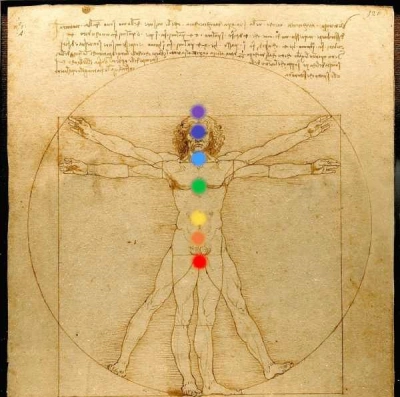
Meditation sessions grow longer as practice deepens. Breathing exercises ask more of the lungs and the diaphragm. Work on the chakras and the serpent raises more bioelectricity through the nerves and the spine. A body in good condition carries all of it: the spine stays upright for 45 minutes, the breath holds steady and the nervous system takes the rising energy without strain.
Hippocrates built his whole regimen on a pair.
Hippocrates, Regimen I.2
ὑπεναντίας μὲν γὰρ ἀλλήλοισιν ἔχει τὰς δυνάμιας σῖτα καὶ πόνοι, συμφέρονται δὲ πρὸς ἄλληλα πρὸς ὑγείην.
Food and exercise have opposite powers, yet they work together toward health.
This level gives the exercise side of that pair a steady footing.
Aristotle adds the rule of measure. Too much training breaks strength down as surely as too little. The 2 weekly sessions here are measured on purpose: enough to change the body, with enough rest between them for the change to take hold.
II. The Outcome of This Level
The outcome is good physical condition. You're strong, you can keep moving for 45 minutes without trouble, and your body holds steady through long meditation from start to finish. Competition and records stay beside the point.
The markers below are indicative. Reach most of them, hold them, and the level is complete.
| Marker | Indicative Benchmark |
|---|---|
| Push-Ups | Men: 10 to 15 full push-ups with a straight body. Women: 5 to 10 full, or 15 to 20 from the knees |
| Squats | 30 bodyweight squats in a row, heels down, full control |
| Plank | 60 seconds on the forearms, body in a straight line |
| Side Plank | 30 seconds on each side |
| Stamina | 30 to 45 minutes of brisk walking, or 20 minutes of easy jogging, at a pace where you can still talk |
| Forward Fold | Fingertips reach the shins or lower, knees soft, without forcing |
| Seated Meditation | 30 to 45 minutes upright and steady |
| Bodyweight | Steadily nearer the healthy range, with the waist shrinking if it started above half your height |
Typical timeframe: 3 to 6 months of steady practice.
III. Health, Bodyweight and the Path
Health doesn't change anyone's spiritual trajectory. The soul's path runs through Meditation, Ethics, a life lived toward ὁμοίωσις θεῷ and Theurgy, and no amount of push-ups moves anyone up or down it.
The bodyweight goal across the 3 levels stays the same. By the Advanced Level, aim for a mostly healthy bodyweight. Chubby is fine. Severe imbalances, such as obesity far above the healthy range or marked underweight, are the ones worth correcting by the time you get there.
At the Intermediate Level, the goal is steady progress. The 2 weekly sessions add muscle, and the diet section below does most of the rest. If you're above the range, lose weight slowly, around 0.5 to 1 kilogram a week at most, so the muscle you're building stays. If you're underweight, eat more and let the strength sessions turn the extra food into muscle.
| Waist-to-Height Ratio | Reading |
|---|---|
| Under 0.5 | Healthy: the waist is less than half your height |
| 0.5 to 0.59 | Increased health risk |
| 0.6 and above | High health risk |
IV. Men, Women and Healthy Bodies
Men and women may follow different regimens. The principles hold for both, while the starting points, the pace on some exercises and certain stages of life differ. The outcome markers above already give separate push-up numbers for this reason.
None of these pages sets out to make hyper-athletes. The aim is healthy men and healthy women, at every level.
- Upper-body strength. On average, men carry more muscle in the arms, chest and shoulders, so the gap shows most in push-ups and least in squats, lunges and bridges. Women can stay longer on knee and incline push-ups without losing anything. Women also gain strength from training at much the same relative rate as men.
- The monthly cycle. Some women feel energy rise and fall across the cycle. Shift the harder session to the stronger days when you can, and keep the walk and the yoga on the lighter ones.
- Pregnancy and after birth. Keep moving with a physician's or midwife's guidance, and rebuild the pelvic floor and deep core after birth before returning to circuits and jumps.
V. The Weekly Rhythm
| Practice | Frequency | Duration | Effort |
|---|---|---|---|
| Session A: Strength | 1 per week | 35 to 45 minutes | Moderate |
| Session B: Stamina and Core | 1 per week | 35 to 45 minutes | Moderate, with short harder stretches |
| Brisk Walking | Most days | 30 minutes | Moderate |
| Joint Mobility | Daily | 5 to 10 minutes | Gentle |
| Hatha Yoga | 2 to 3 times per week | 15 to 20 minutes | Gentle, never forced |
Leave 2 to 3 days between Session A and Session B: Tuesday and Friday, for example, or Monday and Thursday. Moderate effort means you breathe harder and can still speak in short sentences.
Hatha yoga enters the week here on purpose. At the Advanced Level it becomes daily, and 2 or 3 short practices now make that step feel natural later. Follow the sequence on the Temple's Hatha (Physical) Yoga page.
VI. Session A: Strength
Warm-Up: 5 to 8 Minutes
Circle the joints from the neck down to the ankles. Then 1 minute of marching or light jogging on the spot, 10 arm swings across the chest and 10 slow, shallow squats.
Main Block
| Exercise | How to Do It | Dose |
|---|---|---|
| Push-Up | Hands under the shoulders, body straight from head to heels. Lower the chest to a fist's height from the floor and press up. Drop to the knees as soon as the form breaks. | 3 rounds of 8 to 12 |
| Bodyweight Squat | Feet shoulder-width apart. Sit the hips back and down with the chest up and the heels on the floor, then stand tall. | 3 rounds of 12 to 15 |
| Reverse Lunge | Step 1 foot back and lower until both knees bend to about 90 degrees. Push through the front heel to return. | 3 rounds of 8 per leg |
| Single-Leg Glute Bridge | The Beginner bridge with 1 foot lifted off the floor. Keep the hips level as you rise and lower. | 3 rounds of 8 per leg |
| Superman Hold | Lie face down, arms long in front. Lift the arms, chest and legs a few centimeters and hold. Keep the neck long. | 3 rounds of 20 seconds |
| Plank | Forearms under the shoulders, body straight, breath steady and quiet. | 3 rounds of 30 to 45 seconds |
Rest 60 to 90 seconds between rounds.
VII. Session B: Stamina and Core
Warm up as for Session A. Then work in a circuit: 40 seconds on each exercise, 20 seconds to change over, straight on to the next. Rest 2 minutes after each full circuit. Complete 3 rounds and build toward 4.
| Exercise | How to Do It | Work |
|---|---|---|
| Mountain Climbers | From a high plank, drive the knees toward the chest 1 at a time at a steady rhythm. | 40 seconds |
| Squat to Calf Raise | Squat down, stand up and rise onto the toes at the top. | 40 seconds |
| Incline Push-Up | Hands on a sturdy table or bench, body straight. Lower the chest to the edge and press back. | 40 seconds |
| Step-Up | Step onto a stair or a low, sturdy step, stand tall, step down. Switch the leading leg each time. | 40 seconds |
| Dead Bug | On your back, arms toward the ceiling, knees bent at 90 degrees. Lower the opposite arm and leg toward the floor with the lower back pressed down, return, alternate. | 40 seconds |
| Side Plank | On 1 forearm, body in a straight line. Change sides halfway. | 40 seconds |
Finish with 15 to 20 minutes of brisk walking, cycling or easy jogging. For variety, alternate 2 minutes at a comfortable pace with 1 minute faster.
Cool-Down for Both Sessions: 5 Minutes
| Stretch | How to Do It | Hold |
|---|---|---|
| Hip Flexors | Low lunge with the back knee on a cushion. Shift the hips gently forward and keep the chest tall. | 30 seconds per side |
| Hamstrings | Sit with the legs long and fold forward from the hips with a straight back. | 30 seconds |
| Chest and Shoulders | Forearm against a door frame at shoulder height, turn the body gently away. | 30 seconds per side |
| Child's Pose | Kneel, sit back toward the heels and lay the chest down, arms long in front. | 30 to 60 seconds |
VIII. Diet and Daily Habits
The Temple puts no anti-life restrictions on food. Nobody here is told to fast for holiness, give up meat or treat hunger as a virtue. The Temple's teaching on the serpent says it outright: eat as you please and be free. Freedom still has a measure, and here the measure is health.
Bodyweight changes mostly through what you eat. Exercise builds the body and keeps its muscle, while food sets the direction of the scale.
- Protein at every meal. A palm-sized portion of eggs, meat, fish, dairy or legumes with each meal gives the muscles what they need to rebuild after the sessions.
- Regular mealtimes. Eat at roughly the same times each day. It steadies energy and hunger, and it makes meditation times easier to keep.
- Fuel around the sessions. Train 1.5 to 2 hours after a full meal, or have a light snack such as fruit or yogurt an hour before. Eat a proper meal with protein within a few hours after.
- Vegetables at most meals. Build toward the World Health Organization's 400 grams of fruit and vegetables a day if you aren't there yet.
- Water before, during and after. Sweat losses grow at this level. Drink before you're thirsty, and more on hot days.
IX. Measure and Rest
- Progress in small steps. Add 1 or 2 repetitions, or 1 round, every 1 to 2 weeks. When the top of a range feels easy, move to a harder version: knees to full push-ups, 2 legs to 1. That's Aristotle's measure in practice.
- Rest belongs to the training. Strength grows in the recovery between sessions. Keep at least 48 hours between the 2 hard sessions and hold off on a 3rd for now.
- Sleep 7 hours or more. Poor sleep shows up early as poor recovery: heavy legs, flat sessions, restless meditation.
- Know soreness from pain. Dull muscle soreness that fades in 1 to 2 days is the body adapting. Sharp pain, pain inside a joint or pain that lingers tells you to stop that exercise and find out why.
X. From Training Into Meditation
Train, then meditate. Movement raises energy and clears the head. Meditation gathers that energy and directs it.
After each session, sit for 10 minutes. Start with a few rounds of yogic breathing, let the breath settle and feel for the energy buzz moving through the body. Then go on into your Void Meditation or your chakra work.
Watch how training days change your practice: the depth of focus, the strength of the energy, how long you sit without effort. Write it down if you keep a meditation journal. Over a few months the pattern shows you how your own body responds.
If you train in the evening, leave 30 to 60 minutes between the end of the session and sleep, and let meditation settle the energy before you sleep.
XI. Signs You're Ready for the Advanced Level
- You hold the markers. Consistently, for a month or more.
- Hatha yoga has taken root. You practice 3 times a week and miss it on the days you don't.
- Training runs on habit. The 2 sessions happen without willpower, the same way meditation does.
- You want more. The Advanced Level asks for daily yoga and 2 to 3 sessions of an exercise you choose. Step up when that sounds like something you'd enjoy.
Go back to the Beginner Level after a long break or an illness, and climb again from there. When you're ready, the Advanced Level makes training part of the regimen for good.
Train in measure, rest in measure, and let the body grow into the strength the soul's work needs.