





6 min read
Zevist Meditation · Study
Study: Advanced Level
Study becomes a way of life: deep, lifelong, shared with others and turned into action.
- Level
- Advanced
- Daily Practice
- 60 to 90 minutes of deep study
- Writing
- A notebook of your own, as Marcus kept
- Teaching
- What you know, shared with others
- Meditation
- Study as part of the regimen
- Outcome
- Wisdom: knowledge become judgment and action
Marcus Aurelius, Meditations II.17
συνελόντι δὲ εἰπεῖν, πάντα τὰ μὲν τοῦ σώματος ποταμός, τὰ δὲ τῆς ψυχῆς ὄνειρος καὶ τῦφος … τί οὖν τὸ παραπέμψαι δυνάμενον; ἓν καὶ μόνον φιλοσοφία.
“In a word, all the things of the body are a river, and the things of the soul a dream and a vapour … What, then, can guide us through? One thing, and one only: philosophy.” (lit.)
I. Study as a Way of Life
At this level study stands beside meditation and training as a fixed part of the regimen, part of how you live.
The Temple calls this lifelong formation Paideia, education as the sacred forming of the soul (Paideia). Marcus Aurelius lived it. He ruled an empire and led its armies, and still kept the notebook we now call the Meditations; its Greek title, Τὰ εἰς ἑαυτόν, means "the things to himself". Two of its books carry notes of where they were written: among the Quadi on the river Granua, and at Carnuntum, on the Danube frontier.
II. Why Study Is Necessary for Your Existence
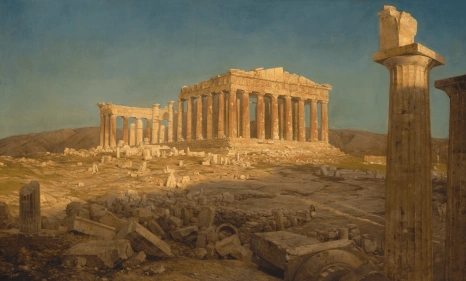
Marcus saw human life clearly in the lines above: brief, flowing and uncertain. Against it he found one guide, philosophy, the love of wisdom, which is built by study and tested by life. He wrote of what it builds:
Marcus Aurelius, Meditations VIII.48
ἀκρόπολίς ἐστιν ἡ ἐλευθέρα παθῶν διάνοια· οὐδὲν γὰρ ὀχυρώτερον ἔχει ἄνθρωπος, ἐφ’ ὃ καταφυγὼν ἀνάλωτος λοιπὸν ἂν εἴη. ὁ μὲν οὖν μὴ ἑωρακὼς τοῦτο ἀμαθής, ὁ δὲ ἑωρακὼς καὶ μὴ καταφεύγων ἀτυχής.
“The mind free of passions is a citadel; a man has nothing stronger to take refuge in and be taken no more. Whoever has not seen this is ignorant; whoever has seen it and does not take refuge there is unfortunate.” (lit.)
Knowledge is that citadel. A person who understands is not carried away by every wave of opinion, fear or propaganda; a person who does not understand is carried by all of them.
Study is also the road of ascent. ὁμοίωσις θεῷ, becoming like the Gods, is the aim of Zevism (Becoming a God), and a mind that refuses to learn does not reach it. The Gods are teachers, and the Initiate is their student.
III. What Study Gives at This Level
- Wisdom. Knowledge joined to judgment: you know what matters and what does not.
- Mastery of a field. Years of study in one domain make you someone others rely on.
- Synthesis. You connect fields: philosophy with your craft, the Ancients with the sciences, the teachings with your life.
- Discernment. You recognize deception, propaganda and empty talk quickly.
- Command of language. Clear writing and speech, and the beginning of the ancient languages.
- Original thought. You stop repeating and begin to contribute.
- The ability to teach. You can form others as you were formed.
- The powers of the mind. Mastery of Thought and Perfect Memory grow from this work (The Powers of Meditation).
IV. Deep Study
Advanced study needs depth more than quantity: 60 to 90 minutes on one subject, without interruption, do more than many short sessions.
- One place. A desk, a lamp, the books you need and nothing else.
- One subject. No switching within a session.
- The phone away. Every notification breaks the depth you have built.
- Define each thing. Marcus's own method, given below.
Marcus Aurelius, Meditations III.11
τὸ ὅρον ἢ ὑπογραφὴν ἀεὶ ποιεῖσθαι τοῦ ὑποπίπτοντος φανταστοῦ, ὥστε αὐτὸ ὁποῖόν ἐστι κατ’ οὐσίαν, γυμνόν, ὅλον δι’ ὅλων διῃρημένως βλέπειν.
“Always to make a definition or an outline of whatever presents itself to the mind, so as to see it as it is in its essence: bare, whole, and part by part.” (lit.)
When you study an idea, write its definition, what it is made of, how long it holds, and how it relates to the whole.
V. What to Study at This Level
- The Gods. Their names, their natures and their teachings (The Gods).
- Philosophy whole. The Pythagoreans, Plato, Aristotle and the Stoics, read in full and compared.
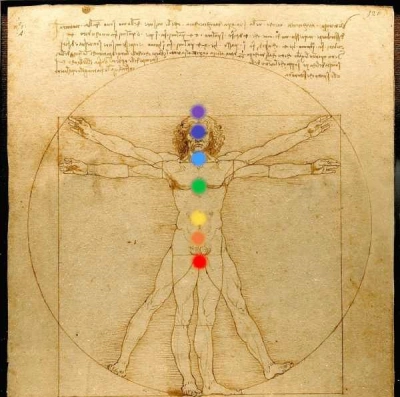
- The sciences of the soul. The Aspects of the Soul, The Chakras and the knowledge that Theurgy rests on.
- History. The ancient world, and the history of your own people and land.
- The sciences of nature. The body, the mind and the cosmos, as the best knowledge of today describes them.
- Your field, to mastery. The one domain in which you aim to be among the best.
VI. Your Own Notebook
The Meditations were Marcus's notebook: short entries in which he reminded himself of what he had learned and how to live by it. Keep one of your own.
- Write daily and briefly. The key idea of the day's study and how it applies to you.
- Reread. Return to old entries. Marcus returned to the same lessons again and again.
- Collect the lines that matter. From the Ancients, from the Temple's teachings and from your own experience.
VII. The Ancients in Their Own Words
Every translation chooses. At this level, begin the language of the sources. The Temple's teachings print the Greek beside the translation: learn the alphabet, then the common words, then read short passages like the ones on this page with the translation beside them.
Read whole works, not extracts: one great book each season, from the first page to the last.
VIII. Teach What You Know
The first book of the Meditations is a list of what Marcus learned from each of his teachers, and he counts good teachers among the gifts of the Gods:
Marcus Aurelius, Meditations I.17
Παρὰ τῶν θεῶν τὸ ἀγαθοὺς πάππους, ἀγαθοὺς γονέας, ἀγαθὴν ἀδελφήν, ἀγαθοὺς διδασκάλους …
“From the Gods: to have had good grandfathers, good parents, a good sister, good teachers …” (lit.)
At this level, become such a teacher. Explain what you know to newer members, in your coven or in your family. Teaching shows you exactly where your own understanding is weak.
IX. From Knowledge to Action
Study has to reach action. Marcus warned himself about this:
Marcus Aurelius, Meditations X.16
Μηκέθ’ ὅλως περὶ τοῦ οἷόν τινα εἶναι τὸν ἀγαθὸν ἄνδρα διαλέγεσθαι, ἀλλὰ εἶναι τοιοῦτον.
“No longer talk at all about what kind of man the good man ought to be, but be such a man.” (lit.)
Each week, choose one thing you learned and put it into practice: a virtue from the Ethics, a method from your craft, a teaching of the Ancients. Write in your notebook how it went.
X. The Weekly Regimen
| Practice | Frequency | Duration |
|---|---|---|
| Deep study | 6 days a week | 60 to 90 minutes |
| Notebook | Daily | 10 minutes |
| The language of the sources | 3 times a week | 20 minutes |
| Teaching or discussion | Weekly | As long as it serves |
| One great work read whole | Every season | Across the sessions |
| Rest from study | 1 day a week | Meditation continues |
Indicative. Arrange it around your own life, as with every regimen of the Temple.
XI. Study Upholds the Soul
At this level the work of the mind and the work of the soul become one. Understanding deepens every meditation: you know what a chakra is, what the serpent does, what an invocation asks, and why. Knowledge of Meditation is no longer a separate subject; it is the light you practise by.
Marcus Aurelius, Meditations VII.59
Ἔνδον σκάπτε· ἔνδον ἡ πηγὴ τοῦ ἀγαθοῦ καὶ ἀεὶ ἀναβλύειν δυναμένη, ἐὰν ἀεὶ σκάπτῃς.
“Dig within. Within is the spring of the good, and it can always gush up, if you always dig.” (lit.)
Keep studying for life. The spring does not run dry for the one who keeps digging.
Study every day, examine everything, teach what you know, and live what you learn.