








2 min read
Order II · Seals of Theurgy and Invocation
Kongo Gassho
वज्राञ्जलि · vajrāñjali (Jp. kongō gasshō 金剛合掌) · Σφραγὶς τῆς Ἀδαμαντίνης Προσκυνήσεως
Also: Vajranjali, Kimyo Gassho
18
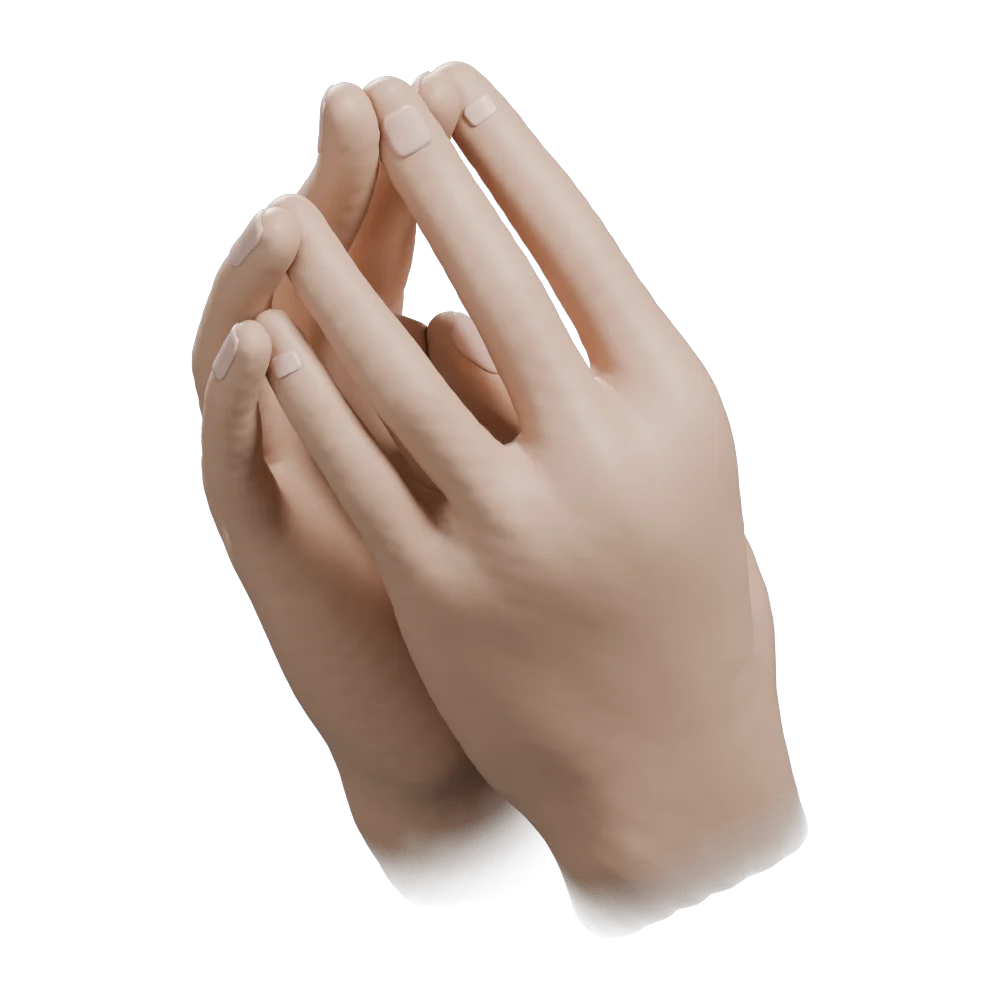
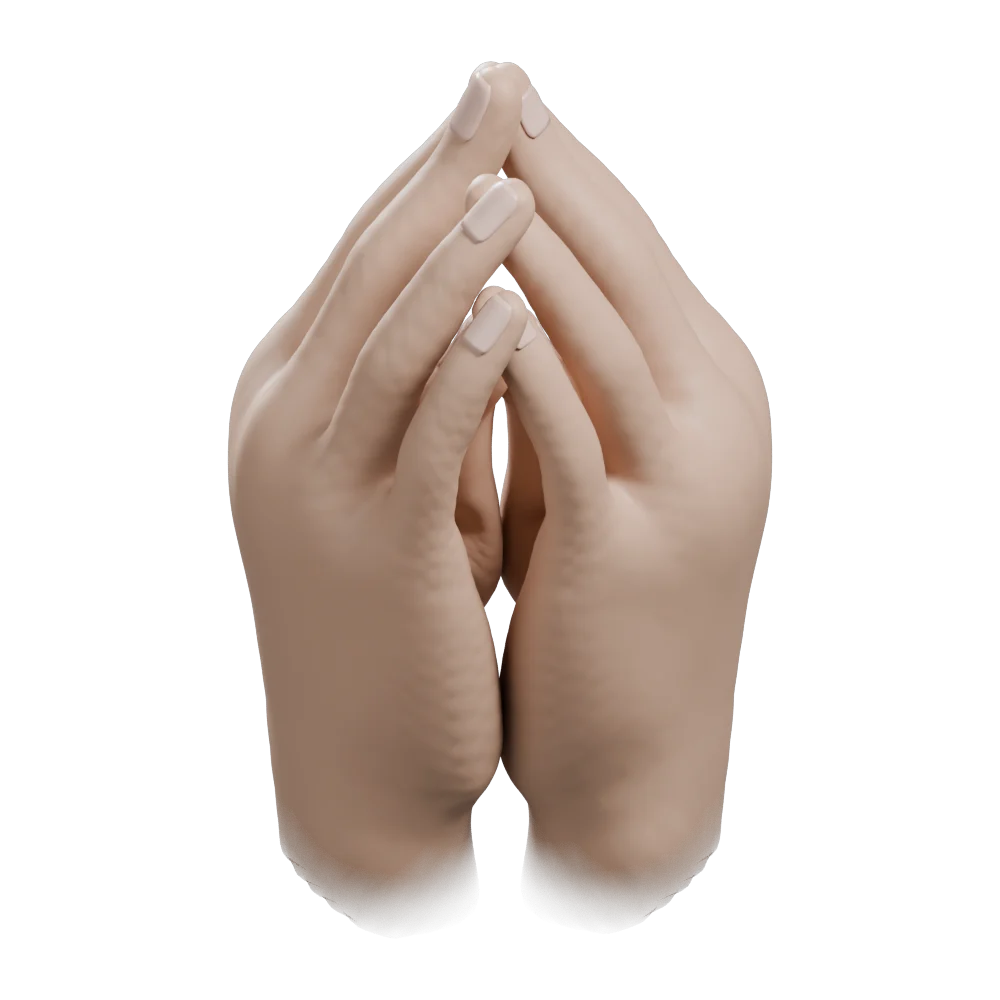
The prayer of the diamond. The palms join and the fingertips interlace, right over left, in the strongest form of devotion.
- Meaning
- Seal of Adamantine Reverence
- Tradition
- Japanese Esoteric Buddhism (Shingon); one of the twelve gassho
- Hands
- Both hands, joined with crossed fingertips
- Placement
- Before the chest.
- Associations
- Heart.
- Level
- Advanced
Formation
- Join the palms as in prayer.
- Open the fingers slightly.
- Cross the fingertips of both hands alternately, the right fingers over the left.
- Cross the thumbs in the same way, the right thumb over the left.
Example Meditation
Join the palms with the fingertips crossed before the chest. Breathe calmly and take refuge in what is held sacred. The locked joining gathers fervent devotion and gives the posture a disciplined form.
Effects
PhysicalΣῶμα
- Locked joining. The crossed fingertips lock the two hands together more firmly than flat prayer.
EmotionalΘυμός
- Fervent devotion. Japanese sources call it the expression of a stronger devotion than ordinary gassho.
IntellectualΝοῦς
- Discipline of form. The rule is exact: the right hand on top; the left on top is considered incorrect.
SoulΨυχή
- Taking refuge. Its other name, kimyo gassho, means the gassho of taking refuge.
AscentἈνάβασις
- Adamantine union. Vajra is diamond and thunderbolt. In the seal the two hands become one indivisible body of reverence before the Divine.
Finger Key
| Finger | Element | Right hand | Left hand |
|---|---|---|---|
| Thumb | Fire | crossed over the left thumb | crossed under the right thumb |
| Index | Air | fingertip crossed over the left fingertip | fingertip crossed under the right fingertip |
| Middle | Aether | fingertip crossed over the left fingertip | fingertip crossed under the right fingertip |
| Ring | Earth | fingertip crossed over the left fingertip | fingertip crossed under the right fingertip |
| Little | Water | fingertip crossed over the left fingertip | fingertip crossed under the right fingertip |
Cautions and Variants
Variants. Kotobank defines it as palms joined with the fingertips of both hands crossed; Japanese Wikipedia (合掌) adds that the right hand is placed on top.
Recommended for Every Zevist Library
Gertrud Hirschi, Mudras: Yoga in Your Hands
The standard practical manual of the hand seals, with their indications and meditations. The Temple of Zeus recommends it as a purchase for every Zevist library, personal or communal.