




14 min read
The Swan of Apollo
author: High Priest Zevios Metathronos
κύκνος (kýknos)
Bird of Apollo, form of Zeus with Leda, mount of Brahma and Saraswati: the sacred voice.
Giles Laurent · CC BY-SA 4.0 · Wikimedia Commons

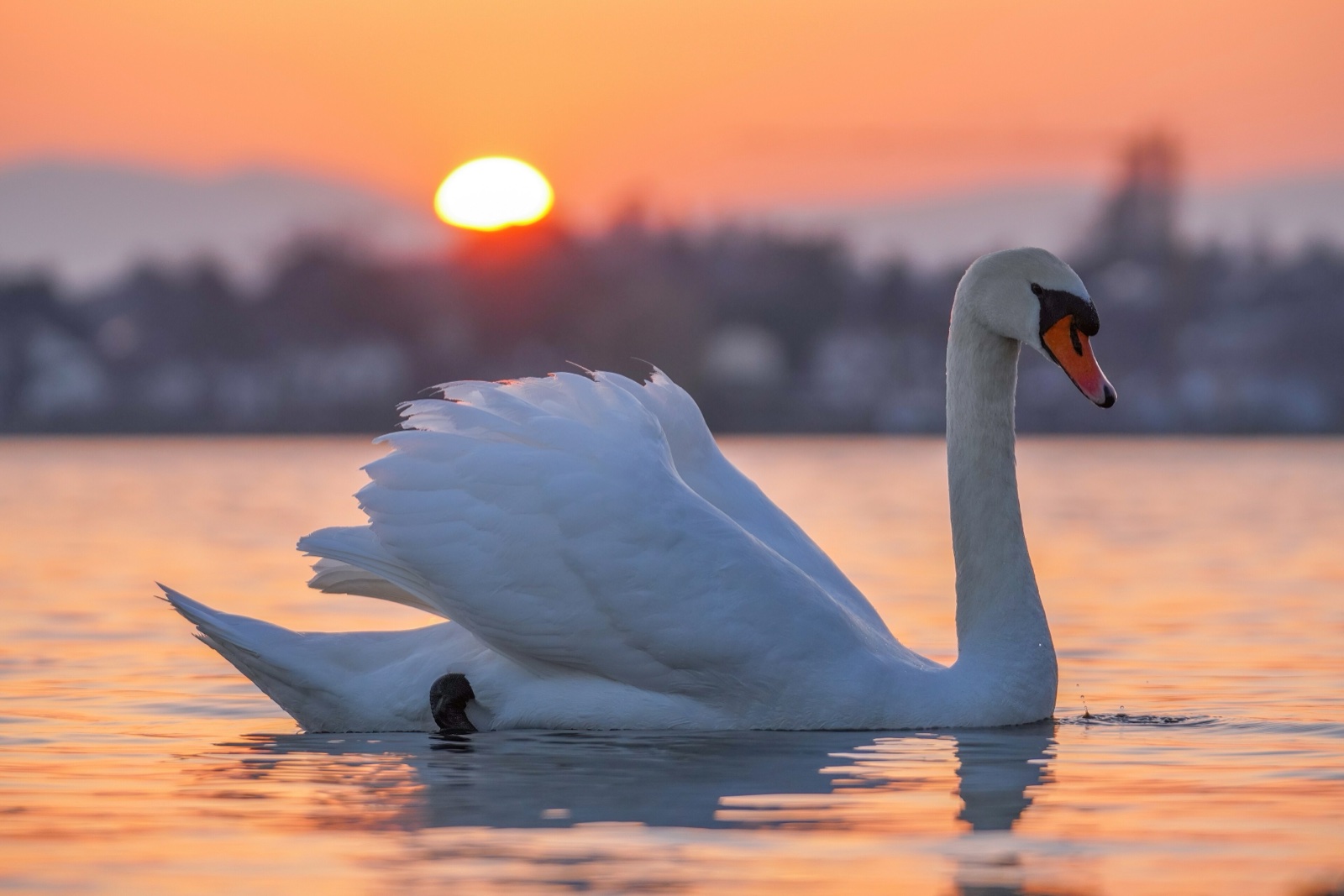
The swans sang 7 times over Delos when Apollo was born, and Socrates said they sing best when they know they are about to die. In Zevism the swan is the soul’s sacred voice: white, rising, and certain of where it is going.
| Realm | Birds of the Heavens |
|---|---|
| Greek | κύκνος (kýknos) |
| Latin | cycnus, olor |
| Other Names | Sanskrit haṃsa (हंस), paramahaṃsa (परमहंस) |
| Species | Cygnus olor (mute swan), Cygnus cygnus (whooper swan) |
| Gods | Apollo, Zeus (Leda), Aphrodite, Brahma, Saraswati |
| Material Capacity | Wings of 2 to 2.5 m, flight above 8,000 m, a lifelong pair bond |
| Spiritual Capacity | Sacred song and prophecy; the soul that meets death singing |
| Element and Sphere | Water and air; the Sun; the throat and crown chakras |
The Living Animal
The swan of Greek and Roman poetry is above all the mute swan, Cygnus olor, which breeds in the British Isles and across north central Europe and Asia[1]. Adults weigh from 7.6 to 14.3 kg, measure 144 to 158 cm, and open wings of 2 to 2.5 m[1]. Its top flight speed is given as 50 to 55 mph, about 80 to 89 km/h, and the beat of its wings makes a sound that the Animal Diversity Web describes as a musical throbbing or humming, clearly audible[1].
The “mute” swan is quiet but never silent: adults snort, hiss, and give barking notes or whistles that do not carry[1]. Its northern cousin, the whooper swan, Cygnus cygnus, is the singer of the family, with whooping calls and a burst of 4-syllable calling before it takes flight[2]. Whooper males weigh from 7.4 to 14 kg, span up to 2.75 m, and migrating birds near the British Isles have been recorded above 8,000 m[2].
Swans live by the water and by the bond of the pair. Mute swans form long-lasting pair bonds, and a bird whose partner dies will take a new mate[3]. They defend the nest and the young with force: Cornell reports that they can be extremely aggressive toward people who approach, and the Animal Diversity Web warns that an adult swan can seriously injure a child[3][1].
Mute swans feed mainly on aquatic plants, much of them submerged: a Maryland study found that a single bird can eat up to 8 pounds, about 3.6 kg, of submerged aquatic vegetation in a day[4][3]. The male builds the first platform of the nest and the female shapes the cup; she lays 2 to 5 eggs, which hatch after 34 to 41 days[4]. The oldest known mute swan in North America, banded in Rhode Island in 1962, was at least 26 years and 9 months old when it was found again in 1988[3].
The Spiritual Capacity
The swan is the bird of Apollo, the God of light, song and prophecy. The Homeric Hymn to Apollo opens with the swan singing to Phoebus as it lands by the river Peneus[5]. Callimachus tells that at Apollo’s birth the swans, “the gods’ own minstrels”, circled Delos 7 times and sang over the birth, and that the God later strung His lyre with 7 strings for that reason[6]. In the Temple’s teaching Apollo is Helios, Mithra, Utu and Shamash: the swan belongs to the solar power, and its whiteness is the colour of light itself.
Its spiritual capacity is sacred song joined to foreknowledge. In the Phaedo, on the day of his death, Socrates says that swans sing most and most beautifully when they sense their end, because they are servants of Apollo, are prophetic, and foresee the good things of Hades[7]. In Zevism this is the swan’s gift to the soul: a voice that does not break before death, because it knows what lies beyond it. The Temple’s teaching on the Afterlife stands behind this reading.
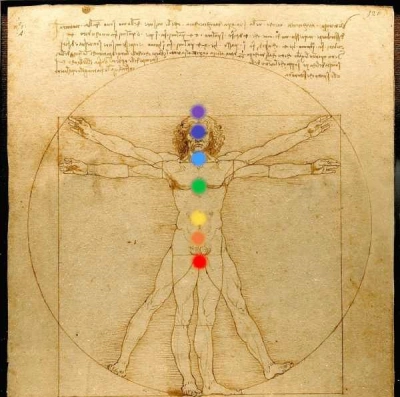
In the anatomy of the soul the swan belongs to the throat and the crown. The throat chakra is its voice, the power of true speech and sacred song; the crown is its whiteness and its height. Its long neck is the image of Sushumna, the central channel through which the serpent rises, the column that joins the heart to the head; the page on Zevism and the Kundalini Serpent sets out that ascent.
In India the same bird carries the creator. The hamsa is the vehicle of Brahma[8], and in the Katha Upanishad the hamsa is the Self that dwells in light and is seated in Rta, the Vedic order of the cosmos[9]. The Temple reads Rta beside Ma’at: the swan is the soul that rests in cosmic order. Indian tradition also credits the hamsa with separating milk from water, a figure for the discernment between the real and the unreal[10].
Where Matter and Spirit Meet
The swan’s body is a commentary on the soul that sings toward the Gods. 5 of its powers show the correspondence plainly.
- The humming wing and the music of the spheres. A mute swan’s wingbeat throbs like an instrument. The Greek poets heard Apollo in it, and the Zevist hears the soul in ascent: its movement toward the divine has a sound, and that sound is harmony.
- Silence and song. The mute swan is nearly voiceless, the whooper calls before it flies. Together they are the throat chakra in its 2 states: the silence that gathers power and the speech that releases it at the right moment, as Socrates spoke at the hour of his death.
- The reaching neck and Sushumna. The swan draws its food from beneath the surface of dark water and lifts it into the light. That is the motion of the Kundalini current: down to the root, up through the central channel, to the crown.
- The defended nest and loyalty. A swan pair holds together for years and defends its young with a force that can injure a grown person. Loyalty with strength behind it is a virtue of Arete, and the swan shows it without compromise.
- Flight above 8,000 m and the Hyperborean height. Whooper swans have been recorded higher than most mountains. The soul that has learned its own song rises above the weather of the world toward the pure north of Apollo’s Hyperboreans.
The Gods and Their Many Names
The swan gathers around 3 divine powers: the solar God of song, the Head God who takes the swan’s shape, and the Goddess of love who rides it. In the Temple’s teaching Apollo is Helios, Mithra, Utu and Shamash; Aphrodite is Astarte, Inanna, Isis and Venus; and the Hindu Trinity of Brahma, Vishnu and Shiva is 3 faces of the cosmic power that Zeus embodies as one, so Brahma on His hamsa is a face of Zeus.
| Civilization | God (and the Temple’s identity) | The Bond with the Animal | Witness |
|---|---|---|---|
| Hellas | Apollo (Helios, Mithra, Shamash) | The swan sings to Phoebus by the river Peneus | Homeric Hymn 21.1-4[5] |
| Hellas, Delos | Apollo at His birth | Swans circle Delos 7 times and sing over the birth | Callimachus, Hymn 4.249-254[6] |
| The Hyperboreans | Apollo in the far north | Swans descend from the Rhipaean mountains, circle His temple and sing in tune with His hymns | Aelian, On Animals 11.1, after Hecataeus of Abdera[11] |
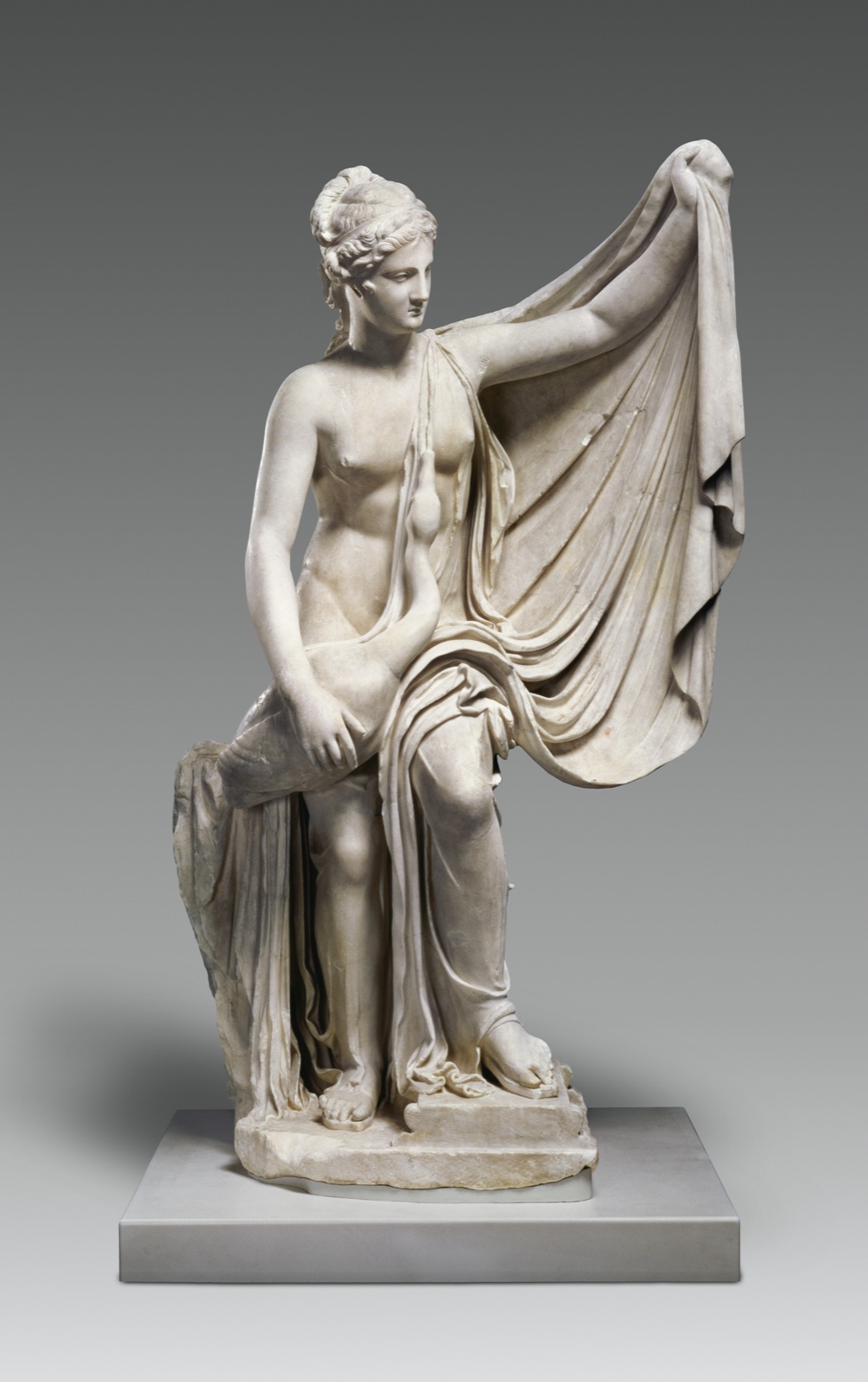
| Hellas, Sparta | Zeus | Zeus takes the form of a swan to come to Leda, mother of Helen | Euripides, Helen 17-21[12] |
| Rome | Jupiter (Zeus) and Venus (Aphrodite) | Arachne weaves Leda lying beneath the swan’s wings; Venus drives a chariot drawn by swans | Ovid, Metamorphoses 6.109, 10.717-718[13] |
| Hellas, Athens | Aphrodite (Astarte, Inanna, Venus) | Aphrodite rides on the back of a swan between 2 winged Erotes | Athenian red-figure, Theoi Gallery K10.11[14] |
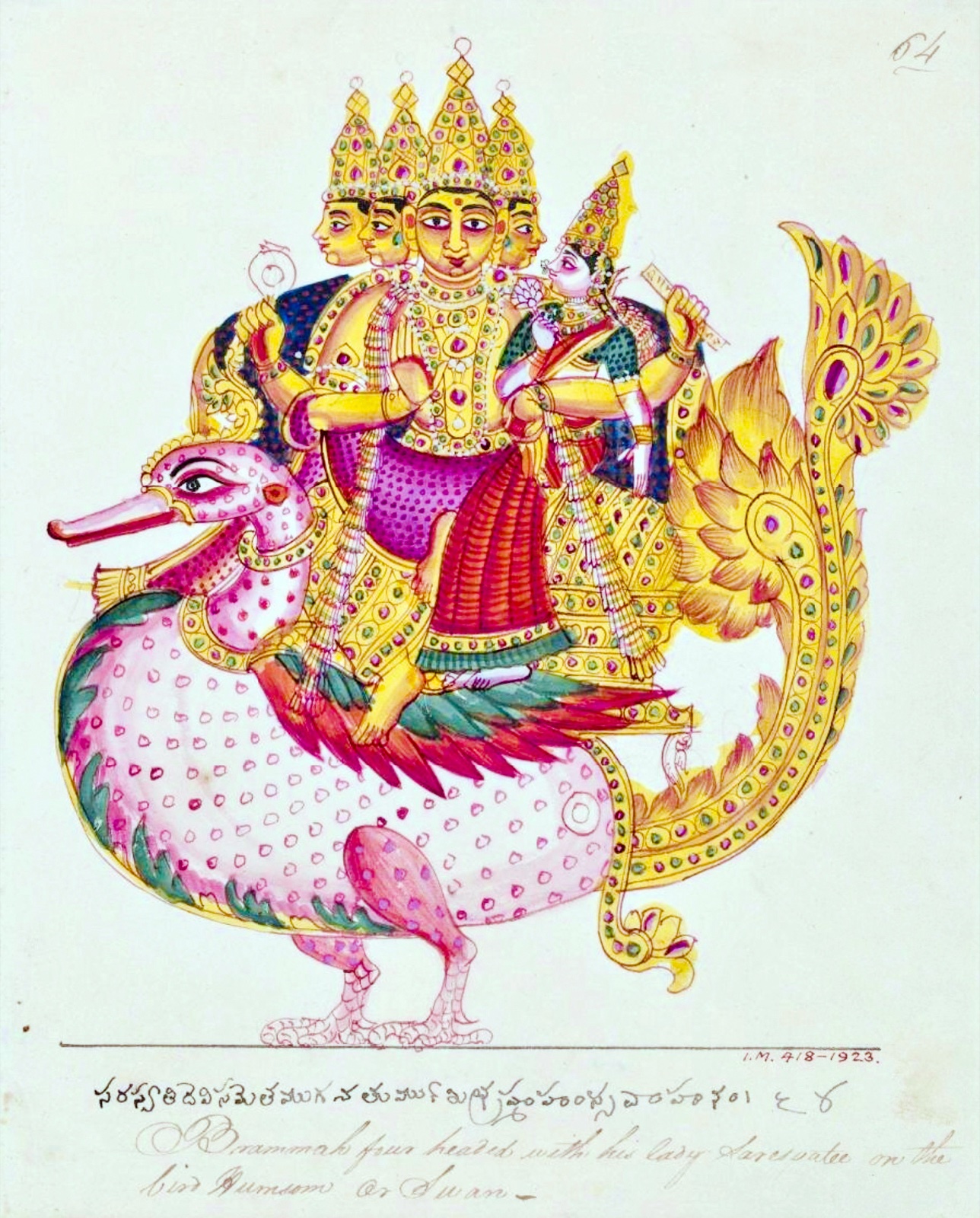
| India | Brahma (a face of Zeus) | The hamsa is His vehicle | Britannica[8]; V&A IM.418-1923[15] |
| India | Saraswati, Goddess of learning, music and speech | She rides the hamsa, in some images a peacock | Britannica[16] |
Scholars identify the hamsa variously as a swan or as a goose, the bar-headed goose that crosses the Himalayas[10]; Britannica writes “goose or swan” for the vehicle of both Brahma and Saraswati[8][16]. The Victoria and Albert Museum’s painting of about 1825 shows the problem in a single object: the curator calls the bird a cosmic goose, while the inscription on the sheet calls it “the bird Humson or Swan”[15].
The thread is song, speech and creation. Apollo sings the order of the cosmos, Zeus enters the world in the swan’s form to father Helen, Brahma speaks creation into being, and Saraswati governs the sacred word. The Temple teaches that these powers keep the same bird because the swan is the visible shape of the creative voice: white, high-flying, and faithful to its course.
J. Paul Getty Museum · CC0 · Wikimedia Commons
.jpg)
Ms Sarah Welch · Public domain · Wikimedia Commons

Ancient Witnesses
5 witnesses follow, in Greek and Sanskrit: the Homeric Hymn on the swan of Phoebus, Socrates on the swan’s last song in 2 passages of the Phaedo, Helen on Zeus in the swan’s form, and the Katha Upanishad on the hamsa seated in light and in cosmic order.
Homeric Hymn 21 to Apollo 1-4 [5]
φοῖβε, σὲ μὲν καὶ κύκνος ὑπὸ πτερύγων λίγʼ ἀείδει,
ὄχθῃ ἐπιθρώσκων ποταμὸν πάρα δινήεντα,
Πηνειόν· σὲ δʼ ἀοιδὸς ἔχων φόρμιγγα λίγειαν
ἡδυεπὴς πρῶτόν τε καὶ ὕστατον αἰὲν ἀείδει.Phoebus, of you even the swan sings clear to the beat of its wings, as it alights on the bank by the eddying river Peneus; and of you the sweet-voiced singer with his clear-toned lyre sings always, first and last.
Hesiod, the Homeric Hymns and Homerica, ed. H. G. Evelyn-White (London, 1914) · Translation: Temple of Zeus.
καί, ὡς ἔοικε, τῶν κύκνων δοκῶ φαυλότερος ὑμῖν εἶναι τὴν μαντικήν, οἳ ἐπειδὰν αἴσθωνται ὅτι δεῖ αὐτοὺς ἀποθανεῖν, ᾄδοντες καὶ ἐν τῷ πρόσθεν χρόνῳ, τότε δὴ πλεῖστα καὶ κάλλιστα ᾄδουσι, γεγηθότες ὅτι μέλλουσι παρὰ τὸν θεὸν ἀπιέναι οὗπέρ εἰσι θεράποντες.
And, it seems, you think me worse at prophecy than the swans, who, when they perceive that they must die, having sung all their life long, then sing most and most beautifully, rejoicing that they are about to go away to the God whose servants they are.
Platonis Opera, ed. J. Burnet (Oxford) · Translation: Temple of Zeus. Socrates speaks.
ἀλλ’ ἅτε οἶμαι τοῦ Ἀπόλλωνος ὄντες, μαντικοί τέ εἰσι καὶ προειδότες τὰ ἐν Ἅιδου ἀγαθὰ ᾄδουσι καὶ τέρπονται ἐκείνην τὴν ἡμέραν διαφερόντως ἢ ἐν τῷ ἔμπροσθεν χρόνῳ.
But, as it seems to me, because they belong to Apollo they are prophetic, and since they foresee the good things in Hades they sing and rejoice on that day more than ever before.
Platonis Opera, ed. J. Burnet (Oxford) · Translation: Temple of Zeus. Socrates speaks.
λόγος τις ὡς Ζεὺς μητέρʼ ἔπτατʼ εἰς ἐμὴν
Λήδαν κύκνου μορφώματʼ ὄρνιθος λαβών,
ὃς δόλιον εὐνὴν ἐξέπραξʼ ὑπʼ αἰετοῦ
δίωγμα φεύγων, εἰ σαφὴς οὗτος λόγος·There is a tale that Zeus flew to Leda, the mother who bore me, taking the shape of a bird, a swan, and won her bed by guile, as though fleeing the pursuit of an eagle, if the tale is true.
Euripidis Fabulae, vol. 3, ed. G. Murray (Oxford, 1913) · Translation: Temple of Zeus. Helen speaks.
हंसः शुचिषद् वसुर् अन्तरिक्षसद् धोता वेदिषद् अतिथिर् दुरोणसत् ।
नृषद् वरसद् ऋतसद् व्योमसद् अब्जा गोजा ऋतजा अद्रिजा ऋतं बृहत् ॥haṃsaḥ śuciṣad vasur antarikṣasad dhotā vediṣad atithir duroṇasat /
nṛṣad varasad ṛtasad vyomasad abjā gojā ṛtajā adrijā ṛtaṃ bṛhat //The hamsa seated in the bright, the Vasu seated in the mid-air, the priest seated at the altar, the guest seated in the house; seated in men, seated in the highest, seated in Rta, seated in the sky; born of the waters, born of the cows, born of Rta, born of the rock: the great Rta.
P. Olivelle, The Early Upanisads (New York, 1998), as input in GRETIL · Translation: Temple of Zeus. The verse is also Rigveda 4.40.5.
Universal Significance
The swan song is Plato’s gift to every modern language. Merriam-Webster defines it as a song of great sweetness said to be sung by a dying swan, and by extension any farewell appearance or final act, and records its first known English use in 1831[17]. The idea that underlies it is the one Socrates gave his friends in the Phaedo: the swan sings at the end because it is Apollo’s and foresees the good beyond[7].
Leda and the swan became one of the most copied subjects of ancient sculpture. The Getty statue, 70.AA.110, is a Roman marble of the 1st century AD after a Greek original of the 300s BC attributed to Timotheos; more than 2 dozen copies survive, and this one was found in Rome in 1775 and heavily restored in the 18th century[18].
The swan entered the theatre in 1877. Tchaikovsky’s Swan Lake was first performed on 4 March 1877 at the Bolshoi Theatre in Moscow, with choreography by Julius Wenzel Reisinger[19], 149 years ago.
Nations and the sky keep the bird too. The whooper swan is the national bird of Finland; hunting and egg collecting had cut it to about 15 pairs in northernmost Lapland by the 1940s, protection came in 1934, and about 10,000 pairs now breed across the country[20]. The International Astronomical Union lists Cygnus, “the Swan”, among the constellations[21]. In India, paramahamsa, “supreme swan”, remains a title of honour for enlightened spiritual teachers[22], and the ascetic texts give it to the renouncer who has reached the highest state[10].
The modern world also carried the mute swan across oceans. All mute swans in North America descend from birds imported from Europe from the mid 1800s to the early 1900s, and Hans Christian Andersen’s The Ugly Duckling made a mute swan the emblem of a soul that grows into its true form[3].
In Zevist Contemplation
The Zevist turns to the swan to learn the discipline of the voice and the calm of the soul that knows its destination. Its image serves meditation on breath and the central channel, study of the sacred texts, and conduct in speech.
- The 7 circles of Delos. The swans circled the island 7 times at Apollo’s birth. In meditation the Zevist carries the breath and the attention through the 7 chakras, one circle for each, from the base to the crown, and lets the solar light gather at the summit as at the birth of the God.
- The white neck. Seated upright, the Zevist holds the image of a swan’s neck, straight and white, along the spine. The breath rises through that column as the serpent rises through Sushumna, and the head rests on it as lightly as a swan’s.
- Milk from water. In study and in daily judgment the Zevist practises the hamsa’s discernment: separating what nourishes from what dilutes, the true from the merely plausible, before speaking or acting.
- The last song. Socrates met death singing, not lamenting. The Zevist contemplates mortality with the swan’s calm, as a passage toward the Gods, and orders each day so that the final word of a life could be a song worth hearing.
The swan has no older symbol page of its own on the Temple’s site; its closest companions are the pages on Apollo and on The Lyre, whose 7 strings Callimachus ties to the 7 songs of the swans.
Continue exploring
Related Pages
- The Gods: Apollo
- The Gods: Zeus
- The Gods: Aphrodite
- Symbol: The Lyre
- Sacred Animal: The Dove of Aphrodite
- Sacred Animal: The Eagle of Zeus
- Previous: The Owl of Athena
- Next: The Dove of Aphrodite
- All 32 Sacred Animals
- All symbols