






11 min read
Coming Home · The Inherited Name
Dyeus Pater: The Name You Already Speak
author: High Priest Zevios Metathronos
Deus, Dios, Dieu, Jupiter and Tuesday belong to one ancient family of divine words, and Zeus stands at its head. Follow the name you already speak back to the Father it names.
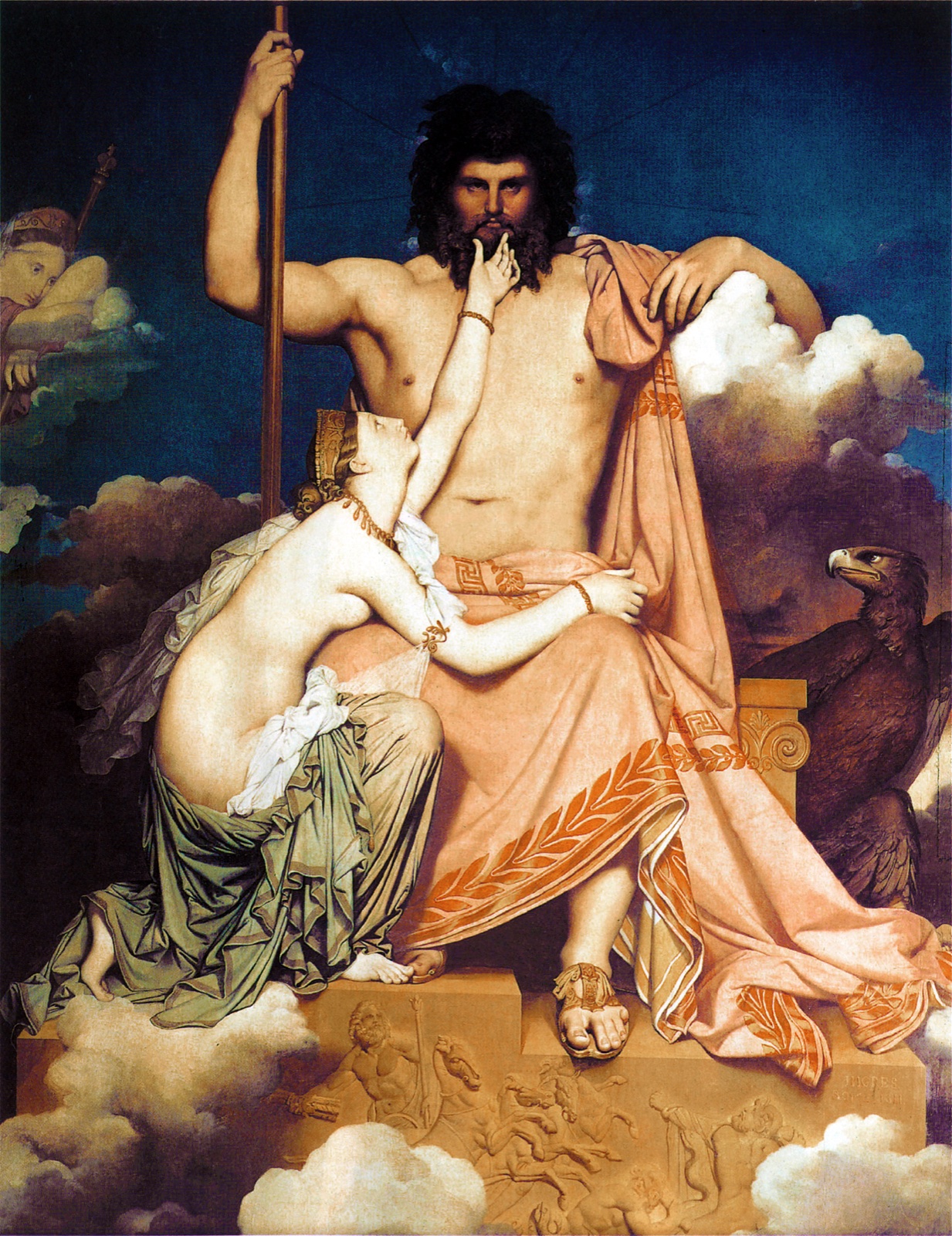
Public domain via Wikimedia Commons · Source and licence

- For
- Christians, Europeans and South Asians who already speak the name
- You Will Find
- The Sky Father in Vedic, Greek, Latin and the living languages
- Next Step
- Discover a Life with the Gods
Homer, Iliad 1.544, tr. Samuel Butler
τὴν δ’ ἠμείβετ’ ἔπειτα πατὴρ ἀνδρῶν τε θεῶν τε
… replied the sire of gods and men.
I. The Name on Your Lips
The Creed opens with a divine name older than the Church that taught it to you.
The Apostles’ Creed, Latin and English, Compendium of the Catechism of the Catholic Church (2005) · Read the text
Credo in Deum Patrem omnipoténtem, Creatorem cæli et terræ
I believe in God the Father almighty, Creator of heaven and earth.
In Spanish the same words run Creo en Dios, Padre Todopoderoso
; in French, Je crois en Dieu, le Père tout puissant
.[1][2][3] God and Father, side by side.
Now set the older prayers beside them. Thetis prays to Zeus in the Iliad and begins Ζεῦ πάτερ
, which Butler renders Father Jove
.[4] The Romans called Him Iuppiter, which Lewis and Short explain as Jovis-pater
, and also Diespiter, another name for Juppiter
.[5] The Rigveda calls on our Father Heaven
, pitā dyauḥ.[6]
Deum Patrem, Dios Padre, Iuppiter, Zeus Pater, Dyauḥ Pitā: a God and the title Father, carried together across the languages of Europe and India. You have been speaking the family name all your life.
II. The Root
Comparative linguists trace these names to a root, written dyeu- in the American Heritage Dictionary, meaning to shine
, the bright day and the day-lit sky.[7][8][9] The dictionary sends Zeus, Jupiter, Jove, deity and Tiu back to that one root.[7]
The root has 2 branches, and they must be kept apart:
- The divine name. The sky itself, worshipped as a God, with the title Father: reconstructed as *di̯éu̯- *ph₂tér-, “father heaven”, and continued in Greek Ζεὺς πατήρ, Vedic dyáuḥ pitā́, Latin Iūpiter and Umbrian iuve patre.[9] This is the name of Zeus.
- The common noun. A word formed from the same root, *dei̯u̯o-, “god”, which became the ordinary word for a God in Latin, Celtic, Baltic and Indo-Iranian.[10] This is the word behind Deus, Dios and Dieu.
Deus is therefore no borrowing of the Greek name Zeus. Both grew from the same root: Zeus is the Sky Father’s own name, deus the word for a God that grew beside it.
III. The Sky Father across the Languages
The first table gives the Father compound and the divine names closest to it, each with the source that prints it.
| Language | Form | Meaning | Kind |
|---|---|---|---|
| Vedic Sanskrit | pitā dyauḥ (Rigveda 1.89.4); dyaurme pitā (1.164.33) | our Father Heaven; Dyaus is my Father | Father compound |
| Homeric Greek | Ζεῦ πάτερ (Iliad 1.503); πατὴρ ἀνδρῶν τε θεῶν τε (1.544) | Father Zeus; father of men and Gods | Father compound |
| Latin | Iuppiter, from Jovis-pater; Diespiter | Jupiter, the chief God of the Romans; another name for Juppiter | Father compound |
| Umbrian | iuve patre | to Father Jove | Father compound |
| Oscan | Diúveí | Jove | Divine name |
| Palaic | Tiyaz | the Sun God | Divine name |
| Luwian | Tiwat- | the Sun God | Divine name |
| Hittite | šiu(n)- | god | The sky word as the word for God |
Sources: Rigveda, tr. Griffith[6]; Iliad[4]; Lewis and Short[5]; eDiAna for Umbrian and Hittite[9]; the Texas Indo-European Lexicon for Oscan, Palaic and Luwian[8].
In Anatolia the word for the bright sky became the ordinary word for God: Hittite šiu(n)-, Palaic tiu(n)-, Luwian tiw-, all glossed “god”.[9] There the shining sky and the Divine became one word.
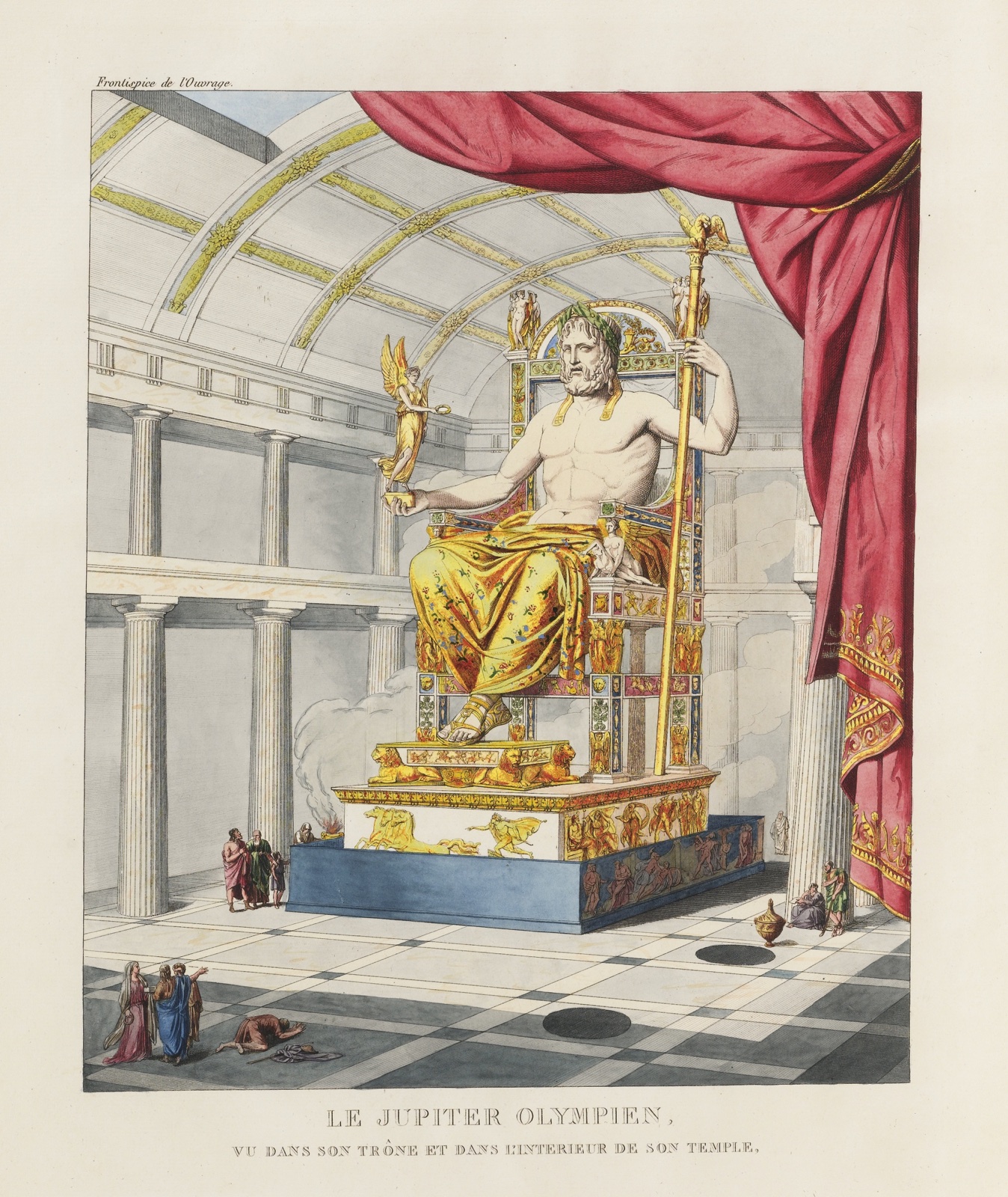
Public domain via Wikimedia Commons · Source and licence

IV. The Word for God
The second table follows the common noun. It marks what each language inherited directly, what the Romance languages took from Latin deus, and what English borrowed.
| Language | Form | Meaning | Kind |
|---|---|---|---|
| Sanskrit | dévas | god | Inherited |
| Avestan | daēva- | demon (see section VII) | Inherited, then inverted |
| Latin | deus; dīvus | god; godlike, divine | Inherited |
| Old Irish | día | god | Inherited |
| Old Welsh, Old Cornish, Middle Breton | duiu, duy, doe | god | Inherited |
| Lithuanian | diẽvas | god | Inherited |
| Latvian | dievs | god | Inherited |
| Old Prussian | deiwas | god | Inherited |
| Old English, Old Norse, Old High German | Tīw, Týr, Ziu | the God Tiu, Tyr | Inherited name of a God |
| French | Dieu | God | From Latin deus |
| Spanish | Dios | God | From Latin deus |
| Italian | dio | god | From Latin deus |
| Portuguese | deus | god | From Latin deus |
| Romanian | zeu | god | From Latin deus |
| English | deity, divine, Jove, jovial, adieu | through Latin deus, dīvus, Iuppiter and French Dieu | Borrowed |
Sources: the Texas Indo-European Lexicon for Sanskrit, Avestan, Latin, Old Irish, Baltic and Germanic[8]; Lexicon Leponticum for the Brittonic forms[10]; the American Heritage Dictionary for English and French[7]; the national dictionaries for Spanish, Italian, Portuguese and Romanian[11][12][13][14].
“Does Deus Relate to Zeus?”
Yes. Deus and Zeus grow from the same root, dyeu-. Zeus is the Sky Father’s name; deus is the word for a God formed beside it.
The American Heritage Dictionary sends both Zeus and deity, from Latin deus, to that root.[7] Deus doesn’t come from the Greek word Zeus; the 2 are siblings, and Dios, Dieu and Dio are deus’s own descendants. The Temple teaches that the God called by them is Zeus, Father and King of the Gods.
V. The Day
The same shining root gives the word for day. The God of the bright sky and the daylight carry one name.
| Language | Form | Meaning |
|---|---|---|
| Latin | diēs; diurnus | day; of the day |
| Sanskrit | dínam | day |
| Old Irish | día | day |
| Lithuanian | dienà | day |
| Old Church Slavonic | dьnь | day |
| Spanish | día | day, from Latin dies |
| French | jour | day |
| English | journey, journal, diurnal, sojourn, diary | all through Latin diurnus or diēs |
Sources: the Texas Indo-European Lexicon[8]; the Real Academia Española for día[11]; the American Heritage Dictionary for the English words[15].
The American Heritage Dictionary traces journey through Old French jornee to Latin diurnus, of a day
, from diēs. Sojourn, journal and diurnal run back through the same diurnus, and diary straight to diēs.[15] Every day you write, travel or stay somewhere, you use the light the Sky Father’s name was made from.
VI. The Week
- Tuesday is Tīw’s day. Old English Tīwesdæg, “Tiu’s day”, translated Latin diēs Mārtis, and Tīw’s name belongs to the root dyeu-.[7][16]
- In the Romance languages, Thursday is Jupiter’s day. French jeudi comes from Latin Jovis dies,
jour de Jupiter
; Spanish jueves from [dies] Iovis,[día] de Júpiter
; Italian giovedì from Iovis dies,giorno di Giove
.[17][11][12] - English Thursday is Thor’s day. Old English thunres dæg rendered Late Latin Iovis diēs, “Jupiter’s day”. Thor’s own name means thunder and comes from a different root.[16] The Germanic peoples gave Jupiter’s day to their Thunderer; the day still belongs to the King of the sky.
VII. An Early Inversion
In India the devas remained Gods. The Rigveda hymn that calls on Father Heaven is addressed to the Viśvedevas, a name built on deva.[6]
In the Iranian world, Zarathustra’s Gathas turned the same word against them. Yasna 30.6 says the daêvâ failed to choose rightly between the 2 spirits:
Yasna 30.6, Avestan after Geldner; tr. L. H. Mills, Sacred Books of the East 31 · Read the passage
ayå nôit eresh vîshyâtâ daêvâcinâ
And between these two spirits the Demon-gods (and they who give them worship) can make no righteous choice …
One word, opposite meanings, on either side of a religious reform: deva, a God, in the Veda; daēva, a demon, in the Avesta.[18][8] The Greek δαίμων suffered the same fate when it became “demon”. The Temple reads these as the pattern of hostile revaluation: a reform takes the word for the Gods and makes it the word for their enemies.
VIII. Other Names, Other Roots
Not every name of the Divine belongs to this family, and the Temple says so plainly.
- English God comes from Old English and goes back to a different root, gheu(ə)-.[19]
- Greek θεός stands under a separate root, dheu̯es-, in Pokorny’s dictionary. The Twin Tongues page follows its history.[20]
- Arabic Allah is al-, “the”, with ʾilāh, “god”, from the Semitic root ʾl.[19] The Temple’s El page follows the older Semitic name, and the Muslims’ track follows Allah into Arabia before Islam.
The Zevist Teaching
The God named God and Θεός is Zeus, Father and King of the Gods. That identification stands on theology, on what the Divine is and does.
The cognates of Deus show the inheritance in the words themselves. Allah stands outside these names: Islam made it the name of one God set against the Gods, and the Temple keeps it apart from Zeus.
IX. From the Name to the Father
Read it yourself. Every form on this page is listed with the dictionary that prints it. For fuller study:
- The American Heritage Dictionary. Its online Indo-European roots appendix gives the English words descended from dyeu-.[7]
- The scholarly references. Michiel de Vaan, Etymological Dictionary of Latin (2008); Robert Beekes, Etymological Dictionary of Greek (2010), under Ζεύς; M. L. West, Indo-European Poetry and Myth (2007), chapter 4.
- The Temple’s own pages. Dyeus Pater, Zevists, Jupiter, Tengri and Zeus, Eternal Truth and His Identities.
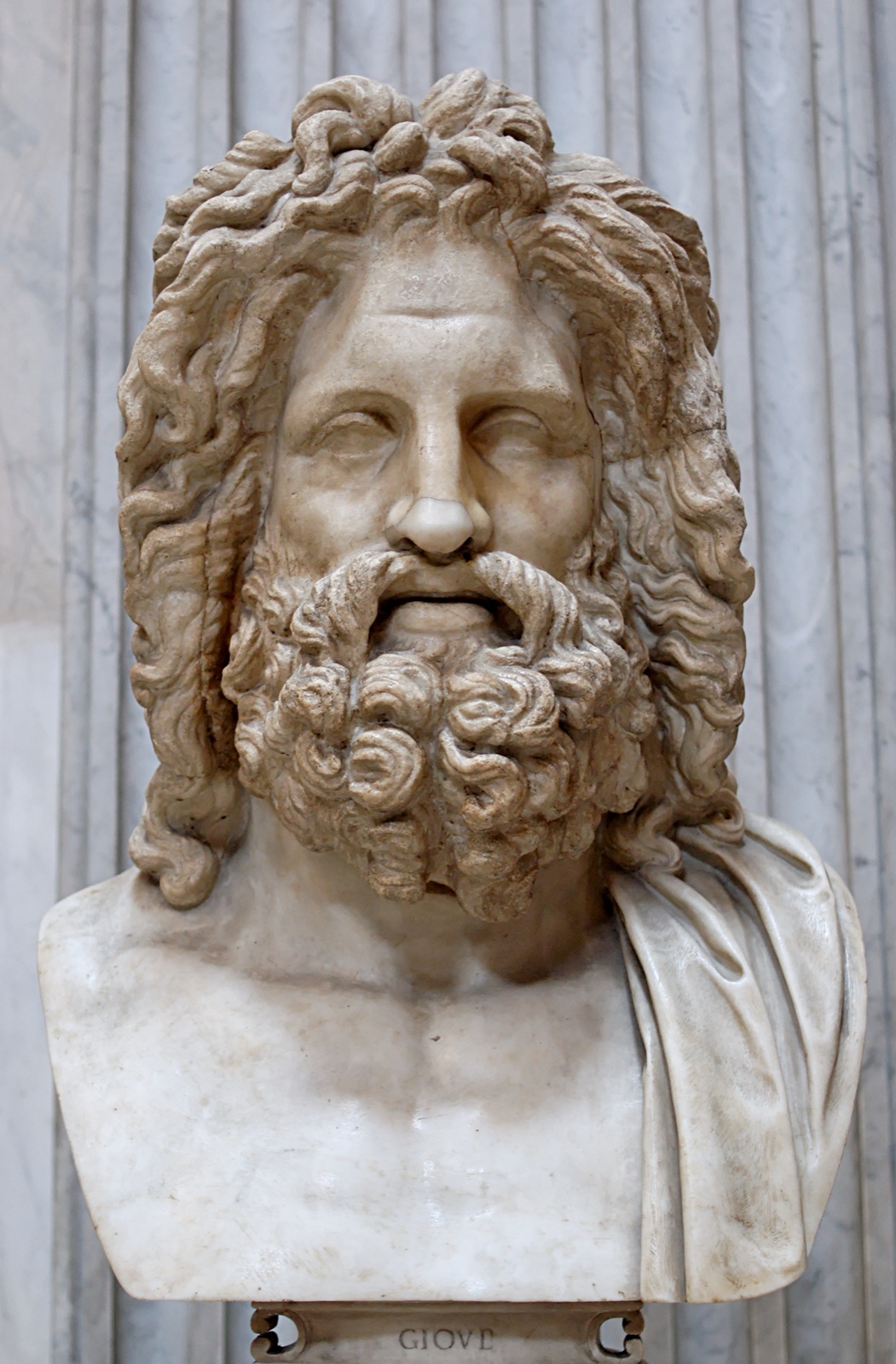
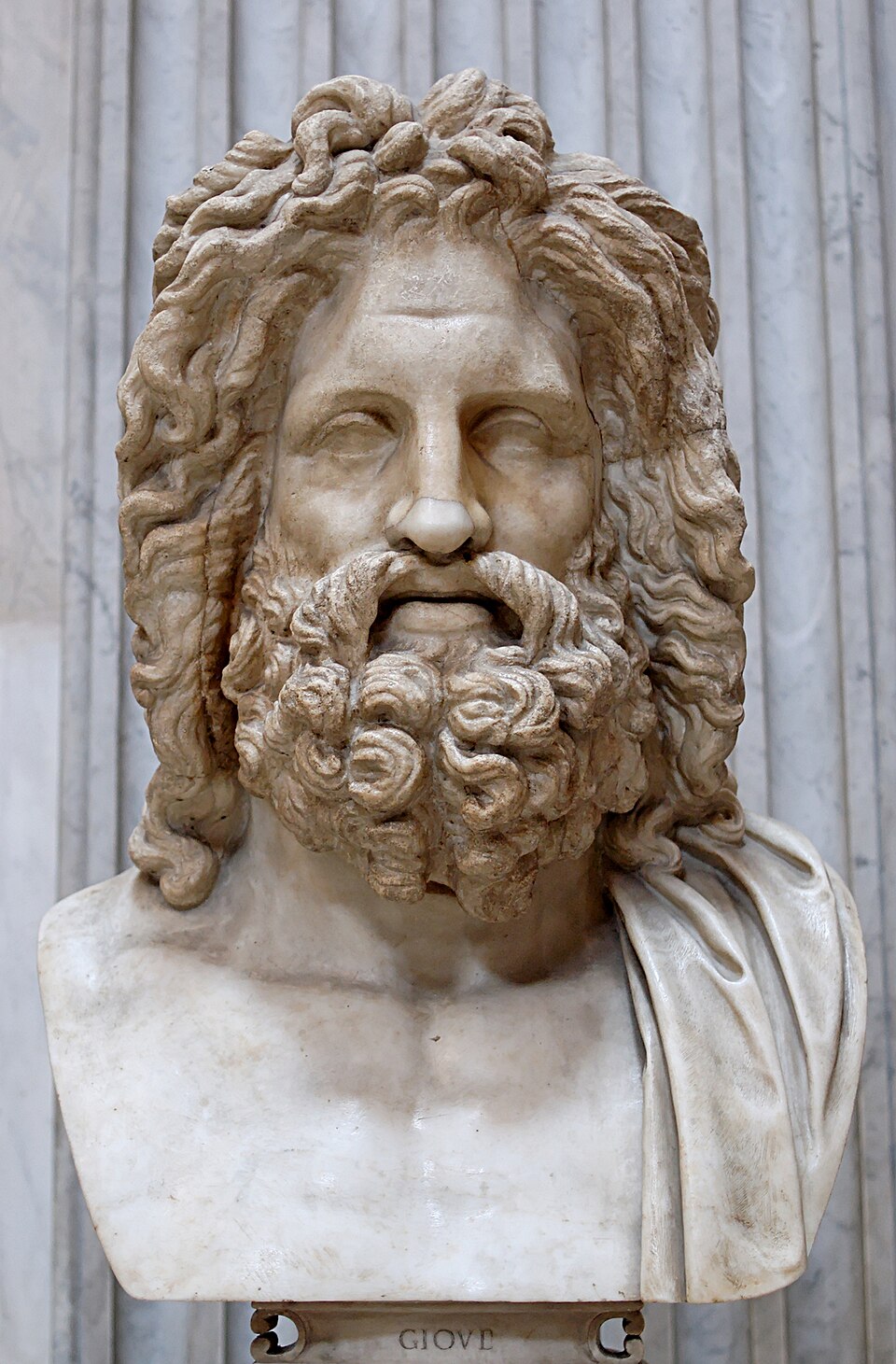
Public domain, photo: Jastrow, via Wikimedia Commons · Source and licence

A name is an address. The Vedic singer used it to claim kinship: Dyaus is my Father, my begetter: kinship is here.
[6] The words in your Creed carry the same address. Speak it again, this time to the Father who bears the name.
Zevism gives that address a life: prayer to Zeus, the company of the Gods under Him, study, meditation and a character ordered by truth. Discover the life the name opens.
Deus, Dios, Dieu, Jupiter, Zeus: one Father behind every form. Call Him by His name.
Continue
- Next. Move from the name to the living relationship. Why Zevism
- Then. How the old name was turned against the Gods. The Inversion
- For Christians. The faith before the faith. For Christians
Sources
- Compendium of the Catechism of the Catholic Church (2005), the Apostles’ Creed, Latin and English. vatican.va
- Compendio del Catecismo de la Iglesia Católica (2005), Símbolo de los Apóstoles. vatican.va
- Abrégé du Catéchisme de l’Église catholique (2005), Symbole des Apôtres. vatican.va
- Homer, Iliad 1.503 and 1.544, Greek text of Book 1 and tr. Samuel Butler (1898). sacred-texts.com (Greek); sacred-texts.com (English)
- C. T. Lewis and C. Short, A Latin Dictionary, s.vv. Juppiter and Diespiter. alatius.com (Juppiter); alatius.com (Diespiter)
- Rigveda 1.89.4 and 1.164.33, tr. Ralph T. H. Griffith, with the Sanskrit text. sacred-texts.com (1.89); sacred-texts.com (1.164); Sanskrit 1.89; Sanskrit 1.164
- The American Heritage Dictionary of the English Language, entries Zeus, Jupiter, Jove, jovial, deity, divine, adieu and Tiu, each referred to the root dyeu- in its Appendix of Indo-European Roots. ahdictionary.com; Indo-European roots appendix
- Linguistics Research Center, University of Texas at Austin, Indo-European Lexicon, etymon dei-, dei̯ə-, dī-, di̯ā-, “to shine, glitter; day, sun; god, deity” (after Pokorny 1959). lrc.la.utexas.edu
- eDiAna: Dictionary of the Minor Ancient Anatolian Corpus Languages, LMU Munich, entry 2665, Proto-Anatolian *di̯éu̯-/diu̯-, “god”, sections on the Anatolian forms and on phraseology. ediana-remake.gwi.uni-muenchen.de
- Lexicon Leponticum, University of Vienna, entry dēu̯-, on Old Irish día, Old Welsh duiu, Old Cornish duy and Middle Breton doe from PIE *dei̯u̯o-. lexlep.univie.ac.at
- Real Academia Española, Diccionario de la lengua española, s.vv. dios, día and jueves. dle.rae.es (dios); dle.rae.es (día); dle.rae.es (jueves)
- Treccani, Vocabolario, s.vv. dio and giovedì. treccani.it (dio); treccani.it (giovedì)
- Dicionário Priberam da Língua Portuguesa, s.v. deus. dicionario.priberam.org
- Dicționarul explicativ al limbii române (DEX ’09), s.v. zeu. dexonline.ro
- The American Heritage Dictionary of the English Language, entries journey, journal, diurnal, sojourn and diary. ahdictionary.com (entry); ahdictionary.com (sojourn); ahdictionary.com (diurnal)
- The American Heritage Dictionary of the English Language, entries Tuesday and Thursday. ahdictionary.com (Tuesday); ahdictionary.com (Thursday)
- Centre National de Ressources Textuelles et Lexicales, Étymologie, s.v. jeudi. cnrtl.fr
- Yasna 30.6: Avestan text after K. F. Geldner (1896), ed. J. H. Peterson; English tr. L. H. Mills, Sacred Books of the East 31. avesta.org; sacred-texts.com
- The American Heritage Dictionary of the English Language, entries god and Allah. ahdictionary.com (god); ahdictionary.com (Allah)
- Linguistics Research Center, University of Texas at Austin, Indo-European Lexicon, etymon dheu̯es-, with Greek θεός among its reflexes (after Pokorny 1959). lrc.la.utexas.edu