





29 min read
Coming Home · For Christians
For Christians: The Faith Before the Faith
author: High Priest Zevios Metathronos
You are welcome in the house of Zeus. The Church’s own writers preserved the faith that came before theirs: read their words, settle your questions, and begin your return to Zeus and the Gods today.
Public domain via Wikimedia Commons · Source and licence

- For
- Catholics, Orthodox, Protestants and those raised in the Church
- You Will Find
- 3 witnesses, your questions answered, Jesus and Apollonius, the forefathers
- Next Step
- Begin Your Return
Augustine, Retractationes I.13.3, translated for this page
Nam res ipsa quae nunc christiana religio nuncupatur, erat apud antiquos, nec defuit ab initio generis humani, quousque ipse Christus veniret in carne, unde vera religio quae jam erat, coepit appellari christiana.
For the thing itself which is now called the Christian religion existed among the ancients, and was not absent from the beginning of the human race until Christ himself came in the flesh; from then the true religion, which already existed, began to be called Christian.
I. The Welcome and the Offer
The Greeks honoured Zeus Xenios, guardian of the law of hospitality.[1] The Temple receives you under that name, as a guest with your questions.
The offer is definite: a living relationship with Zeus, Father and King of the Gods, and with the Gods; a discipline for the soul; truth as the rule of your character; and an inheritance of philosophy, sacred art, prayer and festivals to live in.
Carry forward love of family, of beauty and of worthy conduct. Some beliefs will change: you set down the claim that one institution holds the only door to the Divine. The Temple’s criticism falls on doctrines and institutions, never on you: We reject these doctrines, not the people who follow them.
[2]
II. 3 Witnesses from the Church’s Own Record
Read each passage. Then follow what it shows.
The Verse about Zeus in Acts
Aratus, Phaenomena 1 to 5, tr. G. R. Mair (1921) · Read the passage
Ἐκ Διὸς ἀρχώμεσθα, τὸν οὐδέποτ’ ἄνδρες ἐῶμεν
ἄρρητον· μεσταὶ δὲ Διὸς πᾶσαι μὲν ἀγυιαί,
πᾶσαι δ’ ἀνθρώπων ἀγοραί, μεστὴ δὲ θάλασσα
καὶ λιμένες· πάντη δὲ Διὸς κεχρήμεθα πάντες.
τοῦ γὰρ καὶ γένος εἰμέν.From Zeus let us begin; him do we mortals never leave unnamed; full of Zeus are all the streets and all the market-places of men; full is the sea and the havens thereof; always we all have need of Zeus. For we are also his offspring…
Acts 17:28, Greek text Nestle 1904, tr. King James Version · Read the verse
ἐν αὐτῷ γὰρ ζῶμεν καὶ κινούμεθα καὶ ἐσμέν, ὡς καί τινες τῶν καθ’ ὑμᾶς ποιητῶν εἰρήκασιν Τοῦ γὰρ καὶ γένος ἐσμέν.
For in him we live, and move, and have our being; as certain also of your own poets have said, For we are also his offspring.
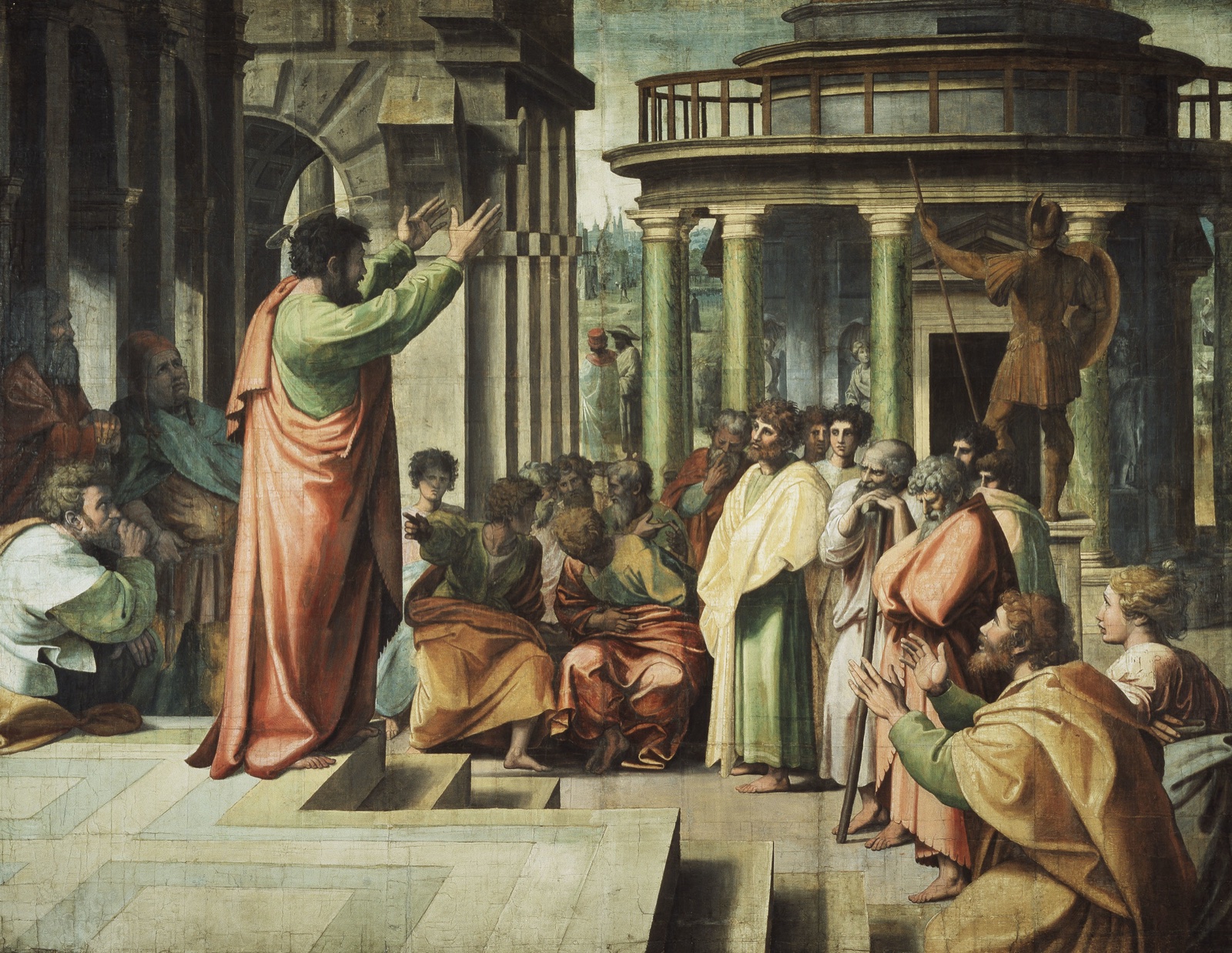
Acts sets Paul on the Areopagus at Athens, quoting your own poets
.[3] The poet is Aratus of Soli, whose Phaenomena opens From Zeus let us begin
; the line is his 5th.[4] Acts gives the half-line word for word, with the common ἐσμέν for the poet’s εἰμέν.
What it establishes. Acts puts a Greek verse addressed to Zeus in the apostle’s mouth as proof of human kinship with God.
The Zevist conclusion. The Father whose offspring you are was named in that poem’s first word. Come to know Him by His name.
The likely reply. Paul applied the line to the God of Israel.
Acts tells you what the speaker meant; Aratus tells you whom the line praised. Aristobulus, a Jewish philosopher of Alexandria, quoted the same opening and made it serve his God by taking away the name of Zeus which runs through the poems
.[5] A name has to be removed only where it stands.
Justin’s Comparisons with the Sons of Zeus
Justin Martyr, First Apology 21, tr. M. Dods and G. Reith (ANF 1) · Read the passage
And when we say also that the Word, who is the first-birth of God, was produced without sexual union, and that He, Jesus Christ, our Teacher, was crucified and died, and rose again, and ascended into heaven, we propound nothing different from what you believe regarding those whom you esteem sons of Jupiter.
Justin addressed his First Apology to the emperor Antoninus Pius. He lists the sons of Jupiter, the Roman Zeus: Mercury, Asclepius, Bacchus, Hercules, the Dioscuri, Perseus, Bellerophon. In chapter 22 he asks the emperor to accept the virgin birth in common with what you accept of Perseus
, and grants that Christ’s cures are very similar to the deeds said to have been done by Æsculapius
.[6]
In chapter 54 he explains: demons, having heard the prophets announce the Christ, put forward many to be called sons of Jupiter
, and when they learned He would heal every sickness, and raise the dead, they produced Aesculapius
.[6]
What it establishes. A 2nd-century apologist concedes the parallels in sonship, birth, healing and ascent, and calls them demonic imitation.
The Zevist conclusion. The sons of Zeus came first. The demonic explanation is the inversion at work, recasting the elder sacred figures as counterfeits of the later one.
The likely reply. Justin was building a bridge for pagans.
The bridge is the evidence: he needed demons because he couldn’t deny the likeness.
Gregory’s Instructions for the Temples
Gregory the Great to Abbot Mellitus, 601, in Bede, Ecclesiastical History I.30, tr. A. M. Sellar (1907) · Read the letter
… the temples of the idols in that nation ought not to be destroyed; but let the idols that are in them be destroyed; let water be consecrated and sprinkled in the said temples, let altars be erected, and relics placed there.
Gregory sent these instructions for the mission to the English, with their purpose: that the nation, seeing that their temples are not destroyed, may remove error from their hearts
. The feasts follow the same rule: because the people are used to slaughter many oxen in sacrifice to devils, some solemnity must be given them in exchange for this
, with huts of boughs about those churches which have been turned to that use from being temples
.[7]
What it establishes. A papal policy kept the sacred places and festal customs and replaced their worship.
The Zevist conclusion. The sacred setting was appropriated and its worship displaced. Wherever a church stands in a temple, it holds a place that belonged to the Gods.
The likely reply. This is missionary accommodation.
Call it that. The conclusion needs no endorsement from Gregory: the places and feasts were kept because the people loved them, and their worship was taken away.
III. The Inheritance Within Reach
Much of what you loved in church is older than the Church. Make its older layers part of your life.
- The name. Deus, Dios, Dieu and Jupiter belong to one inherited family of divine words: The Name You Already Speak.
- The language. The New Testament is Greek. Paul calls Christ
τὸ πάσχα ἡμῶν
,our passover
.[8] Clement preached Christ in the language of the mysteries:O truly sacred mysteries!
[9] - The philosophy. Justin counted Socrates and Heraclitus among
those who lived reasonably
before Christ.[6] Clement called philosophya preparation, paving the way for him who is perfected in Christ
.[10] Aquinas cites Aristotle simply asthe Philosopher
.[11] The writings under the name of Dionysius the Areopagite, Paul’s Athenian convert, date from between 485 and 528, by an authormost probably
a pupil of Proclus.[12] - The admissions. Augustine wrote that the thing now called the Christian religion existed among the ancients.[13] He meant his own God; the Temple takes him at his word: the true religion is older than the name. The Second Vatican Council declared in 1965 that the Church
rejects nothing that is true and holy
in other religions, whichoften reflect a ray of that Truth which enlightens all men
.[14] In 2006 Benedict XVI called the rapprochement of biblical faith and Greek philosophyan event of decisive importance
.[15] These statements confess no Zevist doctrine; they concede the ground on which Zevism stands. - The places. In Rome, Bede records, Pope Boniface obtained from the emperor Phocas
the temple at Rome called by the ancients Pantheon
and dedicated it to the Mother of God and all the martyrs.[16]
Each feast has its own history.
- Christmas. The Chronograph of 354 marks 25 December twice: its calendar reads N·INVICTI·CM·XXX, the birthday of the Unconquered, with 30 races; its list of burials opens VIII kal. Ian. natus Christus in Betleem Iudeae.[17] The calculation theory starts from 25 March, taken as the day of Christ’s conception and death; 25 December falls 9 months later.[18] A century later Leo complained that worshippers at Saint Peter’s
turn round and bow themselves towards the rising sun
.[19] The record holds both: a calculation, and the Unconquered’s birthday on the same day in the same calendar. - Easter. The English name carries a Goddess. Bede wrote that Eosturmonath was
once called after a goddess of theirs named Eostre
, honoured with feasts in that month.[20] - Pascha. The Greek and Latin πάσχα, pascha, is the Passover, the name Paul gives to Christ.[8]
- The equinox. The sky set the Paschal date. Anatolius of Laodicea reports Jewish writers, Aristobulus among them, who taught that
all alike ought to sacrifice the Passover after the vernal equinox in the middle of the first month
.[21] The Temple keeps the Spring Equinox as its own festival.
The Zevist Teaching
The Church kept the language, the philosophy, the places and the feasts, and forbade the Gods to whom they belonged. Return restores the inheritance with its centre: Zeus.
IV. The Questions That Decide the Choice
Am I Leaving God?
No. You are returning to the Father and the Gods.
The Father whose offspring Acts declares you to be is the Zeus of Aratus’s first line. Zeus is Father, the Gods are His family, and you are kin to Them. The Rite of Dedication calls Him the One God who Protects the Many Gods, the source from whom all Gods proceed
.[22] You lose no Father. You learn His name.
Am I Leaving My Heritage?
No. You are entering its older layers.
Your language keeps the divine name in Deus, Dios and Dieu; your year keeps the solstice and equinox. If missionaries reached your people later, seek your own sacred history and family memory.
Why Was I Taught This Was Evil?
Because the texts behind your teaching named the Gods demons, and rulers enforced the ban.
The Greek Psalm says πάντες οἱ θεοὶ τῶν ἐθνῶν δαιμόνια
, all the gods of the nations are demons
; Paul, that the Gentiles sacrifice to devils, and not to God
.[23] Charlemagne’s Saxon law of 775 to 790 ordered death for the Saxon who shall have wished to remain a pagan
.[24] The label was political, and it took your spiritual inheritance. Δαίμων means a divine spirit; demon
is its hostile revaluation.[2]
Is This Satanism?
No. The Temple of Zeus worships Zeus and the Gods.
In its own words: The Temple of Zeus does not worship Satan, the adversary of the Abrahamic religions.
SATANAMA, chanted SA TA NA MA, is the mantra of Kirtan Kriya in Kundalini Yoga, the seed form of SAT NAM, True Name
. The Hebrew śāṭān is an ordinary noun meaning adversary
, used even of the angel in Balaam’s road (Numbers 22:22).[25]
Isn’t God One?
Zevism teaches one divine Head and many Gods under Him.
All the Gods and Daemons serve under Zeus.[22] Unity is His sovereignty; plurality is the order of the cosmos. The Trinity is a different doctrine, 3 persons in 1 divine essence, which Christians don’t count as 3 Gods. Yet your Gospel keeps the older language: Is it not written in your law, I said, Ye are gods?
[26]
What about the Immoral Myths?
Sacred myth veils truth, and the Gods are good.
Plato ruled that God is not the author of all things, but of good only
.[27] Sallustius wrote that one may call the World a Myth, in which bodies and things are visible, but souls and minds hidden
.[28] The Temple’s standard is Satya, the True and the Good; a story read against it has been read too literally.
Will I Be Damned for Leaving?
No. The Gods are good, and They receive those who return.
The threat has a text and an institution behind it: Matthew’s everlasting fire
, and the Catechism’s The teaching of the Church affirms the existence of hell and its eternity.
[29] It guards an exclusive claim, and that claim is what you are examining. In the Temple’s words, the Gods are reaching toward
those who return, not punishing them
.[30]
What If Jesus Existed?
Then a preacher lived, and the Gods remain.
The Temple leans strongly to the answer that he did not. Either way, a preacher’s existence establishes neither the Church’s exclusive claim nor the end of the Gods.
What about the Resurrection Witnesses?
Paul reports a list of witnesses. Their own testimony doesn’t survive.
Paul lists Cephas, the 12, more than 500 at once, of whom the greater part remain unto this present
, James, the apostles and himself.[31] None of the 500 is named or quoted. The Gospels differ on who came to the tomb and where the risen Jesus appeared.
Would the Apostles Die for a Lie?
Sincerity proves conviction. It doesn’t prove an exclusive claim.
Few deaths are attested early. Herod killed James the brother of John with the sword
; Ananus had James, the brother of Jesus, who was called Christ
, delivered to be stoned
; 1 Clement says Peter and Paul suffered martyrdom, naming neither place nor method.[32] The rest is later tradition, and people of every religion have died for their beliefs.
Was Jesus the Highest Moral Teacher?
The Temple judges the forefathers greater, and sets their works before you.
Before the Gospels, Socrates taught in the Crito that one must not, when injured injure in return, as the many imagine; for we must injure no one at all
.[33]
Wasn’t Christianity Spread by Love?
Its first preaching spread under persecution. Its later victories used law and force.
Nero inflicted the most exquisite tortures
on the Christians of Rome.[34] Christianity was in Europe before any emperor established it; once rulers took it up, they used the sword. Of the Saxon who refused baptism, Charlemagne’s law decreed: let him be punished by death
.[24]
Doesn’t Prophecy Prove the Bible?
Read the prophecy in its own setting.
Isaiah 7:14 gives King Ahaz a sign: in the Hebrew, עַלְמָה, the young woman is with child
, and before the child knows good from evil, the land before whose two kings you are in dread will be deserted
. Matthew 1:23 reads the Greek παρθένος, virgin
, and applies the sign to Jesus centuries later.[35]
Don’t the Many Manuscripts Prove Every Sentence?
Many copies show what was copied. They don’t show identical wording.
Open your Bible at Mark 16. The note in the NRSV Updated Edition reads: Some of the most ancient authorities bring the book to a close at the end of 16.8.
[36] Verses 9 to 20, with their resurrection appearances, are absent from those witnesses.
I Felt the Divine in Church
Keep that experience. The Divine was real, and no institution owns it.
The Gods have continued to guide humanity, even through the Dark Ages and times of spiritual suppression
.[2] What reached you in the hymn and the silence came from the Divine; the claim that it comes only through that door came from the institution.
What Happens to My Family and Marriage?
Your love stays. Disclosure is your own considered decision.
Zevism requires no public announcement. Freedom of belief is ordained by the Gods, and the Temple doesn’t force, aggressively convert or psychologically coerce.[2] Your spouse’s belief is their own. Choose your time and your words, and lead by example.
Can I Keep Family Festivals?
Yes. Family affection and gatherings continue.
Sit at the table with the people you love. Your Zevist observance is a separate act: the Temple keeps the Winter Solstice as the Holy Night of Zeus, and the Spring Equinox, with rites for one person or a gathering.
Must I Hate Christians?
No. The Temple welcomes Christians and invites them home.
Its teaching: Christians are not your enemies.
And: The Zevist position is not to hate Christians.
[37] Opposition belongs to doctrines and institutions, never to the guests this page was written for.
Is It Only for Greeks?
No. Belonging is open to everyone who chooses the Gods.
Whatever your ancestry or nationality, you are welcome to study this inheritance and take part in its continuation.
[38] And: The door is not barred by blood.
[39]
Why Should I Join This Temple Now?
Because it gives your return a teaching, a practice and a community today.
The Temple calls the Gods by Their names, teaches Satya and Ma’at, publishes its prayers, meditation programmes and rites openly, and keeps a community. There are no required mediators between you and the Gods.[38]
What Will I Do Tomorrow?
Speak a prayer to Zeus, then follow the 7-day orientation.
Each day has 1 question and 1 short task; day 7 brings a conscious decision about dedication. No registration, purchase or public declaration.
V. Jesus: Zeus in a Form of Inversion
The Zevist Teaching
Jesus is Zeus in a form of inversion. The Father’s kingship, the sonship and healing of His sons, the sun’s light and the Greeks’ sacred language were gathered into one figure, in whose name the worship of Zeus was forbidden. The attributes were kept; the God was denied.
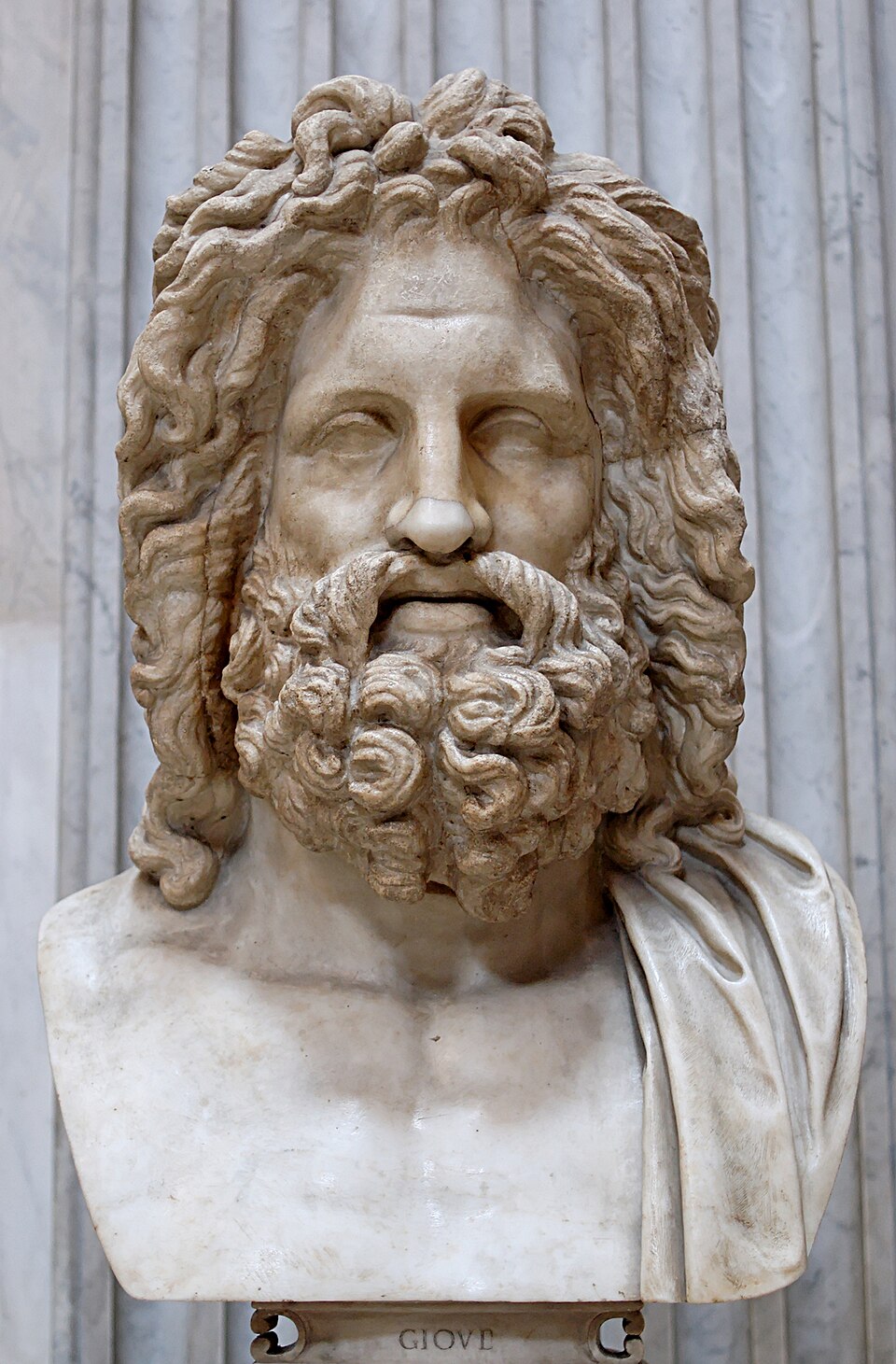
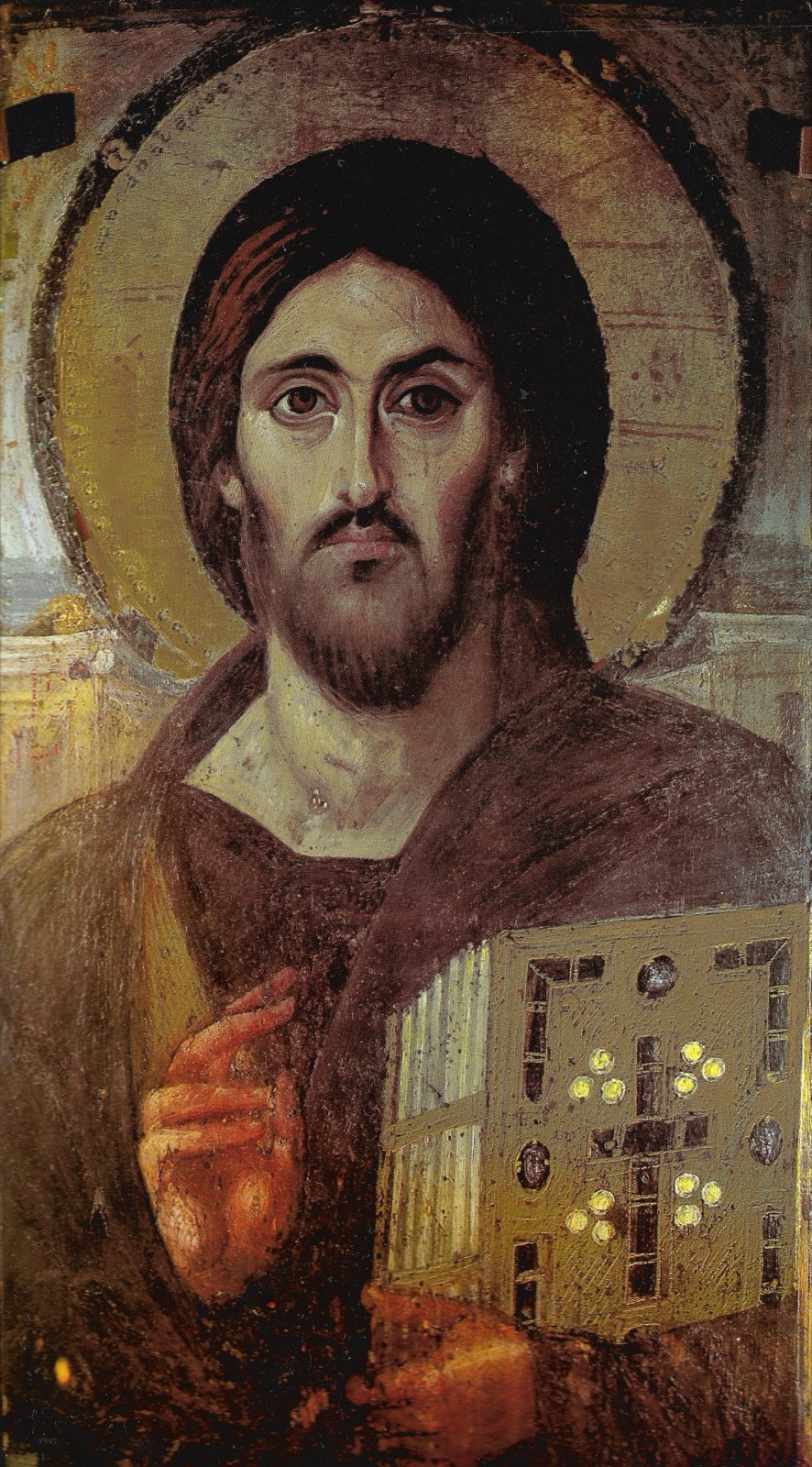
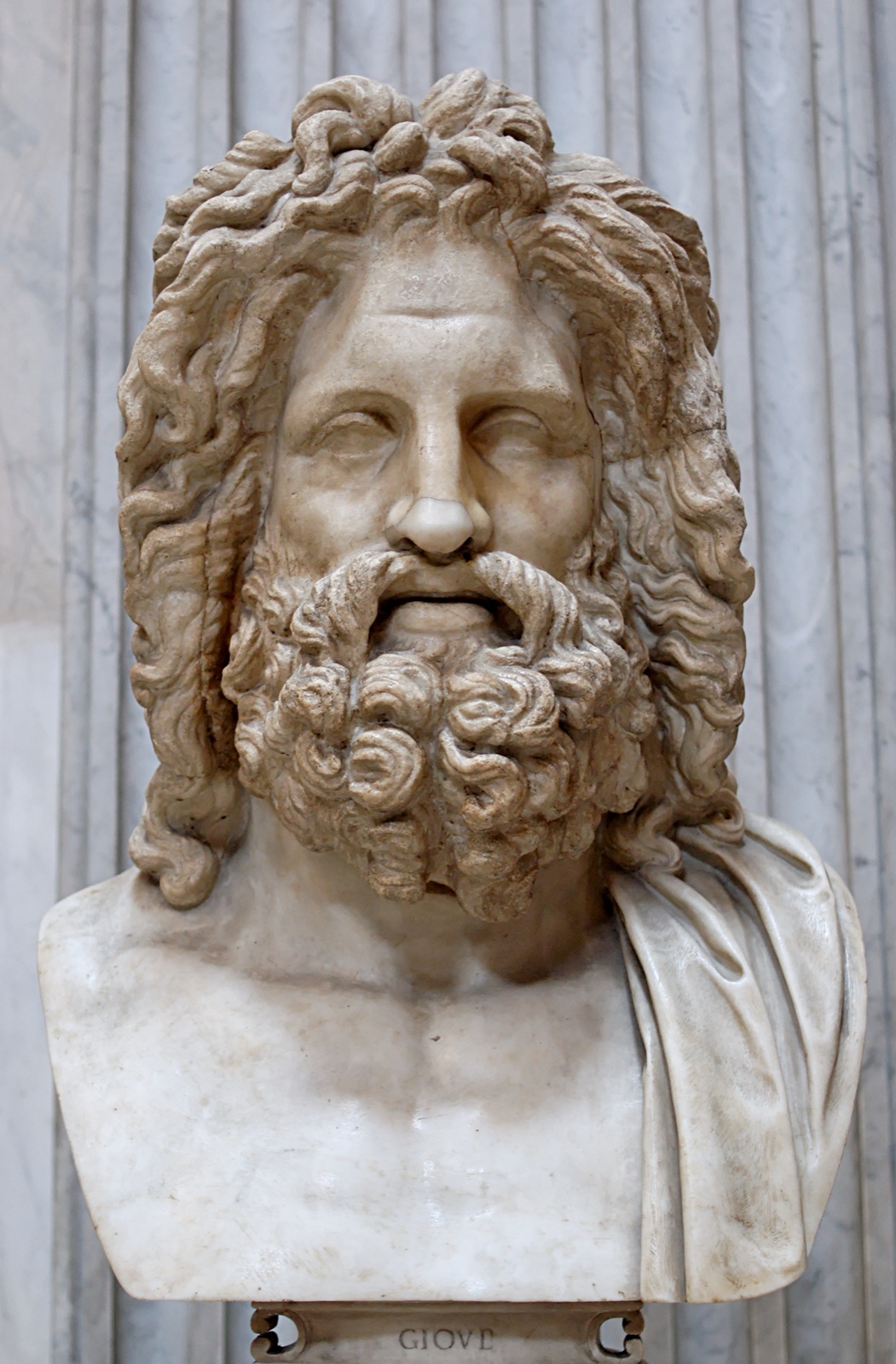
- Divine kingship and imagery. The Christ Pantocrator of Saint Catherine’s Monastery at Sinai is a mid-6th-century encaustic icon.[40] The Zeus of Otricoli in the Vatican Museums is a Roman marble after a Greek original of about the 4th century BCE.[41] Robin Jensen, following Thomas Mathews’s reading of early Christian art as a contest with the Gods, describes images of
Jesus as both Jupiter and Apollo
, and finds that the bearded typemost closely parallels images of the senior, enthroned father gods
.[42] The resemblance shows shared imagery; the Temple names its meaning: the Father’s face placed on the Son.
Public domain via Wikimedia Commons · Source and licence

Public domain, photo: Jastrow, via Wikimedia Commons · Source and licence

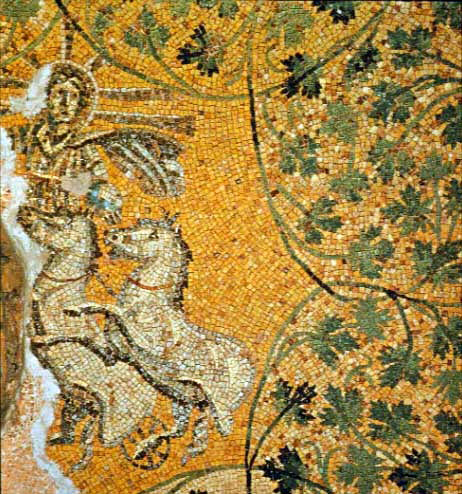
- The solar image. Beneath Saint Peter’s, the vault of Mausoleum M, the Tomb of the Julii, holds a 3rd-century mosaic: a figure with a rayed nimbus driving a chariot, among Christian scenes of Jonah, a shepherd and a fisherman, read as Christ in the image of the Sun.[43] Clement had already preached Christ as
the Sun of Righteousness
, who drives His chariot over all.[44]
Public domain via Wikimedia Commons · Source and licence

- Healing and divine sonship. Justin’s comparison does the work:
nothing different
from the sons of Jupiter, curesvery similar
to those of Asclepius.[6] - The Greek religious language. Ἰησοῦς is the Greek form of the Hebrew name Joshua, Yeshua; translating Hebrews 4:8, the King James Version writes
For if Jesus had given them rest
where Joshua is meant. Χριστός meansanointed
: John glosses the Hebrew Messias asΧριστός
.[45] Christian teachers then preached them with Greek meanings. Cyril of Jerusalem taught:Jesus then means according to the Hebrew “Saviour,” but in the Greek tongue “The Healer”
, since He isphysician of souls and bodies, curer of spirits
.[46] Clement proclaimed:The Lord is the hierophant, and seals while illuminating him who is initiated
.[9] - The older narrative world. A sage of the same century was announced before birth, raised a bride, faced an emperor and ascended. His life follows.
- The historicity question. Richard Carrier argues in On the Historicity of Jesus (2014) that a model in which Jesus began as a heavenly being, later given an earthly biography, explains the evidence at least as well as historicity.[47] Robert M. Price concluded in Deconstructing Jesus (2000):
There may have been a real figure there, but there is simply no longer any way of being sure.
[48] The prevailing historical position holds that a Jewish preacher named Jesus lived and was crucified under Pilate.[49] Its texts deserve an answer. Paul says he sawJames the Lord’s brother
(Galatians 1:19); Carrier reads the phrase as a believer’s title, and his critics read it as kinship.[50] Josephus namesthe brother of Jesus, who was called Christ, whose name was James
(Antiquities 20.200); Carrier argues the original meant the brother of the high priestJesus, the son of Damneus
, named in the same passage.[51] Tacitus writes thatChristus, from whom the name had its origin, suffered the extreme penalty during the reign of Tiberius at the hands of one of our procurators, Pontius Pilatus
(Annals 15.44);[34] mythicists, Carrier among them, answer that Tacitus wrote decades later and preserves no independent tradition.[49] The Temple leans strongly to the mythicist answer and states it as its judgement. - The decisive choice. The argument for return survives either answer. If no preacher lived, the Gospel figure is the older sacred world retold. If one lived, his existence grants no institution possession of the Divine and annuls none of the Gods.
VI. 2 Lives: Apollonius of Tyana and Jesus
Apollonius of Tyana, a Pythagorean sage, lived about 15 to 100. Philostratus wrote his Life in the early 3rd century, after the Gospels, for the empress Julia Domna (1.3).[52][53]
| Moment | Apollonius of Tyana | Jesus of the Gospels |
|---|---|---|
| Announced | Proteus, the God of Egypt, appears to his mother; asked whom she will bear, he answers Myself(1.4) | The angel Gabriel is sent to Mary (Luke 1:26 to 38) |
| Birth | Born in a meadow amid dancing swans; a thunderbolt seems to fall, then rises into the air (1.5) | Angels sing to the shepherds (Luke 2:8 to 14) |
| Boyhood | At 14 sent to Tarsus, then to Aegae and the temple of Asclepius (1.7 to 1.8) | At 12, amazes the teachers in the Temple (Luke 2:42 to 47) |
| Renunciation | Gives away his inheritance, keeping little (1.13) | Tells the rich man to sell all and give to the poor (Mark 10:21) |
| Disciples | Damis joins him as a pupil (1.19) | Appoints the 12 (Mark 3:13 to 19) |
| A demon driven out | Drives a demon from a youth at Athens; a statue falls (4.20) | Drives demons from the man at Gerasa (Mark 5:1 to 13) |
| Raising the dead | Touches a bride dead in the hour of her marriage, and she wakes; the narrator leaves open whether life remained (4.45) | Touches the bier at Nain (Luke 7:11 to 15); raises Jairus’s daughter (Mark 5:41) |
| Trial | Shorn, chained and tried before Domitian (7.34 to 8.5) | Tried before Pilate (Mark 15:1 to 15) |
| Vanishing | Vanishes from the court (8.5) | Passes through the crowd (Luke 4:30); vanishes from sight at Emmaus (Luke 24:31) |
| Appearance | Appears to Damis and Demetrius: Take hold of me(8.12) | Touch me and see(Luke 24:39) |
| Ascent | Enters the temple of Dictynna in Crete as maidens sing Hasten thou from earth, hasten thou to Heaven, hasten(8.30) | A cloud takes him from sight (Acts 1:9) |
| After death | Appears to a young man who denied the soul’s immortality (8.31) | Appears to doubting Thomas (John 20:24 to 29) |
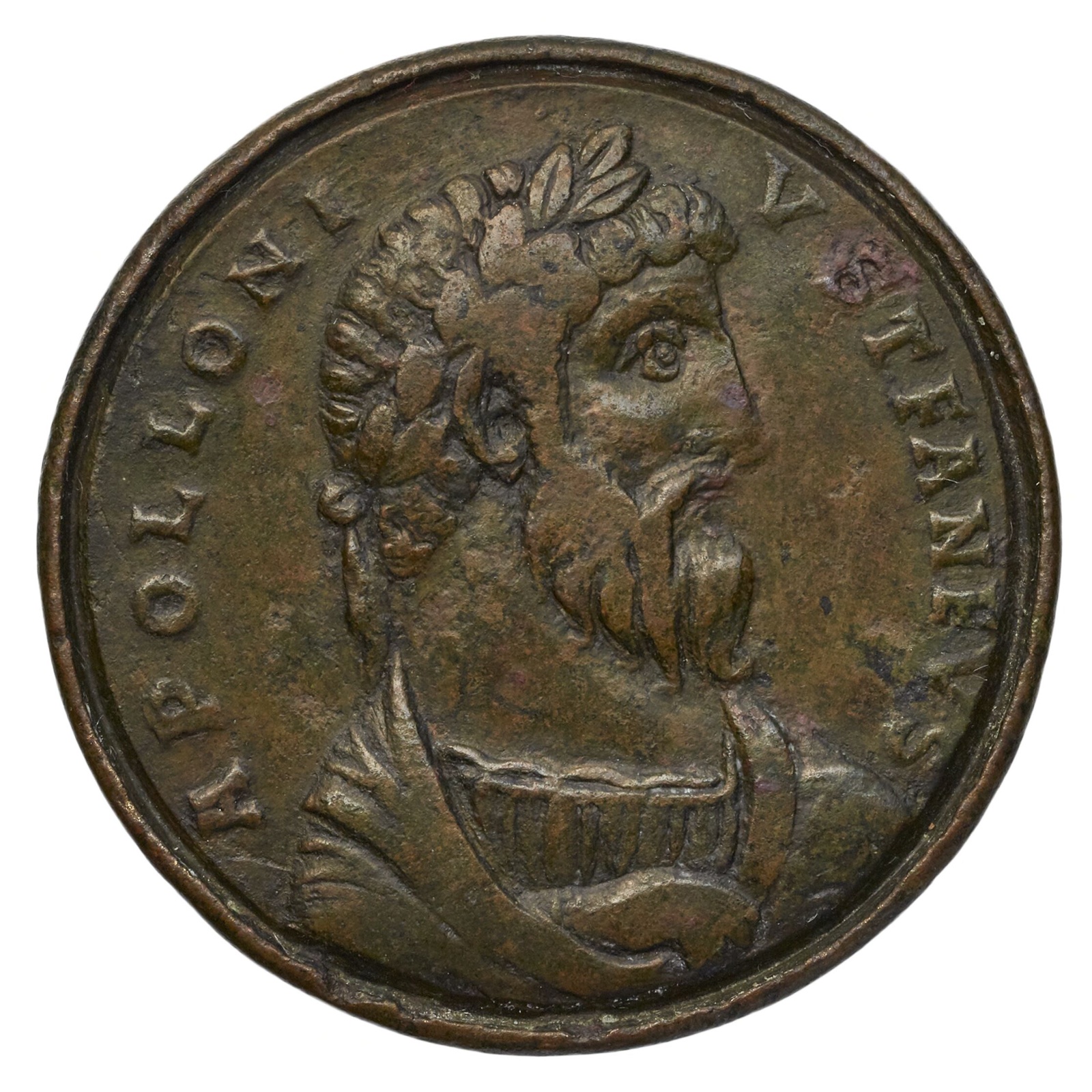
Public domain (PD-France), photo: Bibliothèque nationale de France, via Wikimedia Commons · Source and licence

- Apollonius is attested outside Philostratus. Moeragenes wrote memoirs of
the magician and philosopher Apollonius of Tyana
, as Origen reports.[54] Lucian names the teacher of the false prophet Alexandera native of Tyana, an associate of the great Apollonius
.[55] Cassius Dio tells how Apollonius, on a lofty rock at Ephesus or elsewhere, cried out as Domitian was murdered,Good, Stephanus! Bravo, Stephanus!
, and how Caracalla honouredApollonius of Cappadocia
, the province of Tyana, anderected a shrine to him
.[56] - The Greeks drew the comparison first. Lactantius, without naming him, answers a writer of the persecution who titled his books
truth-loving
andwished to show that Apollonius performed equal or even greater deeds
than Christ.[57] Eusebius names him, Hierocles, author of theLover of Truth
, and wrote Against Hierocles to answer his parallelbetween the man of Tyana and our own Saviour
.[58] - A late biography’s report. The Historia Augusta says the emperor Severus Alexander kept in his household shrine
certain holy souls, among them Apollonius
, and,according to a contemporary writer, Christ, Abraham, Orpheus
.[59] The report is the late biography’s own witness. - The older divine sage and healer. Pythagoras appeared at Croton and at Metapontum on the same day and at the same hour, in a wonder-collection whose chapter on Pythagoras draws on Aristotle.[60] Heraclides told how Empedocles kept a woman 30 days
without pulsation though she never breathed
, and how, after a sacrifice, he vanished, a voice called his name, a light shone in the heavens, and Pausanias declaredit was their duty to sacrifice to him since he was now a god
.[61] Pindar sang that Asclepius was paidto bring back from death a man who was already caught
.[62]
By themselves the parallels prove neither a lost document nor a direction of copying. Their force lies in the older witnesses: the divine sage, the healer who raised the dead and the man taken among the Gods were Greek centuries before the Gospels.
The Zevist Teaching
The Gospel figure reworks the older sacred world and its powers of healing, wisdom and ascent. The Temple restores your access to that wider world, and to the Gods who stood behind it.
VII. The Measure of Men: The Forefathers by Their Works
The Temple’s judgement is plain: the forefathers of Hellas and the ancient world stand higher than the Gospel figure in wisdom, and nearer to the Gods. Test it against works you can open today.
| Forefather | The Work | Why It Matters to Your Choice |
|---|---|---|
| Socrates | Plato’s Apology: the life which is unexamined is not worth living; the Crito: no wrong, even in return[63][33] | Moral courage joined to reasoned inquiry, to the point of death |
| Plato | Republic; Theaetetus 176b: ὁμοίωσις θεῷ, to become holy, just and wise[64] | A full account of how the soul is formed toward likeness to the Divine |
| Aristotle | The logic of the Prior Analytics, the History of Animals, the Nicomachean Ethics | A systematic education of thought and character: the Philosopher of Aquinas’s Summa |
| The Hippocratic writers | On the Sacred Disease: the illness called sacred is nowise more divine nor more sacred than other diseases[65] | Disciplined inquiry turned toward human need |
| Euclid and Archimedes | Euclid’s Elements; Archimedes’ On the Sphere and Cylinder and The Sand-Reckoner | Exact demonstration, still taught |
| Epictetus | Discourses I.13: the slave is your own brother, who has Zeus for his progenitor[66] | Divine kinship made into daily conduct |
| Beyond Greece | Ptahhotep’s Instruction, complete in the Prisse Papyrus, against pride in one’s knowledge; Confucius, Analects 15.24: What you do not want done to yourself, do not do to others; Pāṇini’s grammar of Sanskrit, the Aṣṭādhyāyī[67][68] | The breadth of human wisdom, and a sacred inheritance wider than one nation |
Compare contributions, not birthplaces. The Gospel figure is known only through others, and Socrates also wrote nothing, so authorship can’t be the rule of greatness. The measure is the breadth, depth and lasting use of the works. By that measure the Temple chooses its forefathers, and invites you to read them as your own.
VIII. Your Next Day in Zevism
Tomorrow morning you speak to Zeus by name and place the day under His protection. You read 1 page: Epictetus on kinship, or Plato on becoming like God. At work you keep a hard commitment, because Ma’at is kept in small acts. In the evening you review the day and close it with a prayer. On the 7th day you decide what comes next.
That is the return: a Father named, a practice kept, a life ordered by truth.
Examine the full record: Things Nobody Wants to Accept about Christianity gathers 52 dossiers on scripture, doctrine and institutional power. Reading it is never a condition of entry.
You are returning to the Father and the Gods. Begin with Zeus today.
Continue
- Next. The first prayer and a 7-day orientation. Begin Your Return
- The Positive Case. What Zevism gives your life. Why Zevism
- The Full Record. 52 historical dossiers. Christianity Review
Sources
- Theoi Project, Zeus, on Zeus as guardian of the law of hospitality (xenios), citing Homer, Odyssey. theoi.com
- High Priest Zevios Metathronos, Welcome, Temple of Zeus. templeofzeus.org
- Acts 17:22-31, esp. 17:28, Greek text Nestle 1904 and Westcott-Hort 1881, tr. King James Version. biblehub.com
- Aratus, Phaenomena 1-5, tr. G. R. Mair (Loeb, 1921). theoi.com; Greek text as printed in the Mair Loeb, en.wikipedia.org
- Aristobulus, in Eusebius, Preparation for the Gospel XIII.12, tr. E. H. Gifford (1903). tertullian.org
- Justin Martyr, First Apology 1, 21-22, 46 and 54, tr. M. Dods and G. Reith (ANF 1). newadvent.org (chs. 1-43); chs. 46 and 54 in the same translation at earlychristianwritings.com
- Gregory the Great to Abbot Mellitus, 17 June 601, in Bede, Ecclesiastical History of the English Nation I.30, tr. A. M. Sellar (1907). ccel.org; the letter as Gregory, Epistola 76 (PL 77: 1215-1216), sourcebooks.fordham.edu
- 1 Corinthians 5:7, Greek text Nestle 1904, tr. King James Version. biblehub.com
- Clement of Alexandria, Exhortation to the Heathen (Protrepticus) 12, tr. W. Wilson (ANF 2). newadvent.org
- Clement of Alexandria, Stromata I.5, tr. W. Wilson (ANF 2). newadvent.org
- Thomas Aquinas, Summa Theologiae, First Part, question 2, article 1. newadvent.org
- Kevin Corrigan and L. Michael Harrington, Pseudo-Dionysius the Areopagite, Stanford Encyclopedia of Philosophy, on the dating of the corpus (485 to 518-528) and its relation to Proclus. plato.stanford.edu
- Augustine, Retractationes I.13.3, Latin text (PL 32) with French translation. bkv.unifr.ch
- Second Vatican Council, Nostra Aetate 2, proclaimed by Paul VI, 28 October 1965. vatican.va
- Benedict XVI, Faith, Reason and the University: Memories and Reflections, University of Regensburg, 12 September 2006. vatican.va
- Bede, Ecclesiastical History of the English Nation II.4, tr. A. M. Sellar (1907). ccel.org
- Chronography of 354: the calendar of Philocalus, 25 December, and the Depositio Martyrum, first entry. tertullian.org; tertullian.org
- Andrew McGowan, “How December 25 Became Christmas”, Bible Review (December 2002), republished in Bible History Daily. biblicalarchaeology.org
- Leo the Great, Sermon 27.4, tr. C. L. Feltoe (NPNF 2.12). newadvent.org
- Bede, The Reckoning of Time 15, tr. F. Wallis (Liverpool, 1999), p. 54, as quoted in Ēostre. en.wikipedia.org
- Anatolius of Laodicea, Paschal Canon 3, tr. S. D. F. Salmond (ANF 6). ewtn.com
- High Priest Zevios Metathronos, Becoming an Initiate: The Rite To Dedicate Your Soul to Zeus and The Ancient Gods, Temple of Zeus, the prayer of dedication. templeofzeus.org
- Psalm 95:5 in the Septuagint (Psalm 96:5 in the Hebrew numbering), Greek text. ebible.org; 1 Corinthians 10:20, King James Version. biblehub.com
- Capitulary for Saxony (Capitulatio de partibus Saxoniae), 775-790, ch. 8, tr. D. C. Munro (1900). sourcebooks.fordham.edu
- High Priest Zevios Metathronos, SATANAMA: The Mantra and the Word, Temple of Zeus, with Numbers 22:22 (KJV) as given there. templeofzeus.org
- John 10:34, quoting Psalm 82:6, King James Version. biblehub.com
- Plato, Republic II, 377e-380c, tr. B. Jowett. classics.mit.edu
- Sallustius, On the Gods and the World III, tr. G. Murray, in Five Stages of Greek Religion. sacred-texts.com
- Matthew 25:41, King James Version. biblehub.com; Catechism of the Catholic Church 1035. vatican.va
- Temple of Zeus, The Original Gods behind Abrahamism, Part Seven and What This Means Concretely. templeofzeus.org
- 1 Corinthians 15:3-8, King James Version. biblehub.com
- Acts 12:2, King James Version. biblehub.com; Josephus, Antiquities 20.200 (XX.9.1), tr. W. Whiston. sacred-texts.com; 1 Clement 5, tr. J. Keith (ANF 9). newadvent.org
- Plato, Crito 49b-c, tr. B. Jowett. classics.mit.edu
- Tacitus, Annals 15.44, tr. A. J. Church and W. J. Brodribb. classics.mit.edu
- Isaiah 7:10-16, Hebrew text and NRSV. biblehub.com, 7:14, 7:16; Matthew 1:23, Greek text Nestle 1904. biblehub.com
- Mark 16:8-20 with its textual note, New Revised Standard Version Updated Edition. biblegateway.com
- Temple of Zeus, updated by High Priest Zevios Metathronos, Understanding Christians. templeofzeus.org
- High Priest Zevios Metathronos, Zevism: Instructions for New People, Temple of Zeus. templeofzeus.org
- Temple of Zeus, Declaration of Principles, 15 March 2026. templeofzeus.org
- Christ Pantocrator, encaustic icon, mid-6th century, Saint Catherine’s Monastery, Sinai. en.wikipedia.org
- Zeus of Otricoli, Roman marble after a Greek original of about the 4th century BCE, found 1775, Vatican Museums, Sala Rotonda. en.wikipedia.org
- Thomas F. Mathews, The Clash of Gods: A Reinterpretation of Early Christian Art (Princeton, 1993; rev. ed. 1999). press.princeton.edu; Robin M. Jensen, Face to Face: Portraits of the Divine in Early Christianity (Minneapolis, 2005); Robin M. Jensen, “The Two Faces of Jesus”, Bible Review 18.5 (October 2002). cojs.org
- Mausoleum M (Tomb of the Julii), Vatican Necropolis, vault mosaic, 3rd century: J. Toynbee and J. Ward-Perkins, The Shrine of St. Peter and the Vatican Excavations (1956); K. Weitzmann, ed., Age of Spirituality (1979), pp. 531-532. en.wikipedia.org
- Clement of Alexandria, Exhortation to the Heathen 11, tr. W. Wilson (ANF 2). newadvent.org
- Hebrews 4:8, Greek text and King James Version. biblehub.com; John 1:41, Greek text Westcott-Hort 1881. biblehub.com
- Cyril of Jerusalem, Catechetical Lecture 10.13, tr. E. H. Gifford (NPNF 2.7). newadvent.org
- Richard Carrier, On the Historicity of Jesus: Why We Might Have Reason for Doubt (Sheffield Phoenix, 2014). en.wikipedia.org
- Robert M. Price, Deconstructing Jesus (Prometheus Books, 2000). en.wikipedia.org
- Bart D. Ehrman, Did Jesus Exist? The Historical Argument for Jesus of Nazareth (HarperOne, 2012); on the state of the question, Christ myth theory. en.wikipedia.org
- Galatians 1:19, King James Version and NRSV. biblehub.com; Daniel N. Gullotta, “On Richard Carrier’s Doubts”, Journal for the Study of the Historical Jesus 15 (2017), 310-346, discussed at vridar.org
- Josephus, Antiquities 20.200-203 (XX.9.1), tr. W. Whiston. sacred-texts.com; Carrier’s reading as summarised in Christ myth theory, en.wikipedia.org
- Philostratus, Life of Apollonius of Tyana 1.3-1.19, 4.20, 4.45, 7.32-8.12, 8.30-8.31, tr. F. C. Conybeare (Loeb, 1912), the book and chapter numbering also used by C. P. Jones (Loeb, 2005). livius.org
- Luke 1:26-38; 2:8-14; 2:42-47; 4:30; 7:11-15; 24:31; 24:39. Mark 3:13-19; 5:1-13; 5:41; 10:21; 15:1-15. John 20:24-29. Acts 1:9. NRSV. biblehub.com
- Origen, Against Celsus 6.41, tr. F. Crombie (ANF 4). earlychristianwritings.com
- Lucian, Alexander the Oracle-monger 5, tr. H. W. and F. G. Fowler (1905). sacred-texts.com
- Cassius Dio, Roman History 67.18 and 78.18.4, tr. E. Cary (Loeb). penelope.uchicago.edu; book 78
- Lactantius, Divine Institutes 5.2-5.3, tr. W. Fletcher (ANF 7). newadvent.org
- Eusebius, Against Hierocles 1-2, tr. F. C. Conybeare (Loeb, 1912). tertullian.org
- Historia Augusta, Severus Alexander 29.2, tr. D. Magie (Loeb, 1924). penelope.uchicago.edu
- Apollonius the Paradoxographer, Wonders 6, from Aristotle’s work on the Pythagoreans (Aristotle, fr. 191 Rose), Greek with translation. sententiaeantiquae.com
- Diogenes Laertius, Lives of Eminent Philosophers 8.60-61 and 8.67-69, tr. R. D. Hicks (Loeb, 1925), after Heraclides Ponticus. perseids.org
- Pindar, Pythian 3.54-58, tr. D. A. Svarlien (1990). perseids.org
- Plato, Apology 38a, tr. B. Jowett. classics.mit.edu
- Plato, Theaetetus 176a-b, Greek text with tr. B. Jowett. ellopos.net
- Hippocratic Corpus, On the Sacred Disease 1, tr. F. Adams. classics.mit.edu
- Epictetus, Discourses I.13, tr. G. Long, in A Selection from the Discourses of Epictetus. gutenberg.org
- The Maxims of Ptahhotep, Prisse Papyrus (Bibliothèque nationale de France, Égyptien 187). en.wikipedia.org
- Confucius, Analects 15.24 (Legge XV.23), tr. J. Legge. sacred-texts.com