




26 min read
Coming Home · For Muslims
For Muslims: Before the Name Became One
author: High Priest Zevios Metathronos
You are welcome in the house of Zeus. Arabia honoured the Gods before Islam, as the Qur’an and hadith still record. Zevism offers you Zeus, the Original God, with the Gods under Him, and a path you can begin today, privately if you wish.
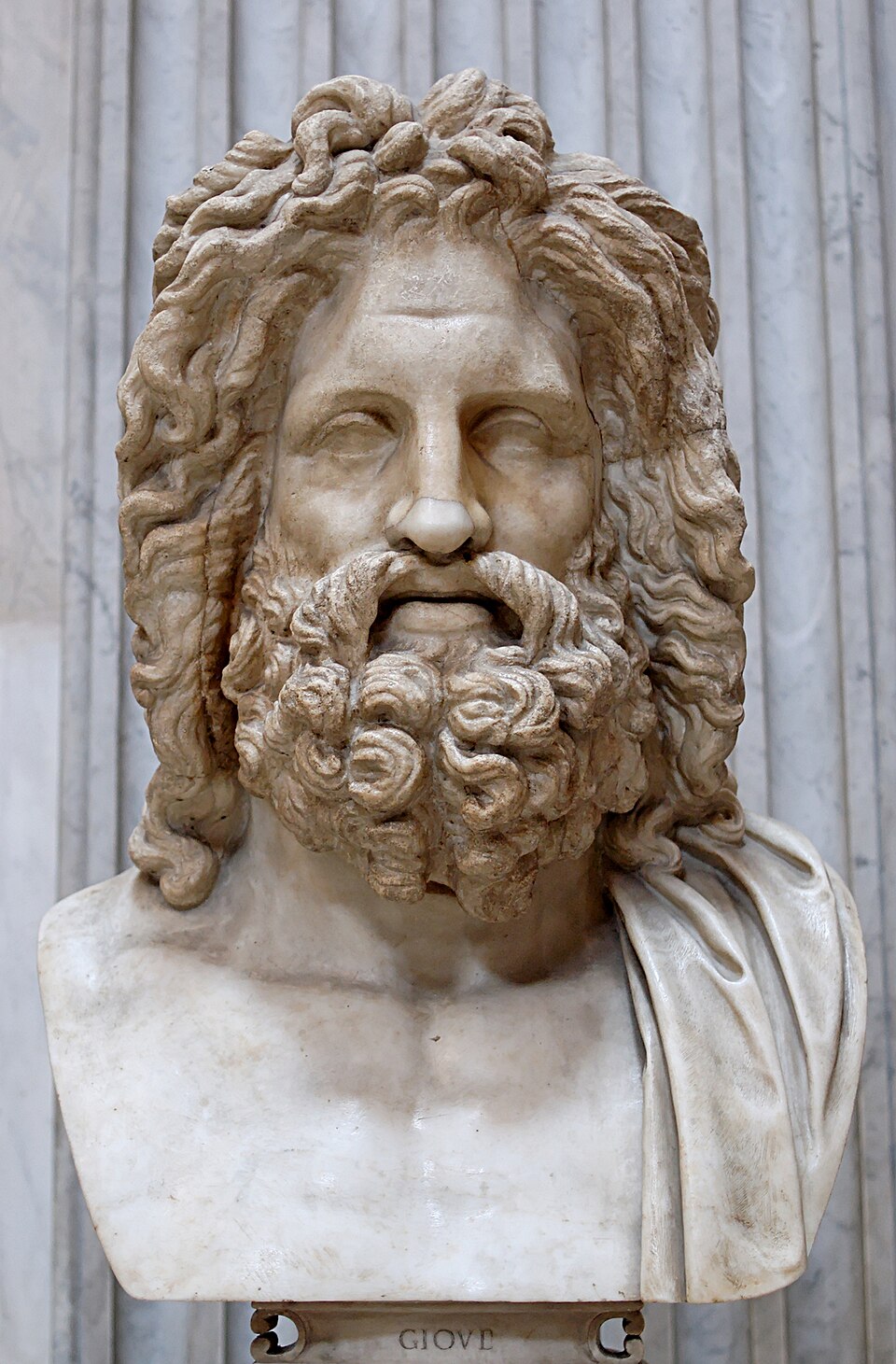
CC BY-SA 3.0, photo: Mappo, via Wikimedia Commons · Source and licence

- For
- Sunni, Shia and those raised in Islam, in any country
- You Will Find
- 3 witnesses, Arabia before Islam, your questions answered
- Next Step
- Begin Your Return, privately if you wish
Homer, Odyssey 6.206 to 208, tr. A. T. Murray
ἀλλ᾽ ὅδε τις δύστηνος ἀλώμενος ἐνθάδ᾽ ἱκάνει,
τὸν νῦν χρὴ κομέειν· πρὸς γὰρ Διός εἰσιν ἅπαντες
ξεῖνοί τε πτωχοί τε, δόσις δ᾽ ὀλίγη τε φίλη τε.Nay, this is some hapless wanderer that has come hither. Him must we now tend; for from Zeus are all strangers and beggars, and a gift, though small, is welcome.
I. A Guest in the House of Zeus
The Greeks called Him Zeus Xenios, guardian of the guest and the stranger: from Zeus are all strangers and beggars
.[1] You arrive here as a guest, and the Temple receives you as one. Here is the life you are invited to choose.
- The Father and the Gods. Zeus, Father of Gods and men, King of the Gods,
the source from whom all Gods proceed and under whom all Gods and Daemons serve
.[2] - The growth of the soul. ὁμοίωσις θεῷ, becoming like God as far as possible, through meditation, ethics, a life ordered toward the Gods, and theurgy.
- Truth in conduct. Satya, the Eternal Truth that Zeus upholds, governs how you speak, judge and act.[3]
- An inheritance to live in. The sacred names, sanctuaries and pilgrimages of Arabia, Syria, Persia and Greece.
Every witness below links to its passage. Read the passage. Then follow what it shows.
Reading where this subject is sensitive? See the short note on reading and practising privately. The first step needs no registration and no public declaration.
II. 3 Witnesses from Your Own Books
“Was Allah Known Before Islam?”
Yes. The Qur’an says the people it opposed named Allah as creator, and the hadith preserve how they addressed Him at the Kaaba.
The prophet of Islam was born into a city where the name was already old: his father, who died before his birth, was called ʿAbd Allah, servant of God.[4] 3 witnesses from sources a Muslim reader already honours carry the case.
The Qur’an Describes Those It Opposed
Qur’an 29:61 and 39:3 (excerpt), tr. Saheeh International · Read 29:61 · Read 39:3
وَلَئِن سَأَلْتَهُم مَّنْ خَلَقَ ٱلسَّمَـٰوَٰتِ وَٱلْأَرْضَ وَسَخَّرَ ٱلشَّمْسَ وَٱلْقَمَرَ لَيَقُولُنَّ ٱللَّهُ ۖ فَأَنَّىٰ يُؤْفَكُونَ
وَٱلَّذِينَ ٱتَّخَذُوا۟ مِن دُونِهِۦٓ أَوْلِيَآءَ مَا نَعْبُدُهُمْ إِلَّا لِيُقَرِّبُونَآ إِلَى ٱللَّهِ زُلْفَىٰٓ
If you asked them, “Who created the heavens and earth and subjected the sun and the moon?” they would surely say, “Allāh.” Then how are they deluded? (29:61)
And those who take protectors besides Him [say], “We only worship them that they may bring us nearer to Allāh in position.” (39:3)
Abdel Haleem renders the answer they are sure to say, ‘God.’
[5] On the Qur’an’s own account, the Meccans it opposed knew their highest God by that name and approached Him through protectors they placed under Him.
The Old Pilgrims’ Cry at the Kaaba
Sahih Muslim 1185, Book of Pilgrimage, chapter on the Talbiyah (in-book reference: Book 15, Hadith 25), English as given on sunnah.com · Read the report
كَانَ الْمُشْرِكُونَ يَقُولُونَ لَبَّيْكَ لاَ شَرِيكَ لَكَ - قَالَ - فَيَقُولُ رَسُولُ اللَّهِ صلى الله عليه وسلم "وَيْلَكُمْ قَدْ قَدْ" فَيَقُولُونَ إِلاَّ شَرِيكًا هُوَ لَكَ تَمْلِكُهُ وَمَا مَلَكَ يَقُولُونَ هَذَا وَهُمْ يَطُوفُونَ بِالْبَيْتِ
Ibn 'Abbas (Allah be pleased with them) reported that the polytheists also pronounced (Talbiya) as: Here I am at Thy service, there is no associate with Thee. The Messenger of Allah (ﷺ) said: Woe be upon them, as they also said: But one associate with Thee, you possess mastery over him, but he does not possess mastery (over you). They used to say this and circumambulate the Ka'ba.
The polytheists’ talbiya, the pilgrim’s cry, ran: Labbaika la sharika laka, illa sharikan huwa laka, tamlikuhu wa ma malak.[6] The closing words, تَمْلِكُهُ وَمَا مَلَكَ, say that the Lord addressed owns that associate and all the associate owns.
The old pilgrims declared one supreme Lord and the associate beside Him His own: a divine family with a head. The Temple teaches that order under its own God: Zeus, the Original God, the One God who protects the many Gods.
The Replacement Made Visible
Sahih al-Bukhari 4287, narrated by ʿAbdullah ibn Masʿud (in-book reference: Book 64, Hadith 320), tr. Muhsin Khan · Read the report
دَخَلَ النَّبِيُّ صلى الله عليه وسلم مَكَّةَ يَوْمَ الْفَتْحِ وَحَوْلَ الْبَيْتِ سِتُّونَ وَثَلاَثُمِائَةِ نُصُبٍ، فَجَعَلَ يَطْعُنُهَا بِعُودٍ فِي يَدِهِ وَيَقُولُ جَاءَ الْحَقُّ وَزَهَقَ الْبَاطِلُ، جَاءَ الْحَقُّ، وَمَا يُبْدِئُ الْبَاطِلُ وَمَا يُعِيدُ
When the Prophet (ﷺ) entered Mecca on the day of the Conquest, there were 360 idols around the Ka`ba. The Prophet (ﷺ) started striking them with a stick he had in his hand and was saying, “Truth has come and Falsehood will neither start nor will it reappear.”
The Arabic for the 360 is nusub, standing cult objects.[7] The sanctuary that heard the old talbiya kept its walls; the divine company around it was struck down.
Both hadith are Sunni, from al-Bukhari and Muslim. A Shia reader holds other authorities; the Qur’an’s witness is shared.
The Likely Reply, and the Zevist Answer
A Muslim reader will answer that Islam restored the pure worship of Abraham, who with Ishmael was raising the foundations of the House
, and that the idols were a later corruption.[5]
The priority of that exclusive claim is precisely what must be examined. The Abrahamic history of the House reaches you only through Islam’s own scripture and tradition, whose authority is the question; the older plurality and its removal are recorded by the same sources. Zevism refuses the exclusive account as premise and calls you to the Gods within that wider inheritance (Islam review).
The Zevist Teaching
Arabia honoured a divine family before Islam. Islam kept the name of its highest God, made it exclusive and struck down the family. Zevism returns you to Zeus, the Original God, Father and King, and to the Gods who stand with Him.
III. The Sacred World Before the Monopoly
Qur’an 53:19 to 23 (excerpt), tr. Saheeh International · Read the passage
أَفَرَءَيْتُمُ ٱللَّـٰتَ وَٱلْعُزَّىٰ وَمَنَوٰةَ ٱلثَّالِثَةَ ٱلْأُخْرَىٰٓ
So have you considered al-Lāt and al-ʿUzzā? And Manāt, the third - the other one? … They are not but [mere] names you have named them - you and your forefathers - for which Allāh has sent down no authority.
The Qur’an names the 3 goddesses and calls their names empty. Its polemic proves they were honoured, by “you and your forefathers”, and that the honour was to end.
The Book of Idols
Hisham ibn al-Kalbi, writing in the early 9th century, gathered what Arabia remembered.[8] The most ancient of all these idols was Manah
, by the sea near Qudayd; Allat stood in al-Ta’if
; al-ʿUzza stood at Nakhlah. Hubal, a red agate figure of a man, had a hand of gold made by the Quraysh, and It stood inside the Ka'bah
.
Ibn al-Kalbi, The Book of Idols, tr. N. A. Faris (1952): the words the Quraysh spoke while circling the Ka'bah · Read the translation
By Allat and al-'Uzza, / And Manah, the third idol besides. / Verily they are the most exalted females / Whose intercession is to be sought.
The 3 were also called ‘the Daughters of Allah,’
and Ibn al-Kalbi records their end: ʿAli sent to destroy Manah in the 8th year of the Hijrah, al-Mughirah burning Allat’s temple, Khalid ibn al-Walid demolishing al-ʿUzza’s.[8] These are reports from tradition, separate from the excavated evidence below.
Herodotus, 5th Century BCE
Over 1,000 years before the Qur’an, Herodotus wrote of the Arabians: Of gods they believe in Dionysos and Urania alone
, and Now they call Dionysos Orotalt and Urania they call Alilat.
[9] Of the Persians he reports: it is their wont to perform sacrifices to Zeus going up to the most lofty of the mountains, and the whole circle of the heavens they call Zeus.
Palmyra: Allat and the Lord of Heaven
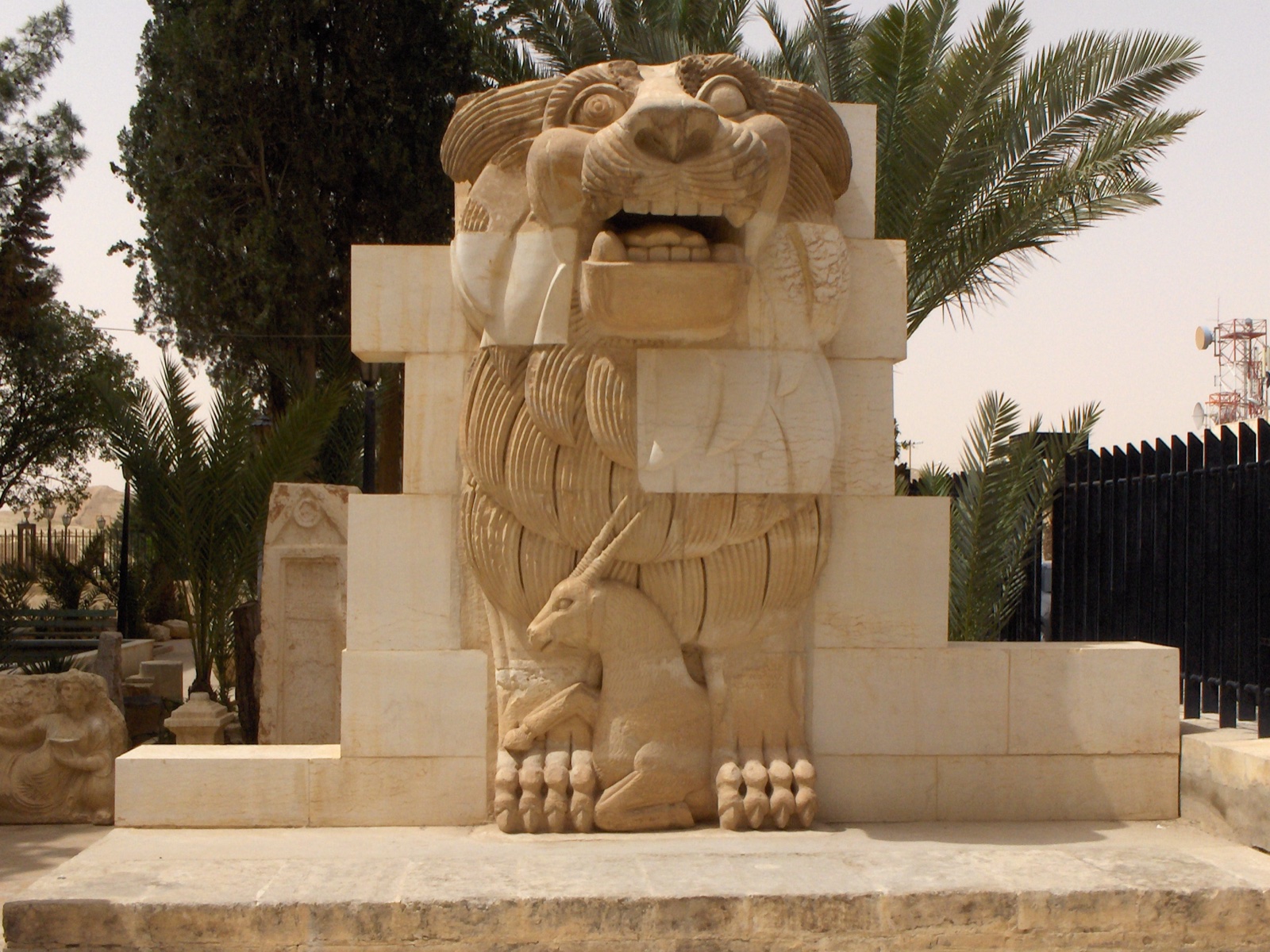
At Palmyra in Syria, Allat had her own temple. Its great limestone lion, of the early 1st century CE, bears a blessing: Al-lāt will bless whoever will not shed blood in the sanctuary
. Damaged by ISIL in 2015 and restored in 2017, it stands in the National Museum of Damascus.[10]
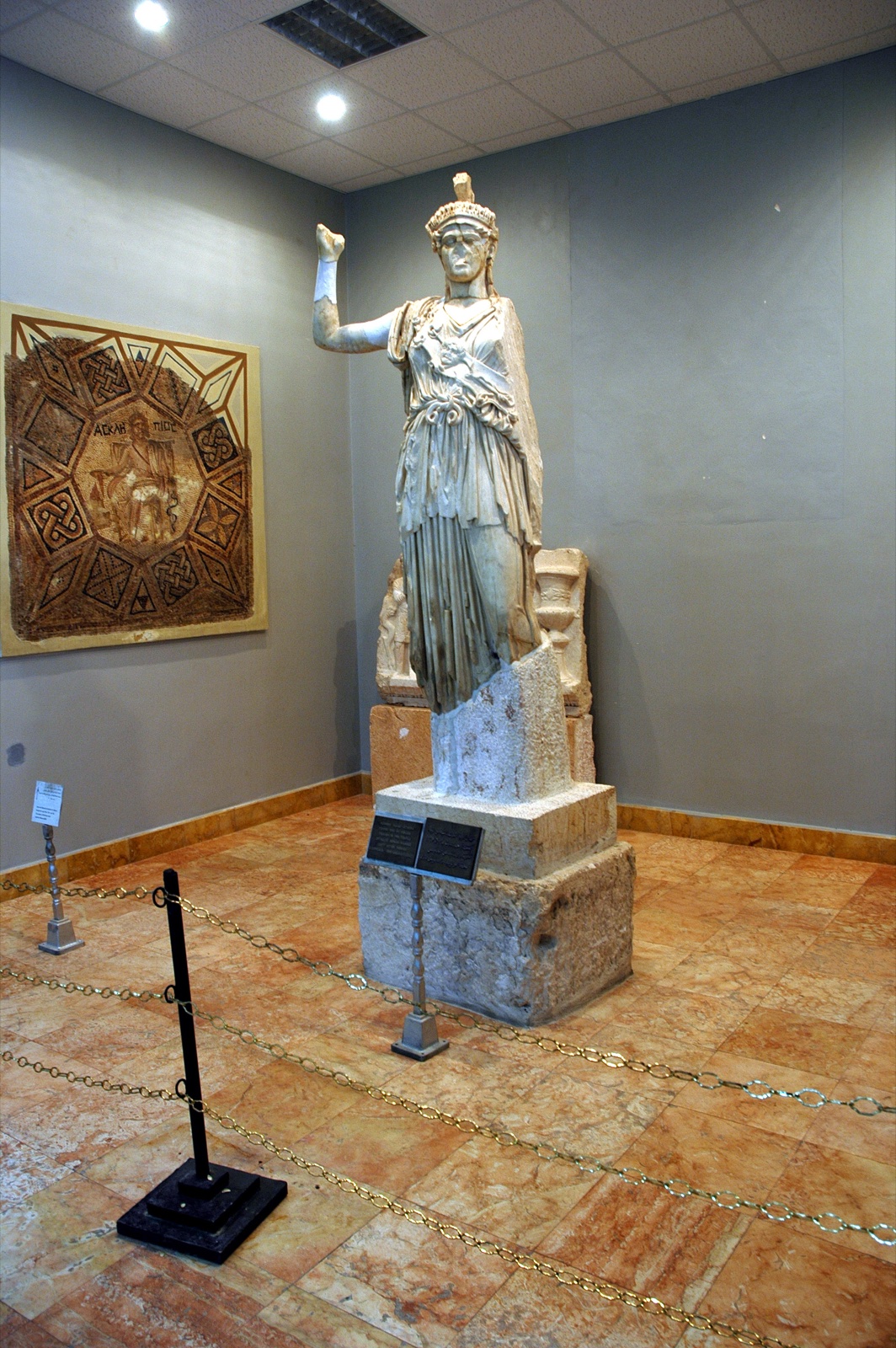
The cult statue of the same temple is an Athena, a copy made around 100 to 200 CE of an original by Phidias.[11] It establishes exactly that identification: Allat honoured in Athena’s form in her own sanctuary.
CC BY-SA 4.0, photo: Gianfranco Gazzetti / GAR, via Wikimedia Commons · Source and licence

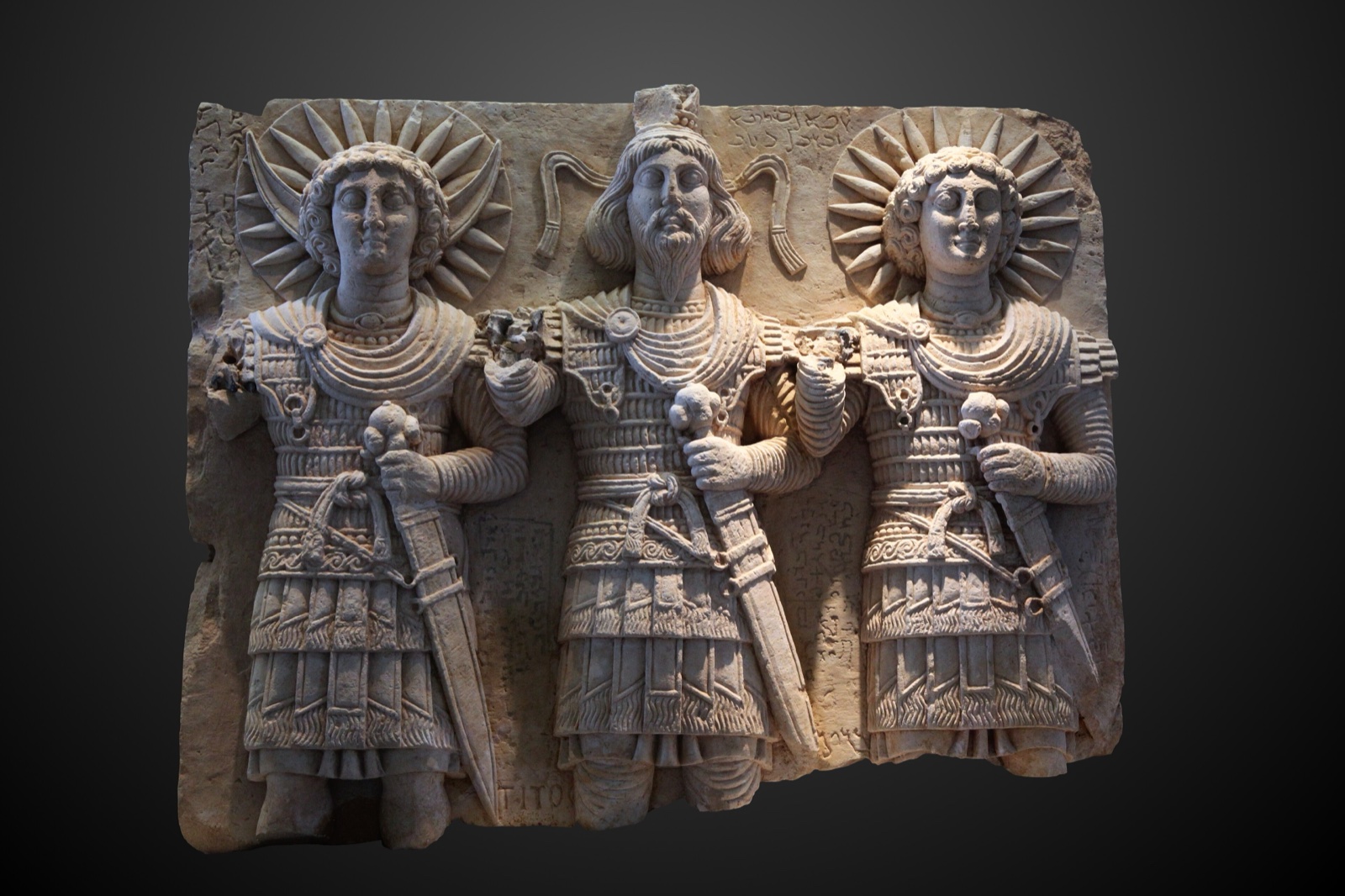
Palmyra’s sky God was Baalshamin, Lord of Heaven. A Louvre relief (AO 19801) shows him between the moon God Aglibol and the sun God Malakbel.[12] The relief names no Greek God; the equation with Zeus is written by Philo of Byblos, quoted by Eusebius: calling him Beelsamen, which is in the Phoenician language “lord of heaven,” and in Greek “Zeus.”
[13]
CC BY-SA 3.0 FR, photo: Rama, via Wikimedia Commons · Source and licence

Qaryat al-Faw: Arabia’s Own Temples
Qaryat al-Faw, capital of the kingdom of Kinda, flourished from the 3rd century BCE to the 3rd century CE. Its excavators found 5 temples, among them those of the sun God Shams and of Wadd, and painted walls.[14] The Qur’an puts Wadd in the mouth of Noah’s people: never leave Wadd
(71:23).[5]
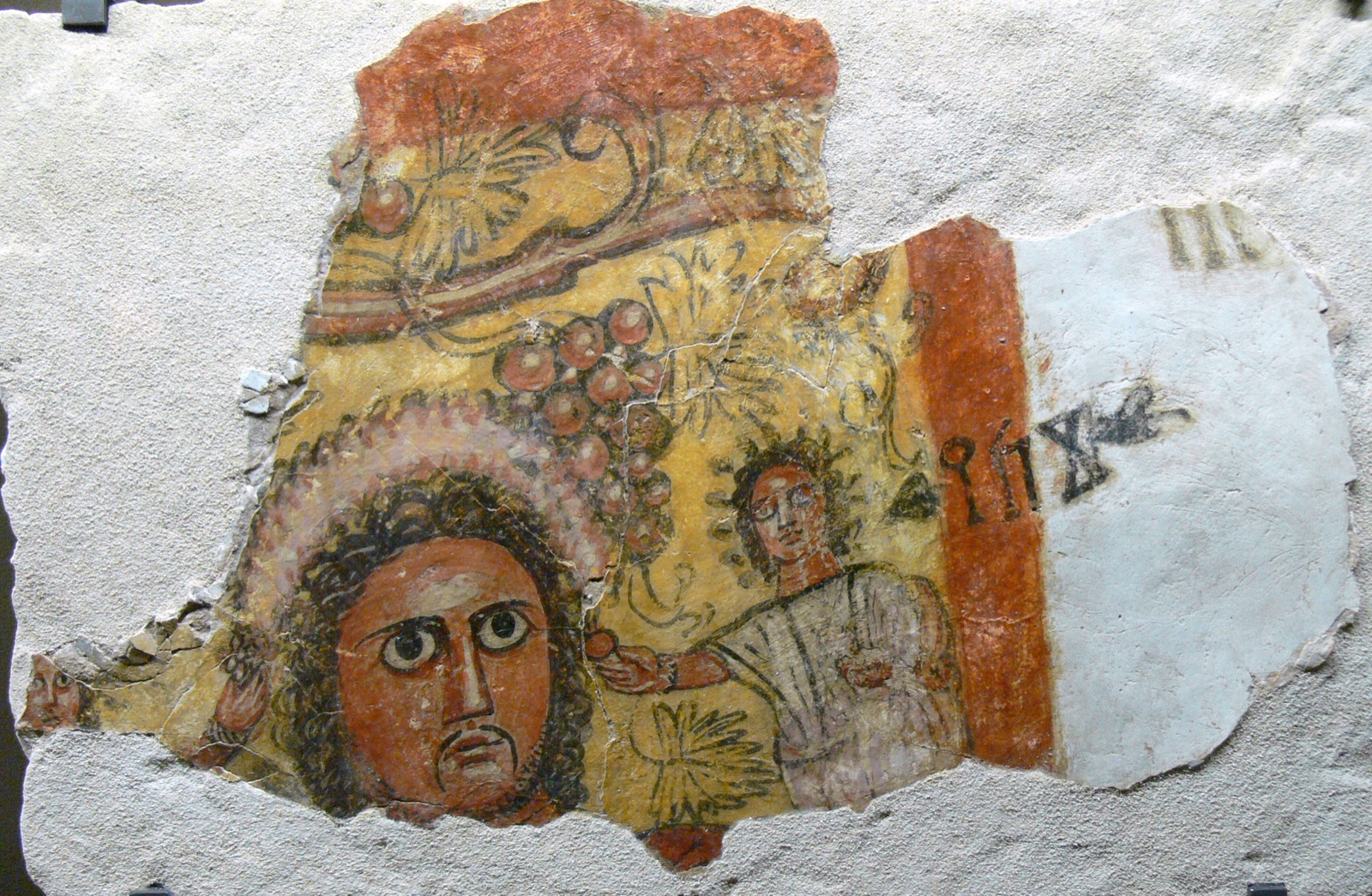
CC BY-SA 3.0, photo: Wolfgang Sauber, via Wikimedia Commons · Source and licence

The Zevist Teaching
Zeus is the Original God, Father and King of the Gods, honoured by His own name long before Islam. This is the Temple’s teaching on its Eternal Head God.[15] The name Allah has another history. Arabia knew it before Islam, and Islam made it the name of one God set against all the Gods: Zevism returns you past that claim, to Zeus and the Gods.
Safa and Marwa
In Bukhari 1643, ʿAisha explains that the verse on Safa and Marwa (2:158) was revealed concerning the Ansar
, who before Islam assumed ihram for Manat and would consider it not right to perform Tawaf between Safa and Marwa
.[16] The verse answered that hesitation, and the Prophet set the tradition of Tawaf between Safa and Marwa.
The report shows a pilgrimage course that a goddess’s worshippers had shunned, negotiated and then commanded under the new order.
IV. Power, Text and the New Religious Order
| Year CE | Event | Source |
|---|---|---|
| 628 | Treaty of al-Hudaybiyya (Dhu l-Qaʿda 6 AH): the Muslims accept the Quraysh condition to return whoever comes to you from us, even if he embraced your religion. | Bukhari 2731 and 2732[17] |
| 629 or 630 | Conquest of Mecca (Ramadan 8 AH): the 360 struck down; the shrines of Manah and al-ʿUzza destroyed, Allat’s soon after. | Bukhari 4287; Ibn al-Kalbi[18] |
| 632 to 633 | The Ridda: against tribes refusing the zakat or following rival prophets, Abu Bakr declares, I will fight those who differentiate between the prayer and the Zakat. | Bukhari 1399 and 1400[19] |
| about 650 | ʿUthman’s copies of the Qur’an go to every province; all other materials are burnt. | Bukhari 4987[20] |
One Text by Order
In Bukhari 4987, Hudhaifa ibn al-Yaman, alarmed at the armies’ differences in recitation, urges ʿUthman: Save this nation before they differ about the Book (Qur’an) as Jews and the Christians did before.
ʿUthman had Hafsa’s manuscripts copied by 4 men, with a rule for disagreement with Zaid: write it in the dialect of Quraish
. Then he ordered that all the other Qur’anic materials, whether written in fragmentary manuscripts or whole copies, be burnt
, in Arabic فِي كُلِّ صَحِيفَةٍ أَوْ مُصْحَفٍ أَنْ يُحْرَقَ.[20]
The Muslim reply is that the order preserved unity. Grant the motive: the report still shows a committee choosing, a dialect rule settling disagreement and a ruler ordering every other copy burnt. A claim of transmission without human selection must answer its own collection (dossier I2).
The Satanic Verses
Early historians report that after 53:19 to 20 the Prophet recited a line praising the goddesses: These are the exalted gharāniq, whose intercession is hoped for.
The line was then withdrawn as an insertion of Satan and replaced by the present rebuke.[21]
- The early record. Al-Tabari (died 923) gives it in his History, with Ibn Ishaq in the chain, and in his commentary; Ibn Saʿd (died 845) in his Tabaqat.[22][23] Ibn Hisham’s recension of Ibn Ishaq omits it.[21] Shahab Ahmed’s study (2017) shows that for Muslims of about 632 to 800 CE, in its publisher’s words,
the Satanic verses were an established fact in the history of the Prophet
.[24] - The later rejection. Objections begin in the 4th Islamic century; Ibn Khuzayma called the story an invention of heretics, and Qadi ʿIyad and Ibn Kathir rejected its chains. By the 13th century most scholars rejected it.[21]
- The verse cited. Al-Tabari connects the episode to 22:52, which says Allah
abolishes that which Satan throws in
.[5] The verse doesn’t name the goddesses and can’t by itself prove the episode; the narrative stands on the historians’ reports.
The reported words closely match the Quraysh chant in Ibn al-Kalbi.[8] The first generations remembered the 3 Daughters well enough to record that their praise once entered the recitation (dossier I30).
V. The Questions That Decide the Choice
“Are You Leaving Allah?”
Yes. You leave the God of the monopoly, and you lose nothing of the Divine: you return to Zeus, the Original God, and to the Gods whom Arabia honoured before it.
Zeus is the Original God, Father and King of the Gods, older than the monopoly and free of it. Islam took the name of its God from the older worship of Arabia and turned it against the Gods. What you set down is that exclusive claim: Returning to the Ancient Gods is not a betrayal of your ancestors. It is a recovery of what was taken from them by force.
[25]
“Are You Leaving Your Heritage?”
No. You enter its older layers.
An Arab reader holds the name, the pilgrimage and the sanctuaries above; an Iranian reader, Herodotus’s Persians on their mountains; Turkish and Central Asian readers have Tengri, Levantine readers El, Kurdish readers the neighbouring Yezidis on their own terms. The Temple assigns no ancestry: belonging depends on choosing the Gods.
“Why Were You Taught the Gods Are Evil?”
Because their worship was to be removed, and a worship marked for removal must first be condemned.
Your inherited fear is the shadow of the acts recorded above. The Temple restores the words used against the Gods: The word “demon” itself is a deliberate corruption of the Greek Daemon (δαίμων), which means a divine spirit or divine intelligence.
[3]
“What About Shirk?”
Zevism rejects the authority of that prohibition and affirms the Gods.
Qur’an 4:48 (excerpt), tr. Saheeh International · Read the verse
إِنَّ ٱللَّهَ لَا يَغْفِرُ أَن يُشْرَكَ بِهِۦ وَيَغْفِرُ مَا دُونَ ذَٰلِكَ لِمَن يَشَآءُ
Indeed, Allāh does not forgive association with Him, but He forgives what is less than that for whom He wills.
Read beside 39:3 and Muslim 1185, its target is the old religion of Arabia: a high God honoured with the powers that are His. A prohibition can’t prove itself by its own severity. Zevism honours Zeus, the Original God, as Head of the Gods: the order of a divine family, which the old talbiya also confessed.
“But God Is One”
The Divine has one Head. Unity doesn’t require an empty heaven.
The Temple names Zeus the One God who protects the many Gods, the source from whom all Gods proceed:[2] unity in the source, plurality in the life that proceeds from it. Arabic philosophy met the One through a Greek: in al-Kindi’s 9th-century circle, parts of Plotinus’s Enneads IV to VI became the Arabic Theology of Aristotle, which presents the First Cause as a creating God.[26] Plotinus wrote: It is not by crushing the divine unto a unity but by displaying its exuberance
that we show knowledge of the might of God, who, abidingly what He is, yet creates that multitude
.[27]
“Are Images the Gods?”
No. An image gives devotion a place to turn; the God isn’t confined in it.
The Gods are Eternal Essences.[28] Dio Chrysostom, before the Zeus of Pheidias at Olympia, named the need an image serves: all men have a strong yearning to honour and worship the deity from close at hand
, like children reaching for an absent parent.[29] The Quraysh mended Hubal’s broken hand with gold.[8] A God needs no repair. His image does.
“Could Anyone Produce a Sura Like It?”
Literary excellence is a judgment of taste. It confers no authority over the Gods.
The challenge of 2:23, then produce a sūrah the like thereof
, sets the contest and supplies its own judge.[5] Whether the Arabic is beautiful is a judgment; that beauty proves divine origin doesn’t follow; how theologians built the doctrine of inimitability is a history of its own.
“What About Scientific Miracles?”
Test each claim against the verse’s words, its reading before the discovery, and the science.
Translations often do the work credited to the verse. Saheeh International renders 18:86 he found it [as if] setting in a body of dark water
; the brackets mark words the translator supplied.[5] A reading that waits for a discovery and then finds it in the text has predicted nothing.
“How Could an Unlettered Man Know These Stories?”
By hearing them. Illiteracy closes books and leaves the ears open.
The Qur’an calls its prophet the unlettered prophet
(7:157).[5] Take the word in its plainest sense and the stories still travelled: section VII sets 3 beside Christian writings, 2 of them older than the Qur’an.
“What If You Fear Hell?”
The threat carries exactly the authority of the text that makes it, and this page has examined that authority.
The Gods are your kin, and Zeus upholds truth and justice. The Temple names the inherited dread plainly: This belief was also manufactured to scare you off the Gods, as fear is a powerful tool of control.
[30] Fear weakens with study, prayer and practice, in its own time.
“What About Jinn, Magic and the Evil Eye?”
Stand under the protection of Zeus.
The Prayer to Zeus for Protection asks the Father to shield you from harm seen and unseen: Let no curse, no binding, no ill will find purchase upon my soul, for I am Yours and You are my shield.
It may be spoken alone in silence.[31] Zevism doesn’t multiply threats around you; it gives you a Father who protects.
“Will Isa Return?”
The Temple teaches that Jesus is Zeus in a form of inversion. The return of an inverted image is nothing to wait for.
Bukhari 3448 promises that the son of Mary will soon descend amongst you
and will break the Cross and kill the pigs and there will be no Jizya
.[32] The Isa it awaits carries stories older than the Qur’an (section VII).
“Has the Qur’an Always Had Exactly One Wording?”
No. The reports describe several ways of reciting and a ruler’s choice among written copies.
In Bukhari 4992 ʿUmar hears Hisham ibn Hakim recite Surat al-Furqan differently, and the Prophet settles it: This Qur’an has been revealed to be recited in seven different ways
.[33] Writing, collection, ʿUthman’s consonantal text and the recognised readings on it each passed through human hands.
“What Changes About Prayer, Fasting and Food?”
Begin with what Zevism asks: a prayer to Zeus, a daily reading, and in time meditation.
The first prayer can be spoken alone in silence.[31] The Rite of Dedication sets the rule for what follows: Enforced prayer and forced practices are not part of Zevism; your relationship with the Gods is freely expressed.
[2] The first orientation requires no visible change at the family table.
“What About Your Spouse, Family or Livelihood?”
Make the religious decision privately, and treat disclosure as a separate decision taken with care.
Zevism requires no public announcement, and the Temple coerces no one.[3] Nobody can guarantee how another person will receive your choice, so choose your own time and words.
“Must You Hate Muslims?”
No.
The Temple’s criticism falls on doctrines, texts and named acts: We reject these doctrines, not the people who follow them.
[3] Your parents, neighbours and friends remain yours.
“Is This Only a Western Path?”
No. The Father of the Gods was known in every direction.
The Temple recognises Him as Amun and Atum in Egypt, Indra in the Vedic world, Hadad and Marduk in Babylon and Shangdi in China.[15] The evidence on this page is Arabian, Persian and Syrian.
“Why Join This Particular Temple?”
Because it gives your return a definite form: named Gods, a doctrine of truth, an ordered practice and a rite of commitment.
It publishes its doctrine, prayer, meditation programme and Rite of Dedication openly, and places no mediator between you and the Gods.
“How Do You Begin?”
Begin with Zeus today: speak the Prayer to Zeus for Protection, then follow the 7-day orientation.
It needs no registration, no purchase and no public declaration.
VI. Muhammad and the Forefathers
The Temple judges Muhammad by 3 separate measures.
- Political leadership. He organised Medina, negotiated at al-Hudaybiyya, took Mecca and left a state. As a political founder he was formidable.
- Prophetic authority. He claimed a final revelation closing every other door to the Divine. Zevism refuses it: the witnesses above show that claim enforced, and no proof that the Gods ceased to be.
- Intellectual achievement. He left no work of inquiry, medicine or mathematics; the Qur’an calls him
the unlettered prophet
.[5]
By the third measure the forefathers stand higher, and their works are open to you: Socrates’ examination of how to live in Plato’s Apology; Plato’s Republic and the Theaetetus (176b); Aristotle’s logic, physics and ethics; the Hippocratic On the Sacred Disease, which gives the illness called sacred a natural cause;[34] Euclid’s Elements; Epictetus, who bids a master bear with a slave as your own brother, who has Zeus for his progenitor
;[35] and beyond Greece, the Maxims of Ptahhotep, the Analects of Confucius and the grammar of Pāṇini. Socrates wrote nothing either: the measure is the depth and lasting use of the works.
Aristotle’s title “First Teacher” belongs to the philosophical tradition written in Arabic, which called al-Farabi the Second Master
, with Aristotle as the first
.[36] The honorific marks his stature in philosophy, and is no confession that he outranked Muhammad as a prophet. Ibn Rushd centred his commentaries on Aristotle, since no one after him has been able to add a word worthy of attention to what he said
.[37] That is a philosopher’s judgment of philosophy, and the Temple shares it.
The reports on his conduct are examined in dossiers I28 to I38; the criticism falls on claims and acts, never on those who revere him.
VII. Isa and the Earlier Narrative Traditions
- The clay birds. Isa says,
I design for you from clay [that which is] like the form of a bird, then I breathe into it and it becomes a bird by permission of Allāh
(3:49; again 5:110).[5] The Infancy Gospel of Thomas tells it of the child Jesus:And having made some soft clay, He fashioned out of it twelve sparrows.
He claps, and they fly away (chapter 2).[38] The text is dated to the 2nd century; its earliest manuscript is 6th-century Syriac. - The palm and the stream. In Sura 19 Mary in labour shelters by
the trunk of a palm tree
, is given a stream and shakes downripe, fresh dates
(19:23 to 25).[5] In the Gospel of Pseudo-Matthew (chapter 20) the infant Jesus, in the flight into Egypt, commands a palm,O tree, bend your branches, and refresh my mother with your fruit
, and bids itopen from your roots a vein of water
.[39] Its editors Gijsel and Beyers date this Latin text to around 600 to 625, others later, so it can’t be assumed older than the Qur’an: the parallel shows a motif current among Christians, not copying from this text. - The substitute on the cross. Irenaeus, writing around 180, reports Basilides’ teaching that Jesus
did not himself suffer death
, butSimon, a certain man of Cyrene, being compelled, bore the cross in his stead
.[40] Qur’an 4:157 saysthey did not kill him, nor did they crucify him; but [another] was made to resemble him to them
.[5] The Arabic وَلَـٰكِن شُبِّهَ لَهُمْ names no one; “another” is the translator’s word. The verse shares none of Basilides’ details, only the idea of a substitute, current more than 4 centuries before the Qur’an.
The Temple reads these parallels as the older sacred repertoire passing into a new scripture. Its teaching on the figure himself, Jesus as Zeus in a form of inversion, is set out for Christian readers; behind the inverted image stands the world of the Gods, open to you directly.
VIII. Reading and Practising Privately
Reading Privately
The first action requires no public declaration and no registration. The Prayer to Zeus for Protection may be spoken alone and in silence, in a quiet room.[31] Reading is ordinary reading.
A private browsing window keeps pages out of that browser’s history. It doesn’t hide your activity from whoever manages the device, from the network you use, or from the services you visit. Nothing online is a promise of anonymity.
You don’t need to delete your history. Sudden visible changes can themselves attract attention, so judge by your own circumstances.
If you face a concrete threat at home, in your community or under the law, your immediate personal safety comes before displaying any religious choice. Laws on apostasy and blasphemy differ by country and change; rely on current, local information for your own situation. In the Temple’s words:
The Gods understand discretion.[41]More practical help: privacy and support in First Steps.
IX. The Life Offered to You
You are choosing Zeus, the Original God, Father and King of the Gods; Athena, whose form Allat wore at Palmyra; Apollo and His son Asclepius, healers; Hera, the Divine Mother. Approach Them as kin.
The first practice is a prayer to Zeus, spoken today. Then 7 days of orientation lead to a conscious decision about the Rite of Dedication, after which the Basic Meditation Program begins. Give the path a place in your day, and return tomorrow.
For the extended case, the 66 dossiers on Islam set out texts and answers. None of it stands between you and the first prayer.
The Zevist Teaching
The Gods were honoured before the name became one. Zevism returns you to Them and to Zeus, the Original God who leads Them, and gives that return a disciplined form: prayer, study, practice and a life ordered by truth.
The Gods were honoured before the monopoly, and the Original God is near now. Begin with Zeus today.
Continue
- Next. The first prayer and a 7-day orientation. Begin Your Return
- The Positive Case. What Zevism gives your life. Why Zevism
- The Full Record. 66 historical dossiers. Islam Review
Sources
- Homer, Odyssey 6.206-208, tr. A. T. Murray (Loeb). theoi.com; Greek text: Bibliotheca Augustana
- High Priest Zevios Metathronos, Becoming an Initiate: The Rite To Dedicate Your Soul to Zeus and The Ancient Gods, Temple of Zeus, the prayer and the guidance after the rite. templeofzeus.org
- High Priest Zevios Metathronos, Welcome, Temple of Zeus. templeofzeus.org
- “Abdullah ibn Abd al-Muttalib”, Wikipedia, consulted 8 October 2026. en.wikipedia.org
- The Qur’an, Arabic text in Uthmani script, with tr. Saheeh International (revised edition on quran.com) and M. A. S. Abdel Haleem (2004), at quran.com: 2:23, 2:127, 3:49, 4:48, 4:157, 5:110, 7:157, 18:86, 19:23-25, 22:52, 29:61, 39:3, 53:19-23, 71:23. quran.com
- Sahih Muslim 1185, Book of Pilgrimage, chapter “The Talbiyah, its description and timing”; in-book reference Book 15, Hadith 25; USC-MSA Book 7, Hadith 2671. sunnah.com
- Sahih al-Bukhari 4287, narrated by ‘Abdullah ibn Mas‘ud; in-book reference Book 64, Hadith 320; USC-MSA Vol. 5, Book 59, Hadith 583; tr. M. Muhsin Khan. sunnah.com
- Hisham ibn al-Kalbi, The Book of Idols (Kitab al-Asnam), tr. Nabih Amin Faris (Princeton, 1952), pp. 14-22, on Manah, Allat, al-‘Uzza and Hubal. archive.org
- Herodotus, Histories 1.131 and 3.8, tr. G. C. Macaulay. sacred-texts.com (1.131); sacred-texts.com (3.8)
- “Lion of Al-lāt”, Wikipedia, consulted 8 October 2026, on its date, discovery, inscription, damage and restoration. en.wikipedia.org; UNESCO World Heritage Centre, “Lion of Al-lāt restored”, news item 1727, 5 October 2017. whc.unesco.org
- Livius, “Palmyra, Temple of Allat, cult statue” (copy of a 5th-century original by Phidias, about 100-200 CE, Palmyra Museum). livius.org; “Al-Lat”, Wikipedia, on her portrayal in the style of Athena. en.wikipedia.org
- Ministère de la Culture, Palmyre, “Triad of Baalshamin”, Musée du Louvre AO 19801, limestone, from a Palmyrene sanctuary near Bir Wereb, Wadi Miyah. archeologie.culture.gouv.fr; World History Encyclopedia, “Aglibol, Baalshamin, and Malakbel”. worldhistory.org
- Philo of Byblos, in Eusebius, Praeparatio Evangelica I.10, tr. E. H. Gifford (1903). tertullian.org
- “Qaryat al-Faw”, Wikipedia, consulted 8 October 2026. en.wikipedia.org; UNESCO, The Cultural Landscape of Al-Faw Archaeological Area, inscribed 2024. whc.unesco.org
- High Priest Zevios Metathronos, Our Eternal Head God: Zeus, Eternal Truth and His Identities, Temple of Zeus. templeofzeus.org
- Sahih al-Bukhari 1643, the report of ‘Aisha to ‘Urwa on Qur’an 2:158; in-book reference Book 25, Hadith 125. sunnah.com
- Sahih al-Bukhari 2731 and 2732, the treaty of al-Hudaibiya; in-book reference Book 54, Hadith 19. sunnah.com; date: “Treaty of Hudaybiyyah”, Wikipedia. en.wikipedia.org
- “Conquest of Mecca”, Wikipedia, consulted 8 October 2026, for the date and the expeditions against the shrines. en.wikipedia.org
- Sahih al-Bukhari 1399 and 1400; in-book reference Book 24, Hadith 5. sunnah.com; “Riddah”, Encyclopædia Britannica. britannica.com
- Sahih al-Bukhari 4987; in-book reference Book 66, Hadith 9; USC-MSA Vol. 6, Book 61, Hadith 510. sunnah.com; date: “Uthman”, Wikipedia. en.wikipedia.org
- “Satanic Verses”, Wikipedia, consulted 8 October 2026, on the transmitting works, the wording of the reports and their later rejection. en.wikipedia.org
- al-Tabari, The History of al-Tabari, vol. VI, Muhammad at Mecca, tr. W. Montgomery Watt and M. V. McDonald (Albany, 1988); dates: “al-Tabari”, Encyclopædia Britannica. britannica.com
- “Ibn Sa’d”, Wikipedia, on his Kitab al-Tabaqat al-Kabir and his death in 845. en.wikipedia.org
- Shahab Ahmed, Before Orthodoxy: The Satanic Verses in Early Islam (Harvard University Press, 2017), publisher’s description. hup.harvard.edu
- High Priest Zevios Metathronos, “YHWH & Allah”: Their Roots From The Ancient Gods, Temple of Zeus, “What This Means Concretely”. templeofzeus.org
- Peter Adamson, “The Theology of Aristotle”, Stanford Encyclopedia of Philosophy; see also P. Adamson, The Arabic Plotinus: A Philosophical Study of the “Theology of Aristotle” (London, 2002). plato.stanford.edu
- Plotinus, Enneads II.9.9, tr. S. MacKenna and B. S. Page. sacred-texts.com
- High Priest Zevios Metathronos, Zevism: Instructions for New People, Temple of Zeus. templeofzeus.org
- Dio Chrysostom, Discourse 12 (the Olympic Discourse) 60-61, tr. J. W. Cohoon (Loeb, 1939). penelope.uchicago.edu
- High Priest Zevios Metathronos, Freeing The Mind From Christianity & Islam: A Mandatory Step, Temple of Zeus. templeofzeus.org
- High Priest Zevios Metathronos and Pythia, Prayer to Zeus for Protection, Temple of Zeus. templeofzeus.org
- Sahih al-Bukhari 3448; in-book reference Book 60, Hadith 118. sunnah.com
- Sahih al-Bukhari 4992; in-book reference Book 66, Hadith 14. sunnah.com
- Hippocratic Corpus, On the Sacred Disease, opening, tr. F. Adams. classics.mit.edu
- Epictetus, Discourses I.13, tr. George Long. classics.mit.edu
- “Al-Farabi”, Wikipedia, on the title “Second Master” (al-Mu‘allim al-thani). en.wikipedia.org
- Ibn Rushd, Long Commentary on Aristotle’s Physics, proem, as quoted in “Ibn Rushd [Averroes]”, Stanford Encyclopedia of Philosophy (after Harvey 1985, 83). plato.stanford.edu
- Infancy Gospel of Thomas (First Greek Form) 2, tr. A. Roberts and J. Donaldson; dating and manuscripts per the introduction at Early Christian Writings. earlychristianwritings.com; introduction
- Gospel of Pseudo-Matthew 20, Ante-Nicene Fathers 8. newadvent.org; dating: “Gospel of Pseudo-Matthew”, Wikipedia, citing J. Gijsel and R. Beyers. en.wikipedia.org
- Irenaeus, Against Heresies I.24.4, tr. A. Roberts and W. Rambaut (ANF 1). newadvent.org; date: “Against Heresies (Irenaeus)”, Wikipedia. en.wikipedia.org
- High Priest Zevios Metathronos, Spiritual Warfare Tips, Temple of Zeus, Personal Conduct. templeofzeus.org