





29 min read
A Real Son of God
Apollonius of Tyana
author: High Priest Zevios Metathronos
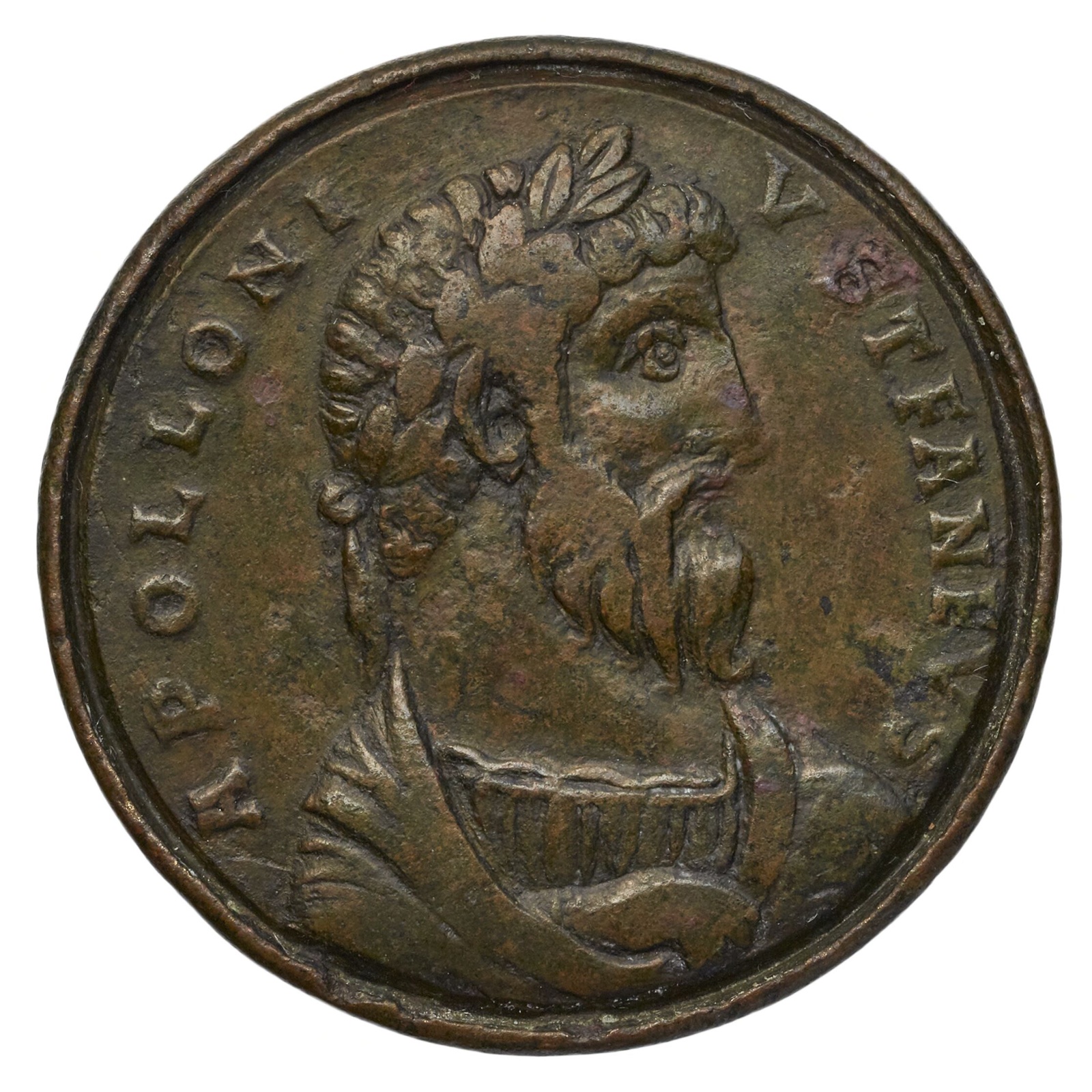
Public domain (PD-France), photo: Bibliothèque nationale de France, via Wikimedia Commons · Source and licence

Dates: born at Tyana in Cappadocia about the beginning of the Common Era; died under Nerva, 96 to 98 CE
Period: Roman period
Apollonius of Tyana was a Pythagorean sage of the 1st century. His city called him the son of Zeus.1 He lived in the temple of Asclepius as a boy, kept silence for 5 years, walked from Babylon to India and back, and taught in Antioch, Ephesus, Corinth, Athens and Rome.
He healed the sick, drove out demons and woke a girl on her bier. He stood trial before the emperor Domitian and vanished from the court.
He showed himself alive to his disciples, and 1 story of his end says he was sung up to heaven. Emperors built him shrines, and philosophers called him a God among men.
This page sets out every ancient witness to his life first. Then it shows what the Church made of it.
THE WITNESSES
Here is every ancient source on Apollonius, in the order they were written. Each is named with its passage and its edition, so you can open it and read it for yourself.
Read them in a row and one thing stands out. Emperors honoured him, philosophers called him half a God, and the Church spent 2 centuries answering him by name.
| Written | Witness | What It Records |
|---|---|---|
| 1st century | Apollonius himself | His letters, to kings, philosophers and cities;2 his will;3 his book On Sacrifices, quoted by Eusebius;4 and a Life of Pythagoras, all named in the Suda.5 The letters were edited by Robert Penella in 1979.6 |
| 1st century | Damis of Nineveh | The disciple who joined him at Nineveh and wrote down his travels, sayings and prophecies. A kinsman of Damis brought the notebooks to the empress Julia Domna.3 |
| 1st century | Maximus of Aegae | A book on all his life at Aegae, by a man later in the emperor’s secretariat.7 |
| 1st to 2nd century | Moeragenes | 4 books of memoirs, which Philostratus rejected and Origen read, of the magician and philosopher Apollonius of Tyana.8 |
| c. 180 | Lucian of Samosata | The teacher of the prophet Alexander was a native of Tyana, an associate of the great Apollonius.9 |
| early 3rd century | Cassius Dio | Apollonius at Ephesus sees Domitian’s murder in Rome as it happens;10 the emperor Caracalla erected a shrine to him.11 |
| after 217 | Philostratus | The Life of Apollonius of Tyana in 8 books, written at the command of the empress Julia Domna from Damis’s notebooks, Maximus’s book, the letters and the traditions of the cities and temples.312 |
| 3rd or 4th century | The Adana epigram | A verse inscription on a stone now in the Adana Museum, in Cilicia: [Οὗτο]ς Ἀπ[ό]λλωνος μὲν ἐπώνυμος, ἐκ Τυά[νων δ]ὲ λάμψας ἀνθρώπων ἔσβεσεν ἀμπλακίας, this man, named for Apollo, shone forth from Tyana and quenched the faults of men. The next lines say that τὸ δ᾿ ἐτήτυμον οὐρανὸς αὐτὸν, in truth heaven received him (Jones’s reading) or begot him (Richardson and Burian’s), so that he might drive out the sufferings of mortals.13 |
| c. 300 | Arnobius | Lists him among the famous workers of wonders whom the Christians had to answer.14 |
| c. 303 | Sossianus Hierocles | The governor and judge sets Apollonius against Jesus in his book Philalethes, the Lover of Truth.1516 |
| early 4th century | Eusebius of Caesarea | Writes a whole treatise to answer Hierocles,15 and preserves Apollonius’s own words on sacrifice.4 |
| c. 305 to 310 | Lactantius | Reports Hierocles’s case that Apollonius did equal or even greater deedsthan Christ.16 |
| late 4th century | The Historia Augusta | The emperor Severus Alexander keeps his image in his household shrine;17 Apollonius appears to the emperor Aurelian at Tyana in 272 and saves the city.18 |
| late 4th century | Ammianus Marcellinus | Names him among the men guided by a guardian spirit,19 and places his birth at the temple of Jupiter near Tyana.20 |
| late 4th century | The contorniate medallions | Rome strikes bronze medallions with his face and name, APOLLONIVS TEANEVS.21 |
| c. 394 | Jerome | Holds him up as the model of the traveller who found something to learneverywhere.22 |
| c. 400 | Eunapius of Sardis | Calls him not merely a philosopher but a demigod, half god, half man.23 |
| 386 to 387 | John Chrysostom | Has to raise his name in a sermon: Πόσα λέγεται Ἀπολλώνιος ὁ ἐκ Τυάνων πεποιηκέναι;, how many things is Apollonius of Tyana said to have done?, and calls them all fraud and show.24 |
| 409 to 412 | Augustine and Marcellinus | The pagans of Africa still set Apollonius above Christ.252627 |
| 478 | Sidonius Apollinaris | A Christian bishop sends his friend a Latin Life of Apollonius and praises the man.28 |
| 10th century | The Suda | The Byzantine lexicon records the annunciation by Proteus, his years from Claudius to Nerva, and his books.5 |
Eunapius, Lives of the Philosophers and Sophists, preface, tr. W. C. Wright (1921) · about 400
“Apollonius of Tyana, who was not merely a philosopher but a demigod, half god, half man.” … “Philostratus of Lemnos wrote a full account of Apollonius, and entitled his book The Life of Apollonius, though he ought to have called it The Visit of God to Mankind.”
Historia Augusta, Aurelian 24.8 · the emperor at Tyana, 272
ille mortuis reddidit vitam, ille multa ultra homines et fecit et dixit.
“He brought the dead back to life, he said and did many things beyond the power of man.”
HIS LIFE AS THE WITNESSES TELL IT
The Child of Tyana
Before he was born, a God came to his mother. It was Proteus, the God of Egypt, the shape-shifter of the Odyssey.
She wasn't afraid. She asked him what child she would bear, and he answered with one word.29
Philostratus, Life of Apollonius 1.4 · the annunciation
ἡ δὲ οὐδὲν δείσασα ἤρετο αὐτόν, τί ἀποκυήσοι· ὁ δὲ ἐμέ εἶπε. σὺ δὲ τίς; εἰπούσης Πρωτεὺς ἔφη ὁ Αἰγύπτιος θεός.
“She was in no way frightened, but asked him what sort of child she would bear. And he answered: ‘Myself.’ ‘And who are you?’ she asked. ‘Proteus,’ answered he, ‘the god of Egypt.’”
He was born in a meadow. The swans that fed there formed a dance around his sleeping mother, and a thunderbolt seemed about to strike the ground, then rose into the air and vanished aloft.30 The bolt is the weapon of Zeus, and Tyana knew whose son he was.
Philostratus, Life of Apollonius 1.6 · the son of Zeus
ἔστι δέ τι περὶ Τύανα ὕδωρ Ὁρκίου Διός … οἱ μὲν δὴ ἐγχώριοί φασι παῖδα τοῦ Διὸς τὸν Ἀπολλώνιον γεγονέναι, ὁ δʼ ἀνὴρ Ἀπολλωνίου ἑαυτὸν καλεῖ.
“Now there is near Tyana a well sacred to Zeus, the god of oaths … The people of the country, then, say that Apollonius was a son of Zeus … but the sage called himself the son of Apollonius.”
His own people called him the son of Zeus Horkios, Zeus of the sworn word, whose spring rose by their city.1 Ammianus Marcellinus, writing in the 4th century, places his birth at the temple of Jupiter Asbamaeus near Tyana: where that famous philosopher Apollonius is said to have been born
.20
At 14 his father took him to Tarsus, to the teacher Euthydemus. He soon left its schools for Aegae on the coast, where stood a temple of Asclepius, where that god reveals himself in person to men.
31 There he took up the life of Pythagoras: no meat, linen in place of wool, bare feet, his hair left long. He lived in the temple itself, and Asclepius told the priest he was delighted to have Apollonius as witness of his cures of the sick.
32
When his father died he gave his inheritance away to his brother and his poorer kin.33 Then he kept silence for 5 whole years.34
The Road to the Brahmans
He set out for the Magi of Babylon and the Brahmans of India. At Nineveh a man named Damis joined him, and stayed with him through his travels, writing down what he saw.35
Among the Brahmans he asked the sage Iarchas what they took themselves to be. We consider ourselves to be Gods,
Iarchas said, because we are good men.
36 He would give the same answer to an emperor.
He prayed to the Sun. At Babylon, while the Parthian king Vardanes sacrificed a horse to it, Apollonius offered frankincense: O thou Sun, send me as far over the earth as is my pleasure and thine.
37
The Healer of Cities
Plague held Ephesus when he came. He called the people to the theatre and told them: Take courage, for I will to-day put a stop to the course of the disease.
The Ephesians set up a statue of Heracles the Averter where the plague was driven out.38
At Athens a dissolute young man from Corcyra mocked him while he spoke. Apollonius saw the demon in him: It is not yourself that perpetrates this insult, but the demon, who drives you on without your knowing it.
The demon left the youth, and threw down a statue in the Royal Stoa as it went.39 At Corinth he unmasked the bride of his pupil Menippus at the wedding feast as one of the empusae, the lamias of the old stories.40
In Rome a girl of a consular house died on her wedding day. Apollonius stopped the bier, merely touching her and whispering in secret some spell over her, at once woke up the maiden from her seeming death.
41
At Olympia, in the reign of Nero, he stood before the Zeus of Pheidias and greeted the Father of Gods and men.42
Philostratus, Life of Apollonius 4.28 · at Olympia
ἰδὼν δὲ ἐς τὸ ἕδος τὸ ἐν Ὀλυμπίᾳ χαῖρε, εἶπεν ἀγαθὲ Ζεῦ, σὺ γὰρ οὕτω τι ἀγαθός, ὡς καὶ σαυτοῦ κοινωνῆσαι τοῖς ἀνθρώποις.
“And looking at the statue set up at Olympia, he said: ‘Hail, O thou good Zeus, for thou art so good that thou dost impart thine own nature unto mankind.’”
Before the Tyrant
Domitian brought him to trial in Rome. The emperor asked the question that hung over his whole life: Why is it that men call you a god?
43
Philostratus, Life of Apollonius 8.5 · before Domitian
τοῦ χάριν οἱ ἄνθρωποι θεόν σε ὀνομάζουσιν; ὅτι πᾶς εἶπεν ἄνθρωπος ἀγαθὸς νομιζόμενος θεοῦ ἐπωνυμίᾳ τιμᾶται.
“‘Why is it that men call you a god?’ ‘Because,’ answered Apollonius, ‘every man that is thought to be good, is honoured by the title of god.’”
When the trial turned against him he quoted Homer to the emperor's face, For thou shalt not slay me, since I tell thee I am not mortal,
and vanished from the court.43 He left Rome before midday and appeared that same dusk to Demetrius and Damis at Dicaearchia, the port of Puteoli.44
They thought he was a ghost. He held out his hand.45
Philostratus, Life of Apollonius 8.12 · “take hold of me”
λαβοῦ μου, ἔφη κἂν μὲν διαφύγω σε, εἴδωλόν εἰμί σοι ἐκ Φερσεφάττης ἧκον … εἰ δὲ ὑπομείναιμι ἁπτόμενον, πεῖθε καὶ Δάμιν ζῆν τέ με καὶ μὴ ἀποβεβληκέναι τὸ σῶμα.
“Take hold of me, and if I evade you, then I am indeed a ghost come to you from the realm of Persephone … But if I resist your touch, then you shall persuade Damis also that I am both alive and that I have not abandoned my body.”
Freed, he went to Olympia and lived in the temple of Zeus, and all Greece came to hear him.46
The End That Was No Death
Years later, lecturing at Ephesus at midday, he stopped mid-sentence and cried out: Smite the tyrant, smite him.
In Rome, at that hour, Domitian was being murdered. The runners who came from Rome confirmed the day and the hour.47
Damis's memoirs end there. He gave no age and no manner of death. Some said Apollonius lived to 80, others past 90, others past 100.48
Philostratus heard 3 stories of his end. He died at Ephesus, tended by 2 maidservants; or he vanished into the temple of Athena at Lindos; or, in Crete, he entered the temple of Dictynna by night, and the voices of maidens were heard singing him up to heaven.49
Philostratus, Life of Apollonius 8.30 · the song from the temple
στεῖχε γᾶς, στεῖχε ἐς οὐρανόν, στεῖχε.
“Hasten thou from earth, hasten thou to Heaven, hasten.”
After that he appeared once more, at Tyana, to a young man who denied that the soul outlives the body, and spoke to him in verse: The soul is immortal, and 'tis no possession of thine own, but of Providence.
Philostratus searched for his grave. With any tomb, however, or cenotaph of the sage I never met.
50
THE FORGING OF JESUS CHRIST OF NAZARETH
The Zevist Teaching
Jesus of Nazareth is a copy of Apollonius of Tyana. The real “Jesus Christ” was Apollonius: a Greek of the 1st century, called the son of Zeus by his own people, a healer from the temple of Asclepius, who woke a girl on her bier, cast out demons, stood before an emperor, vanished, showed himself alive to his disciples and, in the story of his end at Dictynna, was sung up to heaven. His legacy was taken to forge the Christ of the Church, together with the symbols of Apollo, of Helios and of Zeus Himself.
The Same Life, Point by Point
Set the 2 lives side by side and the Gospel story reads as the Greek one told again, moment for moment.
| Moment | Apollonius of Tyana | Jesus of the Gospels |
|---|---|---|
| Announced | Proteus, the God of Egypt, appears to his mother and says the child will be himself.29 | The angel Gabriel is sent to Mary.51 |
| Born | Swans dance round his mother; a thunderbolt seems about to fall, then rises into the sky.30 | A multitude of angels praises God before the shepherds.52 |
| Son of God | His own people call him the son of Zeus.1 | He shall be called the Son of God.53 |
| A boy in the temple | At 14 he’s sent to school at Tarsus; he then moves to Aegae and lives in the temple of Asclepius.3132 | At 12 he sits among the teachers in the Temple.54 |
| Wealth renounced | He gives his inheritance to his brother and his poorer kin.33 | He tells the rich man to sell all he has and give to the poor.55 |
| A disciple who writes | Damis of Nineveh follows him through his travels and keeps the record, until Apollonius sends him away before the end.3556 | Fishermen leave their nets to follow him.57 |
| A demon cast out | At Athens he drives the demon from a young man, and it throws down a statue as it goes.39 | At Gerasa he drives the demons into the swine.58 |
| The bier stopped | In Rome he stops a bier, touches the girl and wakes her from what Philostratus calls her seeming death.41 | At Nain he touches the bier and raises the widow’s son.59 |
| Before the ruler | Tried before the emperor Domitian.43 | Tried before Pontius Pilate.60 |
| “Why call me…?” | every man that is thought to be good, is honoured by the title of god.43 | Why callest thou me good? there is none good but one, that is, God.61 |
| Vanished | He vanishes from the emperor’s court.43 | He vanishes from the sight of 2 disciples.62 |
| “Take hold of me” | Alive, after he vanished from the court, he tells Damis: Take hold of me, and if I evade you, then I am indeed a ghost.45 | handle me, and see; for a spirit hath not flesh and bones, as ye see me have.63 |
| Taken up | In 1 of the 3 endings Philostratus heard, maidens’ voices sing him up to heaven from the temple of Dictynna.49 | A cloud receives him out of their sight.64 |
| A doubter answered | He appears after death to a young man at Tyana who denied the soul outlives the body.50 | He appears to Thomas, who wouldn’t believe.65 |
| No grave | Philostratus finds no tomb and no cenotaph.50 | He is risen; he is not here.66 |
First in Time
The man came first. By the chronology of Philostratus, as his translator Conybeare reckoned it, Apollonius was living in the temple of Asclepius before 17 CE, and he was at Babylon in the reign of Vardanes, in the 40s, a generation before the first Gospel was written.1268 The Gospels were written between about 65 and 95.69
The written Life came later: Philostratus finished it after 217. The Church has made much of that, and the dates above answer it.
His deeds were told in the cities he walked through while he lived, by the men who walked with him, and Damis and Maximus wrote them down. The Gospels were composed in those same decades, in Greek, for the same cities.
| Date | Apollonius | The Gospels |
|---|---|---|
| Before 17 CE | By Conybeare’s reckoning from Philostratus 1.12, Apollonius is already living in the temple of Asclepius at Aegae.127 | |
| About 40 to 47 | He reaches Babylon in the reign of the Parthian king Vardanes.6768 | |
| 54 to 68 | He is in Rome under Nero and wakes the girl on her bier.41 | |
| 65 to 70 | The Gospel of Mark is written.69 | |
| 80 to 85 | The Gospels of Matthew and Luke are written.69 | |
| 81 to 96 | He stands trial before Domitian, vanishes from the court, and sees Domitian’s murder from Ephesus.4710 | |
| 90 to 95 | The Gospel of John is written.69 | |
| 96 to 98 | He dies, or is taken up, under Nerva.5 | |
| After 217 | Philostratus writes the Life.12 |
The Same Roads
The cities of his life are the cities of Paul’s mission, where the first churches were gathered and the Gospels read: Tarsus, Antioch, Ephesus, Corinth, Athens, Puteoli and Rome.31
| City | Apollonius in Philostratus | Paul in the Acts of the Apostles |
|---|---|---|
| Tarsus | 1.7: his schooling at 14 | 9:11; 22:3: Paul “born in Tarsus” |
| Antioch | 1.16: the temple of Apollo at Daphne | 11:26: “the disciples were called Christians first in Antioch” |
| Ephesus | 4.10: the plague ended; 8.26: Domitian’s murder seen | 19:1 to 29: Paul at Ephesus, the riot in the theatre |
| Corinth | 4.25: the bride unmasked; 7.10: the Sun worshipped at midday | 18:1: Paul at Corinth |
| Athens | 4.17 to 22: the Mysteries, the demon cast out | 17:16 to 22: Paul on the Areopagus |
| Puteoli | 7.10; 8.10 to 12: he appears there after vanishing | 28:13: “we came the next day to Puteoli” |
| Rome | 4.39 to 47 under Nero; 7.16 to 8.5 under Domitian | 28:14 to 16: Paul in Rome |
Rome Saw It, and the Church Answered
Rome set the 2 side by side. The emperor Severus Alexander kept in his household shrine certain holy souls, among them Apollonius, and, according to a contemporary writer, Christ, Abraham, Orpheus
.17
About 303 the governor Sossianus Hierocles made the case in writing. Eusebius quotes him: For whereas we reckon him who wrought such feats not a god, but only a man pleasing to the gods, they on the strength of a few miracles proclaim their Jesus a god.
And of the Gospels: the tales of Jesus have been vamped up by Peter and Paul and a few others of the kind
.15 Lactantius records the same charge, that Apollonius did equal or even greater deeds
.16
Marcellinus to Augustine, Letter 136.1, Carthage, 412
“They are accustomed to bring forward their Apollonius and Apuleius, and other men who professed magical arts, whose miracles they maintained to have been greater than the Lord’s.”
Augustine answered that the comparison was ridiculous, and conceded in the same breath that Apollonius was, as we must admit, a much worthier character
than the Jupiter of the poets.27 In 478 a bishop of Gaul, Sidonius Apollinaris, was still copying the Life for a friend and calling its hero a man who, but for his paganism, in many points resembled you
.28
Bart Ehrman’s textbook The New Testament: A Historical Introduction opens its chapter on the world of the first Christians with an unnamed life: From the beginning his mother knew that he was no ordinary person.
The reader takes it for Jesus. Ehrman then names the man: Apollonius of Tyana.69
The Stolen Symbols of Apollo, Helios and Zeus
The forgers took more than a life. The new God was dressed in the light of Apollo and Helios, seated on the throne of Zeus and given their titles. The Fathers themselves called Christ the true Sun and the true Day
.84
| The Symbol | In the Worship of the Gods | In the Church |
|---|---|---|
| The crown of rays | Helios wears it on the metope of Ilion, 300 to 280 BCE, and the late ancient world gives it by preference to the gods of light, above all the sun god. | The nimbus reaches images of Christ in the 4th century: the first nimbed, enthroned Christ appears in a Roman catacomb shortly before 340.70 |
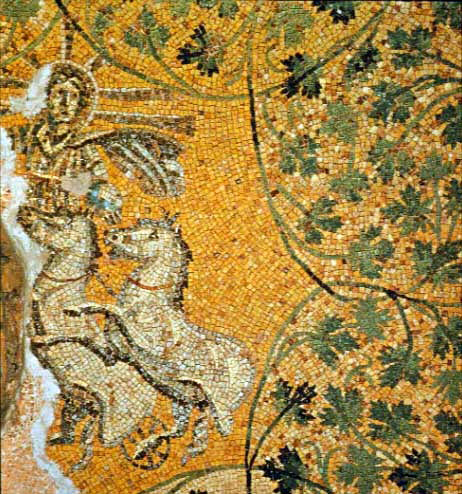
| The chariot of the Sun | Helios drives his horses across the sky. | Christ drives them in the vault of a Christian tomb beneath St Peter’s.71 Clement of Alexandria: the Sun of Righteousness, who drives His chariot over all.72 |
| 25 December | The Roman calendar of 354 marks it N·INVICTI, the birthday of the Unconquered Sun, with 30 races. | The same book lists the Church’s feasts: VIII kal. Ian. natus Christus in Betleem Iudeae, 25 December, Christ born in Bethlehem.73 |
| The day of the Sun | The dies solis of the planetary week. | Constantine orders judges, townsfolk and craftsmen to rest venerabili die solis, on the venerable day of the Sun, in 321. It became the Christian Sunday.74 |
| The Unconquered Companion | Sol Invictus. | The first Christian emperor strikes gold coins in 321 inscribed SOLI INVICTO COMITI, to the Unconquered Sun, my companion.75 |
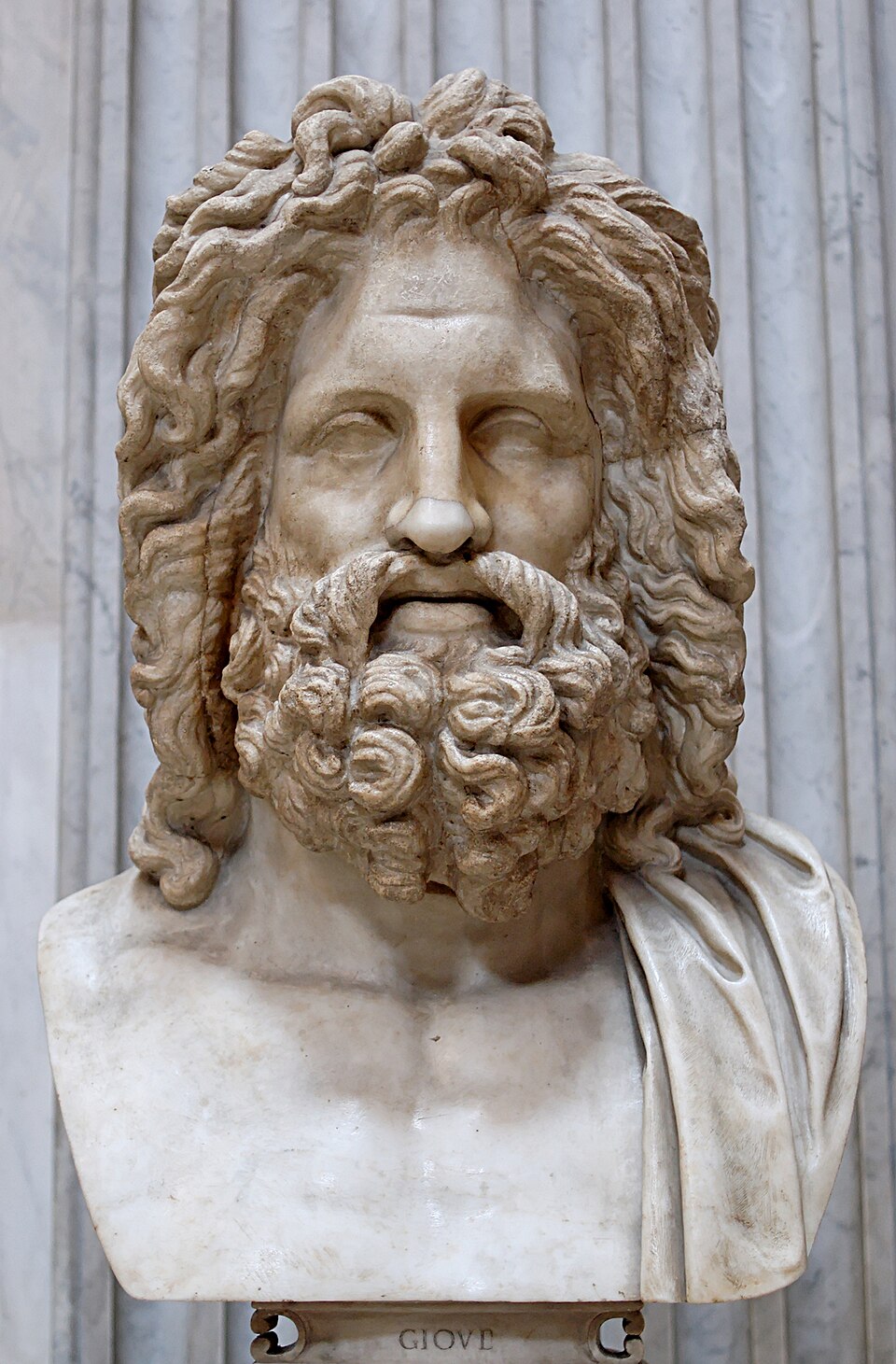
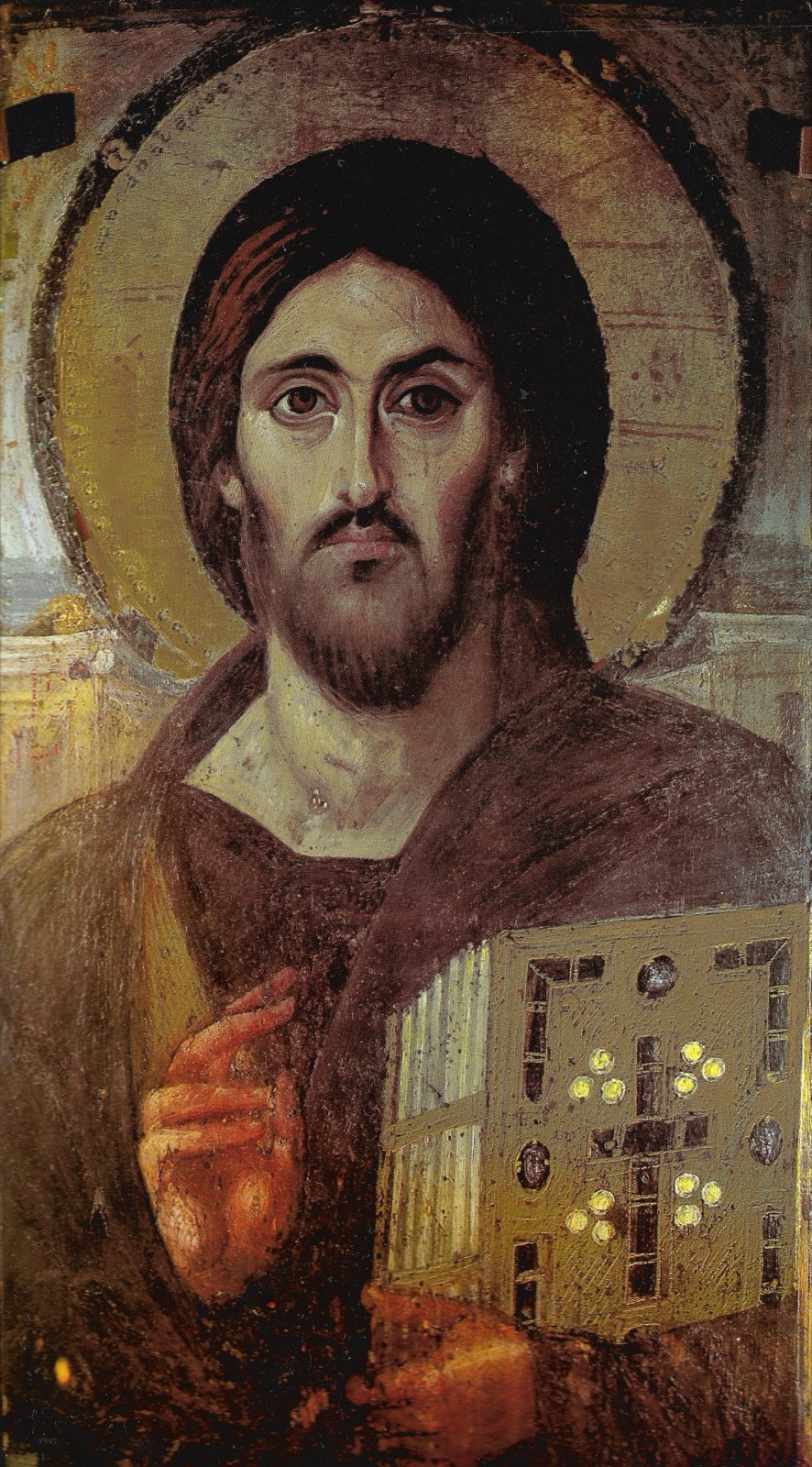
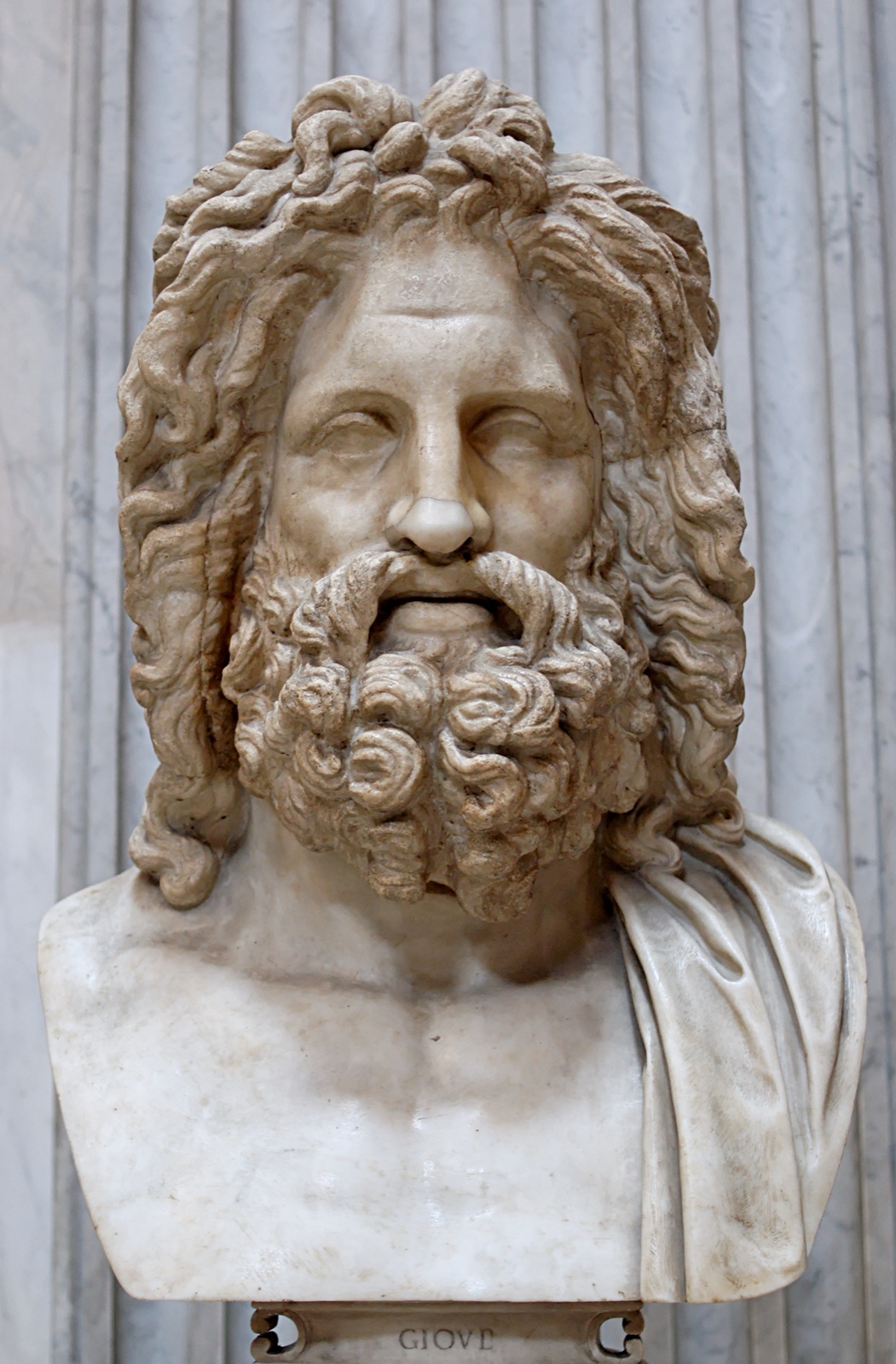
| The enthroned Father | Pheidias’s Zeus at Olympia: The god sits on a throne, and he is made of gold and ivory.76 Apollonius greeted him there.42 | Christ Pantocrator: long hair, full beard, throne and frontal gaze. On the first coin to bear Christ’s face, the Museum of Fine Arts in Boston writes, it’s likely modeled after the face of Zeus in a famous statue by the Classical Greek sculptor Phidias.7778 |
| The shepherd with the ram | Calamis made an image of Hermes carrying a ram upon his shoulders. | The Good Shepherd carries the lamb in the same pose: a marble statuette in the Vatican, reworked in the 18th century from a sarcophagus fragment of the 3rd or 4th century.79 |
| The singer who tames | Orpheus with his lyre. | Christ painted as Orpheus in the catacombs. Clement sets Christ, the New Song, above Orpheus: It alone has tamed men, the most intractable of animals.80 |
| Soter, the Saviour | Zeus Soter in Pindar, Apollo savior and deliverer from the pestilencein Sophocles, Helios surnamed Saviourat Megalopolis, Asclepius the Saviour at Pergamon.81 | The title of Christ. |
| The Logos | The Word of the Greek philosophers. | ἐν ἀρχῇ ἦν ὁ λόγος, in the beginning was the Word.82 |
| The healer who raises the dead | Asclepius, son of Apollo, struck by the thunderbolt and taken to heaven. | Justin Martyr concedes Christ’s cures are very similar to the deeds said to have been done by Æsculapius, and blames the demons for the likeness.83 |
Public domain via Wikimedia Commons · Source and licence

Public domain via Wikimedia Commons · Source and licence

Public domain, photo: Jastrow, via Wikimedia Commons · Source and licence

Leo the Great, Sermon 27.4, Christmas, Rome, mid 5th century
converso corpore ad nascentem se solem reflectant, et curvatis cervicibus, in honorem se splendidi orbis inclinent
“they turn round and bow themselves towards the rising sun and with bent neck do homage to its brilliant orb.”
A pope said it of his own flock, on the steps of St Peter’s, at Christmas.85 4 centuries after Apollonius prayed to the Sun at Babylon, the worshippers of Christ were still bowing to it.37
A SON OF ZEUS, RESTORED
Zevism honours Apollonius as one of its own. He was a son of Zeus by the word of his own city, the witness of Asclepius at Aegae, a Pythagorean who prayed to the Sun and hailed Zeus at Olympia as the God who shares His own nature with mankind.42
His own teaching on worship survives in his words: to the First God, one above all, the purest offering is the better speech
of the mind, the speech which passes not through the lips
.4 It is the theurgy of the Temple in a single line.
The Church took his life, gave it to another and spent 2 centuries answering the men who remembered whose it was. The Temple gives it back.
Continue exploring
- 2 Lives: Apollonius of Tyana and Jesus
- Jesus: Zeus in a Form of Inversion
- The Fathers Admitted the Parallels and Blamed the Demons
- December 25: The Unconquered’s Birthday and Christ’s
- Asclepius
- Apollo / Mithra / Utu / Shammash
- Zeus: Father of Gods and Men
- Plutarch, High Priest of Apollo at Delphi
- All Personalities
NOTES
1 Philostratus, Life of Apollonius of Tyana 1.6: the Greek (ed. C. L. Kayser, Teubner, 1870), tr. F. C. Conybeare, Loeb Classical Library (1912), the 1912 printing.
2 Philostratus, Life of Apollonius of Tyana 1.2: the Greek (ed. C. L. Kayser, Teubner, 1870), tr. F. C. Conybeare, Loeb Classical Library (1912), the 1912 printing.
3 Philostratus, Life of Apollonius of Tyana 1.3: the Greek (ed. C. L. Kayser, Teubner, 1870), tr. F. C. Conybeare, Loeb Classical Library (1912), the 1912 printing.
4 Eusebius, Preparation for the Gospel 4.13, quoting Apollonius, On Sacrifices, tr. E. H. Gifford (1903): tertullian.org.
5 Suda α 3420, Ἀπολλώνιος Τυανεύς, tr. M. Forconi (Suda On Line, 2001): Suda On Line.
6 R. J. Penella, The Letters of Apollonius of Tyana (Leiden: Brill, 1979); C. P. Jones, Philostratus: Apollonius of Tyana, Loeb Classical Library 16, 17 and 458 (2005 to 2006), with the letters and the ancient testimonia.
7 Philostratus, Life of Apollonius of Tyana 1.12: the Greek (ed. C. L. Kayser, Teubner, 1870), tr. F. C. Conybeare, Loeb Classical Library (1912), the 1912 printing.
8 Origen, Against Celsus 6.41, tr. F. Crombie (Ante-Nicene Fathers, vol. 4): newadvent.org.
9 Lucian, Alexander the False Prophet 5, Greek ed. A. M. Harmon, tr. H. W. Fowler (1905): Perseus.
10 Cassius Dio, Roman History 67.18, tr. E. Cary, Loeb (1925): LacusCurtius.
11 Cassius Dio, Roman History 78.18.4 (77.18.4 in Boissevain), tr. E. Cary, Loeb (1927): LacusCurtius.
12 F. C. Conybeare, introduction and index to Philostratus: The Life of Apollonius of Tyana, Loeb (1912), vol. 1: archive.org.
13 C. P. Jones, “An Epigram on Apollonius of Tyana”, Journal of Hellenic Studies 100 (1980), pp. 190 to 194: Cambridge Core; G. Dagron and J. Marcillet-Jaubert, Belleten 42 (1978), pp. 402 to 405 with plate 6; E. L. Bowie, ANRW II 16.2 (1978), pp. 1687 to 1688; N. J. Richardson and P. Burian, “The Epigram on Apollonius of Tyana”, Greek, Roman, and Byzantine Studies 22 (1981), pp. 283 to 285: grbs.library.duke.edu; the stone in Jones’s photograph: Wikimedia Commons.

14 Arnobius, Against the Nations 1.52, tr. H. Bryce and H. Campbell (Ante-Nicene Fathers, vol. 6): newadvent.org.
15 Eusebius, Against Hierocles 1 to 2, tr. F. C. Conybeare, Loeb (1912), vol. 2, pp. 484 to 489: tertullian.org.
16 Lactantius, Divine Institutes 5.2 to 3, tr. W. Fletcher (Ante-Nicene Fathers, vol. 7): newadvent.org; On the Deaths of the Persecutors 16: newadvent.org.
17 Historia Augusta, Severus Alexander 29.2, tr. D. Magie, Loeb (1924): LacusCurtius.
18 Historia Augusta, Aurelian 24.2 to 9, tr. D. Magie, Loeb (1932): LacusCurtius.
19 Ammianus Marcellinus, History 21.14.5, tr. J. C. Rolfe, Loeb (1940): LacusCurtius.
20 Ammianus Marcellinus, History 23.6.19, tr. J. C. Rolfe, Loeb (1940): LacusCurtius.
21 Contorniate medallion of Apollonius of Tyana, Rome, late 4th century, Bibliothèque nationale de France, Monnaies, médailles et antiques (AF.17162): Wikimedia Commons.
22 Jerome, Letter 53.1, tr. W. H. Fremantle, G. Lewis and W. G. Martley (Nicene and Post-Nicene Fathers, 2nd series, vol. 6): newadvent.org.
23 Eunapius, Lives of the Philosophers and Sophists, preface (p. 454 Boissonade), tr. W. C. Wright, Loeb (1921): tertullian.org.
24 John Chrysostom, Against the Jews 5.3.1 (Patrologia Graeca 48.886), Greek: documentacatholicaomnia.eu; English: tertullian.org.
25 Augustine, Letter 102.32 (409), tr. J. G. Cunningham (Nicene and Post-Nicene Fathers, vol. 1): newadvent.org.
26 Marcellinus to Augustine, Letter 136.1 (412), tr. J. G. Cunningham: newadvent.org.
27 Augustine, Letter 138.18 (412), tr. J. G. Cunningham: newadvent.org.
28 Sidonius Apollinaris, Letters 8.3 (478), tr. O. M. Dalton (1915): tertullian.org; Latin: The Latin Library.
29 Philostratus, Life of Apollonius of Tyana 1.4: the Greek (ed. C. L. Kayser, Teubner, 1870), tr. F. C. Conybeare, Loeb Classical Library (1912), the 1912 printing.
30 Philostratus, Life of Apollonius of Tyana 1.5: the Greek (ed. C. L. Kayser, Teubner, 1870), tr. F. C. Conybeare, Loeb Classical Library (1912), the 1912 printing.
31 Philostratus, Life of Apollonius of Tyana 1.7: the Greek (ed. C. L. Kayser, Teubner, 1870), tr. F. C. Conybeare, Loeb Classical Library (1912), the 1912 printing.
32 Philostratus, Life of Apollonius of Tyana 1.8: the Greek (ed. C. L. Kayser, Teubner, 1870), tr. F. C. Conybeare, Loeb Classical Library (1912), the 1912 printing.
33 Philostratus, Life of Apollonius of Tyana 1.13: the Greek (ed. C. L. Kayser, Teubner, 1870), tr. F. C. Conybeare, Loeb Classical Library (1912), the 1912 printing.
34 Philostratus, Life of Apollonius of Tyana 1.14: the Greek (ed. C. L. Kayser, Teubner, 1870), tr. F. C. Conybeare, Loeb Classical Library (1912), the 1912 printing.
35 Philostratus, Life of Apollonius of Tyana 1.19: the Greek (ed. C. L. Kayser, Teubner, 1870), tr. F. C. Conybeare, Loeb Classical Library (1912), the 1912 printing.
36 Philostratus, Life of Apollonius of Tyana 3.18: the Greek (ed. C. L. Kayser, Teubner, 1870), tr. F. C. Conybeare, Loeb Classical Library (1912), the 1912 printing.
37 Philostratus, Life of Apollonius of Tyana 1.31: the Greek (ed. C. L. Kayser, Teubner, 1870), tr. F. C. Conybeare, Loeb Classical Library (1912), the 1912 printing.
38 Philostratus, Life of Apollonius of Tyana 4.10: the Greek (ed. C. L. Kayser, Teubner, 1870), tr. F. C. Conybeare, Loeb Classical Library (1912), the 1912 printing.
39 Philostratus, Life of Apollonius of Tyana 4.20: the Greek (ed. C. L. Kayser, Teubner, 1870), tr. F. C. Conybeare, Loeb Classical Library (1912), the 1912 printing.
40 Philostratus, Life of Apollonius of Tyana 4.25: the Greek (ed. C. L. Kayser, Teubner, 1870), tr. F. C. Conybeare, Loeb Classical Library (1912), the 1912 printing.
41 Philostratus, Life of Apollonius of Tyana 4.45: the Greek (ed. C. L. Kayser, Teubner, 1870), tr. F. C. Conybeare, Loeb Classical Library (1912), the 1912 printing.
42 Philostratus, Life of Apollonius of Tyana 4.28: the Greek (ed. C. L. Kayser, Teubner, 1870), tr. F. C. Conybeare, Loeb Classical Library (1912), the 1912 printing.
43 Philostratus, Life of Apollonius of Tyana 8.5: the Greek (ed. C. L. Kayser, Teubner, 1870), tr. F. C. Conybeare, Loeb Classical Library (1912), the 1912 printing.
44 Philostratus, Life of Apollonius of Tyana 8.10: the Greek (ed. C. L. Kayser, Teubner, 1870), tr. F. C. Conybeare, Loeb Classical Library (1912), the 1912 printing.
45 Philostratus, Life of Apollonius of Tyana 8.12: the Greek (ed. C. L. Kayser, Teubner, 1870), tr. F. C. Conybeare, Loeb Classical Library (1912), the 1912 printing.
46 Philostratus, Life of Apollonius of Tyana 8.15: the Greek (ed. C. L. Kayser, Teubner, 1870), tr. F. C. Conybeare, Loeb Classical Library (1912), the 1912 printing.
47 Philostratus, Life of Apollonius of Tyana 8.26: the Greek (ed. C. L. Kayser, Teubner, 1870), tr. F. C. Conybeare, Loeb Classical Library (1912), the 1912 printing.
48 Philostratus, Life of Apollonius of Tyana 8.29: the Greek (ed. C. L. Kayser, Teubner, 1870), tr. F. C. Conybeare, Loeb Classical Library (1912), the 1912 printing.
49 Philostratus, Life of Apollonius of Tyana 8.30: the Greek (ed. C. L. Kayser, Teubner, 1870), tr. F. C. Conybeare, Loeb Classical Library (1912), the 1912 printing.
50 Philostratus, Life of Apollonius of Tyana 8.31: the Greek (ed. C. L. Kayser, Teubner, 1870), tr. F. C. Conybeare, Loeb Classical Library (1912), the 1912 printing.
51 Luke 1:26 to 38, King James Version.
52 Luke 2:8 to 14, King James Version.
53 Luke 1:35, King James Version.
54 Luke 2:41 to 47, King James Version.
55 Mark 10:21, King James Version.
56 Philostratus, Life of Apollonius of Tyana 8.28: the Greek (ed. C. L. Kayser, Teubner, 1870), tr. F. C. Conybeare, Loeb Classical Library (1912), the 1912 printing.
57 Mark 1:16 to 20, King James Version.
58 Mark 5:1 to 13, King James Version.
59 Luke 7:11 to 15, King James Version.
60 Mark 15:1 to 5, King James Version.
61 Mark 10:18, King James Version.
62 Luke 24:31, King James Version.
63 Luke 24:39, King James Version.
64 Acts 1:9, King James Version.
65 John 20:24 to 29, King James Version.
66 Mark 16:6, King James Version.
67 Philostratus, Life of Apollonius of Tyana 1.21: the Greek (ed. C. L. Kayser, Teubner, 1870), tr. F. C. Conybeare, Loeb Classical Library (1912), the 1912 printing.
68 Tacitus, Annals 11.8 to 10, tr. J. Jackson, Loeb: LacusCurtius; J. Lendering, “Vardanes I”: livius.org.
69 Bart D. Ehrman, The New Testament: A Historical Introduction to the Early Christian Writings (New York: Oxford University Press, 1997), ch. 2, “One Remarkable Life”, pp. 17 to 18; 5th ed. (2012), ch. 3, p. 32, and its chronological chart of the Gospels: archive.org.
70 Adolf Krücke, Der Nimbus und verwandte Attribute in der frühchristlichen Kunst (Strassburg: Heitz, 1905), pp. 6, 33 to 34: archive.org; the Helios metope of the temple of Athena at Ilion, 300 to 280 BCE, Antikensammlung, Berlin: smb.museum.
71 The Christ-Helios mosaic of Mausoleum M (the Tomb of the Julii), Vatican Necropolis, dated to the 3rd century by the Judaism and Rome database and to the first decades of the 4th by Miziołek: Judaism and Rome; J. Miziołek, “Apotheosis, Ascensio or Resurrectio”, Arte Cristiana 85 (1997), pp. 83 to 98: archiv.ub.uni-heidelberg.de.
72 Clement of Alexandria, Exhortation to the Heathen 11 (114.3 Stählin), tr. W. Wilson (Ante-Nicene Fathers, vol. 2): newadvent.org.
73 The Chronograph of 354, Calendar, 25 December, and Depositio Martyrum, ed. Th. Mommsen: the calendar; the Depositio; M. R. Salzman, On Roman Time (Berkeley, 1990).
74 Codex Justinianus 3.12.2 (Constantine to Helpidius, 3 March 321, Krüger’s text): The Latin Library, tr. F. H. Blume: uwyo.edu; Codex Theodosianus 2.8.1 (3 July 321): droitromain.univ-grenoble-alpes.fr.
75 Gold solidus of Constantine I, Sirmium, 321, reverse SOLI INVICTO COMITI, RIC VII Sirmium 21, British Museum R.160: OCRE.
76 Pausanias, Description of Greece 5.11.1, tr. W. H. S. Jones, Loeb (1918): Perseus.
77 Museum of Fine Arts, Boston, solidus of Justinian II with bust of Christ, Constantinople, 692 to 695, accession 35.350: collections.mfa.org.
78 J. D. Breckenridge, The Numismatic Iconography of Justinian II (American Numismatic Society, 1959), deriving the bearded Christ from the Zeus of Pheidias, as reported in The E-Sylum; Robin M. Jensen, Face to Face: Portraits of the Divine in Early Christianity (Minneapolis: Fortress, 2005), ch. 5, “Jesus as Teacher, Philosopher, and Ruler: The Bearded Type”: fortresspress.com.
79 Pausanias, Description of Greece 9.22.1, tr. W. H. S. Jones, Loeb (1918): Perseus; the Good Shepherd statuette, Museo Pio Cristiano, Vatican Museums, inv. 28590, an 18th-century reworking of a sarcophagus fragment: museivaticani.va.
80 Clement of Alexandria, Exhortation to the Heathen 1, tr. W. Wilson: newadvent.org; J. Huskinson, “Some Pagan Mythological Figures and Their Significance in Early Christian Art”, Papers of the British School at Rome 42 (1974), pp. 68 to 97.
81 Pindar, Olympian 5.17; Sophocles, Oedipus Tyrannus 149 to 150, tr. R. C. Jebb (1887); Pausanias 8.31.7, tr. W. H. S. Jones; Aelius Aristides, On Concord, to the Cities: all at Perseus.
82 John 1:1, Greek ed. Westcott and Hort (1885): Perseus.
83 Justin Martyr, First Apology 21, 22 and 54, tr. M. Dods and G. Reith (Ante-Nicene Fathers, vol. 1): newadvent.org; Dialogue with Trypho 69: newadvent.org.
84 Cyprian, On the Lord’s Prayer 35: newadvent.org; Augustine, Tractates on John 34.2: newadvent.org; Eusebius, Oration in Praise of Constantine 6.20: newadvent.org.
85 Leo the Great, Sermon 27.4, tr. C. L. Feltoe (Nicene and Post-Nicene Fathers, 2nd series, vol. 12): newadvent.org.