




10 min read
The Necronomicon: The Temple's Reading
updated by: High Priest Zevios Metathronos & Pythia
Questions about the Necronomicon come to the Temple often. This page gives the true history of the book, shows what is genuinely ancient in the modern books that carry its name and what is not, and sets out how the Temple reads the sleeping serpent. Earlier versions of this page repeated the story of a "1586 copy" translated by Dr. John Dee. That story is false, and it is corrected below.
Where the Book Comes From
The Necronomicon was invented by the American writer Howard Phillips Lovecraft (1890 to 1937) for his tales of weird fiction. It is first named in "The Hound", a story he wrote in 1922 and printed in Weird Tales in February 1924.1 Its supposed author, the mad Arab Abdul Alhazred, had already appeared in "The Nameless City" (1921). Lovecraft had used that name for himself as a boy, as he told Robert E. Howard in a letter of 4 October 1930.2
In 1927 Lovecraft wrote a short "History of the Necronomicon" so that his stories would agree with one another. It was printed only in 1938, after his death, by the Rebel Press.3 This little text gave the book its whole pedigree: an Arabic original called Al Azif, written at Damascus about 730 by Abdul Alhazred, a mad poet of Sanaa in Yemen; a Greek translation by Theodorus Philetas in 950, which gave it the title Necronomicon; a Latin translation by Olaus Wormius in 1228; a ban by Pope Gregory IX in 1232; and copies in the British Museum, the Bibliothèque Nationale and the Widener Library at Harvard. Philetas is invented. Olaus Wormius (Ole Worm) was a real Danish physician and antiquary, but he lived from 1588 to 1654, four centuries after the date Lovecraft gave him. The same History says that an English translation made by Dr. Dee was never printed and exists only in fragments. Even inside Lovecraft's fiction, there was never a printed Dee edition.
Lovecraft never hid that he had made it up. "There never was any Abdul Alhazred or Necronomicon, for I invented these names myself," he wrote to Willis Conover on 29 July 1936. He said the title came to him in a dream, and he explained it from the Greek words for dead, law and image, as an image of the law of the dead (letter to Harry O. Fischer, February 1937).4 The popular rendering "Book of Dead Names" is not what the Greek says.
The "1586 Copy" and Its Preface
The text passed around as "the 1586 Necronomicon of Dr. John Dee" opens with a preface signed by a "Dr. Joseph Talbet" of Harvard University. Everything in that preface comes from Lovecraft's History of 1927: the Arabic Al Azif, Philetas in 950, Wormius in 1228, the Arab's death in 738 at the hands of an unseen power, and a copy in the Widener Library, the very library Lovecraft had named. It adds that Harry Elkins Widener obtained the book in 1912, shortly before he boarded the Titanic. Widener was a real book collector who died on the Titanic; the library that bears his name was given to Harvard by his mother in his memory and opened in 1915. No 1586 manuscript or printing of a Necronomicon, and no such professor, has ever been shown to exist.
John Dee (1527 to about 1609) was a real Elizabethan mathematician and astrologer. His sessions with Edward Kelley in the 1580s produced the Enochian calls. He wrote no Necronomicon. His name entered the legend through Lovecraft's History, and the hoax of 1978 described below used it again.
The list of "documented editions" that used to stand on this page (the Greek of 950, the Latin of 1228, the black-letter printing in Germany, the Spanish reprint and the rest) repeats Lovecraft's fictional chronology together with later inventions by his readers. The Voynich manuscript, which that list counted as an edition, is a real manuscript in Yale University's Beinecke Library (MS 408), dated by radiocarbon to the early fifteenth century and written in a script no one has read. Nothing connects it to the Necronomicon.
The Modern Books Called Necronomicon
The "Simon" Necronomicon (1977)
The book most people now mean by the name was published in New York in 1977 by Schlangekraft, Inc., under an editor who signed himself only "Simon". Avon Books issued it in paperback in 1980.5 Unlike Lovecraft's imaginary volume, it is built on real Mesopotamian material. Its Gods are the Gods of Sumer and Babylon. Its "Maklu" text takes its name and some of its incantations from the Maqlû ("Burning"), a Babylonian series of rites against sorcery. Its bibliography lists R. Campbell Thompson's The Devils and Evil Spirits of Babylonia (1903 to 1904) and James B. Pritchard's Ancient Near Eastern Texts Relating to the Old Testament (1950), and parts of its text closely follow these books. Around this material it sets the frame story of "the Mad Arab", names borrowed from Lovecraft, and seals drawn for the book. No older manuscript of it has ever been shown. Dan Harms and John Wisdom Gonce III traced its sources in The Necronomicon Files.6
The Book of Dead Names (1978)
A year later the publisher Neville Spearman issued The Necronomicon: The Book of Dead Names, edited by George Hay with an introduction by Colin Wilson. Its text was written by the occultist Robert Turner, and the writer David Langford supplied an account of a computer "decoding" of cipher manuscripts of John Dee. Its makers later said plainly that it was a spoof. Colin Wilson told the whole story in "The Necronomicon: The Origin of a Spoof" (Crypt of Cthulhu 23, 1984), and Langford lists the book in his own bibliography as a "non-fact" reconstruction.7 Between Lovecraft's History and this hoax, the name of John Dee became tied to a book he never wrote.
What Is Genuinely Ancient
When the frame story and the borrowed names are set aside, what is of value in the Simon book is old: the Gods of Mesopotamia, the planets that were their stars, and the seven gates.
The Seven Planetary Gods
Babylonian astronomers saw the planets as the stars of their Gods. Morris Jastrow summed up the scholarship of his day: Jupiter was identified with Marduk, Venus with Ishtar, Mars with Nergal, Mercury with Nebo and Saturn with Ninib.8 The Moon was the God Sin, and the Sun was Shamash. These are the seven Gods of the Simon book's gates, and the book keeps the spellings of that older scholarship. They are real Gods, worshipped for thousands of years before any modern book printed their names.
- Nanna, called Sin in Akkadian, the Moon God of Ur and Harran. From the Old Babylonian period his name could be written with the number 30, the days of the lunar month.9
- Nebo, the Hebrew form of Nabu (Isaiah 46:1), God of writing and wisdom, whose temple stood at Borsippa: the planet Mercury.
- Inanna, called Ishtar in Akkadian and known among the nations as Astarte, Goddess of love and war: the planet Venus.
- Shamash, called Utu in Sumerian, the Sun God and judge of Sippar and Larsa. His name could be written with the number 20.10
- Nergal, God of war, plague and the underworld, whose city was Kutha: the planet Mars.
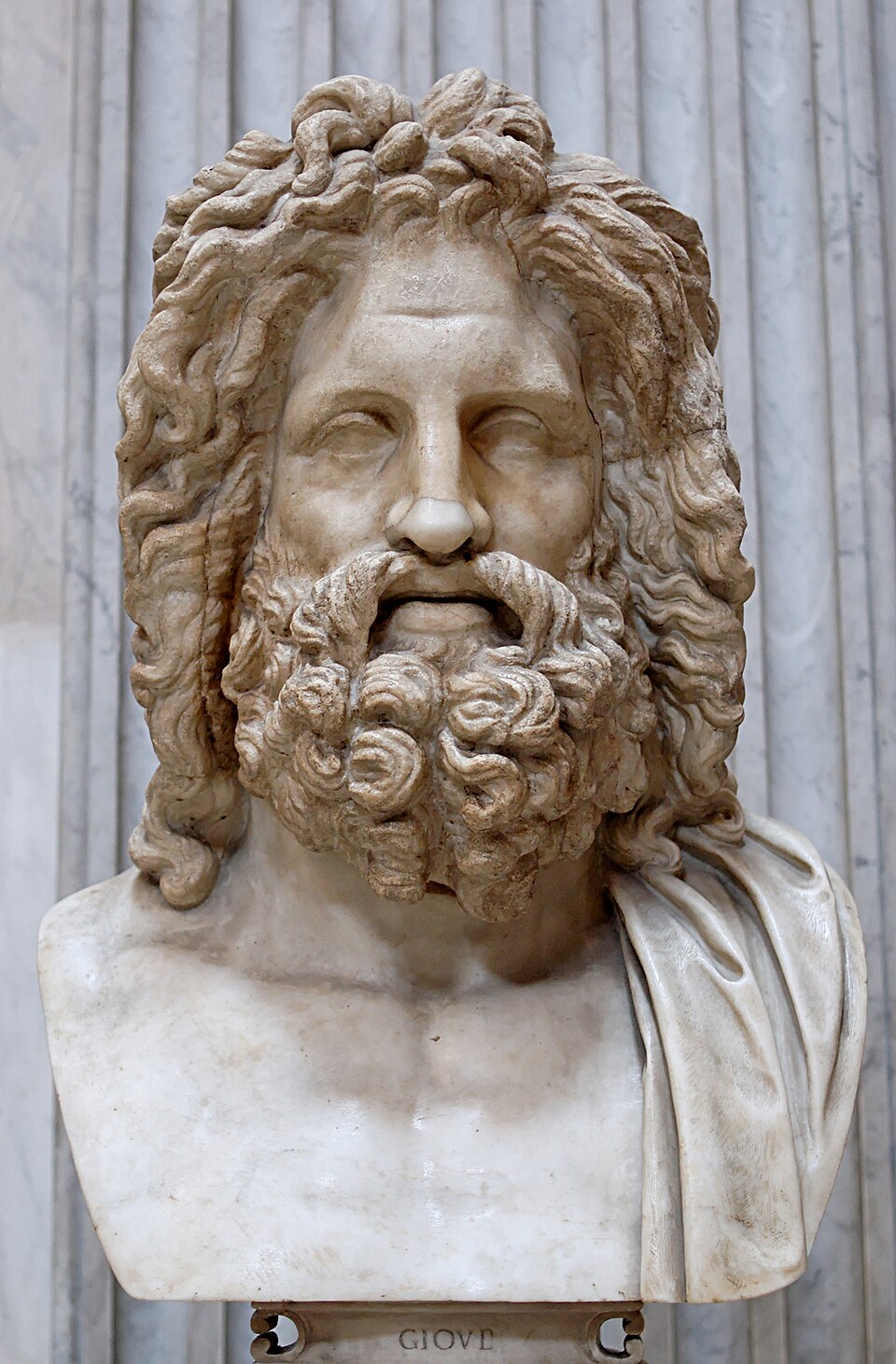
- Marduk, God of Babylon and victor over Tiamat in the Enuma Elish, whom the Temple honors as a name of Zeus: the planet Jupiter.
- Ninib, the reading that early scholars gave to the name of Ninurta, the warrior and farmer God of Nippur, son of Enlil: the planet Saturn.11
The Seven Gates
The order of the Simon book's seven gates, from Nanna to Ninib, is the ancient order of the planetary spheres counted outward from the Earth: the Moon, Mercury, Venus, the Sun, Mars, Jupiter and Saturn, as Ptolemy set them out in the second century.12 The image of seven gates is old as well. In the Descent of Ishtar, the Goddess passes the seven gates of the underworld and gives up one of her ornaments at each. Celsus, a Greek writer of the second century quoted by Origen, describes a ladder of seven gates in the mysteries of Mithras, each gate of the metal of one planet, which stands for the passage of the soul through the planetary spheres.13 The Gods, their planets and the seven gates are ancient. The frame story, the seals and the gate-walking rituals of 1977 are modern.
The Temple's Reading: The Sleeping Serpent
In "The Call of Cthulhu" (written 1926) Lovecraft drew a great power that lies asleep and dreaming, waiting to rise: Cthulhu lies dead but dreaming in a sunken city until the time comes for him to wake. Lovecraft wrote it as horror. In the Temple's reading, the image is the Kundalini, the Serpent of Fire that lies coiled and asleep at the base of the spine. The Sanskrit texts describe her asleep and coiled: in the Ṣaṭ-cakra-nirūpaṇa she sleeps in the root lotus, coiled three and a half times.14 India also shows Narayana (Vishnu) asleep upon the coils of the serpent Shesha, called Ananta, "the endless", on the waters between the ages of the world, as he is carved on the Dashavatara temple at Deogarh in the sixth century. Mesopotamia knew the serpent as a God: on the libation vase that Gudea of Lagash dedicated to Ningishzida around 2120 BCE, two serpents coil around a staff.15
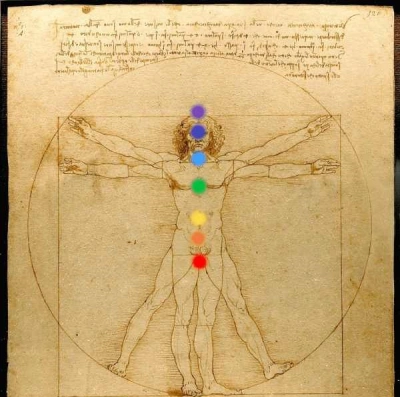
Read in the same way, Lovecraft's "Mad Arab" is a picture of what happens when the serpent is raised before the soul is ready. In the History he is a mad poet who was devoured in broad daylight by an invisible monster. In the Temple's reading, his madness is too much psychic input too soon: a Kundalini forced up through chakras that were still sealed, which overwhelms the capacity for sanity. The seven gates, walked one at a time and in order, are the chakras, opened one by one and never all at once. The God of each gate is the God of the planet that rules that chakra, and each is worked at the time when his or her planet is strong. The Temple's seven meditations on this pattern are given on The Planetary Chakra Meditations.
Simplified Summary
The Necronomicon began as Lovecraft's invention, between "The Hound" of 1922 and his History of 1927. There is no 1586 copy and no translation by John Dee. The book in use today is the Simon Necronomicon of 1977, built on real Babylonian sources, and a second book of 1978 was admitted to be a hoax by its own makers.
What is ancient in them is the Mesopotamian Gods, their planets and the seven gates. The Temple reads the sleeping serpent as the Kundalini, and the seven gates as the chakras opened one at a time.
Do not work with these books casually. Prepare properly. Open your chakras systematically. Build your bioelectricity gradually, and work the planetary meditations in their order and at their times.
Sources
1 H. P. Lovecraft, "The Hound", written 1922, first printed in Weird Tales, February 1924.
2 H. P. Lovecraft, "The Nameless City" (1921); letter to Robert E. Howard, 4 October 1930.
3 H. P. Lovecraft, "History of the Necronomicon", written 1927, first printed by the Rebel Press, 1938. Alhazred, Philetas, Wormius, Pope Gregory IX, the Widener Library copy and the unprinted Dee translation all come from this text.
4 H. P. Lovecraft, letter to Willis Conover, 29 July 1936; letter to Harry O. Fischer, late February 1937.
5 Simon (ed.), Necronomicon (New York: Schlangekraft, 1977); paperback edition, Avon Books, 1980.
6 Daniel Harms and John Wisdom Gonce III, The Necronomicon Files: The Truth Behind the Legend (Night Shade Books, 1998; revised edition, Weiser Books, 2003).
7 George Hay (ed.), The Necronomicon: The Book of Dead Names, introduction by Colin Wilson (Neville Spearman, 1978); Colin Wilson, "The Necronomicon: The Origin of a Spoof", Crypt of Cthulhu 23 (1984); David Langford, bibliography of his books, Ansible (ansible.uk).
8 Morris Jastrow, "Babylonian and Assyrian Religion", Encyclopaedia Britannica, 11th edition (1911), vol. 3.
9 Manfred Krebernik, "Mondgott", Reallexikon der Assyriologie 8 (1993 to 1997), p. 361.
10 Manfred Krebernik, "Sonnengott", Reallexikon der Assyriologie 12 (2009 to 2011), p. 600.
11 W. F. Albright, "Ninib-Ninurta", Journal of the American Oriental Society 38 (1918).
12 Ptolemy, Almagest IX.1.
13 "The Descent of Ishtar to the Underworld", in Stephanie Dalley, Myths from Mesopotamia (Oxford University Press, 1989); Origen, Against Celsus VI.22.
14 Pūrṇānanda, Ṣaṭ-cakra-nirūpaṇa (1577), verses 10 and 11, translated by Arthur Avalon (Sir John Woodroffe) in The Serpent Power (London: Luzac, 1919).
15 Libation vase of Gudea, dedicated to Ningishzida, chlorite, about 2120 to 2110 BCE, Paris, Musée du Louvre, AO 190.