




14 min read
The Bear of Artemis
author: High Priest Zevios Metathronos
ἄρκτος (árktos)
Artemis of Brauron, Callisto among the stars, Artio, the berserkers of Odin: the guardian of the threshold.
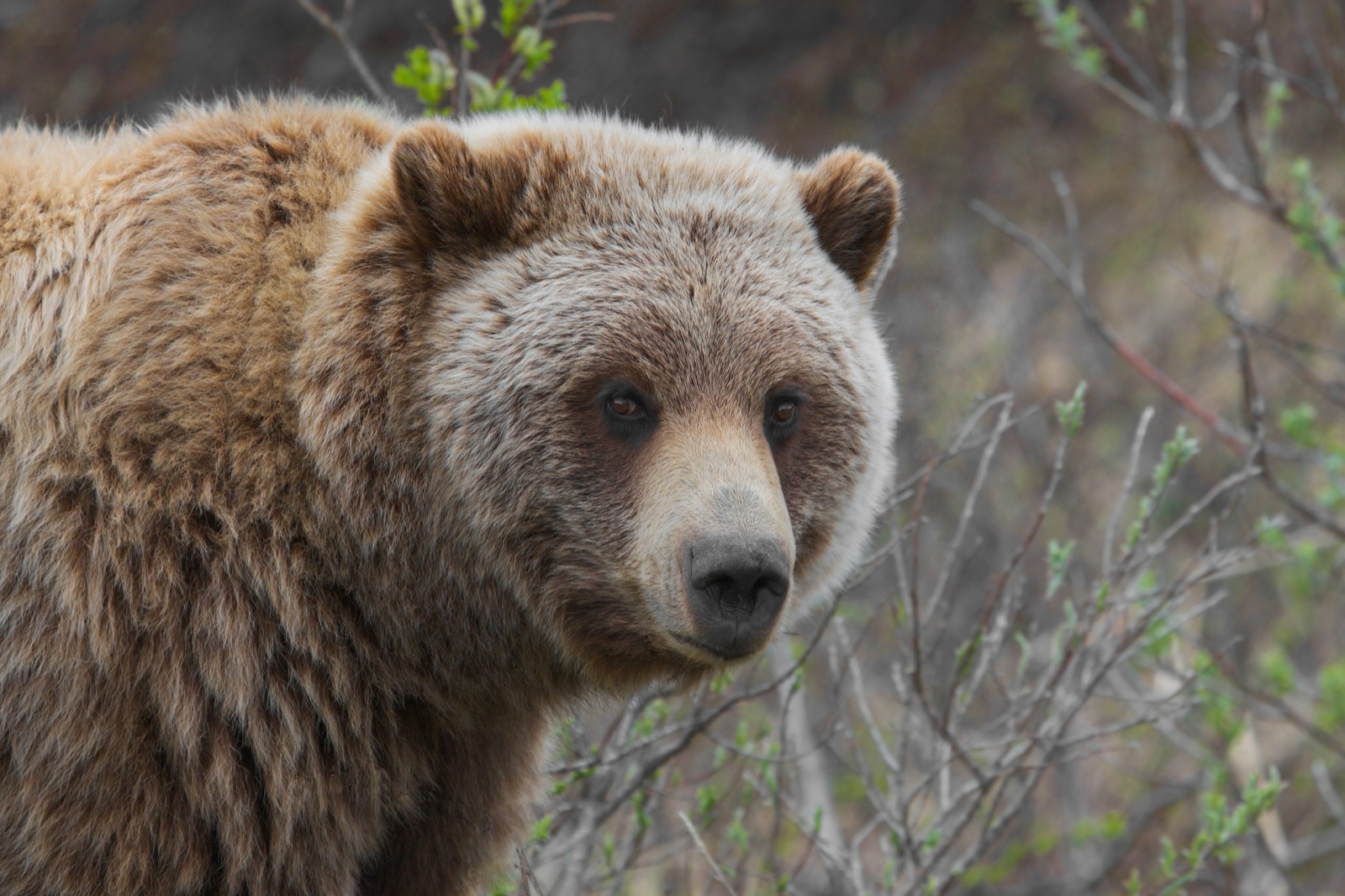
Gregory "Slobirdr" Smith · CC BY-SA 2.0 · Wikimedia Commons
.jpg)
The bear withdraws into the earth for the winter and walks out in spring whole. Artemis kept it at Brauron, Zeus lifted it into the northern sky as the Great Bear, and the Arctic still bears its Greek name.
| Realm | Beasts of the Earth |
|---|---|
| Greek | ἄρκτος (árktos); ἄρκτοι (árktoi), the girls of Brauron |
| Latin | ursus, ursa; Septentriones (the 7 stars of the Bear) |
| Other Names | Gaulish artos; Old Norse björn (plural birnir) |
| Species | Ursus arctos (brown bear, including the grizzly) |
| Gods | Artemis Brauronia, Zeus and Callisto, Artio, Odin (berserkers), Vishnu (Jambavan) |
| Material Capacity | Up to 8 months in the den without food, water or excretion, with muscle and bone preserved |
| Spiritual Capacity | The guardian of the threshold: withdrawal that strengthens, protection of the young, the soul lifted to the pole |
| Element and Sphere | Earth and the northern sky; the den, the forest and the pole star |
The Living Animal
The brown bear, Ursus arctos, is native to Eurasia and north-western North America[1]. The Kodiak bear of Alaska reaches 720 kg, and the species is often counted, with the polar bear, as the largest carnivore on Earth[1]. Alaska's wildlife agency gives brown bears there weights of up to 1,500 pounds (about 680 kg)[2].
Its strength sits in the shoulders. The grizzly carries a noticeable hump above the shoulders, and its powerful shoulder muscles and claws about 4 inches (10 cm) long, slightly curved, make it a digger[3]. For all its mass it can run in short bursts at up to 40 mph (64 km/h)[2].
The bear lives by its nose. Alaska's biologists describe its sense of smell as exceptionally acute, exceeding that of dogs[2]. Salmon, berries, grasses, sedges, roots, ground squirrels and carrion all fall within its reach[2].
Its winter is a physiological wonder. In northern regions a brown bear may spend up to 8 months in the den, and there it does not eat, drink, urinate or defecate[2]. The urea that would leave the body in urine is recycled into proteins that maintain muscle; healthy bears come out in spring without losing muscle mass or bone density, though they may lose up to 33% of their body weight[4].
The body slows but does not freeze. A hibernating bear averages 1 breath per minute and a heart rate of 8 to 10 beats per minute, while its body temperature stays above 31°C[4]. Females give birth to 1 to 3 cubs in the winter den in January or February[3]: the young are born in darkness and walk out with their mother into the spring.
The Spiritual Capacity: Guardian of the Threshold
In Zevism the bear is the guardian of the threshold. It keeps the passage from one state of being to the next: from girlhood to womanhood under Artemis, from mortal life to the stars under Zeus, from winter death to spring return in its own body. Its power is the mother's strength set around what is still forming.
At Brauron in Attica the daughters of Athens served Artemis as arktoi, she-bears, imitating the animal in short saffron dresses; the participants were girls between 5 and 10 years old[5]. The rite answered the wrath of the Goddess: in its founding tale Artemis sent a plague that would cease only when the Athenians consecrated their daughters to Her[5]. The Temple reads the arkteia as an initiation into womanhood. The girl takes the bear's nature into herself, wild and protected, and leaves it behind only when the Goddess releases her.
Callisto, daughter of Lycaon (whose own transformation belongs to The Wolf), hunted with Artemis and was loved by Zeus. Changed into a bear, she wandered the woods in terror of the hunters, until her son Arcas, now grown, raised his spear against her; then the Almighty stayed his hand and set mother and son in the heavens as neighbouring stars[6]. Ps.-Hyginus records that Zeus named her Arctos, the Bear, and her son Arctophylax, the Bear Watcher[7]. In Zevism this is theosis written in the sky: the soul that has suffered transformation is lifted by Zeus to the stars that circle the pole, ὁμοίωσις θεῷ made visible every night (see Becoming as the Gods).
The bear also carries strength beyond fear. Snorri writes that the men of Odin went into battle without mail coats, raging like dogs or wolves, biting their shields, strong as bears or bulls; this was called the berserker's fury[8]. In the Temple's teaching Odin is a face of Zeus, and the Temple reads the berserker as the bear's power in the warrior: immense, but holy only when the God governs it.
In India the bear is the elder who wakes another's power. Jambavan, counted among Rama's monkey host though a bear, recalls that in his youth he circled Vishnu in His form as Trivikrama, and then rouses Hanuman to leap the ocean to Lanka in search of Sita[9][10]. Vishnu is, in the Temple's teaching, 1 of the 3 faces of the power Zeus embodies[11]. The old bear who stirs the sleeping strength of Hanuman is the image of the counsel that wakes the serpent at the base of the spine (Kundalini).
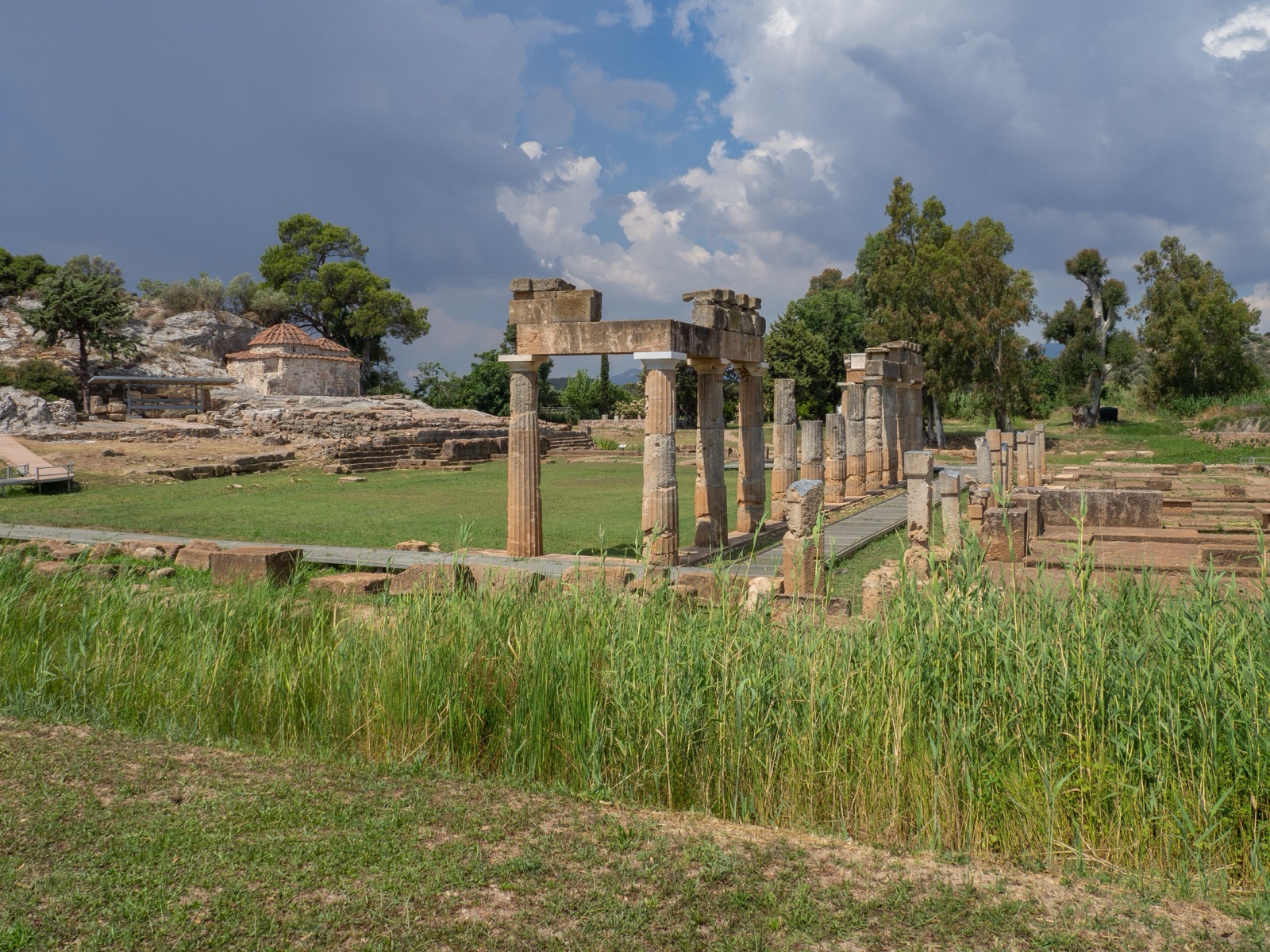
C messier · CC BY-SA 4.0 · Wikimedia Commons

Where Matter and Spirit Meet
Each power of the living bear is the outward form of a power of the soul. The Zevist reads them one by one.
- The winter fast. For up to 8 months the bear neither eats, drinks nor excretes, and it recycles its own waste into the protein of its muscles. This is the soul's sacred withdrawal: meditation, fasting and silence, in which nothing is lost and the inner substance is rebuilt from within. The Zevist enters the cave of the heart as the bear enters the den.
- Bone and muscle kept intact. Healthy bears leave the den with their muscle and bone density whole. The retreat that serves Ma'at does not weaken: it preserves the frame of the self for the return. This is the difference between withdrawal under discipline and the collapse of Izfet.
- Birth in the dark den. Cubs are born in midwinter, in darkness, and walk out in spring. The new self of the initiate is born the same way, in the hidden place, and comes into the light only when ready, as the girls of Brauron came out of the bear's service into womanhood.
- The shoulder hump. The bear's power is massed above the shoulders. The Temple places minor chakras at the shoulders, which give the soul more power and symbolize spiritual freedom; the bear shows that power gathered, a strength the berserker borrowed and the Zevist builds by practice.
- The nose that exceeds the dog's. The bear perceives what is hidden at great distance. This is the faculty of the 6th chakra, the Third Eye, which reads what the outer senses cannot reach.
The Gods and Their Many Names
The bear stands beside 2 powers wherever it appears: the Goddess of the wild who keeps the young and the threshold, and the Sovereign God who lifts the transformed soul and arms the warrior. In Hellas these are Artemis and Zeus; in Gaul the bear-Goddess Artio held the same place as the Mistress of the beasts; in the North the bear's strength filled the warriors of Odin, a face of Zeus in the Temple's teaching; in India the bear Jambavan served Vishnu, another face of the same power.
| Civilization | God (and the Temple's identity) | The Bond with the Animal | Witness |
|---|---|---|---|
| Attica | Artemis Brauronia (Diana) | Girls serve Her as she-bears in saffron robes at Brauron | Aristophanes, Lysistrata 641-647[12] |
| Arcadia | Zeus (Jupiter) and Artemis | Callisto, the hunting companion of Artemis, changed into a bear and set by Zeus among the stars | Ovid, Metamorphoses 2.401-530[6] |
| Arcadia | Zeus and Hermes | Hera makes Callisto a bear and Artemis shoots her; Zeus sends Hermes to save her unborn son | Pausanias 8.3.6[13] |
| The northern sky | Zeus | Callisto named Arctos, the Bear; Arcas named Arctophylax, the Bear Watcher | Ps.-Hyginus, Astronomica 2.1[7] |
| Gaul (Muri, near Bern) | Artio, the bear-Goddess | A bronze Goddess seated before a great bear, dedicated Deae Artioni by Licinia Sabinilla | The Muri group, Bern[14] |
| Scandinavia | Odin (Zeus) | His warriors fight strong as bears: the berserker's fury | Snorri, Ynglinga saga 6[8] |
| India | Vishnu as Rama and Trivikrama (a face of Zeus) | Jambavan, king of the bears, serves Rama and rouses Hanuman | Vālmīki, Rāmāyaṇa, Kiṣkindhā Kāṇḍa 65[9][10] |
The names of the Mistress echo the beast. Artio takes Her name from the Gaulish word for the bear, artos[14], as the Greek arktoi of Brauron took theirs from ἄρκτος. In Gaul and in Hellas a Goddess keeps the bear and the young in Her care, and the Gaulish name and the Greek rite answer to each other as counterparts.
Above both stands the Sovereign. Zeus in Arcadia lifts the bear to the sky; Odin in the North arms His warriors with the bear's strength; Vishnu in India receives the bear's service and circling devotion. The same Head God, under different names, gives the bear its 2 destinies: guardian of the earth and guardian of the stars.
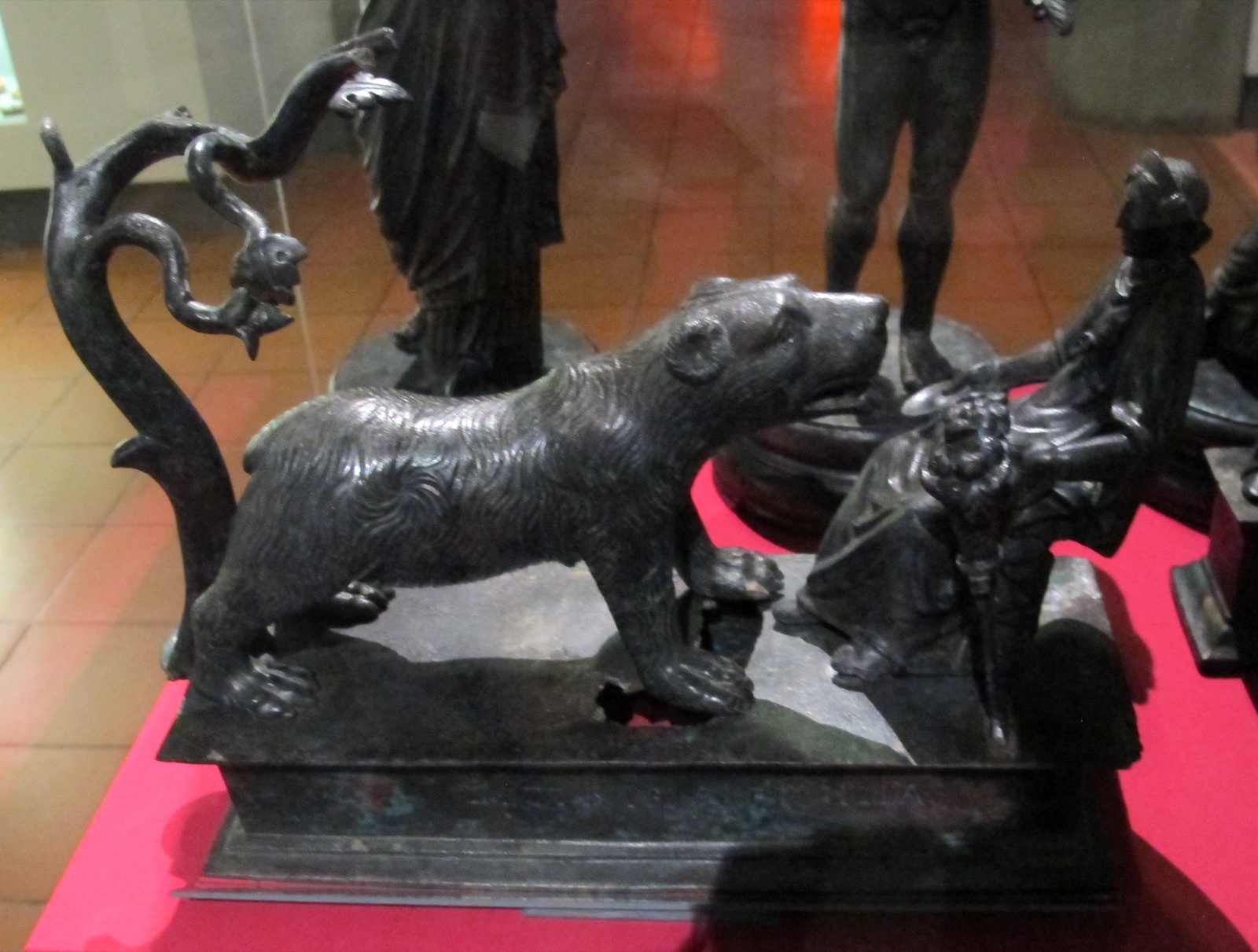
Sailko · CC BY 3.0 · Wikimedia Commons

Ancient Witnesses
The witnesses speak in Greek, Latin and Old Norse. The women of Aristophanes recall their service as bears at Brauron, Ovid tells of Jupiter lifting Callisto and Arcas into the sky, and Snorri describes the bear-strong warriors of Odin.
Aristophanes, Lysistrata 641-645 [12]
ἑπτὰ μὲν ἔτη γεγῶσʼ εὐθὺς ἠρρηφόρουν·
εἶτʼ ἀλετρὶς ἦ δεκέτις οὖσα τἀρχηγέτι·
κᾆτʼ ἔχουσα τὸν κροκωτὸν ἄρκτος ἦ Βραυρωνίοις·At 7 years of age, straightaway, a bearer of the sacred things;
then at 10 a grinder of meal for the Foundress;
and then, wearing the saffron robe, a bear at the Brauronia.Aristophanis Comoediae, ed. F. W. Hall and W. M. Geldart (Oxford, 1907) · Translation: Temple of Zeus. The chorus of women speaks; the edition numbers the lines 641, 642, 645. Perseus Hopper: Perseus:text:1999.01.0242.
Ovid, Metamorphoses 2.505-507 [6]
Arcuit omnipotens pariterque ipsosque nefasque
sustulit, et celeri raptos per inania vento
imposuit caelo vicinaque sidera fecit.The Almighty stayed his hand, and together took away both them and the crime,
and, caught up through the void on a swift wind,
set them in the heavens and made them neighbouring stars.Ovid, Metamorphoses, ed. H. Magnus (Gotha, 1892) · Translation: Temple of Zeus. Arcas is about to spear his mother Callisto, changed into a bear, when Jupiter intervenes.
Snorri Sturluson, Ynglinga saga 6 [8]
en hans menn fóru brynjulausir ok váru galnir sem hundar eða vargar,
bitu í skjöldu sína, váru sterkir sem birnir eða griðungar;but His men went without mail coats and were mad as dogs or wolves,
bit their shields, and were strong as bears or bulls;Heimskringla, Ynglinga saga, Heimskringla.no text · Translation: Temple of Zeus. The chapter goes on to name this state berserksgangr, the berserker's fury.
Universal Significance
The bear gave the north its name. English arctic comes through Latin from Greek arktikos, "of the north", literally of the Bear constellation, from arktos, "bear"[15]; Antarctic is the region opposite it[15]. Every map of the polar world still carries the bear's Greek name.
The bears also keep the pole of heaven. In Ursa Major the line from Merak to Dubhe points to the Pole Star, and the Greeks identified the constellation with Callisto[16]; Polaris itself lies at the end of the handle of the Little Dipper, in Ursa Minor, the Little Bear[17]. The bright star Arcturus takes its name from Greek Arktouros, "guardian of the bear", for it seems to follow the Great Bear across the sky[18]. In the Temple's reading the Bears and their guardian keep watch at the axis of heaven, where Zeus set them.
European cities took the bear as their sign. Bern's founding legend tells that Duke Berthold V of Zähringen vowed to name the city after the 1st animal his hunt met, and a bear was caught; the bear appears on the city's seals as early as 1224, and bears still live at the Bärengraben outside the old town[19]. In Berlin a bear occurs on seals, coins and signet rings from the late 12th century, and the bear arms were fixed by law in 1954[20].
Madrid's bear goes back to the campaigns of Alfonso VIII, when the city's militia carried a black bear on silver as their banner; after an agreement of 1222 a tree was added, and the 7 stars on the border of the arms derive from the 7 stars of the Bear, Ursa Major or Ursa Minor[21]. The Great Bear of heaven and the bear of the earth stand on the same shield.
The bear has stood for Russia in cartoons, articles and plays since as early as the 16th century, and Misha, the bear cub mascot of the 1980 Moscow Olympics, was meant to soften that image[22]. At Muri near Bern the bronze of Artio, found near the city that took the bear as its name, still shows the Goddess and Her animal side by side[14].
In Zevist Contemplation
The Zevist uses the bear's image for the disciplines of withdrawal and return: the retreat that strengthens, the protection of what is still growing, and the rising of the soul toward the pole. The practices below need no priest and promise no more than the soul itself achieves.
- The winter den. Set apart a period of silence and simple fasting, as the bear withdraws into the den. Breathe slowly, attention in the heart, and let the outer world fall away. Return to daily life deliberately, as the bear walks out in spring, carrying back what the retreat preserved.
- The bear at the shoulders. In meditation, feel the strength of the bear gathered across the shoulders and upper back. Let it settle there as calm power: the strength of the guardian, never the blind fury of the berserker.
- The guardian of the young. Take the bear-mother of Artemis as a rule of conduct. Protect what is still forming, in others and in the self: new knowledge, new virtue, a new resolve. Arete grows in shelter before it walks in the open.
- The Bear and the pole. On a clear night find the Great Bear and follow the pointers to the Pole Star. Contemplate Callisto lifted by Zeus: the transformed soul raised among the stars that circle the still axis. Hold the image at the crown of the head, the seat of the soul's union with the divine.
The bear has no older symbol page on the site. Read with it Artemis, Mistress of the bear and of Brauron, and Zeus, who set Callisto among the stars.
Continue exploring
Related Pages
- The Gods: Artemis
- The Gods: Zeus
- Teaching: Astrology
- Sacred Animal: The Wolf of Apollo
- Sacred Animal: The Boar of Artemis
- Sacred Animal: The Fawn of Artemis
- Previous: The Boar of Artemis
- Next: The Wolf of Apollo
- All 32 Sacred Animals
- All symbols